
• An addendum to Rule 3 regarding fan-translated works of things such as Web Novels has been made. Please see here for details.
  • We've issued a clarification on our policy on AI-generated work.
  • Our mod selection process has completed. Please welcome our new moderators.
  • The regular administrative staff are taking a vacation, and in the meantime, Biigoh is taking over. See here for more information.
  • Due to issues with external spam filters, QQ is currently unable to send any mail to Microsoft E-mail addresses. This includes any account at live.com, hotmail.com or msn.com. Signing up to the forum with one of these addresses will result in your verification E-mail never arriving. For best results, please use a different E-mail provider for your QQ address.
  • For prospective new members, a word of warning: don't use common names like Dennis, Simon, or Kenny if you decide to create an account. Spammers have used them all before you and gotten those names flagged in the anti-spam databases. Your account registration will be rejected because of it.
  • Since it has happened MULTIPLE times now, I want to be very clear about this. You do not get to abandon an account and create a new one. You do not get to pass an account to someone else and create a new one. If you do so anyway, you will be banned for creating sockpuppets.
  • Due to the actions of particularly persistent spammers and trolls, we will be banning disposable email addresses from today onward.
  • The rules regarding NSFW links have been updated. See here for details.

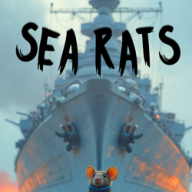
SEA RATS

SEA RATS
Created
Status
Incomplete
Watchers
3
Recent readers
71

PRESENTING: The SEA RATS!

A gang of scrapper mice join North Star, a mercenary outfit that fights piracy across the open seas.

(Also posted on Royal Road, ScribbleHub, Spacebattles Forum, Questionable Questing Forum, and Webnovel)
Last edited:
(Intro) Ruddigh the Red New

vigneashley

Your first time is always over so quickly, isn't it?
Joined
Apr 12, 2026
Messages
3
Likes received
0
Across the Equitorial Wastes, there is only one name that incites panic true.

Only one name that can drive the hearts of sailor rats to despair.

Ruddigh!

Ruddigh the pirate! Ruddigh of the Tungsten Arm!

Ruddigh—whose mechanical claw can squeeze an animal in two—the infamous one whose dreams are black and dead, whose domain extends where Corpos no longer dare to stray!

Ruddigh of the Wastes! Maddened badger, predator king—who massacres crews and paints their lost ships with blood!
 
Ch 1: Simple As, Sir New
Three ships was enough.

They told him again and again.

Not enough money for four. And not enough cargo for five. All excuses by corpos, doomed forever to lose life and money because a damn robot recommended it. No sir, there's no purpose in listening to an experienced sailor rabbit and his crew, the very ones doing the sailing, the very ones who would die if that monster were to encroach.

The captain of the Harbor's Edge balanced at the very top of the lookout, leaning out of the basket with one paw clinging to the cable that led to the very tip of the mast. His rough gray ears flapped heavily in the gale-like wind. He squinted through his monocular to the horizon behind their wake.

Eight dark silhouettes. Some with sails. All still pointed directly toward his little convoy, no matter the change in direction. There was a time, long ago, when this would have meant nothing.

But these days, it could only mean one thing.

Though sometimes, ships clustered up and happened to be on the same equatorial tangent as them. The abandoned continent was still so full of the automated Factoria, and they still shipped product and resource in and out, so why was it so difficult to believe that these haulers might be going the same way?

Except that his turns were compensated for.

Eight ships on the horizon all compensating at the same time? To starboard and larboard both? All day, they remained silent in response to the Harbor's Edge's attempts at radio. They were catching up. Just that morning the silhouettes were dots, and now that it was at the edge of sunset, he could see the clear and blocky shadows that told him that the ships coming straight for the convoy were precisely once cargo vessels like his.

He hoped against hope that he was wrong about who it might be. He could still be mistaken.

But the ships glowed with an unmistakable bloody red.

Their wakes were larger now, too. They'd sped up dramatically, their bows dipping into the surf and sending great wings of spray upward. Their titanic ships were empty of cargo and knifed through the water without resistance. They didn't hulk through the surf, dragged down by grain and rolls of steel. They'd be on them in mere moments.

He wiped his eyes of the windy grit. After coming to terms with what was about to happen, he attached his mechanical clip to the cable and then stepped off the lookout, hanging from it with both paws clutched tight. The clip whirred, and with the help of gravity and a set of resistance pulleys, it lowered him to the deck through the dust of the Equatorial wind. On landing, a mouse with a blooming scar around his nose and mouth took the clip, grimly saluted, and zoomed back up to his station in the lookout. The scoped rifle dangled from the crook of the mouse's arm. The tiny thing rode up like a speck. When it finally reached the lookout basket, it disappeared into it. The barrel of the rifle stuck out like a splinter.

Willard, who was a sooty black mole missing his left arm, took his place at the captain's side as they silently entered the bridge. The mole seemed perfectly relaxed as he waddled behind him. Chin up. Voice low, slow, and polite as if he were asking about a morning tea. "Is it who we think it is, sir?"

The rest of the officers on the bridge were staring intently, watching with eyes wide like lambs.

"They're his ships, that's for certain."

"Ah." Willard stood at the captain's right and put his good arm behind himself. "You should be informed, sir. The crew seemed to know already. No visual and they know. Not a good sign as far as the mystics might say, but I've got a feeling we'll get out of this fine."

Stay calm, the mole's face seemed to urge with a subtle smile and relaxed eyes.

With what's coming can't let them be afraid.

"All's we have to do," the mole said slowly, "is kill enough to make them leave. Simple as, sir."

"Quite right."

The captain pressed a large red button on the control. As he'd done many times before. Though not with his jaw clenching this hard.

A klaxon alarm ripped through the air, deafening even inside. Stations that had previously flared with orange lights now circled with red. Through the window of the bridge, the captain could see animals stopping their work to listen. Some were looking in the direction of their wake. He picked up the com and spoke into it slowly and deliberately.

"This is a convoy-wide alert. Engagement with previously sighted ships is imminent. All sailors report to battlestations."

"There it is, then."

The mole left the captain's side and started digging through a crate next to his chair. He pulled something heavy from it, and then waddled over. He lifted a metallic device that looked slightly like a gun, except that the barrel was large enough to fit a balled paw inside.

"I bought it for you at the last port, sir. Figured you would want something handy for this precise situation, if it ever came to pass, sir. And—all's I'd like to say, sir," The First Mate started to speak with difficulty. He wiped his snout on the shoulder of his armless sleeve. "Is that working with you and this ship has been the… great joy… of what was once a very difficult life, sir, if you don't mind my saying so. I'm just… I'm very sorry to see it go."

"Agreed," the captain said grimly. He tried to shut out Willard's faithful smile. The heartache was going to slow him and get him killed. "But it's not done yet."

"No, sir." The mole snorted and his bubbling, rising tears subsided. He stood straight. "It's not. And that's what where for with the gun. I thought it should be you to kill that monster and find some way to make a trophy mount of it. If there is anything left afterward. Here you go. Careful, sir."

The gun was so heavy that it almost sent him to the floor from the weight. It was thick-barreled, with a second handle welded to the end to compensate for recoil, presumably, but the captain suspected that it was because the gun itself more resembled, and acted like, a cannon. A primitive, lock backed, Goodness-praying when one pulls the trigger, belongs bolted to a steel beam, sort of cannon. Casualties guaranteed.

He held it up, one arm extended. He imagined himself holding up a great spear.

Then Willard handed him the bullet.

It was larger than a fist, or a grenade. The point of the bullet, or perhaps hammerhead, split like a star. When the trigger was pulled, four separate tungsten-alloyed projectiles would leave the muzzle with enough force to powder steel and evaporate anything organic. Surely it'd be enough to kill a badger. A badger was just flesh and blood.

Willard pulled further gear from a crate on the other side and dispersed it to the rest of the bridge crew. Flak jackets with long sleeves. Knives covered with plastic sheathes. Pistols, long rifles, more pistols. Helmets with claw-thick, bulletproof glass face guards. All sizes. Throughout the rest of the convoy, every animal armed simultaneously. Some prayed. The sun was dropping further, and the light was starting to go. The deck transformed into a fortress. Bright beam lights chunked on and swiveled toward their wake. Within a minute, all the sailors lined the decks and squinted into the remnant of a full and red sunset.

The swivel cannon duo at the fore turned to face the rear. The rear guns lifted after with a groan that reverberated through the whole ship. The captain watched, sick, as the decks suddenly lost the light of the sunset, and the sky started to visibly fade.

"Permission to fire?"

"Granted."

First, there was a series of booms, bright at the fore, and then the ship shuddered, and the deck seemed to sink and then rise under the captain's feet.

The swivels at fore and aft fired again, lobbing shells that needled out of sight, toward the fading sliver of sun. The ship rocked, sending the mast swaying in a tall arc. The captain watched the mouse in the basket cling to it defiantly. Its scope still glittered in the sun.

Just a single bullet in the right place is all we need, the captain thought to himself hopefully. One little piece of metal lodged in the right skull.

The first incoming volley hit.

The sound seemed to delay until after the ship shuddered again, and then the floor seemed to jerk under the captain's paws with a squeal. Animals on the decks crowded the rails and clung to them, shields clacking, fearful looks growing more fearful as the enemy closed the distance and their ships loomed just as high, and closer. Then a volley hit the deck.

An explosion ripped through the floor of the boat. The captain could see the space that a cluster of animals once took up against the rails, but the rails were gone. The fireball bloomed hot and flared through the glass of the bridge until it flexed and made crackling sounds. Wounded and dead animals formed a scattered ring far outside of the gaping hole at the edge of the deck. Within the hole, and close to it, he could see shields melting, stuck to walls or floors, and the internals of the ship crawling with wounded sailor animals like ants.

The ships traded fire until they got close. And then the gunfire started. By that point, the attacking ships pushed through the surf until they scraped hard against the slowest ship, and pushed it off course. Their pursuers were cargo ships, that much became even clearer—hulking, steel plated, scarred by similar tactics, and now covered in a bloody, dripping red, from the decks to the hull to the equipment, splashed and smeared with more crimson than a city of animals had blood.

Then he saw the enemy crews.

Even from the bridge, he could see animals in a black mill, charging up from below the enemy decks until they were crowded at the edge, a hive, glinting with blades and bayonet-tipped guns, cheering and shouting as they clustered closer to the walls. He could see their gaunt faces, their patchy, malnourished fur, the chaotic assortment of weapons raised and swinging over the rails as they closed distance on the captain's ship.

The regular tactics weren't working. The desperate fire from his troops did nothing to slow their emergence, and enemy fire was forcing them to keep their heads down while the brave ones, exposed even a little, dropped fast. The enemy took advantage of their relative cover. Cables with harpoons and hooks flew overhead and gripped corners and rails and beams, rattling as they tightened.

Holes popped through the glass of the bridge. Bullets tore apart panels—one of the navigators, a squirrel with an over-sized helmet, fell onto his station clutching at his throat while blood poured into the electronics.

"Get down, sir!"

The captain threw himself down and out of sight. Willard scooted close, shouting over the bullets whistling through the bridge. "It's not looking good! What's the plan, sir?"

More holes sprouted over them and puffed with sparks and insulation. Gunfire smashed against the captain's eardrums from just outside. He managed to peek his head just high enough to catch a glimpse. The foremost enemy ship was now alongside.

The harpoons started to draw—the enemy ship was close enough now for the captain to see rolls of cable, turning tighter, drawing the harpoons back when they'd clawed onto parts of the ship, and pulling them closer. He could hear their machines groaning, like agonized slaves. He could feel the momentum of his craft slowing. It was like vertigo, tipping him sideways. He regained control of himself and shouted into his com so that his voice bellowed across the sound systems. "They're about to board! We need every sailor on hand to stop them before they can so much as take a plank of this boat!"

It was a good thing that his sailors had every instinct to obey orders. He knew this was it.

He climbed up, and the bridge crew followed immediately after. Sailors from down below abandoned their maintenance posts and sprinted up through hatches of their own to scatter across the deck, guns drawn. He could hear everyone's charging footsteps, their brave screaming as he ran out of the bridge, hoping to Goodness the bullets wouldn't shred them all up just yet. Willard was just behind him. The mole had only one weapon—a shining square-bladed hatchet, and it shone in the captain's peripheral as they sprinted down the stairwell and onto the deck.
The cables were drawn taut, scraping over rails and bending them down as hitches groaned audibly from the enemy craft. The ships pulled closer, the deck tipping to the side. He watched one of his mouse soldiers suddenly topple screaming through the railing and disappear into the narrowing shadow between the two boats.

If he were lucky, Gods above if he were just a fraction lucky the monster would show itself—

He clutched the gun Willard gave him like it were the very bedrock of life itself and braced himself an instant too late.

The decks came together.

Like a duo of great bells, the ships rang. The captain found himself thrown forward onto the floor, with a great many of his marines. He could hardly understand what he saw even though he saw it happen—the decks crunched together, the ships skidded and rubbed as the cables drew tight, and then, it was as if a wave of animals poured off of the crimson decks and onto his. Hundreds, climbing over rails, leaping down in cohorts.

From the ground, he drew his pistol and fired wildly into the masses of pirates. He could feel the wind ripping around him as bullets flew. He could see machetes. An arrow sped across the deck a hair's breadth from his paw, sending him jumping as he charged. They were up close and in front of his very face. He could see snarling fangs and eyes yellow with jaundice and he could see teeth, saliva, blood spattering like mist into the air, hear pistons hammering, automatic fire. Smoke choked his lungs. When the pistol clicked with nothing inside, he chucked it, and then heaved Willard's gun like a club. He felt it connecting with flesh and bone and wondered at how slowly it seemed to move even through the storm of screaming and fire, and how he could feel bones breaking through his grip. The smell of burning flesh and epoxy turned his stomach. He could see Willard, desperately hacking at a steel cable as the harpoon pulled out the edge of a smashed-out window— He could see his animals swinging their shields, shoving knives forward, guns flaring, blades—

Then he heard the roar.

And felt it.

A deep bellow, monstrous and resonant, over the sound of gunfire. Over the sound of the ships grinding together. Over the screams, over the cannon reverberating through his chest and rattling his head.

It was as if the fight drew a gasp. The gunfire ceased from both sides. The enemy regrouped into a shuddering mass, their weapons bristling.

And then he saw Ruddigh. High above them all.

A shadow in the smoke loomed over the horde of pirates. It was on all fours, topping the scarred bridge of its ship. It was as if a mountain grew from the shadow of the carnage, sending pitch dark shade from the flames of the lost ships. The captain tried to fathom Ruddigh's size. If a mouse were up to his hip and a mole up to his shoulder, and if an otter stood nearly twice him, and a badger just a head taller…

Oh Gods.

This wasn't a badger at all. It was a creature of hell. Greater in every way.

A mechanical arm, grinding with servos, clacked a three-pronged claw high above the rest. Its form hulked over the masses of soldiers, seeming as if it could tread the animals like a tank. It stood on top of the bridge of the enemy ship, looking down over the chaos. The captain could see its mouth open, panting with madness, its jaws lined with teeth of metal and bone. He could see the scarring all over its right side, a border accepting its cybernetic arm with tissue and mottled skin. That arm was a monster all its own. He could see the weight of it, the size, hear it scraping over steel.

He could see Ruddigh's red eye.

Through the smoke, through the chaos, a single glowing eye pierced through and seemed to look directly into his trembling body. It seemed to know that his heart was failing—

He felt himself moving slowly and automatically. Something tiny in him knew paradoxically that now, right now, he had the faintest chance. The weapon Willard gave him lifted, one paw gripping the forward handle, the other knocking the chamber open. Everything was shaking.

"Gather close!" Willard screamed, bloody faced, his hatchet dripping with gore. "Everyone together!" Enough sailors were dead. There were only now a few dozen on the deck with him, the captain saw. The enemy weren't charging anymore. They closed in slow, everything pointing toward the little round of warriors left. He pulled the bullet from his pocket. It slid into the chamber. He flexed it closed with a grunt as Ruddigh's crew surrounded them completely. Everything seemed clear—the wind, the scent of smoke and charred acrylic, the decks, awash with blood and dead. Searchlights from the enemy ships centered on everyone left.

The ships were now bound so tight that the enemy deck crushed over the rails of the Harbor's Edge. Ruddigh dismounted the bridge with a leap. The metal arm clanged against the deck. The horde parted for him, shrank from him.

The captain stared with horror. Ruddigh's cybernetic eye sat in a swollen, inflamed socket, a dizzily spinning eye that flared with a light powerful enough to be a blinding laser.

"So little left," the rumble seemed to shake through the captain's chest. "And only these few. But how brave are they! It seems they are begging to die." Its jaws opened up in an open-mouthed grin.

The captain felt Willard's elbow give him a subtle push.

"Three seconds," Willard whispered, "We'll make a distraction. Then it's on you. One lucky shot and the whole thing ends."

The captain wanted to tell his animals that they were all truly brave. He wanted to tell them to hold hope and stand strong. There just wasn't time.

The monster lifted its metal arm.

The claw started to drop from the wrist. A length of rumbling, heavy chain, opalescent in its polish, unwound from the monster's shoulder, feeding through the arm. The curled tungsten of each claw turned about and locked into place as a triple pronged hook. Each chain link, the captain realized, was the size of his head.

The hook started to swing.

"Three," the captain heard Willard breathe. He watched a rabbit and three mice tense themselves toward the front of their cluster, shields rising.

"Two."

He braced himself and thanked the Gods that even as he raised the gun that it was hidden by the bodies of his sailors.

Ruddigh took a single step back. He seemed to hunch toward his cybernetic arm and turned partially away.

"One."

The red eye flashed. Like a beam, it blinded the captain and made him blink, and in the space of that blink, the chain and hook suddenly whipped out in a wide arc that whistled—and then struck the survivors.

The captain watched as the chain and hook smashed through them all, him included. His ribs were suddenly splintering all through his body. The sound of the chain hitting all those animals was like fireworks, a unified crackle. Their bodies scattered. He skidded across the deck, pain all through his core and guts and his vision flickering.

He could see Willard's broken form slumped against the rail stairs to the bridge. He could hear the wounded just starting to scream, and gurgling coming from the dying ones too broken to even express their pain. He couldn't feel his legs. He could feel the deck underneath his cheek. He could feel the cannon, nestled as if it were a baby in his arms. It rolled off his shoulder and clattered against the deck.

Ruddigh noticed.

"What's this? This one had a plan."

The captain struggled to breathe as it lumbered closer. The metal arm scraped across the deck, the chain retreating and rolling back up into its shoulder coil. Every step rumbled under him. The captain tried desperately to push himself up with his paws so his back could prop against a ventilation unit.

"It isn't right, that the brave die so terribly," Ruddigh conceded, the tone dangerously gentle, even as the maw stretched. "And you're the one leading them, aren't you? An old one, who's lived this long, all your experience amounting to nothing. All that bravery, all these lives, for nothing. What is it like? Tell me, captain, what does it feel like to see your brave die in vain?" Ruddigh's eye flared, fixed upon the dying rabbit.

The captain choked with a snarl. "B—bitter—"

Ruddigh grinned at that answer.

He struggled to breathe. He was sitting up. His paw grabbed at the fore-handle of the gun and he struggled to pull it toward him. Ruddigh seemed to relax, and watched him struggle.

"Even for all this," the monster leaned closer, ignoring the moans of the dying and his horde, watching silently behind him. "It is not as bitter as the things I've seen. The brave simply love to die. What is more bitter—is watching cowards starve. A great many cowards. I hope the Gods will show you. Then you will see this in a different light. You will know that I am right."

The captain could smell Ruddigh's rotten breath. He could see Ruddigh's real eye, its proud gloat.

He could see his own paws failing to grasp the trigger handle, and Ruddigh's cybernetic eye tracking the gun.

"Have you ever seen a city starve, rabbit? I know you have."

The captain's mind flashed with a bad question.

Where did Ruddigh come from? The question came unbidden. From what cursed place in the wastes? From what city on the abandoned continent?

"These trade lanes carry food," coughed the captain. He could taste blood. He could feel it dripping down the sides of his mouth and the collar of his uniform soaking it in, warm around his collarbone. "You're—you're going to make others starve—you—you're making it all worse—"

"For who?"

The badger's teeth were in his face.

"For us?"

The captain choked on a throatful of blood and then swallowed it down. His eyes were growing heavy and everything was cold. Everything hurt.

He saw Willard.

Willard was sitting up, only marginally less injured. He had a radio in his clubby paw. He started to shout into it, cringing with pain and fighting with every word—

"Shoot—you have to—to shoot now—"

Ruddigh's face turned slowly from the captain toward the mole.

Willard struggled. His dark eyes were locked on the badger. Every shout sounded like crying. "Damn you! Damn you, you damn coward mouse, shoot him now!"

Suddenly there was a loud pop. A spark sheared off of Ruddigh's shoulder. The beast cursed and wheeled to see. The captain squinted into the dark and saw a splinter poking out of the lookout nest.

Another pop, and this time, Ruddigh snarled when a round hit him around the neck and his fur bloomed with blood. "Get that!" He screamed. "Kill it dead!"

Spotlights swung up from the enemy ship. Several made contact with the basket and clung to it. The mouse at the top appeared like a spot of brown, ducking back before recommitting once more. Its rifle pointed downward again and flashed with another shot, sending another scatter of sparks off of Ruddigh's arm. The horde responded with a flurry of shots from dozens of angles. Gunfire sent paint chips flying off the nest—no more shots came from it. Instead the wave of fire darkened the nest with holes and the brown form disappeared, shrinking, breaking down under all those bullets.

The rifle, in a tangled piece, fell from the sky.

It crashed onto the deck with a clatter. Blood darkened in a dripping run down the mast. Willard moaned from his place and then fell unconscious. The radio dropped from his paw and made a final knock.

Ruddigh drew his real paw away from the wound in his neck. "Is this all? You'd bloody me with a caliber not good enough to execute a rat—"
The cybernetic eye snapped to the captain.

And to the dark opening of the barrel, pointed directly at his pupil.

The captain was laughing. His paw was already squeezing the trigger. His chest and stomach ground with shattered bone but the damn monster didn't see him struggle to lift it and to aim until the firing pin went click.

Even then, Ruddigh was fast.

The claw flew upward as the explosion fired the core of the round and all four of its heads at three hundred animeters per second. As if he had reached out to grab it, the palm of Ruddigh's cybernetic claw whipped in front of the barrel and took the round—the tungsten drove into the soft, steel palm—and then through—crushing rods and gears, current-bearing wire, silicone electronics, daubed with fragile silver lines, every part not made of armored alloy shook loose, crunching together and apart, until the four heads met fellow tungsten and ripped it backward at the tip of the chain. It was a sound so loud and ringing and high that it shone in the captain's head with the brilliance of diamond, even as the explosion crushed him. In the chaos, Ruddigh was screaming. His clawless arm smoked and seized and whipped through the scattering horde.

The captain realized now that he was done.

The recoil broke what was left.

He was now numb and cold against the crumpled vent system, looking listlessly at the sky.

In his peripheral vision, as everything darkened, he saw Ruddigh's arm shudder and then shut down, becoming a dead metallic tentacle that hung uselessly. He found he was laughing.

Even as Ruddigh approached him, dragging the arm behind. It didn't matter that Ruddigh's good hand grabbed him by the neck, claws digging into his throat and spine, lifting him so that his unfeeling legs dangled. It didn't matter that Ruddigh's hand was crushing his throat and that consciousness fled. It didn't matter that Ruddigh was roaring in his face, and that he could feel every break in his body melting into darkness. The stars were out. The North Star shone toward the horizon.

The last thing he saw as he died, was Willard. Carried away. Hauled over shoulders and up onto the enemy deck, doomed to a fate that his soul, as it faded, could not fathom.
 
Ch 2: Siddy New
Siddy didn't need an alarm to wake up because he was already awake, and he was awake because he was hungry.

His paw felt above his head in the compressed dark. The stale air was warm. His elbow pushed past his belongings, all in a single bag. When his paw found the lever to open the hatch, he took a deep breath and heaved it as hard as he could, which was hard to do lying down. The door swung upward, helped by large springs, and the light from the hostel's corridor came in, cold and white. Along with the damp cold.

His eyes blinked. His face scrunched. His tail curled around him, along with his arms, and he started shivering. He grabbed his coat which served as a blanket, and swung it around himself.

It was a coat meant for moles. Polyester fleece. Thik-Tex shell. Larger and bulkier than his own little mouse body. Because of his thinness, the coat seemed to wrap around him one and a half times.

He shivered in his coat until he felt marginally warmer, then dropped down from his pod and landed on the floor. The display outside of his pod suddenly lit up with a tired chime. He blinked at it and tried to read it. He could see the numbers; a pair of Zeros on one side and a red number with a dash on the other side.

He tried to ignore it. He stood on tiptoe and reached into the pod for his bag.

"Unfortunately," the display suddenly said with a friendly tone, "due to unpaid balance, we will not be renewing your rental terms for another night. Please pay the full due balance of—63.338—credits—to reserve this pod for your use."

Siddy felt his face go warm with embarrassment. Then cold with fear. "I'm collecting today—I should have enough," he stammered. He stretched out as far as he could, feeling around the pod with his paws until he grabbed his bag.

"Please pay the full due balance before 8 PM tonight," the AI said coolly. "Or we will close out your reservation and refer the past due balance to a collections agency."

"Okay. Yes. I will!" Siddy whispered. "Thank you."

He pulled a pair of over-sized gloves onto his shaking paws. He checked his bag.

Brush. Scraper. Prybar.

Water bottle. Pick set. A hook made out of scrap steel.

The pocket that normally carried a square of Malto was empty.

He shook his head, tried to ignore the sudden grumbling in his stomach, and shouldered his bag. The AI's screen was replaced by a grainy advertisement. A rabbit wearing a seahare's uniform and shouldering a rifle stood at the bow of a battleship.

ADVENTURE AND EXPERIENCE.

5,000 CR BONUS. ROOM+FOOD FREE

NORTH STAR SECURITY.

His eyes snapped to the number. To the words after it.

His stomach growled.

But it'd make no sense to try and sign up. Even for that money. For one, everyone, even him, knew that signing up for a 'Security' job these days meant they'd send you anywhere and make you do anything.

His stomach growled again. He looked at the number.

Then to the gun in the seahare's hand.

What kind of sailor or security animal could he be, really? He could hardly read and never fought. With a weapon at least.

He glanced into the pod. His pillow, the one he owned, was the only thing left. After a final thought, that if he wasn't able to make enough today that the hostel would take his pillow and send it right to the dump where he'd be desperately scrapping anyway, he plucked it from inside and stuffed it down into his bag. He pulled out his water, drank as much as he could, and then filled it from a spigot hanging just off the wall. The water tasted like chlorine and was so cold that it made his head and stomach hurt.

He walked to the hostel's door, waited for the AI to unlock it, and then stepped outside, into an ugly, murky, undercity morning.

The morning was cold, especially in this quarter of Nuu, where the scaffolding rose for hundreds of floors, and the natural light at high noon only made it down in sparkles and glimmers. In the darkness of the morning, however, this part of the city of Nuu was pitch black. His bare footpaws tripped over something warm—another mouse swiped at him from underfoot and mumbled to watch for tails. He fished into his bag, and pulled out a poplight that he unfolded into a lantern. The light spread thin over trash and hollow aluminum poles and the prickly, thorny mess of scaffold connections. The mouse under him shifted beneath a tarp and curled out of sight.
He rose through dozens of levels, and could feel the temperature rise by infantesimal degrees with each floor. Light started to drip through the distant ceiling.

He emerged from the undercity through an exit that opened into an alley behind a towering, cubic medical center. The air was cool and crisp, and there were pink lights filtering through the rising city around him. The walls of Nuu rose high, leaving half the city dark in shadow and the other half in a mellow pink and blue. He went straight toward the main avenue that led to the Eastern exit of the city. The sun was rising somewhere outside of Nuu itself. Its rays started to cook the hotcrete and stone and glass all over Nuu's top layers.

The walking made him warm. He rolled his jacket up and stuffed it away. He hoped his bag wouldn't rupture and his pillow stick out like a puff of popcorn.

When he made it to the Eastern Entrance, the traffic for both paw and vehicle became a melee. There were several modes of transport, fighting to get in and out across entire fronts over several rising levels at once. He took a walkway that shrunk and curled off of a pedestrian level and extended, like a long fibrous peel, into the rocky, dusty outside. The walkway was entirely open on one side. No protection. No windguards. An animal could slip right off and fall to its death, but then again, that was technically the fastest way to the dump.

Once he made it far enough down the path, the natural morning breeze suddenly turned into a gale. It blew him toward the edge of the hotcrete and threatened to spin him around and then to gently tip him over. Even with the dump so far below, the smell was harsh. The dump extended all through the riverbed, creating a half-full trench that ran below Nuu's walls and directly under the East entrance. The garbage, if hauled onto a flat plain, would have formed a mountain. But in the riverbed, it created a river of its own, with slow waves of piles rising and falling over weeks as animals and machines dug through looking for scrap and acrylics.

He stuck to the side of the walkway that had any structure to hold onto. Steel and aluminum reflected the sun off the bridge through dust. He tried not to look down. The drop made him squeak if he looked.

As the walkway curled and steepened, he could see other animals walking off of its base into the refuse. They were the real early animals, Siddy thought jealously and frustratedly to himself. The ones who seemed to leave before the sun could singe them. The ones who continued to sort and collect for weeks when others gave up and left. The ones who had been doing it for generations. They were dressed similarly to him, though, his bag was already full with his belongings while theirs were empty.

He started to wonder how he could even collect anything valuable today.

Eventually, the walkway came to an end across the riverbed. Siddy now could look upward, and see the bridge of the magrail stretching off the top of the walls of Nuu.

The walls rose in cliffs above him and lost its shadows in the day. The dump became a low, suppressed field of heat. Animals in clusters, like working ants, scattered across its prickly and chaotically covered surface. The sun created shimmers. The smell grew worse. He stepped from the last bit of steady hotcrete, onto an alien world made of plastic bags and smelling like poison.

He covered his mouth with a sleeve and tried to breathe.

He looked for a fresh patch, where the garbage had recently been scraped back by an earth mover. More than a dozen animals, mostly mice, filthy and working with their heads bent low, collectively seemed to stiffen as he got close. "Hello," he said, trying to settle in without disturbing them.

"This pile's ours," one of them stood achingly up straight.

She had a scar on her face, where the fur struggled to grow back. Battery acid could do that if one wasn't careful. She had a chisel in her hand that was covered in grime. She stood up as tall as she could and squared off. Siddy could see behind her. There was something big and metal half-buried in the trash.

The scarred mouse noticed him looking. She started toward him.

"I said it was ours! Get out of here!"

The chisel swiped toward Siddy's face. The rest of the mice in her crew started putting their tools down and getting up to face him too. They had lean, thin faces, and their clothes were ruined with grease marks and holes. Siddy could see knives on their belts. A couple mice drew theirs. He knew that one little scratch would put him at the mercy of his hungry, tired immune system, and the thought drew a chill.

"Okay," he said, backing away. "I'm sorry."

The trash sunk under his shoes. He wandered across the sea of plastic and refuse and kicked around, hoping that the sound or feel could clue him into something valuable. After a time, with the hot sun beating down, and his stomach squealing with hunger, there was a clue. Something hard and plasticky, like a tray. Or a box. Most of the time that meant just some piece of garbage long ripped off a droid or something, but large panels clued to large things, and large things sometimes held things inside, like electronics.

He pulled his hook from his bag and started to dig. A layer of plastic shredded back and revealed that the hard tray thing he found was an acrylic panel an entire paw thick. It could have belonged to a droid, it seemed. Heavy, but plastic. He set it to the side. It'd be worth a fraction of a credit if he could haul it all the way to the top…

It was difficult, disgusting work. Time passed slowly. The sun baked overhead. The heat was the worst—it beat down, making him sleepy and sick and slow when he needed to dig faster.

He could hear someone calling close by. He lifted his head from a hole deep enough to fit him halfway, only having found plastic. He saw an elderly squirrel pulling a cart, cobbled together out of plastic panels and a couple of mismatched wheels. He had squares of Malto hanging around his neck, tied together with a plastic string. "Scrap for food," he called, limping. "Metal for Malto, trade up some Malto—"

"Do you take plastic?" Siddy called.

The squirrel grimaced at the tangle of garbage next to Siddy's hole, then limped away toward the site where the dozen-plus animals continued to dig out the machine under them. "Wants to give up a bunch of plastic for this real food, no way, no way. Metal for Malto!" The squirrel hoarsely called. The animals guarding their site waved him over and they began trading.

Hours later, a team of rabbits called from the base of the ramp. He blearily looked up and saw them pulling a sled with a couple of opaque and mismatched barrels of water.

"Trade for water!" One of them shouted out, over and over. "Fresh, clean water! One to one for metal! Five to one for plastic!"

By the time the noon sun was squarely overhead, Siddy was growing dizzy. His arm was tired. His stomach hurt. Everything felt weak. He drank the last of his water. He tried to think. If he could get enough credits tonight for a pod, then there'd be complimentary water too. But if he passed out in the dump, there was no telling whether an earth mover would shove a fresh hill of garbage over him and smother him to death. Or if he'd simply die of heat. It sometimes happened.

Siddy glanced at his pile of mined scrap. It certainly wouldn't fit in his bag. He imagined somehow carrying all of it all the way back up and getting a measly three credits for it. It'd be enough to drink water, but it wouldn't be enough to keep his pod.

When they finished dealing with the group far off, Siddy waved them over. The rabbits pulled the sled with a rope. When they stopped in front of him, one pulled a scale from the top of a pile of metal and plastic parts tucked behind their water barrels. The scale was tossed to the ground, right side up.

"That's all plastic, aye? Five for one. By weight."

Siddy started gathering the plastic in his arms and tried to settle the heavy panel onto the scale.

"Ten for one," another said, scoffing. "We got enough metal. Don't need plastic today, no sirrah." Siddy tried to stay calm. The weight of the panel would make sure there was enough water to fill his bottle, ten to one or not. No use arguing. One never knew if water traders would even be down here later. And ten to one wasn't a bad deal anyway, especially if you were thirsty. They took all his plastic in the end, in exchange for letting him drink as much as he could and then filling his bottle all the way afterward. Then they continued into the dump while Siddy worked the hole and prayed that there'd be something, anything, that would guarantee him a meal.

By the time the sun made it behind the city and the dump was suddenly swallowed up by shadow, Siddy was shaking uncontrollably. He sat at the edge of the hole and tried to rest, despite feeling every panicking impulse in him to get back to work. He'd only found a few copper panels that were once decorations and were now dented and corroded, along with a fistful of wires from a machine that had already had most of its internals removed. And more plastic. It'd barely be enough for a square of Malto, if he was lucky.

The gang of mice finally abandoned their site. Their bags were full, and they tottered off in an unsteady line toward the ramp. After a time, Siddy could see their tiny forms hiking all the way back up toward the city, bent over, bags bursting, covered in rags, but triumphant. And likely to eat well. There was nothing more glorious as a scrapper than to carry a barely managable load of metals all the way back up.
He looked around. If their bags were so full that they were bent town, then there had to be more to scavenge at their site.

Right?

He felt a drop of adrenaline. He grabbed everything and dragged it over. No other animals came by the site, or seemed to notice it being open and available. It was a gaping shadow where they'd dug down to the depth of a mouse and uncovered…

Siddy blinked.

It was a car.

It was a car! Entangled in garbage, hidden for who-knew-how-long. A real, solid, hydrocarbon vehicle, now missing all of its plastic fixtures and electronics on the inside. It had been unburied down from the top of its roof to the windows, which the previous scrappers had knocked out and crawled inside to take everything that could possibly be pried off. He crawled onto all fours and looked inside.

It was scraped clean.

It was as if the car had been dipped in solvent and only the metal that had been cast together remained.

But still. There had to be something left.

He glanced around one more time before activating his poplight. He crawled into the smashed out window. Inside, the roominess of the car allowed him to comfortably stand. This one had to have been made for something large. Larger than rabbits, certainly. Possibly for otters. Or weasels. Or maybe raccoons.

There was nothing left inside. All the electronics were ripped out. Everything plastic was missing. Even with the light, it was clear that nothing had been left un-disturbed.

He waited another moment.

As if he would find something.

He crawled back out slowly.

He heard broken glass tinkling under his gloves.

No food. No shelter.

It was finally dark.

He looked up. It was a long climb up the ramp and back into the city. He could find a corner to bundle up and sleep in, like the mouse he tripped over that morning. Or maybe he could just stay along the dump. There was a ramshackle village on the other side of the depths of the riverbed where most of its inhabitants were scavengers. He could trade this scrap for food there as well. And then… he could live there.

He sniffled. He shut his eyes tight and shook his head. Another moment of silence passed where he thought about the seahare and the gun.
When he opened his eyes, the light from his lantern bounced off of the roof of the car and against the dark mound of garbage behind it.

It was a definite glint.

He tilted his head. His nose twitched. His eyes went wide.

He stepped closer.

He wiped his paw across the flat top of the car. Suspiciously flat. He slid it along the side of the top and realized that there was a large panel on top of the car frame, and while the vehicle's internals had been completely and perfectly and focusedly ripped out, the crew had missed the very top of the car, not realizing that the electronics within had been partially powered by a broad, thick—

"Solar panel," Siddy breathed.

He glanced around quickly and went to work. For a whole hour, he chipped and pried around the panel. It was built tightly into the frame, but peeled upward slowly. Once he heard the sound of some glue layer separating and the whole panel lifted with a gasp, he threw himself onto his crowbar. The sharp lever downward forced the panel upward and bent the frame. Plastic rivets popped in a row. A few more tugs, and the solar panel broke free.

He started giggling. He felt giddy. He could go right up the ramp with it, and if the wind wasn't too strong, he'd stumble alive into a pawn shop and get at least a hundred if it worked and sixty if it didn't. He heaved the panel upward, trying to balance it on his bag. The lantern dangled underneath his arm where it clipped onto a strap.

Lights now danced across the garbage field. It was a black sea covered in dust and, now that the sun stopped baking the garbage, it only smelled like chemicals. He started toward the ramp base, when a collection of lights coming off the ramp suddenly shifted direction and moved quickly closer to him, all at once.

There were about a dozen.

All mouse height.

His heart seized when he realized that the crew from before might be back.

He changed directions, and rushed as fast as he could, but they seemed to notice and were faster. Before he could make it to the ramp, he was surrounded, and the mouse that got close enough to him to shove a lantern in his face was the mouse whose face was scarred by battery acid.
Siddy watched her draw her chisel from her belt.

"What's that you got there, mousey?" She asked. She wiped it on an apron that had once been a shirt. "Is that our panel? From our car? It looks familiar."

Siddy suddenly felt angry. Panicked too, but mostly angry. If there was one thing he was more than angry, it was hungry.

"No!" He yelled. "It's mine!"

The other mouse showed teeth. "Oh, ho, it's not. That was our site. We were coming back."

Siddy stuttered, even as he shouted. "I n—need it! I need to eat!" He fumbled his bag to the ground, and then pulled the hook out from inside. "Stay back!"

"You're not cut out for scrapping, mousey," she taunted, stepping sideways. "Takes more than stealing from others' sites. You get extra hurt doing that." The lights lit up her scars. They were pale. The other mice closed closer to Siddy. He started swinging the hook in fast arcs that made a thin, needly sound through the air. The other mice had their weapons drawn. Scrap knives with an oily sheen. Shivs with chunky plastic handles. They were clutched in tiny paws.

"Give it to us," the scarred leader said, calmly. "We've got some Malto. We'll trade you."

"It's my panel," Siddy said through gritted fangs. He ran the math as a mouse could. He might get overwhelmed by them if they rushed him. He could leave his bag behind, use the solar panel as a shield and charge straight ahead, hope he outran them, and then buy new equipment on the cheap. He could—

There was a fast movement just behind him. His eyes barely picked it up, but his hungry frame, oceanically flooded with adrenaline, solved the whole problem for him by clutching the shield tight from underneath—and charging as fast as he could—straight toward the mouse with the chisel.

"YAAAAAAAAA!" He screamed—the mice collectively cursed and a couple leaped backward, and he found himself running unopposed across the garbage field.

His shoes squeaked on garbage bags and slipped on slimes. He didn't know how fast or how slow he was going. All he had to rely on were the shouts behind him, the fast treading of paws and shoes, too many, too close. Too fast. His lungs hurt, the panel was catching on plastic and he was cracking himself in the face, the ankles with it—

The ramp up to the city became visible, a thin grey line. Then it swelled into a path with lights dotting up and down as animals traversed it, up and down.

How could he possibly make it all the way up to the city without being caught? His body felt trembly and weak and everything was hurting, and they were still chasing him, but when his shoes made contact with the hard roughness of the ramp and the garbage no longer sucked his paws into it, he realized that he might be home free.

"That's our panel!" He heard the leader scream, terrifyingly close behind. "Thief! Thief!!"

The higher he rose, the harder the wind blew. He couldn't see down, it was too dark except for little lights across the dump's surface that clued just how far he'd fall.

Animals and carts and sleds stepped themselves out of the way, and only toward the side of the ramp with support. Siddy ran on the outer edge. He didn't know if his paws would continue hitting hard hotcrete or if he'd find that his next step was just air and he'd find himself falling. He could still hear the animals shouting after him, less close, but also certainly less encumbered. The wind pushed and pulled at the panel. He could see the turn at the very top where the ramp disappeared into the bridge. It glowed with the rapid blink of shadows and the lights of thousands of vehicles, reflecting off of concrete pillars in multicolored blooms.

It was so far. He was hardly a third up the ramp.

A heavy gust gripped the panel like a machine and then ripped it from his paws. The panel flew into the darkness and disappeared immediately.

He was on one paw. Off balance.

His shoe tried to make contact with the ramp.

But it didn't.
 

Users who are viewing this thread

Back
Top