
• We've issued a clarification on our policy on AI-generated work.
  • Our mod selection process has completed. Please welcome our new moderators.
  • The regular administrative staff are taking a vacation, and in the meantime, Biigoh is taking over. See here for more information.
  • A notice about Rule 3 regarding sites hosting pirated/unauthorized content has been made. Please see here for details.
  • Due to issues with external spam filters, QQ is currently unable to send any mail to Microsoft E-mail addresses. This includes any account at live.com, hotmail.com or msn.com. Signing up to the forum with one of these addresses will result in your verification E-mail never arriving. For best results, please use a different E-mail provider for your QQ address.
  • For prospective new members, a word of warning: don't use common names like Dennis, Simon, or Kenny if you decide to create an account. Spammers have used them all before you and gotten those names flagged in the anti-spam databases. Your account registration will be rejected because of it.
  • Since it has happened MULTIPLE times now, I want to be very clear about this. You do not get to abandon an account and create a new one. You do not get to pass an account to someone else and create a new one. If you do so anyway, you will be banned for creating sockpuppets.
  • Due to the actions of particularly persistent spammers and trolls, we will be banning disposable email addresses from today onward.
  • The rules regarding NSFW links have been updated. See here for details.
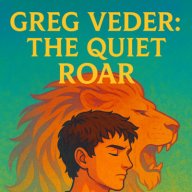
Greg Veder: The Quiet Roar
Created
Status
Incomplete
Watchers
73
Recent readers
67

Greg Veder always felt like he was living on the wrong frequency — too intense, too honest, too much. Autism made school a battlefield long before capes or monsters ever entered the picture.

Then something ancient wakes inside him.

Leo, the Lion Who Roars True, chooses to be Greg's Patron — a cosmic force that punishes lies, rewards authenticity, and demands impossible honesty from those who follow him. Suddenly Greg's emotions, senses, and instincts burn hotter than he can control… and Brockton Bay becomes the worst possible place to learn self-mastery.
Last edited:
1.1 Waking Up With a Sun in His Chest

Durolord

Making the rounds.
Joined
Feb 21, 2021
Messages
35
Likes received
211
Greg woke up already tired.

Not the kind of tired that went away with a yawn and a stretch, but the bone-deep, system-level kind. The kind where his body had technically been horizontal and unconscious, but his brain refused to believe in the concept of "off."

Light speared straight into his eyes before he even opened them. The thin curtains over his window might as well have been tracing paper; Brockton Bay's weak morning sun hit the glass, bounced off the white walls, and pooled on his face like someone had dragged a spotlight over his bed.

He didn't move at first. He lay still and let the data come in.

The hum of the refrigerator downstairs, a low, constant vibration under the floorboards. The pipe in the wall to his left clanking in irregular bursts—three small clanks, pause, one louder one, then silence, restarting in variable patterns his brain automatically started tracking. The distant wail of a siren, pitch dropping as it moved away. His cheap sheets: slightly pilled, rougher where his heels had scraped them in his sleep, one fold pressing like a thin rope across his ankle.

Too bright, too loud, too much texture. Not as feelings, not yet. Just entries in a log.

He opened his eyes a fraction of an inch.

The ceiling was a flat white rectangle, the overhead light fixture a circle dead center. Dust motes drifted across the sunbeam at a measurable rate—slower than falling rain, faster than a lazy insect. His mind set up lines between them, phantom diagrams: vector A, vector B, trajectory C.

A hot weight pushed against the underside of his sternum, like someone had cupped a hand around his heart and slipped a warming pad in between.

Leo's awake, he thought, and the heat flared in confirmation.

It wasn't a separate voice, not really. No whisper in his ear, no actual words. Just pressure and temperature and the sense of something coiled and waiting. A sun compressed to the size of his fist, tucked just under bone and muscle. Sometimes it was a pleasant warmth, the kind you could imagine curling around on a winter day. Right now, though, it was too much. A slow burn that made him want to curl his shoulders in and protect his chest.

He swallowed. His throat felt dry; he could smell yesterday's dust, the faint chemical tang of the detergent his stepdad bought because it was on sale, the lingering hint of old sweat trapped in the pillowcase.

He should get up.

He should… he should start the day.

The thought wasn't even fully formed—I should tone it down today—before the heat under his sternum spiked like someone jabbed a poker into it.

Greg hissed and curled slightly on his side, hands flying instinctively to his chest. His fingertips pressed into his T-shirt, finding nothing there except cotton and his own too-fast heartbeat, but the pain flared anyway. Sharp, stinging, electric.

"Okay, okay," he muttered, breath puffing hot across the pillowcase. "I heard you."

The pain eased back to an uncomfortable throb.

Leo did that sometimes. Reacted to thoughts. Not the casual ones—what's for breakfast, I should shower, where did I put my phone—but the heavier ones. The ones about shrinking, about turning the brightness down on himself so other people didn't flinch. The ones about disappearing.

Apparently, "tone it down" now qualified as a lie.

He lay there and let his breathing slow in precise increments. In through the nose, count four. Hold, count four. Out through the mouth—he could feel the way the air dragged across his teeth—count six. He repeated the cycle until his chest no longer felt like it was going to crack open along invisible fault lines.

The pipes clanked again: three little taps, one bigger. His brain filed the pattern under "probably the upstairs neighbor's shower." There was a whir from the hallway fan. A car passed outside, tires hissing on wet pavement—so it must have rained during the night. He added that to the internal status screen. Weather: damp. Light: too bright. Noise: high but manageable.

Emotion: uncertain.

He stared at the ceiling, eyes now fully open, and thought, Just act normal today.

The heat rolled in his chest, not quite pain this time. More like the sun was laughing at him.


Greg pushed himself upright slowly, joints protesting. He sat on the edge of his narrow mattress and let his feet find the cold floor. The contrast between the warm spot under the blankets and the cool vinyl sent a sharp, clear signal up through his legs, like his nerves were waking in sequence.

He liked that part. Clear signals were easier.

The room around him was small enough to map in one mental snapshot. Bed along the right wall, shoved into the corner. Desk opposite, under the window: old particleboard, edges chipped where he'd picked at the veneer during long nights online. Computer tower humming—a familiar noise, friendly in its consistency. Monitor dark. A cheap swivel chair with a cushion that had a permanent indent shaped like his hips.

Shelves along the other wall: uneven, one bracket slightly crooked. Stacks of notebooks, a few worn paperbacks, a couple of tabletop RPG manuals with corners flared from being flipped through too often. A mug holding pens sorted by type and ink color, and one spoon he never remembered to take back to the kitchen.

He let his eyes run over each object, naming them in his head. Naming was grounding.

Poster of an old superhero movie, edges curling. Cracks in the ceiling paint forming branching shapes; they looked like a map of rivers if he squinted. Laundry basket half-full, with the undifferentiated smell of human fabric: detergent, sweat, a tiny hint of mildew.

Outside the thin door, the house made its own set of sounds. His mom moving around—footsteps that weighed less than his stepdad's. The faint squeak of the kitchen cabinet hinge she kept meaning to fix. The tinny drone of the morning news from the small TV on the counter.

Greg mentally traced the house's layout through the floor: his room, the hallway, the stairs down, the living room to the left, the kitchen to the right. He could almost feel where each noise came from, the way sonar mapped space with sound.

The pipes rattled again. He counted the seconds between bursts.

Three.

Seven.

Five.

Pattern: inconsistent. Source: probably normal. Threat level: low.

That was how his brain liked to categorize things. It was easier to treat life as data rather than chaos. Chaos was overwhelming. Data could be sorted into columns and rows, tagged and prioritized.

He scratched absently at the side of his neck, nails catching on the faint roughness of healing acne. The sensation was a staccato series of dots along his skin. He noted it and moved on.

The light still stabbed at him, so he turned his head away from the window, focusing instead on the shadowed corner by the door. Shadows were smoother on the eyes. The transition line between light and dark created a gradient his brain could follow, mapping the intensity drop-off.

He was aware—dimly—that most people didn't start their day by silently cataloguing every sensory input and assigning them values. Most people seemed to just… be. They rolled over, groaned, maybe checked their phones, and went on autopilot.

Greg didn't have an autopilot. He had a control room with a hundred blinking panels and no off switch.

Leo sat at the center of it, a solar core that wasn't supposed to be there.

He pressed his palm lightly against his sternum. The warmth pulsed, slow and steady. Not painful now, but present. Always present. Like an internal glowstick cracked open and impossible to un-crack.

"Can you… not fry me today?" he asked under his breath.

No answer, obviously. But the warmth deepened for a moment, spreading in a thin line outward, like fingers tracing along his ribs from the inside. Not comforting, exactly. Not hostile, either. A reminder.

Right. You hate it when I lie, he thought, and felt a tiny spike. Not enough to make him wince, but enough to confirm the hypothesis.

He had learned that the hard way. The first time he'd decided to "just shut it all down" and pretend nothing was wrong, he'd ended up on the floor, clutching his chest while the world went white-hot around the edges. After that, he'd started treating Leo like a badly documented program—no manual, unknown fail-states, painful error messages.

He was still debugging.

Noise shifted downstairs. His stepdad's heavier footfalls entered the mix, cadence different from his mom's. His voice joined the news anchor's—low, slurry in the morning, a little too loud for the space. Greg's shoulders tightened autonomically.

He ran the likely script in his head. If he went down now, he'd get a comment about "sleeping in" even if it was barely past seven. If he waited too long, he'd get the look. The one that said he was being lazy, selfish, inconsiderate in ways no one would articulate directly but everyone seemed to agree on.

His brain projected both options on an imaginary screen, side by side. He hated them both.

"Just act normal," he murmured, out of habit.

The heat in his chest flared again—sharp, reprimanding.

"Fine," he added quickly. "I'll… try to act… calibrated."

Leo didn't spike at that. Which was annoying, because "calibrated" meant basically the same thing to him. Maybe Leo didn't speak in synonyms.

Greg pushed himself to his feet and swayed for a second, knees protesting the sudden change in angle. His bare toes curled on the cold floor. He inhaled once, deep, letting the cool air hit the back of his throat, and exhaled slowly.

Begin day, he told himself, like he was hitting a start button.


He started moving.

Greg's body liked movement more than stillness, but he'd spent years teaching it to hold still in front of other people. To fold into smaller shapes, to ignore the itch under his skin that wanted to rock, sway, tap, flick.

Here, alone in his room, the itch had more room.

He paced two steps forward, two steps back in the narrow strip of floor between his bed and the desk. Heel-to-toe, heel-to-toe. Each step landed at the same distance because he made it that way; his brain liked the rhythm. The creak of the floorboard under his second step marked a safe point, a quiet little yes from the house.

His fingers flicked at his sides, a rapid flutter of motion. He could feel air resistance against them in little pulses. His right hand traced an invisible figure eight; his left tapped against his thigh in a pattern that matched the pipes' clanks.

He counted the taps. One-two-three, pause, one-two-three-four-five, pause. It was like aligning two audio tracks in an editing program, looking for where the spikes matched.

The more he moved, the more his thoughts stopped trying to explode in every direction. Motion pulled them into a rough orbit.

He crossed to the wall by the door and ran his fingertips over the paint. There were tiny bumps there, imperfections from a rushed job years ago. To most people, it would feel smooth. To him, it was a textured map.

He traced shapes lightly—triangles, circles, a crude sun.

Leo pulsed faintly when his finger completed the sun's outline. Heat-to-touch mapping: internal star, external symbol.

"You like that?" he asked quietly.

No spike, no reprimand. Just a steady warmth.

So you're okay with suns. Good to know. He added that to Leo's growing list of preferences: hates lies, hates suppression, tolerates terrible jokes if they're honest, apparently likes symbolic reinforcement.

He let his head tip forward until his forehead rested against the cool wall. The contrast between his warm skin and the wall's chill was sharp enough to be pleasant. He closed his eyes and focused on the feeling. The wall was firm, unyielding; he could press without it moving.

He liked that, too. Some things in his life felt like they changed if he looked at them wrong—social rules that melted and reformed when tested. Physical reality was easier. Walls stayed where they were.

He inhaled, counted five, exhaled on seven.

The urge to stay like that, just braced against something solid, hummed through him. He could imagine spending the whole day here, orbiting his room like a small satellite around a planet, never dipping into the messy atmosphere below. Up here, he could be as weird as he needed to be. He could let his hands move, let his face go blank, let the scripts drop into the background.

Downstairs, the world would expect him to be a person version of "normal."

The thought of stepping into that space, into the shared kitchen with its too-bright overhead light and its conflicting smells and its unsaid expectations, made his stomach knot.

He shifted his forehead on the wall, feeling the drag of skin against paint, the slight stickiness of morning sweat. His fingers kept moving, tracing and retracing the outline of the small sun until the pattern etched into the wall's micro-bumps in his mind.

His chest unclenched a little. Not much, but enough.

Moving honestly, letting his body respond to the overload, helped. He knew that. He'd read about it in forum posts and blogs—stimming, self-regulation, sensory processing. People used the word "autism" like a blanket term, but inside it were all these specific mechanics his brain recognized as familiar. He wasn't officially diagnosed; paperwork cost money his family didn't have and patience his stepdad definitely didn't. But the descriptions fit.

He had learned to stim in ways that looked acceptable in public. Tapping his foot under the desk where teachers couldn't see. Spinning a pen quietly instead of flapping his hands. Counting silently instead of humming. Translation of need into something less noticeable.

Right now, there was no one to see. His fingers flicked openly. His feet sketched out the path on the floor without apology.

It felt… better. Not good, not safe, but closer to stable.

Of course, there was the problem.

If he acted like this around other people, they got weird.

They stared. They shifted away. They nudged each other. They thought he didn't notice, but his brain tracked micro-movements just as easily as it tracked dust motes and sound spikes. He had a whole archive of half-withdrawn smiles and tightened shoulders and sideways glances.

So: alone, he could move. Around others, he had to choose between regulation and acceptance.

His forehead thumped once, gently, against the wall as if to punctuate the thought.

First conflict of the day: If he acted like himself, people got weird. If he faked it, Leo hurt him.

He pulled back from the wall with a sigh, opening his eyes. The room wavered for a second as his visual processing caught up to the change from zero input to full input. Edges sharpened into focus, the boundary between shadow and light reasserting itself.

"Okay," he said quietly to the empty space. "We have to leave the room eventually. Rules are rules. School still exists. People will notice if I don't show up."

His chest warmed in what felt suspiciously like agreement.

"Traitor," he muttered at Leo, and got a small, amused pulse in return.


Clothes first. Armor.

Greg crossed to the small chest of drawers at the foot of his bed. The top drawer slid out with a familiar rasp. Inside, his T-shirts were sorted in a specific order, not by color but by texture and hem feel.

He ran his fingers lightly over the stack, eyes half-lidded, letting his skin do the deciding. The first shirt had a tiny, scratchy tag at the neck; he'd meant to cut it off but never got around to it. He skipped that one automatically. The second was an old event shirt with cracked lettering; the printed part felt rough and unpleasant against his fingertips. He pushed that aside, too.

Third: soft cotton, worn but not thin, no obvious tag, minimal seams. The fabric draped off his fingers in a way that suggested it would fall comfortably on his shoulders rather than cling.

"Winner," he murmured, and tugged it free.

It was navy blue with a faded graphic of some old sci-fi show logo. The design had cracked over time, but it sat on the chest in a way that usually didn't bug him, and the color was dark enough to feel like a shield. Bright colors felt like yelling. He preferred clothes that said, quietly, nothing to see here, move along.

Boxers and socks next. He picked the socks with the smoothest toe seam; misaligned seams haunted his day far more efficiently than any supervillain could. Pants—dark jeans with enough give in the fabric to not pinch when he sat too long.

He changed quickly, the practiced rhythm of someone who had optimized the process. Shirt over head, slight static tug at his hair, fabric settling along his skin. The sensation of the shirt's weight on his shoulders took a few seconds to register as "okay" rather than "invading." Pants up, button, zipper, the brush of metal teeth against his knuckles. Socks rolled over his feet in a snug hug.

Each step of dressing was a series of micro-sensations that his brain wanted to catalogue, but he had learned to compress that data so it didn't swallow the entire morning.

He glanced at the narrow mirror screwed into the back of his door. At the moment, it reflected only a sliver of his torso, but he avoided looking too directly at it yet. One thing at a time.

He stepped over to his desk and picked up the hoodie draped over his chair. It was his favorite one—gray, oversized, soft inside. It smelled faintly like laundry detergent and his own shampoo. He shoved his arms into it and pulled it on, and the immediate sense of containment settled over him like a weighted blanket.

Layers helped. They made his body feel more defined, less like he was leaking out into space.

He tugged the sleeves down so the cuffs almost covered his fingers, then flexed his hands against the fabric. Textile friction against skin: good. Warmth over forearms: good. Hood attached, available if the lights at school got too bright or the halls too noisy.

Armor status: acceptable.

He checked his pockets. Phone: front right, screen facing in, because he'd once tried it the other way and the notifications buzzed right against the thinner fabric and made his leg itch. Wallet: back right—thin, with student ID and bus pass. Front left pocket was reserved for an emergency stim object; currently, that was a smooth, flat bottlecap he'd worried the ridges off over several weeks. He thumbed its edge now, feeling the familiar, cool circle. The contact point between bottlecap and skin grounded him.

He turned to the mirror again and, this time, let himself look.

His reflection looked back with the cautious wariness of someone who never recognized himself fully. Brown hair that never did exactly what he wanted, currently pushed back with his fingers into something like order. Eyes a little too wide, a little too bright, like he was taking in more than he knew what to do with. Nose slightly crooked. Mouth pressed into a line that didn't quite know if it was allowed to be a smile.

The hoodie made his shoulders look broader, which he liked. It made him feel less fragile. The T-shirt neckline sat flat, no tag visible. No skin showing at the waist, socks fully covered.

Visually, he passed his own inspection.

Internally, Leo pulsed—a slow, even beat.

He'd chosen these clothes not just for how they looked, but for how they felt. The fabric didn't fight him. The seams didn't itch. The weight wasn't too much. He could endure the day in this, maybe even function in it.

His brain, of course, didn't stop at "am I comfortable?" It had to run the secondary program: What will other people see?

Neutral colors: less attention. Graphic tee: socially acceptable baseline nerd indicator. Jeans: standard. Hoodie: "slightly withdrawn" but not "suspicious." No bold statements, no slogans anyone could use as an excuse to start a conversation he wasn't ready for.

People liked to pretend clothes didn't communicate anything, but they read them anyway. He'd learned that the hard way with the one time he'd worn a shirt from an obscure series he actually cared about. Someone had recognized it, tried to talk to him about the lore, and he'd ended up infodumping for ten minutes straight without breathing properly.

Their expression had gone from excited to overwhelmed to suffocatingly polite. He'd replayed that scene for weeks.

Now, he picked shirts that meant less to him. That way, if someone commented, he could answer and move away without the gravitational pull of obsession dragging him under.

He tugged at the hem of his hoodie, straightening it once, twice. His fingers repeated the motion a third time even though it wasn't necessary. The repetition soothed the jittery feeling in his chest.

"Armor: online," he told his reflection quietly.

Leo's warmth hummed in agreement, low and steady.


Clothed and contained, Greg moved back toward the desk. His notebook lay open where he'd left it last night, a pen balanced across the pages. The blue ink had slightly bled into the paper fibers along each letter.

He'd spent an hour before bed writing out scripts.

Some people could just improvise their way through social situations. He needed prepared lines. Not to memorize word-for-word, but to have a bank of phrases he could grab when his brain froze.

He slid into the chair, feeling the familiar give of the cushion. The desk surface under his forearms was cool to the touch. He pulled the notebook closer.

Across the top of the page, his own handwriting stared back at him in uneven lines: Tuesday – School – Baseline Scripts.

Below that, in bullet points:

  • "Morning." (Neutral tone. Not too loud.)

  • "Hey." (Only if someone speaks first.)

  • "How was your weekend?" (Safe, generic.)

  • "Yeah, I saw that." (Only if true.)

  • "Cool." (Default response to info.)
His chest twinged faintly at that last one.

He tapped the pen against the notebook, the rhythmic clack syncing with his foot tapping under the desk.

He'd marked some lines with small symbols. A dot next to "Try not to talk too much about [insert current obsession]." A star next to "Remember to ask at least one question back in conversations."

His eyes skimmed down further, where he'd written a different set of lines, these ones with faint question marks next to them:

  • "Don't make eye contact too long."

  • "Smile so they know you're friendly."

  • "Laugh when they laugh."
The moment he read that last one, Leo flared hot.

"Okay, okay," Greg muttered, pen freezing mid-tap. "I know."

The heat settled into a slow burn, more disapproval than pain.

"I didn't say I was going to use it," he added, because apparently he now argued with the star in his chest like it was a code reviewer leaving aggressive comments.

He stared at the words "Laugh when they laugh."

It was one of those things he'd learned early. People laughed in groups, sometimes at things that weren't actually funny. Sometimes because they were supposed to. Sometimes because they were uncomfortable and didn't know what else to do.

He'd learned that if he didn't laugh with them, they gave him that look. The one that said he'd broken the script.

So he'd tried. Forced laughter when others laughed. After jokes he didn't understand, or statements that felt neutral but apparently counted as jokes, or digs at someone who wasn't in the room.

His laughter always felt off. He could hear it, flat at the edges. Wrong timing, wrong volume.

Leo, apparently, hated that.

The first time he'd forced a laugh at someone else's expense, the sun in his chest had gone white-hot, like boiling metal. He'd doubled over, one hand pressed against his ribs, swallowing down a shout while the table of kids around him kept on laughing. No one noticed he was in pain.

He'd learned something that day, too: Leo didn't care for dishonest mirroring.

He tapped the point of his pen lightly against the phrase until the ink threatened to tear through the paper. Then he crossed it out with a decisive line.

"Fine," he told the notebook. "New rule: I laugh if I actually think it's funny. Or if it's… kind, I guess. Not just because it's safer."

Warmth in his chest again. Approving.

He flipped the page to a fresh one and wrote across the top: Updated Scripts – Aligned.

It was a stupid word to use, but it felt right. Aligned with what he actually felt, not just what people wanted from him. If he could find a tiny overlap between "true" and "socially acceptable," maybe Leo wouldn't roast him from the inside and his peers wouldn't freeze him out entirely.

He wrote:

  • "Morning." (If voice works.)

  • Small nod if not. (Still counts.)

  • "Sorry, I'm a bit out of it." (Honest if overloaded.)

  • "Can you repeat that?" (Instead of pretending.)

  • "I don't get it, can you explain?" (If safe.)
His hand hesitated over that last one. Asking for clarification had a mixed track record. Some people were fine with it. Others acted like he'd just insulted their intelligence.

Rejection sensitivity curled up in his gut like a wary animal. So many memories of asking, "What do you mean?" and getting the eye-roll, the sigh, the "Never mind, forget it."

He added in small letters beside it: "Use with people you trust (if any)."

His pen hovered again.

Trust. The word sat heavy on the page. His brain offered up a quick slide show of faces: kids at school he knew the names of, teachers who praised his "potential" but got frustrated when he missed implied instructions, his mom, his stepdad, random internet avatars with usernames but no real names.

He didn't add any specific names next to "people you trust." The space stayed blank.

The pipes thumped again. His foot started tapping out the pattern almost automatically. Leo's warmth synced with his heartbeat. Tap-tap-tap, thump. Warm-warm, pulse.

He flipped back to the first page and scanned the scripts again.

Some were still functional. "Morning." "Hey." Neutral enough to be honest. Others felt like putty he'd molded to fit past expectations that no longer fit his insides.

His eyes caught on one of the earliest lines he'd written months ago, now smudged with wear: "Just act normal."

The ink had faded from rereading. He'd circled it once, hard enough to dent the page.

At the time, it had felt like a goal. A mission. If he could just act normal enough, maybe things would stop hurting. The stares, the sighs, the tension in his stepdad's jaw whenever he talked too fast. The teachers' polite frustration. The turn of classmates' shoulders away from his desk.

Now, looking at the words, his chest burned.

Leo flared so hot he had to slam the notebook shut and press his palm to his sternum, fingers spreading as if he could bleed some of the heat away into his hand.

"Okay," he hissed through his teeth. "Message received."

His heart hammered against his palm. Sweat pricked at the back of his neck. The pain wasn't as bad as it had been that first time, but it was sharp enough to carve away any illusion that "just act normal" was neutral.

"Not normal," he said aloud, barely above a whisper. "Calibrated. Real. Fine. I get it."

The heat eased, simmering down to a low hum like a turned-down stove burner.

He leaned back in his chair, letting his head rest against the top of it for a second. The ceiling stared back, indifferent.

He wasn't sure what scared him more—that Leo punished his lies, or that Leo might be right.


Footsteps on the stairs snapped him back to the timeline.

His stepdad, by the weight and rhythm. The boards creaked in predictable spots—third from the top, second from the bottom. A cough halfway up. Greg's internal status bar ticked toward red.

"Greg!" his mom's voice floated up from downstairs a moment later. "You awake?"

He swallowed. His throat felt tight, but his voice mostly worked when he tested it with a soft, "Yeah."

Louder: "Yeah! I'm up!"

"Breakfast!" she called. "Don't be late!"

Breakfast. Shared space. Shared noise. Shared expectations.

He stood up again, heel catching briefly on the edge of the rug. The hoodie shifted with him, the fabric's brush across his arms a small reassurance.

Before he opened the door, he forced himself to turn back to the mirror.

His reflection looked exactly as it had a few minutes ago: hoodie, jeans, slightly rumpled hair. Face caught between expressions.

But now he looked past the surface. Past the armor. He imagined the cross-section: skin, muscle, bone, and under the sternum, an impossible sun.

He couldn't see Leo, but he could feel him. A pressure, a glow, a presence that refused to be ignored whenever he tried to compress himself into something smaller and more palatable.

He stared at his own eyes. They looked too bright. Too intense. Like they held a question he didn't know how to answer.

What version of himself was he supposed to be today?

He knew the options. He'd rehearsed them for years.

Version one: the quiet background guy. Minimal input, minimal output. Smile occasionally, nod, drift. Don't raise your hand too much. Don't correct teachers when they're slightly wrong unless it really matters. Don't infodump. Don't let your hands move where people can see. Keep your face at half-power.

That version had gotten him fewer comments, fewer obvious stares, fewer overt "what's wrong with you?" moments. It had also left him feeling like he was watching his own life from somewhere behind his eyes, disconnected.

Version two: the honest version. The one who let his hands move when they wanted to, who asked questions when he didn't understand, who admitted when something was too loud or too bright. Who laughed when he actually found something funny, even if no one else did. Who talked about the things he cared about, not just the things other people signaled were safe.

That version had gotten him labeled "weird" more times than he could count. It had earned him invisible edges around social groups, polite distance, the occasional cruel joke he pretended not to hear.

Somewhere between them, maybe, there was a version three. A balance. But he hadn't found it yet.

His eyes flicked down to his own chest in the reflection, then back up.

"I'll just act normal," he told the mirror softly.

The words were out before he could stop them. Habit. The same way you typed a password you knew you needed to change.

Leo's response was immediate and brutal.

Pain knifed through his chest, a hot, stabbing spike that made his breath hitch. It felt like someone had reached through his ribs and squeezed the sun with bare hands. His knees dipped. He caught himself on the edge of the desk with one hand, fingers digging into the wood.

"Ah—" The sound escaped before he could swallow it.

He clamped his jaw shut, forcing slow breaths in and out. In through his nose, out through his mouth. The heat flared again, then again, in miserable pulses, like a warning alarm that refused to be silenced.

"Okay," he whispered, throat tight. "Not… normal. I get it. I get it."

Tears pricked at the corners of his eyes, more from the intensity of the sensation than from emotion, though both tangled together. He blinked them back. Crying before breakfast would not help.

The pain ebbed gradually to a dull ache. His hand slipped from the desk, leaving faint crescents in the soft wood where his nails had dug in.

He looked back at his reflection once more, breathing hard.

Not normal, then.

He straightened his hoodie, fingers smoothing fabric more for something to do than out of actual need. His shoulders settled into a position that was as close to comfortable as he could get: not hunched, not fully relaxed, somewhere in between. His face refused to shape itself into a convincing smile, so he didn't force it. Neutral was safer than false.

"New plan," he told the mirror quietly. "I'll… try to act like myself. Just… on low volume."

Leo's warmth nudged against his ribs, gentler this time. Not approval, exactly, but not flaming rejection either. Something in between. A we'll see.

Downstairs, his mom called his name again, sharper. The clatter of dishes grew louder, the morning news anchor's chipper tone clashing with his stepdad's muttered commentary.

Greg wrapped his hand around the doorknob. The cool metal grounded him. He turned it slowly, feeling each increment of movement.

Before he opened it fully, he took one more breath and silently ran a final system check.

Light: too bright, but hoodie hood available. Noise: high, but patterns identifiable. Textures: manageable. Scripts: partially updated. Internal sun: active, opinionated, currently not trying to kill him.

He stepped out into the hallway.

The door clicked shut behind him with a soft finality.

The version of himself he had chosen—somewhere between masked and honest, somewhere between suppression and explosion—would have to survive at least until breakfast.

Whether Leo would tolerate that compromise… was a question for five minutes from now.

For the moment, the sun in his chest pulsed once, twice, in quiet, watchful rhythm.

And Greg Veder went downstairs.
 
1.2 – Winslow: Rules No One Wrote Down


Threshold Noise

Winslow hit him before he even made it through the doors.

The school loomed in front of him, big blocks of brick and grimy windows under a cloudy Brockton Bay sky. The flag out front hung limp, edges frayed. The concrete steps leading up were stained with old gum and whatever else people had decided to discard over the years. He catalogued each detail automatically, like he always did.

But the real hit came when he pulled the front door open.

Noise.

It slammed into him as if the door was holding it back and he'd just broken the seal. Overlapping conversations, locker doors banging, shoes squeaking on linoleum, the too-high whine of some ancient fluorescent light, the rumble of the ventilation system, the occasional sharp bark of laughter that cut through the rest like a siren.

Smell.

Sweat, deodorant, cheap perfume, stale cafeteria oil finding its way into the hallway somehow. Paper and cleaning chemicals. Wet fabric, because some people hadn't dried fully from the morning rain.

Light.

Flickering tubes overhead, some too bright, some dim and buzzing like they resented being asked to function. The stutter-flicker created little hits of change in the corner of his vision, as if reality was briefly cutting to a different frame and back.

His brain did what it always did in response to overload: it started mapping.

Okay. Main corridor: long, crowded, sloping slightly downward from the front doors toward the central intersection. Left branch: science wing, with that one water fountain that sputtered. Right branch: admin offices, guidance, nurse. Straight ahead: lockers, then classrooms.

He stepped to the side immediately after coming through the door, pressing his back briefly against the cool metal of the nearest locker bank. Don't stop in the middle, don't block the flow—that was one of the unwritten rules he'd learned fast. People moved like water here; if you stood in the wrong place, you got knocked around.

He let his gaze scan the corridor in slices.

Safe zones:

  • The patch by the trophy case where traffic split and slowed.

  • The nook near the janitor's closet where the lights were dimmer and people only passed through, not lingered.

  • The seat at the far end of the main staircase landing where you could see both up and down but most people's eyes slid past you.
Hostile clusters:

  • The knot of boys by the central lockers who liked to "accidentally" shoulder-check anyone smaller.

  • The group of girls near the drinking fountain whose laughter had that particular sharp edge that meant they were laughing at, not with.

  • The cluster by the entrance to the girls' bathroom—Emma's group, sometimes with that athletic girl, Sophia, orbiting close.
He didn't need to get close to any of them to know the risk zones. Their sound signatures were distinct. The way they filled space, too—bodies angled out, occupying more room than necessary, bags dropped where people would have to step around them. Passive-aggressive territory marking.

His chest hummed with heat, Leo's presence shifting, reacting to his micro-spikes of anxiety. Not painful, just a constant awareness that the sun under his sternum was paying attention.

He adjusted his backpack straps, making sure the weight was distributed evenly. One strap slightly higher than the other would bug him all day. Right now, it lay flat across both shoulders, the weight centered. Acceptable.

He stepped into the flow.

The hallway pressed around him immediately. Shoulders brushed shoulders. Backpacks bumped. Someone's elbow nearly caught his side; he shifted half a step sideways without thinking, moving into a gap that only existed for a fraction of a second.

He kept his eyes moving. Not in wild darts—that drew attention—but in a constant, scanning pattern that let him know where the threats were without locking onto anyone long enough to make them uncomfortable.

Snatches of conversation hit his ears and tried to stick.

"…told you, he totally—"

"—can't believe my mom—"

"—homework? Nah, I just—"

He filtered most of it out. Background noise. Non-critical. What mattered was the flow.

Don't stop in the middle. Don't block the flow. Angle your shoulders when passing someone coming the other way. Don't cut across someone's path unless you're sure of the gap. Don't walk too fast; you'll bump into people. Don't walk too slow; they'll bump into you.

Rules no one had written down but everyone seemed to know instinctively.

Everyone except people like him.

He'd learned them by trial and error. The first day, he'd stopped dead three steps inside the main hall to get his bearings and immediately got a shoulder in the back and a muttered "watch it, idiot." He'd spent the rest of that day with the imprint of that word replaying in his head along with the jolt of impact.

Now, he moved like he was slipping through a maze. Left, pause. Right, adjust. Shorten stride to avoid collision with a kid who'd dropped their binder. Lengthen stride to get past a slow-moving cluster before they could box him in.

His head buzzed faintly with the effort of tracking so many variables at once, but he preferred that to the alternative: being static in a moving space.

He passed the trophy case. The glass was smudged, reflecting the hallway in warped fragments. The old trophies inside—track, football, something from two decades ago—stood like relics of a school that maybe cared more once.

He kept going.

At the central intersection, the volume rose. More doors, more voices, more slamming metal. A locker door banged open to his right, the sharp metallic clang sending a flare of irritation up his spine. He flinched internally but kept his face neutral.

Don't react too much. Another unwritten rule. Reacting marked you as a target.

Overhead, one light flickered three times and then steadied. His eyes tracked the pattern despite himself. Three flickers, one long, two short—if he tried, he could map it to Morse code, give it meaning it didn't actually have. His brain liked doing that.

He pulled his hood up halfway—not enough to obscure his face fully, just enough to narrow his field of vision and dampen some of the worst of the overhead glare. The fabric muffled some sound as it brushed against his ears. Slightly better.

"Greg!"

The sudden sound of his name yanked his attention sideways. His heart jumped.

He turned to see who'd said it, already running through possible scripts.

The voice belonged to Mrs. Avery, one of the English teachers. She stood near her classroom door, stack of papers in one hand, coffee mug in the other. Late thirties, frizzy hair trying to escape a loose clip, glasses perched at the end of her nose. She had a tendency to talk like everything was a joke, even when it wasn't.

His brain flipped to the subroutine for teacher interaction before he'd fully faced her.


Homeroom Calibration

"Morning, Greg," Mrs. Avery said, giving him a quick once-over that he recognized: checking for obvious signs of truancy, exhaustion, or trouble.

There were three acceptable responses to a teacher's casual greeting in this context.

Option A: "Morning." Neutral, safe.
Option B: Nod and smile. Low verbal load, but might be read as rude if the teacher valued verbal responses.
Option C: Add a polite question back: "How are you?" Risk of follow-up conversation he wasn't ready for.

He picked A with a small add-on, because his brain liked precision.

"Good morning, Mrs. Avery," he said.

He heard the tiny hitch in his own voice—a little too formal, a little too crisp compared to the languid, careless "mornin'" echoing around from other students. His volume came out slightly higher than he'd intended, clipping the noise floor and attracting a flicker of attention from a kid walking past.

Mrs. Avery raised an eyebrow, a quirk that might have meant amusement or might have meant nothing. "You're here early for once," she said.

He wasn't, technically. He'd arrived at his usual time, which was five minutes before the bell, which was statistically slightly earlier than the median but well within the expected range. His brain calculated that without effort.

"I left home at the same time as usual," he answered. "Traffic was lighter by approximately nine percent. I didn't get stuck at the light on—"

He stopped himself when her expression shifted.

It was subtle. The corners of her mouth stayed up—they didn't drop into a frown—but her eyes unfocused a little, the way people's did when they were listening-but-not. A faint tension smoothed into her forehead like she'd just remembered a to-do list item mid-conversation.

Right. Too much detail.

He could see, in the periphery, two kids slowing slightly as they walked by, glancing over. One of them smirked in that particular way that said, oh, it's him.

The "odd" vibe. The invisible tag that some people carried at this school: Not Cool. Not Quite Right. Easy Target.

Greg felt it like a temperature drop on the back of his neck. His chest warmed in response, Leo pressing outward against his ribs in what could have been annoyance or solidarity; he hadn't figured out the difference yet.

Mrs. Avery recovered with a small chuckle. "Well, glad you made it on time," she said. "Ready for the quiz later?"

Her tone was light. Probably a joke. Definitely a test.

Greg's brain, unfortunately, took the words at face value first.

"There's no quiz scheduled for today," he said. "Not unless you changed the plan since yesterday. You said we'd be starting the poetry unit, and quizzes usually happen after at least one lecture or handout, not before, unless it's a diagnostic to measure prior knowledge, which you usually tell us about ahead of time, so—"

He saw it this time as he talked: the exact moment her expression shifted from conversational to that tight, micro wince. Her smile froze a degree too stiff. One of the kids going past snorted quietly.

"Relax, I was kidding," she cut in. "It was a joke, Greg."

His words stuttered to a halt. The hallway noise surged back in, loud and undefined, as if someone had turned the background up.

"Oh," he said. "Okay."

He tried to adjust his tone, make the word lighter. It came out too flat instead. Like a test tone on a speaker.

A laugh—not hers, someone else's—popped nearby. He couldn't tell if it was directed at him or just laughing at something else entirely. His rejection sensitivity immediately assumed it was about him. The skin on his face went hot.

His chest flared, but not from embarrassment alone. Leo's heat rose, sharp and prickly.

It wasn't wrong, he thought defensively at the warmth. She said "quiz." There wasn't one.

The heat shifted, not into pain but into a kind of restless simmer. Maybe not disapproval. Maybe just agitation.

"Anyway," Mrs. Avery said, already half-turning back toward her classroom. "Get to homeroom. Bell's about to ring."

"Right," he said. That came out too sharp, as if he was snapping at her when he wasn't. He winced internally.

He started walking again before the interaction could stretch any further. His shoulders tightened of their own accord, his steps going slightly stiff.

Behind him, he could feel—without looking—the echo of that small, subtle ugh, him vibe from the kids who'd been close enough to hear. Not hatred, not outright cruelty. Just that creeping dismissal. The way people's eyes slid off him like he was a mildly unpleasant topic they didn't want to engage with.

He hated that more than open hostility sometimes. At least when someone yelled at you, you knew where you stood.

He rejoined the hallway flow, recalculating his route. Homeroom, then English, then… his brain slotted the day's schedule into a familiar grid, overlaying it on the map of the building.

Leo simmered at his core like a small, impatient star.


Locker Vectors

His locker stood in the middle section of the hall, three down from a chipped support pillar, two across from a water fountain that dripped continuously into a rust-stained basin. Not ideal, but not worst-case either.

He timed his approach carefully. Too early, and the cluster of kids from the bus would still be there, talking loudly and swinging their bags into the thin space between lockers. Too late, and he'd get caught in the post-bell rush as everyone shoved books into metal boxes at the same time.

He hit it at the almost-quiet moment—noise still loud, but movement a little slower as people filtered into homerooms. He spun the combination lock with practiced speed. 12, 32, 7. The metal dial was cool under his fingers, edges biting faintly into his skin. The mechanism clicked in satisfying sequence.

He opened the locker door, its hinge giving the familiar squeak on the last inch.

Inside, everything was arranged in a way that calmed a tiny part of his overloaded brain. Top shelf: notebooks stacked by subject, spines facing out, labels written in the same pen, same angle. Middle: textbooks, ordered by weight so the smaller ones didn't get crushed. Bottom: gym shoes in a plastic bag, emergency granola bar, a small tin holding earplugs.

He swapped out his books quickly, sliding yesterday's math into the space and pulling out English and history. His fingers brushed the edge of the earplug tin and paused.

He considered it. The hall was loud. The day would probably be louder. Teachers sometimes complained if you wore earplugs in class because it "looked rude," even if you could still hear them just fine. His chest twinged.

He left the tin where it was. Calculated risk: less immediate sensory relief, lower chance of confrontation. For now.

He was closing the locker when he heard it.

"…I'm telling you, it was disgusting."

The words cut through the ambient noise with that specific nasty tone people used when they enjoyed what they were describing.

Greg's hand froze on the locker handle.

Sound source: behind him, offset by thirty degrees. Distance: maybe three meters. Voices: female, two primary, one secondary. He recognized the primary ones from prior mapping.

Emma Barnes. Red hair, clean clothes that somehow always looked new, laughter that bent too easily into cruelty. Associated cluster: social high tier. Probability of direct engagement with him: low, but not negligible if he did something to attract attention.

Sophia Hess. Dark hair, athlete. Moved like she owned the hallway. Always seemed bored and vaguely irritated with everything. The type who could hurt someone and make it look like an accident.

He didn't turn around fully. That would signal interest. Instead, he adjusted his stance, angling his ear slightly while pretending to fuss with the binders in his locker.

"Should've heard her," Emma said. Her voice had that bright, amused quality that set Greg's teeth on edge. "She totally lost it."

"Like, actual screaming?" one of the other girls asked. He didn't know her name; his brain hadn't tagged her as central to any pattern yet.

Sophia snorted. "Like a dying animal. It was pathetic."

A cluster of giggles. Greg's fingers tightened involuntarily on the edge of a textbook.

Data: they were talking about someone. Some event. Past tense? Present? His brain searched for context. There had been murmurings at school recently. Snatches of "did you hear about…" and "no way, that's gross." He hadn't had enough pieces yet to assemble a full picture.

"'Please,'" Emma said in a high, mocking whine. "'Stop, please, let me out.'" She laughed. "Like anyone cared."

"Locker freak," Sophia added. "Should've stayed in there."

"Yeah," another girl chimed in. "Seriously. The freak in the locker."

The phrase dropped into the noise like a stone into still water.

Greg heard it and something in his brain snapped to attention.

The freak in the locker.

Words formed units. Units formed patterns. Some patterns stood out as wrong.

His thoughts immediately started sorting.

Locker: confined space, usually small, used for storage, not people. Freak: socially assigned label for someone who doesn't fit norms, often used to justify mistreatment. In the locker: prepositional phrase indicating physical location. A person, locked inside, being called a freak for being there rather than for what put them there.

Should've heard her. She totally lost it.

He didn't have a visual for this event. His brain tried to generate one anyway—cramped metal, darkness, the muffled sound of someone shouting while footsteps walked away.

The skin on his arms prickled under his hoodie.

He risked a glance over his shoulder.

Emma stood with her back to his general direction, facing Sophia and the others. Her expression was animated, eyes bright, mouth curved in delight as she relived the story. Sophia leaned against the lockers with her arms crossed, smirk in place. The other girls hovered close, some laughing outright, others doing that half-smile people did when they weren't sure if it was entirely okay to enjoy what they were hearing but went along anyway.

He wasn't close enough to see all their faces clearly, but the posture was enough.

They weren't disturbed. They were entertained.

His chest tightened.

Leo's heat spiked suddenly, not like the punishing flare when Greg lied, but like the first blast of air when an oven door opened. Fierce, directed, angry.

Angry?

It took him a second to label it. The sensation didn't come with words, just with intensity. His heartbeat kicked up. He could feel the pulse in his throat.

He swallowed, forcing his gaze away before anyone noticed he was listening. The rules here were clear: eavesdropping on the powerful social clusters and then getting caught meant making yourself a target.

He shut his locker, the metal door clanging shut.

The sound rang louder in his skull than it should have. The phrase echoed with it in his mind.

The freak in the locker. The freak in the locker. The freak—

He wanted to file it away neatly, tag it as "mean girls being mean" and move on, like he did with most hallway cruelty. But something about this wouldn't slot into the usual category. It snagged.

Maybe it was the word "locker." Maybe it was the way Emma mimicked someone pleading. Maybe it was the faint, instinctive revulsion he felt at the idea of someone being locked in a small, dark space and mocked for their reaction rather than help.

His own experiences brushed up against that mental image. Not identical, but adjacent. Being cornered, mocked, unable to leave because the social rules said you'd be making it worse if you pushed past. Being stuck in conversations where everything hurt but walking away meant more whispers later.

He stepped away from his locker, heading down the hall toward homeroom. As he walked, the noise of other conversations washed in and out. None stuck the way that phrase did.

The freak in the locker.

His brain stamped it as something else: not just gossip. Narrative anomaly. Event hook. A piece of data that didn't fit the usual pattern of petty Winslow cruelty.

He didn't know why yet.

But he felt Leo burning hotter with every repetition.


Pattern Lock

Homeroom was in one of the older classrooms on the second floor, with yellowing posters on the walls and a whiteboard that still showed faint ghost marks from old notes never fully erased. Desks in uneven rows. Fluorescent lights buzzing overhead; one in the corner flickered at random intervals like it was trying to send a distress signal.

Greg slid into his usual seat—second row from the back, near the window. From here, he could see both the front of the room and the door. Two sightlines, fewer surprises.

The murmurs of other students washed around him. People talking about TV shows, weekend drama, someone's party. Words blurred into a low hum, but certain phrases still jumped out as his brain scanned for relevance.

"…did you hear—"

"…gross, man, I would've—"

"…they said she—"

Each time he thought he heard the beginning of something about the locker, his attention sharpened and then sank again when it turned into something else. Half-formed rumors, sideways references with no names.

He pulled out his English notebook, flipping past the neat notes from last week until he found a blank margin. His pen hovered, then started moving almost without conscious decision.

locker incident?
victim? student or teacher?
timeframe: recent (tone of voices = fresh gossip)
participants: Emma, Sophia, unknown others
motive: amusement? punishment? something else?

He underlined "victim" twice.

He should have been reviewing his notes on metaphors and similes. Mrs. Avery would definitely go over them again today if they were starting poetry, and a diagnostic quiz was not out of the question even if she had technically been joking earlier.

Instead, his pen kept circling back to the same patch of paper.

freak in locker
why "freak"?
why locker?

His chest throbbed in time with the words. Leo's heat sat like a solid weight.

The teacher for homeroom—Mr. Dahmer, math, monotone voice—took attendance in the background. Greg responded when his name was called, the automatic "here" sliding out of his mouth with practiced ease, and then his brain dove back under the surface of the room and into the pattern.

Locker as confinement. Social label "freak" currently applied loosely to various students, including himself, but context here felt… harsher. There was a difference between someone muttering "freak" under their breath as he walked by and someone laughing about a "freak in the locker" who had screamed to be let out.

He wrote, in small letters:

panic response ≠ freak

His skull throbbed at the temples, a tingling pressure like static building up. Too much sensory input plus too much internal processing: bad combo.

The room felt slightly too bright, the hum of the lights a little too high frequency. A pen clicked repeatedly from two rows over, each click a needle. Someone behind him tapped their foot arrhythmically. His brain tried to sync to the pattern and failed, creating internal dissonance.

He dug his nails lightly into the underside of the desk, grounding himself in the sharp sensation.

The freak in the locker.

He didn't know who "she" was. Emma had said "her," and Sophia had said "she." Female student, likely. His brain started scrolling through the mental roster of girls at Winslow, cross-referencing with known targets of cruelty.

Plenty of names popped up. Some he only knew as faces. Some he'd seen being whispered about. None clicked immediately.

Still, the phrase felt wrong. Not just because of the cruelty, but because of the mismatch between label and situation. If someone had been locked in a locker against their will—and that's what his brain had constructed, deliberate or not—the wrongness lay with whoever put them there, not with the girl who panicked in a dark, confined space.

His sense of injustice didn't always match the intensity of everyone else's. Sometimes people got outraged about things that felt fuzzy and abstract to him. But this? This slotted straight into a part of his brain that recognized cruelty as a glitch in the system.

He tapped his pen in the margin, dot-dot-dot, dash, dot-dot.

Leo pulsed once, sharply, when he wrote:

maybe tell someone?

The idea felt… big. Dangerous. His history with "telling someone" wasn't great. On the occasions he'd reported something—cheating on a test, kids throwing things at another kid's head when teachers weren't looking—it had ended with him being labeled a snitch, or with the adults nodding and doing nothing he could see.

Still. He wrote:

if pattern escalates → action?

His handwriting got messier as his head pounded. Sensory overload plus fixation equals headache—that was a known equation.

He forced himself to close the notebook halfway through another speculative line. The paper rasped under his fingertips. He tucked the pen under the metal groove at the top of the desk and pressed the heels of his hands into his eyes for a second, applying steady pressure.

Hot colors bloomed behind his eyelids. Patterns of red and gold and white, like miniature suns.

When he let go, the room snapped back into focus: dull posters, flickering lights, slumped students. Mr. Dahmer's voice droned on about lateness policies and reminders for some school assembly later in the week.

Greg tried to shift gears. His brain resisted.

The freak in the locker sat in the center of his mental map like a glowing error icon.

He flipped to the back of the notebook and, in tiny letters, wrote:

event hook: locker
flagged.

The word "hook" came from the online stories he read sometimes, the ones that started with something weird and then spiraled into bigger narrative events. He didn't think his life was a story, exactly, but sometimes it helped to think of it in terms of structure. Setups and payoffs. Foreshadowing.

Maybe this was nothing. Maybe it was just Winslow being Winslow, another cruel story that would wash out in a week.

His chest said otherwise.

Leo's heat pressed outward, insistent.


Pressure in the Air

The bell rang.

It was a jarring sound, a metallic clang with a frequency that seemed specifically engineered to punch through whatever you were thinking about and shred it. Conversation snapped on and off around the room. Chairs scraped. Backpacks rustled.

Greg's skull throbbed in time with the bell's echo.

He slid his notebook into his bag, the motion practiced enough that he didn't have to look. His hand brushed the rough cardboard of a folder; the texture scraped unpleasantly across his fingertips, sending a brief shiver up his arm. He shoved the folder aside and zipped the bag.

Students funneled toward the door in a loose line that immediately dissolved the second they hit the hallway. The volume in the corridor surged, bouncing off the cinderblock walls.

He stepped out of the classroom and into the stream.

Something felt… different.

He couldn't quantify it at first. The hallway looked the same—same lockers, same posters peeling at the edges, same army of teenagers moving in every direction. The sounds were at their usual deafening level. The smells hadn't improved.

But there was an undercurrent.

Like the air had thickened half a degree. Like the background noise had picked up a new thread that didn't match the rest.

His brain tried to pin it down as he walked.

More hushed tones than usual in some clusters. Not quieter overall—just pockets of tight, intent conversation, heads bent. A few glances toward one particular section of hallway, quickly averted when someone noticed someone else looking.

He followed the vector of those glances without meaning to. They converged near one of the rows of lockers, two turns down from where his own was. The air there felt… denser. Like humidity without the actual moisture.

Leo's heat rose, subtle at first, then stronger with each step he took in that direction.

He wasn't heading there deliberately; his route to English happened to pass close. Still, the closer he got, the more his skin prickled. Noise seemed to warp around that section of the hall, like people were talking around something rather than about it directly.

"…so gross—"

"—seriously, they should've—"

"—how long was she—"

He couldn't catch full sentences, just fragments. His brain filled in possibilities, each one worse than the last.

The freak in the locker.

He swallowed, throat suddenly dry. The strap of his backpack felt heavier on his shoulder.

Leo burned in his chest, a low, constant flame.

He reached the corner that would take him toward English and hesitated for half a second, eyes flicking down the other branch where the density of students was higher, compressed around something he couldn't see.

His fingers twitched at his side.

He wasn't late yet. He could afford three seconds. Three seconds to just… look.

His feet shifted.

And then, even before he could take those three seconds, even before he could round the corner enough to see clearly, the hallway changed.

It was in the way sound dipped and then spiked, like a crowd reacting to something unexpected. In the way bodies shifted position, a ripple moving through the mass. In the sudden sharpness of someone's shout, cutting through the rest.

His brain registered it as a pre-echo, the split-second before something happens that you can never fully articulate afterward but always remember.

Something's wrong.

He didn't know what, not yet. He only knew that the air tasted different on his tongue, metallic and tense, and Leo's heat flared so abruptly he almost staggered.

For a heartbeat, the image from his notes flashed in his mind—locker, victim, word "freak" like a stamp—and collided with the sensory present.

He stepped forward, into the branching corridor, as the system inside his head went from mapping to alarm.

He didn't know her name yet.

He didn't know that, thirty feet away, someone was about to be shoved.

He didn't know that this moment, this bell, this hallway, would end up as one of the pivot points on his internal timeline.

All he knew was that something about the pattern of Winslow had just shifted, and the sun in his chest reacted like it had been waiting for this exact glitch.

The freak in the locker, he thought again, and for the first time, the phrase didn't just lodge as wrong.

It felt like an accusation against the entire hallway.

He stepped into the new vector.

The story twisted.

And somewhere ahead, Taylor Hebert moved into position.
 
1.3 – The Locker and the Echo New

The Trigger Echo

The moment before it hit him was ordinary in every way that counted.

Greg was navigating Winslow's morning hallway on practiced autopilot—eyes tracking gaps in the crowd, ears filtering through noise that sounded like ten radio stations playing at once. Locker slams registering as short sharp spikes. Overlapping conversations forming a chaotic spectrogram. The uneven flicker of a fluorescent two units down creating strobing patches in his peripheral vision.

Normal Winslow. Normal sensory overload. Normal battle-route mapping.

He had just shifted his backpack straps to distribute weight evenly—because one strap sitting half an inch lower would throw off how he moved through space for the entire day—when something tore through him.

Not physically.

Worse.

Inside.

The world didn't darken or slow. It didn't explode. It just—

hit.

A spike of sensation that didn't belong to him lanced down his spine so violently that his knees nearly buckled. He grabbed the nearest locker door, fingers pressing into cold metal. Electricity—or something like it—ran up his arm as if the locker itself were vibrating with wrongness.

For half a second he thought: panic attack.

But no.

This wasn't from him.

This was incoming.

A sensory surge punched through him, so sudden and alien he sucked air through his teeth. His brain scrambled to categorize, to sort, to find a template—

Nothing matched.

His vision blurred. The hallway noise dimmed—not because the volume dropped, but because his nervous system had redirected everything toward something else. Something crashing through every sense at once.

A jolt. A squeeze. A suffocating pulse of terror that wasn't his.

The echo wasn't auditory. It didn't come through his ears. It pulsed straight through his nerves, vibrating in time with a fear he had no source for.

Then came the impressions—too fast, too jagged for coherent pictures, but sharp enough to cut:

Metal interior. Dark. No space. Breath rebounding off walls. A rising panic. Something crawling. Something skittering. Something sharp brushing past the skin of someone else's arm. A claustrophobic, choking terror so intense it felt animal.

His breath faltered. His hand slipped on the locker door. The hallway tilted.

He squeezed his eyes shut and tried to breathe through it, but even his own lungs felt foreign—each inhale broken up by the phantom rhythm of someone else's gasping.

His heart raced. Too fast. Too uneven. Too scared.

A scream pressed at the edges of his skull. Muffled. Distorted. The way someone would sound if they were screaming into metal.

He heard it. He felt it. He knew it was real—not imagined, not metaphorical.

Someone near him was experiencing absolute terror.

And it had bled into him like a broadcast.

His fingers spasmed on the latch. He bent forward so suddenly he bumped a passing student, who swore at him and kept walking, unaware of the way Greg's whole body shuddered in place.

In the center of his chest, Leo detonated.

The sun under his sternum flared with a heat so intense he staggered sideways until his shoulder hit the wall. Pressure expanded outward—down his ribs, up into his throat, around his heart.

Not punishment. Not pain from lying.

Urgent.

An alarm.

Leo wasn't neutral. Leo wasn't calm.

The heat pulsed rapidly, like a heart squeezed by a burning hand:

Go. Go now. Go.

He forced one breath. Then another. Then another. When he reopened his eyes, everything around him felt slightly unreal.

Students walking with careless indifference. Laughter bouncing off walls. Cheap perfume and old sweat and flickering lights. And layered over all of it—wrongness. A fog of panic clinging to the air like static after a storm.

Greg pushed off the wall. His fingers tingled. His chest throbbed with leftover heat.

He didn't consciously decide to follow it. He didn't analyze or calculate a route. He just turned and moved. His senses were still half-glitched, half-tuned to something else, navigating by instinct rather than mapping—shoulders turning, feet weaving between gaps, chest pulling him forward like something magnetic.

He turned down the next hallway.

And then—he felt it. Like walking into a warm room after being outside in winter. Like stepping across a threshold.

The echo intensified. He was getting closer.

He turned another corner—

—and found the aftermath.

A knot of students. Whispering. Laughing. Staring at a locker several feet ahead with its door slightly ajar.

Bent out of shape.

The smell hit him first—a metallic taint his brain registered as contaminant, distress marker, wrong. Then the residual panic, still clinging to the metal like static discharge.

Greg froze.

He didn't hear the hallway anymore. Everything else was noise. All he focused on was that locker—warped metal, a faint smear on the inside lip of the door, the aura of terror radiating from it like heat from a cooling engine.

His whole body reacted. Not with fear.

With recognition.

Not of the person—he didn't know who it had been yet. But of the event pattern.

Someone had been inside. Someone had been terrified. Someone had screamed. And no one had helped.

Something in Greg's stomach twisted.

Leo pulsed again—Go. Find. Understand.

Greg stumbled forward.


Trying to Investigate

He pushed toward the cluster of students, moving through bodies with a strangely automatic urgency. The echo of panic still reverberated under his skin, making his muscles feel electric and wrong. It was like being carried by a wave—fight it and you'd drown in the undertow.

The crowd was thickest right where two hallways met. The loitering had a predatory quality, like birds gathering near a carcass rather than people chatting.

Whispers reached him as he approached—quick, wet with fascination:

"—no way she actually—" "—I swear, she freaked—" "—smelled like—" "—did you see her face—"

Every fragment that alluded to her fear fed back into the echo in his mind. His chest tightened. Leo burned hotter.

He slipped between two taller students, emerged into the inner ring of the crowd, and faced the locker.

Clearly forced open. Metal warped outward. Paint scratched by something sharp and frantic. The inside smeared with dark, damp streaks he didn't want to identify because his brain was already generating too many possibilities.

His throat closed. His breath hitched. Leo thrummed like a live wire.

A hand blocked his chest.

"Greg." Mr. Gladly's voice—annoyed, trying to sound kind. "Back up, please."

Greg's eyes darted from the teacher's hand to the locker door.

Someone had fought to get out.

The ghost-scream pulsed through him again, faint but real. He swallowed and tried to line his thoughts into something functional.

He needed facts. He raised his chin.

"Who was in the locker?"

Whispering paused. Nearby kids shifted their attention. A few smirked automatically.

Mr. Gladly sighed. "Greg, it's handled. Please go to class."

"That's not an answer," Greg said, voice flat, precise. "Someone was inside. Someone was very afraid. Do you need to call emergency services? Panic can cause—"

A snort cut through his sentence. A boy in a Letterman jacket looked him up and down. "You're seriously still talking? Mind your own business, dude."

Greg blinked, stunned less by the rudeness than by the dismissal. "Someone was trapped. Something happened. Ignoring it doesn't change reality."

Laughter. Soft snickers first, then louder.

"He felt something?" "Oh my God, his freaky psychic act." "Bro, you need therapy."

Greg flinched at the volume more than the words. Group laughter always hit him wrong—vibrating inside his skull with jagged edges.

"Greg," Mr. Gladly said again, tone tightening. "This isn't your concern. Go to class."

Greg talked over him—something he almost never did. "It's not safe to pretend nothing happened. Someone was locked in there. Someone was screaming."

His voice cracked on the last word.

Another wave of snickers rippled through.

"Did the locker talk to you?" "Creeeeepy."

His stomach turned. The detachment was worse than the cruelty. He didn't understand how they could see the bent door, smell what lingered, hear the whispers of what happened—and shrug.

Leo pressed outward against his ribs like claws of heat gripping from inside.

"Who was inside?" he asked again, clipped, like he was solving an equation.

A girl in a tight ponytail sighed dramatically. "Oh my God. Fine. It was Hebert."

She said the name like something she wanted to drop.

Greg's breath stalled. The air felt charged.

But before that could settle, another voice chimed in—harsh, amused, pleased:

"Taylor Hebert. The freak. Totally lost it."

Emma Barnes. Red hair, perfect posture, eyes sharp and cruel. She leaned against a locker with performative ease, enjoying the attention as she reenacted something for her group.

"Hear me out," she said, smirking. "'Please—someone—help me!'" She pitched her voice high and trembling. "Like a total psycho."

Greg's stomach lurched.

The words shot out before he could stop them: "You put her in there?"

The crowd erupted.

"Dude!" "What the hell?" "Greg, shut up!"

Emma froze for a heartbeat—surprised, then amused, then venomous. "Are you asking if I shoved some weirdo in a locker? I'm not a psycho. Unlike some people." Her eyes flicked pointedly to him. Her friends giggled on cue.

Greg's jaw tightened. He didn't break eye contact. "I didn't say you did. I asked if you knew who did."

Emma scoffed. "Wow. Helpful distinction."

His ears burned. Not from shame—from anger layered over confusion.

"Someone should call for help," he said to no one in particular. "Check if she's okay. Call her parents. Or—"

The Letterman jacket guy barked a laugh. "Her parents? Dude, what planet are you on?"

"The one where someone was hurt," Greg said.

That only made him laugh harder. "You're such a weirdo, man."

Weirdo. Old sting. Older pattern. Greg winced—not at the insult itself but at the mismatch between the seriousness of the situation and the ridiculousness of everyone's response.

Why wasn't anyone upset? Why wasn't anyone calling for help? Why—

A loud clap cut through the noise.

Mr. Gladly had stopped trying to herd politely.

"Okay. Enough. Everyone to class. Now. This situation is under control."

Greg stared at him.

Nothing was under control. Nothing had even been acknowledged.

"You're lying," he said, before he could stop himself.

Mr. Gladly's face tightened. "Greg."

"You said everything is fine. It isn't. Someone is hurt and you're pretending—"

"That's enough." His voice cracked in a way that said he was embarrassed—not for Taylor, but for the scene. "Go. To. Class."

Greg's breath shook. He forced his eyes away from the teacher and looked at the locker again.

Bent metal. Scratched interior. Dark streaks. The smell of rot and cleaning chemical and human fear.

Softly, too quietly for anyone but himself, he said:

"Screaming isn't fine."

The crowd thinned as the bell rang. Laughter and muttered jokes trailed down the hall.

"Omega freak." "Greg's malfunctioning again." "Report him to IT."

He didn't respond. He didn't track who said it. His focus was locked on one point.

Taylor Hebert was inside that locker. And everyone had walked away like it was nothing.

Leo pulsed under his sternum—hot, low, insistent.

Do not let this move past you.

Greg clenched his hands into fists, the sensation sharp and grounding, and turned away from the locker.

He didn't know what he could do. Not really. But he knew one thing with painful certainty:

He could not pretend this didn't matter. Not like everyone else. Not like the teachers. Not like the students.


Emotional Resonance

Greg walked in the direction they'd taken Taylor Hebert, but he wasn't so much walking as being pulled. His body moved with a momentum he hadn't agreed to but couldn't stop—like his chest had become a magnet and something ahead was imprinted in the air as a command.

His thoughts came in fragments:

Locker. Bent metal. Dark space. Screaming. Hebert.

The one that stabbed hardest: Someone screamed, and they laughed.

His hands shook inside the sleeves of his hoodie. He curled them into fists, nails pressing crescents into his palms.

He replayed the sensory echo—not because he wanted to, but because his nervous system had clamped onto it and refused to release. The air too thin. The sense of something crawling against skin. The overwhelming wrongness that invaded him like a second soul.

He couldn't stop feeling it. Couldn't stop hearing the ghost-scream. Couldn't stop imagining someone crying inside a metal coffin while the school pretended it was normal.

Now the name had a shape.

Taylor Hebert.

The first time he'd heard it, something had sparked. The second time, it had slotted into the pattern. Now, moving through the hallway past students who'd stopped to stare at the bent locker like it was entertainment, the name rooted itself deeper.

He didn't understand why.

He didn't have a blueprint for this feeling. It wasn't attraction—attraction felt different. He'd felt small versions of it before, curiosity or warmth or interest in someone's presence. This wasn't that. He didn't even know her voice. He'd never spoken to her.

But he felt something else. Something intense and dangerous.

Something like recognition. Or resonance—a deep, low-frequency vibration that matched some internal hollow space he'd never had a word for.

He walked faster.

He needed to see her face. Needed to know she was breathing right. Needed confirmation that she hadn't been—

Crushed. Hurt. Abandoned.

Leo pulsed—slow, hot, heavy. Not punishment. Not alarm. Something closer to focus. Like molten metal turning steadily in place.

Greg's breath came fast and shallow, not from exertion but from a kind of emotional overheating. He turned the corner into the quieter hallway.

"…drama queen…" "…imagine freaking out in front of everyone…" "…seriously, they should've expelled her for the smell…"

Each comment tightened something in him. He didn't even realize he was clenching his jaw until his teeth ached.

He scanned the hallway.

Then he saw it: a teacher rounding a corner, another adult helping, and between them—

Taylor.

His steps faltered. He nearly tripped.

His brain took a full three seconds to process what he was seeing.

"Walking" wasn't quite the right word. She was moving like someone who hadn't yet remembered how. Her legs obeyed because muscle memory forced them to, but every step had the hesitant rhythm of someone not fully trusting their own body. Arms stiff at her sides, elbows tucked close. Hands curled slightly inward.

Micro-tremors—still there. Tiny shakes running from fingertips up into forearms. She wasn't fidgeting. She was vibrating.

Her hair hung damp, clinging to her temple and cheek. Not water. Something else. Her shirt—borrowed sweatpants and a too-large school T-shirt that hung off one shoulder—showed clean fabric still marked with the ghost of what had been there before. Her bare arms were covered in goosebumps from cold or shock or both.

Her posture was still wrong. Too upright. Too stiff. Like someone braced for impact who hadn't remembered how to un-brace.

Her face—

Blank.

Not empty. Not calm. Blank. The kind that came from too much—too much noise, too much fear, too much humiliation all at once. The kind Greg recognized because he'd felt lesser versions of it his entire life. The kind that meant:

I am shutting down. I cannot process this. I am still inside the event.

Her eyes were wide but not tracking. They weren't focused on where she was going. She wasn't seeing anything. She was wrapped in a numbing fog.

Greg stopped walking without meaning to. His body refused to go forward because his brain had lost its script.

He felt a sensation in his chest he had no category for. Like grief for someone he didn't know. Like anger lodged deep enough to sting. Like his ribs were too small to contain the heat growing beneath them.

Leo burned—hot, steady, sun-like. Not flaring. Not spiking.

Steady.

Greg found himself whispering, barely audible: "Taylor…"

One of the teachers shot him a sharp look. "Greg. Class."

She said it like class was the most relevant thing in the world right now.

He stepped back automatically—not because he agreed, but because adult-tone was a rule he obeyed even when he hated it. But he couldn't look away.

Taylor's arm brushed the teacher's sleeve as they guided her forward.

She flinched.

So small. So fast. Most people wouldn't notice.

Greg did.

He knew what it meant: someone had touched her without asking, while she was overloaded, while she was shut down.

He felt his breath catch.

He remembered being twelve—someone grabbing his arm unexpectedly, his entire nervous system lighting up like a fire alarm. The memory surfaced so fast it made his stomach turn. He saw that same panic flicker across Taylor's posture now. Shoulders tightening, toes curling inward briefly as if absorbing impact, the faint jerk of her head.

Another fragment of recognition:

She broke in a way I could break. She hurt in a way I understand. She's alone in it—just like I always am.

The hallway blurred. Greg blinked hard. He was overstimulated—not from noise or light but from something he'd never overloaded on before.

Not sensory.

Empathetic.

Taylor reached the nurse's office door. The teacher pulled it open. She walked inside without protest, without looking back, without any sign she registered the world at all.

The door closed.

Greg stood there for a long moment.

A long, long moment.

The late bell rang. The hallway emptied completely. He didn't move. He didn't breathe properly. He wasn't fully present in his own body.

The echo of her panic still soaked the air.

The words people had said earlier ricocheted through him:

She lost it. Freak. Drama queen. She deserved it.

The cruelty hit harder now that he'd seen her face.

Deserved it? For what? For existing? For being someone they decided wasn't worth basic humanity?

He wanted to reach out. Say something. Anything.

"Are you okay?"—useless. "I'm sorry"—presumptuous. "I know how it feels"—not precisely true, and it felt like theft, like claiming her pain as his own.

The words he actually wanted were more like: They shouldn't have done that to you. They shouldn't have laughed. You're not a freak. They are.

But his throat was too tight. His anxiety too thick. The social script too unforgiving. He already had a reputation for saying the wrong thing. Walking up to a girl who'd just been pulled from a locker and unloading a monologue about injustice would probably only add to her humiliation.

He stood frozen instead.

The small procession turned a corner and vanished.

The ache in his chest didn't.

He stayed there long after the hallway emptied, staring at the space where she'd been. Slowly, something in his mind encoded the moment. Not as a passing observation—as a node. A point on his internal map, glowing faintly.

Locker Incident → Hebert, Taylor → broken walk, numb face, tremors → system failure → unresolved.

His brain attached a flag: Follow-up required.

It wasn't romantic. Not yet. It was narrative. Ethical. Systemic.

He recognized a fracture line in the pattern of Winslow—and unavoidably, in his own trajectory.

He stumbled into the side alcove near the janitor's closet, pressed his back against the wall, and slid down to the floor. His knees pulled to his chest. Not hugging them—bracing. Holding himself together with geometry.

His face was wet. He hadn't noticed until now.

He wasn't crying, not fully. But tears had formed anyway.

Because he didn't understand how someone could scream for help and be laughed at. Because he didn't understand why she'd been alone in that terror. Because he knew, with sick certainty, what it felt like to be alone in terror.

His voice came out cracked and quiet: "This isn't right."

The words steadied him. Anchored him.

He scrubbed his face with his sleeve and inhaled shakily.

"Taylor Hebert," he whispered, testing the name, letting it settle. "Locker victim. Panic echo. Hurt."

His chest hurt.

In a deep, lonely way.

He pushed air out in a long breath. His mind drifted back to the phrase he'd overheard that morning—she deserved it—and his jaw clenched.

No one deserved that. Not even someone cruel. Definitely not someone quiet. Someone who'd made herself so small the world forgot she existed until there was a reason to hurt her.

He pulled his notebook out with trembling hands and added one line beneath what he'd already written, in small letters:

Feels wrong in a way I can't ignore.

He stared at the words.

He knew himself. Once something slotted into the can't ignore folder, it wasn't leaving. It would surface in idle thoughts, in half-sleep, in background processing while he did homework, until he either solved it or broke against it.

Taylor Hebert had become one of those things.

The sun in his chest pulsed once, warm and low. Not angry. Not alarmed.

Acknowledgment.

He let out a breath he hadn't realized he'd been holding.

"I see you," he whispered to the empty hallway.

He didn't know that someday, much later, he'd misread this ache—this resonance, this stubborn refusal to look away from her pain—as the early shape of a crush.

Right now it was simpler and more complicated at the same time.

He didn't want her. He wanted her to be okay.

And in Greg Veder's internal system, that was the beginning of a bond:

Not built on attraction. Built on recognition.


First Glimpse of Taylor (Post-Trigger, From a Distance)

For a while after he wrote her name, Greg didn't trust himself to move.

He stayed in the alcove, sat on the cold floor with his back braced against the wall, notebook closed on his knee. The hallway outside continued as if nothing had happened—footsteps, chatter, the lingering echo of the bell. Normal routines consuming a not-normal event.

Inside him, nothing was normal.

The echo still hummed low and persistent through his nerves, like tinnitus but emotional. Every time he reached for something else—class, attendance, which page they were on in English—his mind slid back.

Locker. Bent metal. Wrong laughter. Taylor.

He opened his notebook out of reflex and stared at the three lines already there. Sharp and neat on the page, too orderly for what they contained.

He traced the letters of her name with the tip of his pen. H. E. B. E. R. T. He didn't know why he did that. He didn't usually do that with people's names.

His chest burned—not flaring, not punishing. More like a live coal resting under his sternum. Leo's heat had shifted from emergency alarm to fixed attention.

Stay with this. Don't let it slide out of view. This matters.

The late bell rang, distant but clear. His brain pinged: he was supposed to be in class. Being late would put his name on a list, and his stepdad would get annoyed if the school called home again.

He didn't move.

His body felt like a machine running two incompatible processes at once: Perform school routine and Process emotional disaster. Something had to give.

He sat for another full minute, forehead resting briefly on his knees. When he finally stood, his legs wobbled once before holding. He shoved the notebook into his bag, feeling each tooth of the zipper connect.

A familiar pull: get back to the routine, or you'll unravel.

Another, just as strong: find out if she's okay.

He compromised. He couldn't get to the nurse's office directly—adult barricades, unspoken rules about loitering, the near-certainty that any attempt to ask again would get him classified as the problem rather than the situation. So he took a longer route, one that passed the intersection where the nurse's office was visible down the next hall. Far enough not to be hovering. Close enough to see movement.

The linoleum squeaked under his sneakers. He stopped just before the corner and angled his head to see down the hallway without standing in the middle of it.

The nurse's office door sat halfway down the stretch—wired glass window at head height, silhouettes inside distorted by the mesh. He couldn't make out much. Just shifting shapes.

He stared anyway.

His logical brain offered the obvious: this was pointless. He wasn't family. Not a friend. Not even an acquaintance. He was some guy who'd felt a secondhand panic attack because his weird sun-core reacted to someone else's terror. He had no standing here.

But another part of him—the part that collected patterns and refused to release them—insisted: You saw the locker. You heard the echo. You wrote the name. If you walk away now, you'll be lying to yourself about what happened.

Leo pulsed, slow and hot, agreeing.

So he stayed.

His attention drifted over small things while he waited, because that's what his brain did when it couldn't focus on what it really wanted. A piece of tape peeling from the baseboard. A crack in the ceiling paint. The flicker pattern of the nearest fluorescent: long-long-short, pause, long. Each piece of data anchored him lightly, like guy wires on a tower in a storm.

Time passed. His sense of minutes frayed easily in situations like this.

Eventually, the nurse's office door opened.

Greg straightened reflexively.

Two adults emerged first—one in office attire, one in the nurse's polo. They moved carefully, creating a small pocket of space around the figure between them.

Taylor.

His breath left him in a soft, involuntary exhale.

She looked different from before. Not dramatically, not in the movie way. In the micro-ways his brain noticed before anyone else's would.

Her hair had been hastily rinsed, darker now, pulled back in a loose tie with a few strands stuck to her neck. The worst of the grime had been scrubbed from her skin, but faint streaks remained along her jawline—ghosts of whatever had been in the locker with her. Her clothes were changed: loaner sweatpants and a too-large school T-shirt hanging off one shoulder. The fabric looked aggressively generic, pulled from a lost-and-found box. Clean, but her bare arms showed goosebumps from cold or shock or both.

Her posture was still wrong. Too upright, too stiff, like someone who'd braced against impact and hadn't remembered how to un-brace.

Her hands hung at her sides, fingers curled slightly inward. The micro-tremors were still there—tiny shakes from fingertips up into forearms, invisible to anyone not tracking micro-movements. Greg saw them instantly.

Her eyes were open, but not engaged. They flicked around as if processing stimuli, but nothing landed. Like a computer with the screen on and the OS frozen—display up, no input being processed.

The adults spoke to her quietly as they walked. Greg caught only the cadence: low, soothing, the kind of tone people used when they wanted to sound comforting without actually understanding what comfort required.

Taylor's lips moved once, barely. He didn't catch sound. He couldn't tell if she was answering them or talking to herself.

The vice principal's hand hovered near Taylor's back—not quite touching, but close.

Greg's body flinched in sympathy. Don't touch her without asking. She's overloaded. You'll make it worse. The words lodged in his throat. Social rules weighed down on his tongue.

He swallowed the protest.

The small procession turned into clearer view.

Her face hit him like a physical force.

Pale—not dramatically so, not chalky in a cartoonish way, just drained. The color leeched from her features, leaving tired shadows under her eyes and faint redness at the rims, like she'd already cried or was perpetually on the verge of it.

Her mouth was flat. Not pressed tight, not trembling. Just flat, like the idea of expression had been switched off to conserve power.

Her gaze moved over doors, walls, floor. It never landed on another person. No eye contact. No scanning for faces. No checking for threat.

That wasn't how people normally moved after trauma, he thought. There was usually hypervigilance—darting eyes, flinching at sudden motion. Instead she seemed disconnected from her surroundings, her brain retreated somewhere deep, her body left on autopilot.

He recognized the shape of it.

Not from an identical experience—but from the smaller shutdowns he'd had over the years. Times when noise and light and expectation stacked too high and something inside him clicked and turned down his ability to feel. He remembered eighth grade, a substitute teacher yelling at him in front of the class for correcting her math. The shame and confusion had piled on top of a bad sensory day until he'd sat through the rest of the period barely hearing anything, watching his own hands on the desk like they belonged to someone else.

He'd walked home afterward with the same kind of numb, stiff gait Taylor had now.

Seeing it on someone else—

It hurt.

That was the only word his brain could eventually land on.

Not physically. Not even emotionally in the usual sense. A kind of ache that started somewhere behind his ribs and radiated outward, slow and heavy. An ache for the fact that he understood this too well. An ache for the certainty that after today, people would talk about her for the wrong reasons.

He didn't think I like her. He didn't think she's pretty or she's interesting.

He thought: She's one of mine.

Not literally. Not possessively. In the sense of category. The category of people the system failed. The category of people others labeled "freak" when they reacted honestly to impossible situations. The category he slotted himself into daily, without wanting to but unable to deny.

If he'd been shoved into that locker—if his body had been trapped, his senses overloaded, his brain screaming in a box while insects crawled over his skin—he would have broken too. Maybe worse.

He watched the adults guide Taylor past a row of "Bullying" and "Respect" posters that suddenly felt like a joke carved in paper.

The irony scraped against him.

He wanted to reach out. Say something. The words he actually wanted were: They shouldn't have done that to you. They shouldn't have laughed. You're not a freak. They are.

But his throat was too tight. His anxiety too thick. He already had a reputation for saying the wrong thing at the wrong time—walking up to her now would probably only add to her humiliation.

He stood frozen.

The procession passed through his line of sight and continued down the hall. The vice principal's hand hovered close to Taylor's shoulder as if ready to steady her. The nurse glanced back once, scanning the hall. Greg flattened himself against the wall.

They didn't see him.

He watched until they turned a corner and vanished.

The ache in his chest didn't.

He stayed there long after the hallway emptied again, staring at the space where she'd been. Slowly, something in his mind encoded the moment. Not as a loose memory—as a node. A point on his internal map, glowing faintly.

Locker Incident → Hebert, Taylor → broken walk, numb face, tremors → system failure → unresolved.

His brain attached a flag: Follow-up required.

It wasn't romantic. It was narrative. Ethical. Systemic. He recognized a fracture line in the pattern of Winslow—and unavoidably, in his own trajectory.

He pulled his notebook out with trembling hands and added a line beneath what he'd already written, in smaller letters:

Feels wrong in a way I can't ignore.

He stared at the words. He knew himself. Once something slotted into the can't ignore folder, it wasn't leaving. Taylor Hebert had become one of those things.

The sun in his chest pulsed once, warm and low.

Not angry. Not alarmed.

Acknowledgment.

He let out a breath he hadn't realized he'd been holding.

"I see you," he whispered to the empty hallway.

He didn't know that someday, much later, he'd misread this ache—this resonance, this stubborn refusal to look away from her pain—as the early shape of a crush.

Right now it was simpler and more complicated at the same time.

He didn't want her. He wanted her to be okay.

And in Greg Veder's internal system, that was the beginning of a bond:

Not built on attraction. Built on recognition.


End Beat: Log Entry and Quiet Resolve

For several long seconds after Taylor disappeared around the corner, Greg remained frozen. The hallway was unnaturally silent. The building's hum seemed louder without students to absorb it. Distant HVAC. The soft buzz of overhead lights. The rhythmic tick of a clock behind a classroom door.

Winslow never felt still. Right now, everything felt paused.

His body took a moment to catch up to itself. His fingers trembled—not violently, a fine, restless shake through each knuckle like low-level voltage. He pulled his hands into his hoodie sleeves and pressed them against his stomach. Pressure helped. Anchored him.

He leaned against the cool wall, letting the surface take some of his weight. His heart still beat too fast. The sun under his sternum was warm and solid—the kind of heat that wasn't painful but insistent.

He'd learned that this warmth usually meant two things:

(1) attention. (2) significance.

He needed to get out of the hallway. He moved away from the intersection toward the quieter math wing, where traffic would be minimal, and slid down the wall to sit again beside the broken vending machine. His legs gave out more easily this time, like they were grateful for permission.

He drew his knees to his chest. Not hugging them—bracing. Holding himself together with geometry.

He sat there for a minute. Maybe two. Maybe ten. His sense of minutes frayed easily after sensory overloads and emotional fractures. Eventually, when his hands obeyed him again, he pulled out his notebook.

He stared at the ink.

Three lines. Four words. One name.

Unassuming. Plain. But there was weight in it now. Memory weight. Responsibility weight.

Greg clicked his pen. Once. Twice. Three times. The soft mechanical snap steadied his breathing.

Then he wrote. Not in rushed scribbles. In neat, precise handwriting that tracked his thoughts like data entries.

3.12 – Follow-up Observation Saw Taylor Hebert escorted from nurse's office. Clothes changed. Hair damp. Recently cleaned. Affect: dissociated. Motor signs: tremors, stiffness, reduction of natural movement patterns. Eye contact: none. External engagement: low. Possible sensory overload/shutdown.

He paused.

The image replayed—Taylor walking in borrowed clothes, flanked by adults, like a ghost being escorted through a land of the living.

He wrote:

She looked alone.

He didn't underline it. He didn't need to.

He glanced around the alcove to make sure no one was watching, then lowered his pen again.

Peer response: high dismissal, derision, cruelty. No empathy detected. Teacher response: avoidance, minimization. No escalation to emergency services. System response: insufficient.

System response.
That phrase stuck.

It was the same language he used whenever something went wrong with his own emotions and he tried to analyze them like a malfunctioning program. Whenever his masking failed, whenever his sensory processing broke down in public, whenever he got in trouble not because he meant to misbehave but because he'd misread instructions and the teacher assumed difficulty.

System response failure.

He'd thought of himself that way for years.

But now he was watching the school fail Taylor in exactly the same pattern.

He'd seen it play out a hundred times in smaller scales—with other kids who didn't fit, who didn't speak up, who didn't match the script Winslow demanded. The world only stepped in when it was too late. And even then, the intervention was sloppy. Performative. Reactive. The kind that arrived hours after the damage had already sunk into the bones.

He wrote:

She shouldn't have been alone in that hallway. She shouldn't have walked without proper support. Teachers should have intervened earlier. Students laughed. This is wrong.

He stared at the words, breathing slow.

He felt the wrongness like a pressure around his ribs. Not metaphorical—physical. A band tightening under his sternum.

Leo throbbed once, hot and intense. Not in warning. In agreement.

Greg pressed his palm over his chest unconsciously, applying steady pressure. The warmth grounded him.

He flipped to a new page and wrote at the top:

Pattern Analysis: Locker Incident

Then:

Input: panic sensation from unknown source → confirmed Taylor Hebert. Physical evidence: bent locker door, contamination, residual odor. Emotional echo: intense, non-localized, triggered through sympathetic resonance? Hypothesis: emotional imprint triggered power reaction.

He swallowed.

He rarely referenced Leo in writing. Documenting powers felt dangerous—evidence that could be held against him. But the sensation from earlier wasn't a typical empathic response. It had been too specific, too sharp, too synchronized to dismiss.

He wrote carefully:

Note: Leo reacted strongly. Indicates external distress detectable under certain conditions.

He looked up, scanning the hallway. Still empty.

Potential risk: Taylor may not receive support from staff or peers. Potential outcome: worsening symptoms, social isolation, increased vulnerability. Required action: monitor. Check status. Avoid direct confrontation until stable. Do not forget.

That last line scratched itself into the page like a command. Not from Leo. Not from fear. From principle.

Greg closed his eyes briefly.

He didn't know why this weighed so heavily. Why the ache felt so large, like a bruise spreading under the ribs. Why his focus kept narrowing down to Taylor's posture, her tremors, the blankness in her stare.

He only knew that ignoring it made the heat in his chest spike painfully.

So he wasn't going to ignore it.

He pressed the pen against the closed notebook and held it there, grounding himself with the texture of plastic and metal.

A thought rose—quiet, small, persistent:

If that happened to me, I would want someone to care.

The thought hurt. In a deep, lonely way.

He pushed air out in a long breath and stared at the opposite wall. The vending machine's display glowed dimly, stuck at 00.00 like it, too, had shut down.

His mind drifted back to the phrase he'd overheard that morning. She deserved it.

His jaw clenched.

No one deserved that. Not even someone cruel. Definitely not someone quiet. Someone who kept to themselves. Someone who'd made herself so small the world forgot she existed until there was a reason to hurt her.

He opened the notebook and added one last line at the bottom of the page:

She did not deserve it.

He underlined it. Once. Firmly.

The line steadied something inside him.

He glanced at the clock above the vending machine. Long past the late bell. He was supposed to be in geometry. Or English. His brain didn't supply the schedule immediately.

All he could picture was Taylor's empty stare.

He stood slowly, gripping his backpack strap with one hand.

Go to class, get a late slip, pretend everything is normal?

Or keep tracking the pattern, risk disciplinary notice?


Leo pulsed under his ribs—warm, steady, silent encouragement.

Greg swallowed. He slung the backpack over his shoulder, took one step out of the alcove, then another. Each step threaded itself through a quiet, newly formed line of logic:

I'm not letting this disappear. Not into rumor. Not into silence. Not into laughter. Not the way everything else disappears in this place.

He reached the corner where the hallway split toward classrooms.

He didn't turn toward class.

He took the long loop—the one that passed the office later, where he could check if anything had changed, gather more data from a safe distance.

He walked with purpose. Not fast but focused.

New entry in his internal ledger:

Priority: Taylor Hebert. Status: fragile. Follow-up required.

The sun under his sternum pulsed once more—hot, final.

Like sealing a vow.

Greg exhaled and whispered, voice barely audible:

"I won't forget you."

And with that, he disappeared down the hallway, the ache in his chest transformed into something else—

resolve.
 
PHO INTERLUDE A New
Thread: "New Cape at Winslow???"
Forum: Parahumans Online → United States → Brockton Bay → Rumors & Sightings
Status: Active (Low-level derailment)


► Posted by: Winters_Lotus
Timestamp: 00:13:55

So uh… anyone else hear about some kid at Winslow who made a bunch of bullies back off just by staring at them??

Like someone said he "looked at them like a Brute" and they just… stopped.

Please tell me this isn't another ABB recruitment rumor.


► Reply by: Coil_Is_My_CoPilot
Timestamp: 00:14:10

Winslow having a cape is statistically improbable.

If they had powers, they'd transfer out, get recruited, or die.

Those are the options.


► Reply by: BBResident
Timestamp: 00:14:44

No, I've heard this too.

Cousin's a freshman there.

Said some guy just stood in the hallway and four older students backed off.

No shouting. No fight.

Just… "weird energy."


► Reply by: 3rd_Shift_Dockworker
Timestamp: 00:15:30

"Weird energy" is not a classification.

Last I checked.


► Reply by: NeighborhoodWatch
Timestamp: 00:16:01

Wait—is this connected to the locker rumor?

Someone mentioned a girl screaming inside a locker last week.


► Reply by: Mod Note – Flagbearer
Timestamp: 00:16:14

Reminder: Keep discussion respectful. No identifying minors.

Continue.


► Reply by: CoyoteBlue
Timestamp: 00:16:44

Okay my brother goes there.

He said there are two things going around:

  1. Locker girl incident (different hallway)
  2. "Intense guy"
Apparently people feel him before they see him.

Like… hair-standing-up feeling.

That's Stranger-type, right?


► Reply by: Brockton_Born
Timestamp: 00:17:23

Stranger? No.

Stranger is subtle.

This sounds more like:

  • Brute intimidation aura
  • Or Master presence
  • Or just extreme social discomfort projected outward
Pick your poison.


► Reply by: 5Knuckle_Justice
Timestamp: 00:18:09

Or he's just a sleep-deprived teen who looks like a haunted house prop.

Winslow is full of those.


► Reply by: Tattle_Tail
Timestamp: 00:18:50

My friend said Thinker.

Apparently he scans people like he's reading variables.

Doesn't react like normal students.

Bullies don't like that.


► Reply by: Winters_Lotus
Timestamp: 00:19:14

OP here—this matches what I heard.

A friend in dance class said:

"He moved like he was following a path no one else could see."

She thought maybe Master influence, but not intentional.

Just… unsettling.


► Reply by: Laser_Mutt
Timestamp: 00:19:47

So either:

  • Stranger 1
  • Thinker 2
  • Or socially anxious teenager
PHO loves escalating options.


► Reply by: 3AM_Coffee
Timestamp: 00:20:14

Let's be real.

If he had powers, Winslow would've weaponized him by now.

That school doesn't do subtle.


► Reply by: SophiaSux
Timestamp: 00:20:50

Finally a Winslow rumor thread not blaming the locker incident on the victim.

But yeah—heard similar.

Two versions:

A) He stared someone down and they backed off immediately
B) He threw someone across a hallway with "invisible force"

Both can't be true.

Probably neither is.


► Reply by: ShardHunter
Timestamp: 00:21:31

Or witnesses are just unreliable.

Winslow reporting accuracy is… not great.


► Reply by: BrocktonBayBuzz
Timestamp: 00:22:09

I heard the "throwing" version too.

Except in mine it was a girl.

Which makes even less sense.

Unless physics took a day off.


► Reply by: Winters_Lotus
Timestamp: 00:22:41

OP again:

Most consistent version is simpler:

He didn't do anything overt.

Just stood still.

Didn't flinch.

Bullies got nervous and backed off.


► Reply by: RealTalk_Wards
Timestamp: 00:23:17

This is how cape rumors always start.

Quiet kid → does one intense thing → becomes "Master 10 with death eyes."

Give it a week, someone will say he controls fear.


► Reply by: Masked_and_Afraid
Timestamp: 00:23:58

Or… what if he is a cape?

Winslow has had multiple trigger incidents before.

That school is basically a pressure cooker.


► Reply by: BBResident
Timestamp: 00:24:40

Nobody connects him with the locker thing though.

Different incidents.

Different people.

Locker girl got taken out by staff.

Intense guy just… walked through a hallway.


► Reply by: 3rd_Shift_Dockworker
Timestamp: 00:25:14

Summary:

  • Kid stands weird
  • Bullies hesitate
  • Internet builds mythology
  • No actual evidence
Classic PHO cycle.


► Reply by: Coil_Is_My_CoPilot
Timestamp: 00:26:05

No video = no cape.


► Reply by: Winters_Lotus
Timestamp: 00:26:48

I'll try to get a picture next time.

Friend says you can't miss him.

Tall-ish. Hoodie. Walks like he's following invisible instructions.

Sounds like half of Winslow though.


► Mod Note – Flagbearer
Timestamp:
00:27:31

Reminder:

Do not attempt to photograph minors.

Do not request or share identifying images.


► Reply by: WardsFan_89
Timestamp: 00:28:02

Bet this is just anxiety.

Winslow students think eye contact is a superpower.


► Reply by: SophiaSux
Timestamp: 00:29:04

Honestly?

That tracks.

At that school, silence gets misread as intimidation.


► Reply by: clipped_Feathers
Timestamp: 00:29:52

This sounds like:

Socially anxious kid → stares too long → bullies misinterpret → rumor escalates

That's it.


► Reply by: Coil_Is_My_CoPilot
Timestamp: 00:30:40

I buy that more than Brute/Master theories.


► Reply by: BBResident
Timestamp: 00:31:14

Even if he's not a cape…

If he scared bullies without touching anyone?

That's kind of impressive.

Winslow needs more of that.


► Reply by: NeighborhoodWatch
Timestamp: 00:32:01

Speaking of locker girl—

Anyone got updates?

No news coverage.

No official statement.

Just silence.


► Reply by: 5Knuckle_Justice
Timestamp: 00:32:29

Different topic.

Rumor says she wasn't hurt.

Just shaken.


► Reply by: Masked_and_Afraid
Timestamp: 00:32:51

Locked in a bug-filled locker and "not hurt"?

That sounds incomplete.


► Reply by: ShardHunter
Timestamp: 00:33:15

Theory:

Locker girl = potential trigger
Intense guy = unrelated stress anomaly
Winslow = trigger factory


► Reply by: 3rd_Shift_Dockworker
Timestamp: 00:33:58

If a new cape triggered there, we'd see effects.

We don't.

Just rumors.


► Reply by: Winters_Lotus
Timestamp: 00:34:24

OP again:

Still weird how everyone agrees on one thing:

"He felt intense."

That's the consistent detail.

Everything else changes.


► Reply by: 3AM_Coffee
Timestamp: 00:35:11

This thread:

  • Possibly nothing
  • Possibly anxiety kid
  • Possibly cape rumor starter pack
Brockton Bay special.


► Mod Note – Flagbearer
Timestamp:
00:36:02

Thread remains open.

Keep speculation non-invasive.


► Reply by: Winters_Lotus
Timestamp: 00:36:44

Final thought:

People keep saying "he looked through me instead of at me."

That's… not normal.

Even if he's not a cape.

Something about that keeps sticking.


► Reply by: CoyoteBlue
Timestamp: 00:37:28

Still think it's just intimidation aura.

Bullies read "don't mess with me" and back off.

That's enough.


► Reply by: BrocktonBayBuzz
Timestamp: 00:38:17

Until proof shows up:

Winslow Kid Being Weird: Episode 1


► Auto-Summary Bot
Timestamp:
00:39:02

Rumor Level: Low (3/10)

  • Unverified student at Winslow
  • Reports of intense stare / intimidation effect
  • Conflicting interpretations (Stranger / Thinker / normal teen)
  • No confirmed cape activity
  • No confirmed identity


► Reply by: Winters_Lotus
Timestamp: 00:39:37

Harmless?

I don't know.

But I've got a feeling we're going to hear about him again.


1.4 – Flare on the Sidewalk New

Post-Locker, Pre-Flare Headspace

The rest of the school day didn't feel real.

It felt like someone had dragged a normal schedule through static until the edges blurred. The events were technically there—he could list them: geometry, English, lunch, history, science. But each one slid past him like scenes from someone else's life.

His body moved through them. His brain did not.

Geometry was angles and proofs and the scratch of pencils. The teacher's voice drifted across the room in a monotone: "Given triangle ABC…" All Greg's mind supplied was: Given: locker. Prove: no one cares.

He stared at his notebook, pen hovering over a blank problem set. Instead of triangles, he kept drawing boxes—rectangles with too-small interiors, cross-hatching for darkness, the occasional jagged line that might have been a hand pressing against metal.

He only realized what he was doing on the third one.

He stopped, hand cramping from gripping the pen too tight. He turned the page and forced himself to copy equations from the board with mechanical precision. The numbers went down correctly. The answers were right. But they felt like performances rather than understanding.

His chest stayed warm. Not flaring—just present. Leo simmering under his sternum like a star seen through fog.

He tried not to think about Taylor. Failed.

In English, Mrs. Avery talked about metaphor and imagery. The class read a poem about being trapped and unseen, and Greg wanted to laugh at the universe's sense of humor. He didn't. His mouth stayed a flat line.

"See how the author uses the image of a room with no doors?" she said. "To represent… what?"

Hands went up. Hopelessness. Being stuck. Like prison.

Greg stared at his paper and wrote, in small letters at the bottom: Locker.

He crossed it out with a hard line immediately.

His fingers twitched. The desk's texture felt too rough. The fluorescent above him strobed at the edge of his vision. A kid behind him clicked a pen, over and over.

Click. Click. Click.

Each click was a needle.

On a good day, he could file it away. Today, everything stacked.

Click. Locker. Buzz. Taylor. "Freak in the locker." Chalk scraping. "She lost it." Pages turning. "She deserved it." Leo's heat, low and constant.

His chest tightened. His breathing hitched once, then resettled into something shallow.

No one noticed.

The cafeteria smelled like salt and oil and too many people in too little space. The line moved in jerks. Trays clattered. Someone dropped a soda can and the metallic clang made his spine light up with irritation.

He picked his corner table—back to the wall, facing the room, same as always—and pulled out his lunch mechanically. Sandwich, apple, granola bar. His stomach flipped at the thought of eating, but he recognized the prickly edge of low blood sugar and forced himself to take a bite anyway.

The bread felt dry and thick.

Snatches of conversation drifted over from nearby tables.

"…locker girl's not back yet…" "…heard she went crazy…" "…bugs, man, can you imagine? I'd puke…"

His hand tightened around the sandwich.

He thought about getting up and leaving his tray there. His body did that sometimes—just stood and walked away before the rest of him could catch up. He stayed. Sitting felt like resistance in itself. Staying in the room, keeping his eyes open, pretending to be part of the communal act of lunchtime.

Sentences scrolled through his head without voices:

You're eating food in a room where everyone's discussing a girl who screamed for help. You're chewing while they laugh. You're swallowing while they call her names. You're sitting still because if you move wrong, they'll do it to you too.

His chest burned.

He took another bite.

By science, his brain had shifted from static to tired buzzing. Two of the overhead lights flickered in an alternating pattern that made the room feel like a glitching video. Mr. Patel noticed him squinting.

"You okay, Greg?"

Greg wanted to say: No. Today is wrong. Everything is wrong. What came out was: "Headache."

Not a lie, exactly. He did have a headache. But it wasn't the whole truth, and Leo seemed to know the difference—the heat under his ribs didn't spike in disapproval. It felt sympathetic. Or braced. The way someone might stand ready beside you without speaking.

"Drink some water," Mr. Patel said, already moving on.

No one else paused to look at him. No one noticed when his gaze dropped to his notebook every time someone said locker or freak under their breath and laughed.

By the final bell, he wasn't just tired. He was wired.

The specific flavor of exhaustion that came from suppressing reactions all day. His skin felt both too tight and too loose. His thoughts buzzed and sparked like overloaded circuits.

He stepped into the after-school hallway like a diver breaking the surface.

Noise exploded. Chairs scraping, lockers slamming, shouts of see you and text me and got practice later? The smell of sweat and deodorant and outside air leaking in through opening doors.

He adjusted his backpack straps automatically, paused to smooth a slight twist near the top, then merged into the stream heading for the main exit.

Don't stop in the middle. Don't block the flow.

The fluorescent lights grated on already frayed nerves. Every bump from a passing shoulder registered as a separate burst of irritation.

His internal loop had stopped making organized lists.

Locker. Taylor. Echo. No one listening. No one caring. She walked out in borrowed clothes and they just shrugged. "Handled."

He heard Mr. Gladly's voice again in his memory: Everything's fine.

Liar.


The sun in his chest pulsed in quiet agreement.

He reached the front doors and pressed into the cluster of bodies all trying to leave at once. Too much heat, too many smells, too many voices. He focused on texture instead: backpack strap fibers under his fingers, the cool smooth metal of the door handle, the slight drag of rubber sole on the threshold.

He stepped out into open air.

Cold wind hit his face immediately. Not genuinely cold—but after the stale, overheated hallways, it felt sharp and clean. He inhaled deeply, lungs expanding with relief.

The sky over Brockton Bay was its usual color: some indistinct shade between gray and brown, clouds smearing the light. Students dispersed in every direction—buses, side roads, the long walk home.

The world felt bigger out here. Not kinder. Just bigger.

He stepped down onto the sidewalk and paused.

For a brief moment, he tried to imagine walking home like this was any other day. Earbuds in, playlist on, brain shifting into the predictable path of sidewalk → corner store → apartment → homework.

His brain didn't accept the simulation.

Taylor in the hall. Taylor not looking at anyone. Taylor's tremors. "She deserved it." She did not deserve it. Why won't anyone say that out loud but me?

He stuffed his hands into his hoodie pockets to keep from flapping them. He wanted to—the urge sat under his skin, familiar and insistent, fingers wanting to flick, wrists wanting to shake out the excess sensory input. Out here, people would see. It would mark him further.

He rolled his shoulders instead. A smaller-motion compromise. The backpack straps dug in.

A group of students spilled out behind him, shoving each other and laughing, voices rising in jagged arcs.

"Did you see her face?" "Locker girl? Yeah." "Should've stayed inside, less ugly that way."

Greg kept his back to them, eyes fixed on the sidewalk ahead.

He counted the cracks in the pavement. One, two, three, skip. One, two, three, skip.

His chest burned.

Part of him wanted very badly to turn around and say something. He didn't even know what words would come out—maybe something like you're cruel and you don't even know it, or she's a person, not a joke. But he knew how that played out. Speak up, get pegged as the problem. React too strongly, get the there he goes again look.

The odds weren't good.

He focused on the ground under his shoes instead: rough concrete, dust, tiny bits of gravel pressing through rubber.

Just get off school property. Things feel better away from the building.

Usually, that was true. Usually, once he crossed the street and left Winslow's gravitational pull, his shoulders would drop half an inch and his thoughts would detangle enough to file themselves.

Today, the weight came with him.

He could feel the building behind him like a hostile server farm humming with corrupted data, his mind pinging it constantly: something bad happened there, unresolved, unresolved, unresolved.

"Locker girl."

The phrase floated behind him again, accompanied by snickering.

He kept walking.

Concrete. Crack. Skip. Breathe.

He reached the edge of the school sidewalk where it met the public pavement—a faint change in texture and color, barely visible. His brain treated it like a border.

School. Not-school.

He stepped over it.

His shoulders loosened a millimeter.

Then someone's hand hit his backpack.

Hard.

The force yanked him backward half a step. The strap bit into his chest. His balance seesawed. He spun halfway around before stopping himself.

Three boys stood behind him on the sidewalk.

Not Winslow's worst—not the infamous ones who controlled hallways like territory. The opportunistic type. The kind who floated around, sniffed out weakness, and took cheap shots when there was an audience.

Right now, he was both.

"Hey, psycho," one of them said. "You have fun having your meltdown over the locker freak?"

The world sharpened around the edges.

The light seemed too bright, glancing off parked car windows in hard shivers of glare. The sound of nearby traffic became distinct, each engine noise standing out bell-like.

Greg stared at them.

His throat felt dry. He didn't answer immediately. His brain scrambled for social scripts: if confronted → de-escalate. Don't be weird. Don't overreact. Don't give them more reason.

His chest throbbed. Leo stirred—faint, questioning.

The boy who'd shoved his backpack stepped closer, smirking. "What, no rant? No 'you're all morally incorrect' speech? The guys said you went off about calling 911, like—dude, chill. It's just a prank."

Just a prank.

The words hit him like a slap.

Something in his chest tightened further, a coil being wound.

Behind the speaker, the other two snickered. One nudged the other like this was a show and he was glad he'd bought a ticket.

"Seriously," the second boy chimed in, "she's a freak. You defending her or something? Got a crush on locker girl?"

Heat flooded Greg's face. Not the good kind—not normal embarrassment—but a rush of hot frustration layered over shame and something that felt uncomfortably like protectiveness.

He opened his mouth. No words came out yet.

The boys interpreted the delay as an invitation.

"Look at his face," the third one laughed. "He's doing the thing. The stare thing. Dude, you're freaking everyone out. People were talking in class: 'Don't look at Veder too long, he'll hex you.'"

Veder. The sound of his last name in that tone made his skin crawl.

His brain tried to pick a script. Option A: laugh along, pretend it's no big deal. Option B: walk away, absorb the hit, keep moving. Option C: say something logical to people who weren't interested in logic.

His mind hovered over Option B.

Walk away. You always walk away. You don't make things worse.

But prank echoed again, colliding with Taylor's blank face.

Something in him snapped. Quietly. Inwardly. Like glass breaking inside soundproof walls.

His chest surged with heat—sudden, bright, sharp. Leo flared from a simmer to a low, thrumming burn under his sternum.

He inhaled.

The air felt different going in. Colder. More precise.

For the first time all day, the chaos in his thoughts didn't expand. It narrowed. Focused. On them. On the shove. On the laughter.

A line of thought crystallized: They think hurting her was funny. They are not safe.

Another followed, quieter: No one stopped them. No one stopped the last ones. No one will stop these either.

His body buzzed. Leo burned.

Something deep in him—some obscure subroutine—stirred.

The boys kept talking. Their words washed over him without hooking in the usual places. What felt close was the ground under his feet, his center of gravity, the weight of his backpack, the distance between his body and theirs.

Numbers. Angles. Vectors.

For the first time, he became acutely aware of exactly where his feet were placed.

And how they could be placed differently.


The Stance

Something inside Greg shifted.

Not emotionally. Not metaphorically.

Literally—down in the wiring of his nervous system, the same place where pain signals and reflex arcs lived. The place that reacted before conscious thought, before social scripts, before fear.

It felt like a file opening.

A file he had never created.

His breath tightened, then steadied. His posture straightened by degrees, like pieces of a mechanical frame locking into alignment. His feet adjusted on the pavement—half a step back with the right, slight turn of the left, weight distributed with a precision he had never learned in any gym class.

A stance.

A martial stance. Perfect.

The kind trained fighters dropped into without thinking. The kind Greg had seen in movies, on dojo posters, in Protectorate training clips.

Never in a mirror.

His body continued without him.

Knees bent slightly to absorb force. Spine aligned. Shoulders lowered but not hunched. His left hand drifted subtly forward—open, relaxed, an intercepting guard. His right hovered near his chest, fingers loose, ready.

The boys stopped laughing.

They noticed the shift immediately. Not because they understood martial arts. But because suddenly the weird kid wasn't shrinking back. Wasn't flinching. Wasn't de-escalating.

He looked ready.

And Greg's presence—normally awkward, twitchy, inward-focused—changed texture. It thickened. His gaze locked onto the nearest boy, pupils contracting, breathing slow and rhythmic, his whole body radiating a focused attention that made the air feel heavier.

To Greg, it felt correct.

Not triumphant. Not adrenaline. More like solving an equation that had been sitting half-finished for years. A puzzle piece clicking into place. A pattern fully revealed.

This is the optimal configuration for threat management. This is what you do when danger is imminent.

But he didn't know this. He couldn't name the stance, couldn't recall practicing it, couldn't explain it.

He just knew where to place his body.

The heat in his chest flared—not punishing, not angry, but illuminating. Like Leo was spotlighting this new state. Approving.

The nearest boy took half a step back.

"What the hell are you doing?" His voice unsteady.

Greg didn't answer. His vocal cords felt locked behind the same focus controlling his posture. His thoughts had stopped racing—they were collapsing into a single silent line:

If they move, intercept. If they strike, redirect. Maintain center. Maintain ground.

Where was he getting this? How was he doing this?

He didn't know. But something in his body did.

The second boy noticed the foot placement. "Dude," he murmured, "he's, like… doing something."

The third tried for a laugh and failed. "Stop— stop standing like that, man."

Greg didn't move. Not a twitch. Not a blink.

His stillness was the worst part. Most people moved when stressed—shifted weight, twitched fingers, looked away, blinked too fast. Greg was perfectly motionless except for the tiny expansions of his chest with each measured breath. Deliberate without being forced.

Predatory.

But he didn't feel predatory. He felt aligned. Centered. The world had snapped into clean organization: threats, angles, movement options, escape routes. All of it laid out in a grid.

And the injustice—the shove, the mockery, the way Taylor's name had been used like a punchline—made the heat in his chest flare brighter.

Not outward. Inward. A molten focus.

The first boy swallowed audibly. "Okay, seriously. Stop that." He took another cautious step back, hands lifting slightly—not surrender, just uncertainty.

"Is he—" the second boy whispered, "is he a cape?"

The third snorted. "Man, look at him. Clearly something's wrong with him." A pause. "But… maybe?"

Greg's eyes flicked to him.

Only that. A single shift of gaze.

The boy stumbled back as if struck, bumping into his friend. "What the fuck. His eyes—"

Greg didn't know what they meant. He felt nothing odd behind his eyes. But his focus was absolute. Deep. Penetrating in a way that stripped their performative cruelty down to its actual components:

The tremor in the first boy's left hand. The weight shift on the third boy's right foot. The micro-expression of fear hiding under surface bravado. The way the air moved around them, carrying their exhalations.

His brain parsed it all without instruction. Catalogued it. Measured it. Filed it.

For once, the data wasn't overwhelming—it was clarifying.

"He's going to do something," one of them whispered. "I'm telling you."

"I didn't even shove him that hard—" the first boy began.

Greg's head tilted.

Not to intimidate. Not to posture. The motion simply followed a line of thought: What is your next move? Why did you shove me? Will you do it again?

The first boy froze mid-sentence, closed his mouth, and held his hands slightly higher.

Not apologizing. Just scared. And angry about being scared.

Greg's body leaned forward.

Barely. An inch. A weight shift.

All three boys flinched.

The second stepped back so fast he nearly tripped. "Nope. No, no, no. Fuck this. I'm not getting punched by a cape today."

"He's not a cape," the third hissed. Then louder: "He's just a freak!"

The word slid through Greg like a razor.

A memory surfaced: the metal taste of shame when a teacher asked, in front of everyone, why are you like this? The sting of laughter when someone mimicked his hand-flapping. The time a group of boys asked if he could "turn off the weird" like a light switch.

This wasn't new. But today it landed differently.

Today his stance held. Solid.

The third boy saw that and panicked. "See?! He thinks he's some kind of ninja! I swear if you hit me, I'll—"

Greg spoke.

Quietly. Flatly.

"I'm not going to hit you."

His voice startled even him. Not shaky. Not defensive.

Calm. Like his stance. Like certainty.

The boys didn't believe him—because something else rode beneath the words that they misread as power. Not a visible flare or energy surge. Just presence. Intensity. Conviction. Something that made them second-guess their safety.

"He's definitely a cape," the first boy muttered. "He's gotta be."

"I'm not," Greg said automatically—said it because it was true, or at least he thought it was true, or at least he needed it to be true.

Leo's heat pulsed at that.

Soft. Not approval. Not disapproval.

Observation.

The boys glanced at each other, communicating the universal teen-boy language of retreat while pretending it's voluntary.

The second took a full step back. The third followed.

"Let's just go," one muttered.

"Yeah," another said, voice cracking. "Whatever, man. We're done."

The first boy forced a last jab as they backed away.

"Freak." Softer this time. Not triumphant.

Afraid.

They retreated down the sidewalk without turning their backs, the way people sometimes walked away from stray dogs they weren't sure would bite. When they reached the far end of the block, they broke formation and hurried off, trying to look casual and failing.

Greg stayed where he was.

He didn't drop the stance.

Not yet.

His body trembled once—leg muscles twitching under the strain of holding a coordinated position he'd never trained for.

He inhaled. Exhaled.

Slowly, like someone emerging from deep water, he felt control return.

The stance dissolved. His shoulders sagged. His knees wobbled. His arms fell limp.

Shock hit a second later—cold and hot simultaneously, like stepping from flame into ice.

He looked at his own hands.

They were shaking.

His whole body was shaking.

"What… what was that?" he whispered.

Just his pulse hammering in his ears. Just the burned-in outline of the stance echoing in muscle memory he didn't know he possessed.

"Oh God," he murmured. "I scared them."

A wave of nausea rolled through him.

I scared them. They were afraid of me. They thought I was a cape.

Fear twisted into guilt. Immediate. Total. Reflexive.

I messed up. I overreacted. I scared people.

His hands dug into the edges of his hoodie sleeves, gripping the fabric like a lifeline. He thought of Taylor.

Would she think he was dangerous too? Would she look at him the way they had—a freak, a threat, something to avoid?

His stomach lurched.

"No," he whispered, shaking his head. "I didn't mean— I didn't…"

But Leo pulsed warmly in his chest. A single strong beat.

Approval.

That made it worse.

Or better.

He didn't know.


The Spiral, the Fear, and the Walk Home

For a long moment after the boys disappeared down the block, Greg couldn't move.

He stood rooted to the pavement as if his muscles had been replaced with cooling metal. The afternoon air sliced across the sweat along his hairline. The trembling in his hands spread up through his arms, into his shoulders, down into his legs until even his calves quivered.

The perfect stance was gone. But the echo of it clung like static.

Too real. Too sharp. Too purposeful.

He lifted a hand and stared at it. Faint indentations marked his palm from how tightly he'd curled it during the activation—he hadn't even noticed.

His breath came in ragged, uneven pulls. He tried to steady it, but the attempt only made him more aware of how off-rhythm he was.

"No," he whispered. "No, no, no."

He didn't know if he was telling his body to stop shaking or telling the memory of the boys' fear to stop crawling under his skin.

They were afraid of me.

That thought landed like a punch.

He squeezed his eyes shut, jaw tightening until it hurt.

He hadn't wanted to scare them. Hadn't wanted to threaten them. Hadn't even wanted to react. He just wanted the day to stop being awful. Wanted the injustice to stop piling on. Wanted someone—anyone—to treat what happened to Taylor like more than a stupid prank.

But instead he'd stood there like a weapon.

A weapon pointed at three boys who were vultures, not wolves. Opportunists. And he'd reacted as if they were existential threats.

"I messed up," he whispered shakily. "Why did I do that?"

His chest throbbed—Leo's heat pulsing steady, present.

Not condemning.

That somehow made everything worse.

"I didn't want to scare them," Greg whispered, voice cracking. "I don't want people to think I'm dangerous."

The heat shifted—softened slightly. Not a correction. Not a disagreement.

A reassurance he didn't know how to accept.

He backed away from the sidewalk until his back hit the low brick wall along the school's perimeter. The impact made him gasp. He pressed both palms into the rough surface, letting the texture dig into his skin.

Pain helped. Pain made things clearer. Pain was simple.

Slowly, his breathing started to stabilize. In. Two-three. Out. Two-three-four.

His eyes opened.

The world looked too bright. Edges too sharp. Colors too saturated.

The stance had done something to his perception. Or the adrenaline had. Or Leo had. Maybe all three.

He pushed away from the wall on unsteady legs and started walking. If he stood still, he'd break. If he walked, maybe the shaking would stop. Maybe his thoughts would reorder.

A car drove by and leaned on its horn.

Greg flinched violently.

Too loud. Too sudden. Too much.

He took a long shaky breath and forced himself toward the crosswalk.

His legs felt wrong—not numb, not heavy. Wrong. Like they remembered the stance and were now confused by ordinary walking. His balance felt off by half a centimeter. His awareness too wide.

He kept glancing around, unavoidably mapping everything:

Three kids ahead on bikes → not a threat. Dog walker on the left → neutral posture. Two adults at the bus stop → disinterested. Car at the curb → no movement inside. Wind pattern → shifting toward the bay.

His brain wouldn't stop.

He'd never been this aware of everything before. Not with this kind of clarity. It felt like leftover whatever-the-stance-was, a martial awareness lingering past its purpose.

Or maybe it wasn't leftover.

Maybe it was the start.

The thought made his stomach twist.

"Okay," he whispered. "Just walk home. Get home. Then think."

He reached the curb, waited for two cars to pass, then crossed.

The farther he got from Winslow, the more the tension in his shoulders eased—not vanished, just lowered from a roar to a hum, volume reduced but not muted.

Blocks passed. The corner store with the flickering beer sign. The row of townhouses with peeling paint. The fence with rust spots that always caught sunlight weirdly. Routine places. Routine landmarks.

Normally, these grounded him. Helped him measure distance the way other people used internal emotional maps.

Today, none of them landed.

His brain kept replaying in disjointed fragments:

Taylor's empty stare. The boys backing away. His stance. Their fear. His calm.

His calm. His calm. Where had that calm come from?

He stopped walking and pressed a fist against the center of his chest.

Leo pulsed beneath his sternum. Not aggressive. Not demanding. Just steady. Reassuring.

That scared him more than anything.

"No," he whispered. "Stop that. I didn't mean for you to—"

His throat tightened.

He didn't want Leo to feed off that moment. Didn't want Leo to like that moment. He didn't even know if Leo could like anything.

But the approval had been unmistakable.

Heat radiated outward, filling his torso like a warm tide. Not burning. Not scalding. Just present. Like a hand on his shoulder. Like a nod of recognition.

Like yes.

Greg squeezed his eyes shut.

"That wasn't good," he said aloud, because he needed to hear the words in the air. "I scared people. I don't want to scare people."

Leo's pulse didn't change.

"I'm not supposed to be like that," he whispered. "People already think I'm weird. If they think I'm dangerous—"

His breath hitched.

"I'll lose everything."

Not that he had much. But being labeled dangerous was worse than being labeled odd. Dangerous meant scrutiny. Dangerous meant isolation. Dangerous meant they had a reason to push him harder.

He resumed walking, pace faster now. Not running—running drew attention. Just brisk. Purposeful.

Another intersection. He waited for traffic, then crossed.

The sky had darkened slightly. Clouds rolled in from the bay. Wind combed through his hair, cool against overheated skin. A grounding contrast.

Thoughts spilled in tangled loops as he walked:

I didn't hit them. I didn't touch them. I didn't threaten them. I just… stood there. In a way that made them back off. In a way that didn't feel like me. In a way that felt exactly like me.

His breath shuddered.

He didn't know which part scared him more: that he'd acted like someone he didn't recognize, or that the someone he didn't recognize had fit him too well.

A sudden, intrusive thought jabbed at him: What if Taylor saw that? Would she flinch too? Would she think he was just another threat?

His stomach dropped.

He swallowed hard.

"She wouldn't— she's not like them," he said quickly, almost pleading.

But another thought countered: She doesn't know you. To her, you're just another person in the hallway. Maybe another danger.

His steps faltered.

He grabbed his backpack strap to steady himself.

He hated the thought of scaring her. Of adding to her fear. Of being one more unpredictable element in her already broken world.

The guilt spread through him like cold water.

He forced himself to breathe.

He reached the block before his own, where the sidewalk cracked in a spiderweb pattern from a tree root lifting the concrete. He stepped over it automatically. Routine. Habit.

Two little kids raced down the sidewalk on scooters. A mother called after them, voice carrying warm concern. Normal life, people living normal life while his insides felt like everything had been rewired.

He slowed.

His apartment building came into view—squat, aging, grimy windows, a stairwell that always smelled faintly of mildew.

Home. Or something like it.

He stopped in front of it.

The trembling had eased, replaced by bone-deep exhaustion.

He pressed two fingers to the bridge of his nose.

"Please don't make this a thing," he whispered. "Please just let today end."

Leo pulsed one more time.

Quiet. Warm. Certain.

Greg didn't know if that was agreement or inevitability. He reached for the door handle, turned it, stepped inside.

The weight of the day followed him in like a shadow he couldn't shake.


Home Fallout: Masking, Overload, and Leo

The stairwell smelled like damp concrete and someone else's cooking—fried onions, oil, spice hanging in the air from a different apartment on a different floor. Today, the smell hit Greg's nose like a physical object.

He paused at the bottom of the stairs and shut his eyes.

The echo of the sidewalk still clung to him. The stance. The boys' faces. The way they'd backed away. The way his chest had burned with that strange, steady approval.

He shook his head slightly, as if he could dislodge the memory.

It didn't work.

He trudged up the stairs, one hand skimming the rail. The chipped paint left a faint gritty residue under his fingers. His body felt heavier with each step, like someone had added weight to his joints and pushed the slider up.

Second floor. Turn. Third floor.

He reached the landing, key in hand, and stopped.

Mask on.

He didn't literally think the words. The sensation was just familiar—like pulling something tight over his face, smoothing out expression, tucking away anything too sharp or raw.

He turned the key and opened the door.

The apartment's air hit him: warmer, a little stale, carrying detergent and old carpet and the faint tang of the city.

"Hey," his stepfather called from the living room without looking away from the TV. "You're late."

A sitcom laugh track floated into the hallway. Someone on-screen said something obvious. Audience roared.

Greg winced inwardly at the canned laughter.

"Sorry," he said, keeping his voice level. "Walk was slow."

"Mm." A noncommittal response. "Homework done?"

"It will be." Truth-adjacent enough that Leo didn't flare, vague enough to satisfy surface-level checking.

He kicked off his shoes by the door and lined them up precisely: heels aligned, toes angled the same way. The tiny act of order soothed a corner of his mind.

His backpack felt like an anchor. He shrugged it off carefully, wincing when the strap scraped his neck. He caught it before it hit the floor, as if dropping it would be a moral failure on top of everything else.

"Don't hole up all night," his stepdad added. "You hear me?"

"Yeah," Greg said without turning. "I hear you."

The door clicked shut behind him.

He exhaled, long and shaky.

The room was small—bed, desk, secondhand dresser, a narrow strip of floor. The window looked out over the neighboring building's brick wall and fire escapes, with a sliver of sky if he tilted his head just right.

He dropped his backpack by the desk. This time he let it fall, the thud muffled by the thin carpet.

His hands went to his hair, fingers digging into his scalp and scratching lightly. He paced. One step from bed to wall. Turn. One step back. The movement felt necessary—vital. Like his body couldn't contain the buzzing energy without motion.

He counted the passes. One. Two. Three. Four.

He pressed his fingers into the seam where wall met window frame. The paint was rough there. He rubbed thumb and forefinger back and forth, the repetitive texture scratching grounding lines into his focus.

He stopped only when his reflection in the darkened window caught his eye.

He looked off. Pale. Eyes too bright. Shoulders held a fraction too high, like they couldn't decide whether to drop.

He walked closer to the glass. The cloudy surface reflected a ghostly version of his room—bedspread slightly rumpled, stack of books leaning precariously, a half-finished sketch pinned to the wall.

His own reflection stared back.

"You looked like a cape," he muttered.

The words tasted wrong in his mouth.

He didn't have a costume. Didn't have a name. Didn't have a manifesto. He had a hoodie, a notebook, a too-bright brain, and a star burning under his sternum.

He closed his eyes and replayed the stance in his mind.

Feet angled. Weight settled. Hands positioned.

His body still remembered.

Without really deciding to, he stepped away from the window toward the middle of the room. He stood still. Then—slowly, haltingly—he tried to place his feet the way they had been on the sidewalk.

Right foot back a bit. Left forward, slightly turned. Knees loose. Hips aligned. Back straight.

He raised his left hand. Open. Slightly forward. Right hand closer to his chest.

His breath shortened.

His heart rate picked up immediately. His skin prickled with unease.

The position felt too right. Too familiar for something he'd never practiced. His body relaxed into it like he'd done it a thousand times.

He hadn't. He knew he hadn't. No dojo. No lessons. No training.

Yet everything lined up with absurd precision.

Shift weight 3% more to the back foot. Widen stance by two inches. Lower center of gravity.

He shuddered.

"This is not normal," he whispered.

Leo warmed in his chest. Not surging. Not spiking. Glowing. Appreciative. Like the stance was a prayer and Leo was the god receiving it.

"Stop that," Greg said, voice shaking. "It's not good."

He dropped the stance suddenly, as if his own posture had burned him.

His knees nearly buckled. He caught himself against the edge of the bed, fingers gripping the comforter.

He sat down hard. The mattress springs squeaked—familiar, home-like.

His heart still raced.

He dug the heels of his hands into his eyes until points of light bloomed in the darkness.

The images were all still there: locker, bent door, Taylor's numb face, her trembling hands, his own stance on the sidewalk, the boys backing away.

"Why today?" he muttered. "Why all at once?"

He didn't expect an answer. He got something anyway—a sensation, not words, not quite emotion. A deep slow acknowledgement from Leo. Like a heavy, warm hand resting over his sternum.

He knew Leo's different states by now. The low hum when it was just present. The sharp sting when he lied to himself or masked too hard. The bright flare when emotions spiked past certain thresholds.

Today had shown him something new.

Leo liked it when he stood his ground.

The realization made his throat close up.

He thought back to the hallway—the way the heat had reacted when he heard about Taylor, when he saw her, when he watched people laugh at her pain. He thought back to the sidewalk, to the surge when the boys mocked her and shoved him.

Leo wasn't impartial.

It had opinions.

He wasn't sure he liked what those opinions might be.

He slid sideways until he was lying on his back, staring at the ceiling. A faint crack traced the plaster in a diagonal line, like a fault in an old map. He followed it with his eyes.

His breathing had slowed, but the tightness in his chest hadn't gone.

He whispered, barely hearing himself:

"I scared them."

He expected the guilt to spiral outward the way it usually did: you overreacted, you're too much, you're the problem. Those thoughts came. They always did.

But something else threaded through them this time, quieter:

They shoved you. They mocked a traumatized girl. You didn't hit them. You didn't hurt them. You just showed them you weren't safe to push.

He turned his head slightly, frowning at nothing.

That sounded too forgiving. He wasn't used to being forgiven. Not by others. Not by himself.

"Is that you?" he asked the ceiling. "Or me?"

Leo pulsed once in his chest. Not an answer. A presence.

He placed his hand flat over his sternum.

Warmth bled through skin and bone to meet his palm.

"Are you… happy?" he asked, the word feeling ridiculous. "That I did that?"

The warmth didn't spike. It didn't flare in cruelty or hunger. It just stayed.

Steady. Like a quiet yes.

He swallowed.

"I don't know if that makes this better or worse," he muttered.

He rolled onto his side, pulling his knees up slightly. His fingers twisted in the edge of his blanket, rubbing the fabric between thumb and forefinger. Sensory focus. Grounding.

His mind, because it hated silence, began building simulations.

What if the boys told people? What if tomorrow the phrase locker girl got replaced with freak who thinks he's a cape? What if teachers started watching him? What if someone reported him to the school counselor as unstable?

He imagined Taylor hearing about it. Sitting in some classroom, staring at her desk, hearing Greg's name mixed into the whispers. "Did you hear? That weird kid freaked out on some guys." "Maybe they should put him in a locker too."

His stomach twisted.

He didn't want to be part of her nightmare. He wanted—illogically, selfishly—to be the one person in Winslow who wasn't another source of fear for her.

"You're ridiculous," he told himself. "She doesn't even know who you are."

True. Which somehow hurt more.

A traitorous thought whispered in a corner of his mind:

What if she'd felt safer if someone like you had stood like that for her? Between her and them—not at them, but for her.

His chest ached.

He didn't know if it was his own emotion or Leo's or both tangled together. He let the thought sit there. Didn't chase it away. Didn't fully accept it either.

It just existed. Like a possibility.

His stepdad's voice drifted faintly through the wall. The TV laughed again. A commercial jingle played—too bright, too cheerful, tonally incompatible with everything in his head.

He stared at the wall.

Eventually, his breathing leveled out. The buzzing in his nerves dropped from a roar to a faint tremor.

But the memory of the stance didn't leave. Nor did the awareness that, for the first time, when someone shoved him and mocked his existence, a part of him hadn't wanted to shrink away.

A part of him had wanted to stand firm.

And his power had agreed.

That scared him.

And in a way he wasn't ready to admit—

It comforted him.


Quiet Reflection, Vow, and Leo's Ambiguous Pulse

For a long time, Greg lay still.

Stillness wasn't restful. Not for him. It was a suspended state where his mind didn't quiet but didn't move forward either—frozen between frames of motion, thoughts hovering in slow orbits around the same gravitational center.

Taylor. The stance. The boys' flinch. His calm.

He rolled onto his back, staring at the ceiling crack branching like lightning caught mid-flash.

"You can't do that again," he whispered.

Saying it aloud made it feel more real. More anchored. A rule he was imposing on himself.

I won't scare people again. I won't let Leo pull me into that state again.

But the rule felt flimsy. A wish, not a certainty.

He pressed both hands to his face and dragged them slowly down over tired skin.

He didn't know where the stance had come from. Didn't know how his body had made decisions he'd never taught it. Didn't know how he'd balanced so precisely, or why threats had fallen into geometric clarity, or why he'd been able to predict tiny shifts in movement without thinking.

It had felt natural. Instinctive. Correct.

That scared him more than if it had felt alien.

He turned his head to look at his desk. The notebook sat on the edge, a corner of a page poking out like a beckoning finger. He knew what it wanted: documentation, analysis, control.

Writing helped him detangle things. Made them concrete, manageable, real in a way that gave him something to hold.

But the idea of opening it right now, of seeing his own handwriting staring back like a second conscience—

He lay still instead.

The room hummed softly—refrigerator cycling in the kitchen, the faint electric buzz of the hallway light through his closed door, muffled footsteps from the apartment above.

Under it all, beneath skin and muscle and bone, Leo thrummed. A warm, pulsing presence. Not loud, not forceful. Just there.

Almost comforting. Almost intrusive.

A paradox in his chest.

Greg exhaled shakily.

"This isn't normal," he murmured. "I'm not… normal."

He rarely spoke the word aloud. People wielded it like a weapon, a line dividing acceptable from unacceptable. He didn't like the word. But right now it floated in his mind not as an insult—as a question.

What am I becoming?

He thought back to the sidewalk. The air feeling different, denser, because he had changed. When threat patterns had aligned into a perfect equation. When his breathing had shifted into a rhythm that felt older than anything he knew.

He imagined watching himself from the outside.

A boy who never fought suddenly standing like a trained martial artist. A boy who flinched at sharp noises suddenly focusing like a predator. A boy who hated conflict radiating a quiet warning powerful enough to unsettle three people at once.

If he saw that from the outside—

He'd think it was a cape too.

His chest tightened.

"Taylor would think I'm a cape," he whispered.

The words hung heavy in the air.

He pictured her standing at the end of the hallway, pale and trembling in that oversized shirt. He pictured her watching him stand like that. He pictured her flinching, stepping back.

He closed his eyes.

"I don't want her to be afraid of me."

That truth hurt more than anything else today.

He didn't know her. Had no right to want anything from her. He wasn't entitled to her attention or trust or even basic recognition.

But seeing someone like her—someone quiet, someone overlooked, someone who'd broken under pressure the way he knew he might—had hit something deep.

Not attraction. Not yet.

Recognition. A mirror held at a slant.

She is the kind of person the world steps on. You are the kind of person the world misunderstands. You could break the same way. You almost have.

He swallowed thickly.

"I won't let them hurt her again," he whispered before he could stop himself.

The words slipped out, soft but solid.

He blinked, startled by his own voice.

He hadn't meant to say it out loud. Not like that.

He turned onto his side again, curling in on himself—a position that felt safer, smaller. Where had that come from? He didn't make vows. He barely made decisions.

But the words had felt inevitable. Like a line his emotions had already crossed and his voice had simply caught up.

He placed his hand over his sternum.

Leo pulsed.

A slow, warm thrum. Deep. Approving.

"No," Greg said immediately. "Don't—don't take that like an invitation. I didn't mean—"

But he had meant it.

And Leo, whatever Leo truly was, knew.

The warmth deepened—not aggressive, not hungry, not pushing him back into the stance. This was different.

I hear your vow. I acknowledge it. I stand with it.

Greg's breath hitched.

He squeezed his eyes shut hard enough that tiny sparks bloomed in the dark.

He didn't want this. Didn't want a power that encouraged him to be dangerous. Didn't want something in his chest rising up when he stood in defense of someone else. Didn't want to feel good—God, he hated that word—good about scaring people.

He wasn't supposed to be good at that.

He flinched internally at his own hypocrisy.

He hated injustice. He always had. But he'd never had the power to do anything about it before.

What if Leo wanted him to? What if this was what Leo was for?

He pulled his pillow over the side of his face as if it could muffle the thoughts.

"I'm not a hero," he whispered into the fabric. "I don't even know how to be one."

The warmth shifted—softened.

Not a correction. Not a disagreement.

A reassurance.

He didn't know how he knew that. He just did.

He rolled onto his back again, exhausted, staring at the ceiling crack with hollow eyes. His limbs felt heavy. His brain buzzed under static. His chest felt like a sun trying not to flare.

He pressed his palm to his sternum.

"I don't want to scare her," he murmured. "Or anyone. I just want things to be fair. I want people to stop hurting others because they can."

His hand trembled slightly on his chest.

"I don't want to be dangerous," he said. "I just want things to make sense."

Leo pulsed.

A slow, steady warmth. Like an answer without words:

You will find your way.

Greg stared at the ceiling crack branching like a fault line.

He didn't feel calmer. Not really. But he felt aligned—not soothed, not settled, but steadied. Like he'd taken the first step onto a path he couldn't fully see yet.

He let his eyes close.

His last conscious thought before drifting into restless half-sleep:

I won't let them hurt her again.

And Leo pulsed once—deep, resonant—like a vow being stamped into bone.
 
1.5 – The PRT Building New

Before the Door

Greg woke to the feeling of being watched from inside his own chest.

Not a bad feeling, exactly. Not the sharp electric dread that came when someone shouted his name down a hallway. It was heavy, slow, aware—a presence coiled just under his sternum, warm as a curled animal pressed against bone.

Leo. Not roaring. Just awake.

He stared at the ceiling for a long time before moving. The hairline crack in the plaster ran diagonally between two corners, and he found it with his eyes the way he always did—tracing it once, twice, three times. His brain catalogued how many times he'd traced it before getting up. Today the number stuck on three, the way it did when he knew the day mattered.

He rolled onto his side.

The letter on his dresser came into view. Plain envelope. PRT stamp. His name in printed letters that didn't quite look real, as if some other Gregory Veder might show up in his place and handle this better.

He'd read it enough times that the words painted themselves without needing the paper.

Please report to the Brockton Bay PRT building for a conversation regarding the recent incident.

A conversation.

Not a trial. Not an arrest. Not an offer. Just a conversation—which was worse, because conversations had rules you couldn't see. Laws you could learn. Social expectations you had to feel.

Greg pushed himself upright. The motion made Leo shift too, a slow stretch of weight against his ribs. It had been like this since the incident—like someone else had moved in, but only into the space where his feelings lived.

"I know," he muttered, rubbing at his sternum with the heel of his palm. "I don't like it either."

He showered. The water was slightly too cold—the pipes in their apartment took ages to warm up. He didn't mind the chill as much as the unpredictability: a burst of warmth, a slide back to lukewarm, a sudden shock of cold. If it could have just chosen one temperature and committed, he'd have been fine.

He dressed methodically: jeans, T-shirt, hoodie. The black one with the least pilling and the zipper that didn't catch at the collar. He zipped it up, unzipped it halfway, zipped it again to test the smoothness.

Good. Reliable.

He checked the cuffs. Even. The hem. Straight.

His fingers trembled once, briefly. He jammed them into his pocket until they stopped.

His mom insisted on coming with him as far as the building. She hid her worry in logistics—how they'd get there, what time the bus left, whether he'd eaten. Her voice came out too bright, questions stacked on top of each other without waiting for answers.

He answered anyway. "Yes, I ate." "Yes, I have the letter." "Yes, I'll text you when I'm done."

He didn't tell her his stomach felt like a nest of live wires. Didn't mention the metallic taste at the back of his tongue, or that every time he thought about the PRT building his palms went damp.

He didn't tell her about Leo at all.

The bus ride was a blur of overlapping textures—old gum on the underside of the seat, diesel and cold air each time the doors hissed open, fabric scratching the back of his legs through denim, conversations stacking over each other in too many threads. His brain wanted to follow all of them. He had to consciously tell himself to latch onto none.

He counted the stops instead. Familiar landmarks rolled past: the bakery with the crooked sign, the empty lot with the broken fence, the wall with the faded graffiti that used to be a face but looked more like static now.

Leo was quiet, but not gone. Just watching.

The PRT building rose out of Brockton Bay like something from a different city entirely—glass and steel, clean lines and deliberate symmetry. The closer the bus came, the more Greg's world narrowed: building, reflection, sky. People blurred into obstacles. Noise flattened into a distant hum.

He got off with his mom. For a second they both just stood there on the sidewalk, facing the building like it might blink.

"Do you want me to come in?" she asked.

He hated that question. The honest answer was yes. The strategic answer was no. He didn't know which one was more important.

"No," he said, words catching a little. "They probably want to talk to just me."

Her face went through three expressions in about a second—relief, guilt, worry—and settled on a nod. She put a hand on his arm, squeezing once. Too brief to be really comforting, long enough to be something.

"Text me when you're done," she said. "Right away."

"I will."

He meant it. He also knew there was a non-zero chance he'd forget the second something intense happened.

He turned away before she could say anything else, before he could change his mind, and walked toward the doors.

They slid open with a soft hiss.

The air inside was colder, controlled. It smelled faintly of cleaning products and recycled air. The floor gleamed. White and yellow lines near the security area directed people where to queue. He liked the lines. They made sense.

The security guard at the front was broad-shouldered, uniform pressed so sharply it looked like it might cut. His gaze did a quick sweep—habitual, not hostile.

"Appointment?"

"Uh. Yeah." Greg fumbled the letter out of his pocket, nearly dropping it before getting his grip right. "They—this. They sent me this. I'm Greg. Gregory. Veder."

The guard took the letter, eyes flicking across the text, then back to Greg's face. Something in his jaw loosened, like he'd been expecting worse.

"Alright, Mr. Veder. Bag on the conveyor. Stand on the footprints. Arms out."

Greg obeyed. He stepped onto the outlined footprints—placed his sneakers exactly within the edges, toe to line, heel to curve. Arms out.

The handheld scanner swept from one shoulder, across his chest, down the other arm. The faint vibration made his skin twitch, sensation smearing across his nerves like static.

"Relax," the guard said, not unkindly.

Greg hadn't realized he'd been holding his breath until he forced himself to let it go.

He passed. The guard handed the letter back and nodded toward the interior.

"You can wait inside. They'll come get you."

"Okay. Thanks."

He clutched the letter too tightly as he walked into the main lobby. Chairs lined one wall and clustered around a low table with outdated magazines and PRT pamphlets. A flat-screen TV played muted news in the corner, live captions chasing the anchor's mouth with a half-second delay.

The lights overhead were fluorescent and slightly off—one panel flickering just enough that his eyes kept drifting toward it without his consent. Every time it wavered, his stomach clenched.

He chose a chair near the wall so no one could sit behind him. The plastic seat had a rough texture that clung to his hoodie when he shifted, every movement transmitting through fabric to skin. He tried to sit still.

The clock on the wall said 10:07 AM. The second hand ticked in sharp increments instead of gliding.

Tick. Tick. Tick.

Each one carved a line down his spine.

Greg tried to regulate his breathing—in for four, hold for four, out for six—but the air didn't cooperate. It tasted flattened, over-filtered. Hospital air. The kind that existed in every place where something important might happen and you weren't the one making the decisions.

Leo stirred, restless.

Not danger, Greg told him, because sometimes it helped to treat the presence like a listener. Just people. Just questions.

The problem was that people and questions could be their own kind of danger.

The receptionist typed steadily at a nearby desk, nails clicking on plastic keys in an uneven pattern—long bursts, pause, single tap, pause, three taps. His brain wanted to decode it as morse code or rhythm. He forced himself to look away, then realized looking away made it worse. He looked back at the muted TV, where the anchor's mouth synced imperfectly with the captions, and that mismatch made his jaw clench.

His gaze snagged on a Wards poster across the room—clean, dynamic poses, all smiles and power signatures. A small figure in the back, half-hidden behind the more prominent ones.

He wondered, irrationally, if that kid had ever sat in a room like this, feeling like a bug pinned to a display board.

"Gregory Veder?"

He jolted. The chair squeaked under him.

A woman in PRT black and white stood at the hallway entrance, tablet in hand. Her tone was professional but not cold. Her gaze skimmed his face, then dropped briefly to how tightly his fingers had twisted around the letter.

"That's me," he said, too loud. He flinched at the echo, then tried to correct: "Greg. I mean—Greg is fine."

She gave a small nod, neither reassuring nor judgmental. "Come with me, please."

He stood and almost walked before realizing he'd forgotten his bag. He backtracked, grabbed it—the strap nearly slipping from his sweaty fingers—and hurried to catch up. He ended up walking too close, had to consciously slow down to avoid stepping on the back of her shoes. When he corrected, he overdid it and drifted too far behind.

Social distance. Still a minigame. Still impossible.

The hallway was quieter than the lobby, carpet softening their footsteps. The walls were lined with framed photos—heroes, team shots, newspaper clippings. Greg's eyes flickered over them in rapid bursts, taking in nothing and everything.

They stopped at a door marked INTERVIEW 3.

The escort opened it, gestured him inside. "Wait here. They'll be with you shortly."

He stepped in.

Small. Rectangular. Two chairs on one side of a metal table, one on the other. The kind of setup that told you everything about who was being evaluated and who was doing the evaluating.

He chose the single chair without being told. Sat. Adjusted. Sat again. The seat was harder than the ones outside, edges biting slightly into his thighs. The table was cool under his fingertips when he placed his hands on it, then he pulled them back, unsure if they were supposed to see him fidget.

The silence was heavy. The air felt thicker, conditioned in a way that removed smell almost entirely. No anchor. Nothing to latch onto.

Leo pressed closer, nearest to the center of his chest now, as if trying to see through his ribs.

"I know," Greg whispered. His lips barely moved. "I don't like it either."

The door opened with a soft, controlled sound.

Miss Militia entered first. He recognized her immediately—the flag scarf, the calm posture, the sense of self-contained readiness. Her steps were measured, not loud enough to jolt, not soft enough to surprise. She took in the room in a sweep, eyes passing over him, pausing, cataloguing. It didn't feel like judgment. It felt like assessment with the possibility of empathy.

Armsmaster came in behind her, taller, bulkier in his armor, halberd absent but implied by the sheer weight of his presence. Where Miss Militia moved like someone who'd chosen every motion deliberately, Armsmaster moved like a machine whose joints had been calibrated for efficient precision.

"Gregory Veder," Miss Militia said, voice level. "Thank you for coming in."

"Greg," he corrected automatically, then winced. "I mean. Yes. Hi. Um. Thanks. For having me?"

The words tangled halfway out. He wanted to rewind.

Miss Militia's eyes softened just enough to notice, if you were watching closely. "Greg, then. May we sit?"

He nodded quickly. "Yeah. Sure. It's your—room. Not that you need my permission. Obviously. I just—yes. Sit. Please."

He wanted to claw his face off.

They sat across from him. Miss Militia set a small stack of folders in front of her. Armsmaster placed a slim device near his hand; its surface lit with faint scrolling text he couldn't read from this angle.

"There will be an audio recording," Armsmaster said, voice filtered slightly through his helmet. "For accuracy and documentation."

"Okay," Greg said. "Do I—do I have to sign something for consent, or is it implied because I'm already here?"

"You signed the preliminary consent at the front desk," Miss Militia said. "This is standard procedure."

"Right. Standard. That's good. Standard is good."

Leo shifted—curious, maybe. Greg wasn't sure if he was imagining that, but it helped to pretend it meant something.

Miss Militia folded her hands, fingers loosely laced. "We'd like you to describe the incident from your perspective. Take your time. Start wherever makes sense to you."

He swallowed. His throat felt too small.

"Okay," he said. "Um. So it started—it didn't start at the locker. I mean, that's when I did something. But it started earlier. Like earlier in the day. Maybe earlier in the week. Or month. Or… anyway. It started with noise."

He could feel himself sliding into too many words. He could also feel the impossibility of finding fewer.

And as he began to speak—about the hallways, the laughter, the weight of every stare that wasn't a stare but felt like one anyway—Leo listened with him, each memory stirring the presence inside his chest, coiling tighter, brighter, as if every word was another hand on the latch of a cage.


The Interview, the Spiral, and the First Flare

Greg's voice came out uneven at first—halting, searching—but once he started, something in his brain clicked into motion and refused to stop.

"It wasn't a single moment. People think I snapped. Like I went from zero to meltdown in a straight line. But it wasn't like that. It was layers."

Miss Militia nodded once, inviting him to continue.

Armsmaster's visor didn't move. But Greg felt watched in a way that made every word feel like it was stepping onto a pressure plate.

"Earlier in the day, everything felt sharp. Louder. Brighter. Not literally brighter—but kind of literally? The lights at school flicker and I see them even when no one else does and they get under my skin, and it's like my brain is buzzing all the time—"

Miss Militia made a slow, deliberate note.

Armsmaster's fingers tapped once on his device. Quiet but crisp. That single tap hit Greg like a shard of ice.

His pulse quickened. Leo shifted, mirroring him.

Miss Militia spoke carefully. "You mentioned noise. What kind?"

"Not one kind." Greg rubbed the heel of his palm against his sternum in small circles. "Everything. Doors slamming. People laughing. Locker hinges squeaking. Someone dropped a stapler and the sound hit me in the teeth."

He hadn't meant to say that last part. It slipped out raw.

Armsmaster's visor tilted a fraction. Miss Militia's gaze flicked briefly—not judgment, but recognition.

"I was walking to my locker," Greg continued, swallowing. "And people were whispering. Or I thought they were. Probably they were just talking. But it felt like it was about me. My brain kept trying to decode it—what they were saying, if it was about me, if they were laughing. I couldn't stop checking. And then someone said my name—or something that sounded like my name—and the hallway got smaller."

Leo stirred, warmth thickening beneath his ribs.

"I dropped my books," he said quietly. "When I bent down to pick them up, someone bumped me. Hard. Maybe on purpose, maybe not. My brain made it mean something it probably didn't. And then someone laughed. And it felt like the whole school was laughing."

The air in the interview room thickened. Subtle. Barely noticeable unless you were sensitive to pressure shifts.

Greg felt it immediately. Leo did too—lifting his head, pressing forward like an animal scenting something it hadn't decided about yet.

Miss Militia leaned forward slightly. "And then?"

Greg took a breath. It shook.

"I felt heat. In my chest. Like something was trying to push out—not against my skin, against my bones. Like my ribs were too tight. Like something inside me was expanding and the room wasn't big enough. I couldn't think around it. I couldn't control it."

Armsmaster's voice came out crisp: "Consistent with an uncontrolled trigger-state response."

Greg winced so hard he physically dipped forward.

Miss Militia shot Armsmaster a look. A quiet not helpful.

Greg kept talking because stopping felt dangerous—like silence would make the pressure worse.

"So I stood up too fast. My books fell again. Someone said, 'You good, dude?'—but my brain didn't hear it as concern. It heard it as sarcasm. And the heat got bigger. And I—"

He paused.

"I didn't roar. Everyone says I roared. I didn't. It was just—" He tapped his sternum. "Leo."

Silence.

Armsmaster's visor shifted a hair. "Leo?"

Oh no.

He didn't want to explain it. But once the question was asked, it unlocked his honesty like a lever.

"It's the thing inside me," Greg said. "The presence. Not a person, not a hallucination, not a voice. More like… an emotion with weight. Shape. Like—if anger had a backbone. Or if fear had claws."

Miss Militia's expression softened. She understood metaphor.

Armsmaster did not.

"Does it speak to you?"

"No!" Greg's voice spiked. "No. It doesn't talk. It's just there. Like a feeling that's too big for my body."

As his voice rose, the lights flickered.

A soft, subtle pulse. Barely perceptible.

But Armsmaster noticed. His hand twitched toward his utility belt.

Greg froze.

Leo reacted instantly—flaring, pressing outward. Heat radiated through his chest like a slow-burning furnace waking up.

Miss Militia raised one hand gently, palm outward. A grounding gesture.

"Greg," she said softly. "You're safe. We're just talking. Nothing bad is happening."

Her tone wrapped around the room like a warm blanket.

Armsmaster's posture remained coiled, calculating.

Greg's breath stuttered. "I'm not—trying to do anything. I don't want—this isn't—"

He couldn't find the words. His throat locked.

"It's okay," Miss Militia said again. "Slow down."

He tried. He really did. But shame hit him hard—a punch to the ribs from the inside.

Then Armsmaster's voice landed like cold steel:

"You need to learn to control yourself."

Leo lunged.

The air pressure spiked—sharp enough that the papers on the table lifted at their edges. The fluorescent lights dimmed then flared, humming angrily.

Armsmaster's hand moved fast toward his belt.

Miss Militia placed herself between them. "Colin." One word. Sharp. Human.

Armsmaster stopped.

Greg doubled forward, gripping the edge of the table, trying not to gasp. His chest burned. Leo strained, wanting space, wanting air, wanting—

Not danger, Greg begged silently. Just too much.

He forced one breath in. Then another. And another.

Gradually, the lights steadied. The pressure eased. Leo curled back in, simmering but no longer clawing outward.

Greg sat trembling, mortified.

Miss Militia's voice broke through. "Thank you. For coming back down."

Armsmaster didn't speak for a long moment.

She watched Greg with steady eyes—not afraid, not impressed. Just present.

"Let's take a moment," she said softly. "And then we'll continue."


The Breaking Point, the Verdict, and the Second Flare

The stillness after the flare felt fragile, like a soap bubble balanced on a knife's edge. Greg stayed hunched forward, fingers locked around the rim of the table, trying to keep his breathing steady. His chest throbbed—not burning, not painful, just alive, too alive, as if every heartbeat was a drumbeat for something waiting behind his ribs.

Miss Militia waited with him. Armsmaster did not.

He adjusted his posture by half an inch—subtle, but enough for Greg to feel it. Enough for Leo to lift his head again.

"You see the problem," Armsmaster said, angling toward Miss Militia but clearly intending Greg to hear. "Escalation under minimal stress. Emotional volatility. Power manifestation linked to agitation rather than intent."

Greg froze.

He wasn't being spoken to. He was being spoken about. Like he wasn't in the room. Like a threat being catalogued. Like a device whose wiring had been found faulty.

Every word felt like a bolt tightening around his spine.

"He's overwhelmed," Miss Militia said. "Not malicious."

"He's dangerous," Armsmaster countered. "Even if unintentionally."

Greg shut his eyes. The pressure in his chest coiled again.

Dangerous. Volatile. Uncontrolled.

Words meant to be clinical that pierced straight through him anyway.

He didn't want to be a threat. Didn't want anyone to think he'd hurt them. He wanted to explain all of that, every jagged thought, every fear—but when he opened his mouth the words came out wrong.

"I'm not trying to—I don't want—I'm not doing anything on purpose! I don't want to scare anyone, I don't want to hurt anyone!"

His voice climbed too fast. Leo responded too fast.

Heat pulsed outward, warping the air. The fluorescent lights hissed, flickered, dimmed. The surface of the table vibrated faintly beneath his palms.

Armsmaster's hand snapped toward his belt again.

Miss Militia stepped in front of him. More firmly this time.

"Greg," she said, voice lower, warmer. "Breathe with me."

Her tone was like someone standing between him and a cliff. Not blocking him. Protecting him from the edge.

Greg inhaled shakily. The first breath failed. The second was better. The third hit something steady.

Leo paused. Not calm—just listening.

Miss Militia waited until the trembling in his shoulders eased by a fraction. "Good," she said softly. "Let's continue carefully."

But Armsmaster wasn't interested in careful.

"Mr. Veder," he said, pitch formal again. "The PRT needs to assess whether you are willing and capable of cooperating with safety protocols."

"I am," Greg said quickly. "I want to be. I'm trying."

"You must demonstrate that you can regulate your emotions."

That word. Regulate.

Greg's throat tightened. He hated it almost as much as he hated control. It always came from people who didn't understand what it cost him—as if emotions were switches, as if intensity were a choice.

"He is regulating," Miss Militia said quietly. "He's overwhelmed, not disobedient."

Armsmaster ignored her.

"Your powers appear to be triggered by emotional instability," he said. "That is unacceptable for a team environment."

The shame hit so hard Greg thought he might vomit.

He curled inward the way he did when teachers told him he was too reactive, too intense, hard to manage. But this wasn't school. These were heroes. People who mattered. People who were deciding if he mattered.

"I don't mean to be unstable," he whispered. "I just—I can't always tell how loud I am. Or how strong something feels. Or what part of it is me and what part is—"

He tapped his chest again.

"Leo."

Armsmaster leaned in, visor gleaming. "If your emotional state is externalized to that degree—"

"It's not external," Greg said, panicking. "It's just how I understand it. It's just a feeling. A big one with shape. I'm not hearing voices or losing it or—"

The lights flickered sharply. Greg flinched. Leo pressed outward, instinctive, protective.

The air pressure jumped in a noticeable wave, rattling the metal legs of the table.

Armsmaster stood in one swift mechanical motion.

Greg's heart stopped.

He hadn't meant anything. Hadn't wanted anything. He was just scared. And shame made Leo flare harder.

"I'm sorry," he said quickly, desperately. "I didn't—I'm not trying to make anything happen!"

Miss Militia rose too, slowly, palms open.

"Greg," she said. "Look at me."

He did.

She wasn't afraid.

Not even a little.

"We're not in danger," she said. "You're not in danger. You're just overwhelmed."

Greg's breath shuddered in and out.

Leo strained once more—then curled back down to a simmer.

The room steadied. The lights stabilized. The air stopped vibrating.

Slowly, Armsmaster sat again. Miss Militia exhaled quietly. "Thank you," she said to Greg. "For grounding."

He nodded shakily.

The handler entered then—business attire instead of armor, timing too perfect to be coincidence. They leaned down and whispered something to Miss Militia and Armsmaster.

Greg's stomach dropped. He'd seen this in enough shows and interviews to feel the shift in the room. He braced.

Miss Militia straightened. Armsmaster tapped his device. The handler took a breath like someone delivering pre-written bad news.

"Greg," the handler began, gentle in a rehearsed way. "Based on this evaluation, the PRT has decided you are not currently a candidate for the Wards program."

Greg's breath broke. His ears rang. His vision fuzzed at the edges.

"We don't believe you're ready," the handler continued. "Your emotional volatility and irregular power surges present risks we cannot take at this time."

He heard the words but not the details. Only the shape of them:

We don't want you. You're too much. You're dangerous without meaning to be.

Miss Militia's jaw tightened, but she didn't contradict the decision.

"I understand," Greg lied, voice cracking.

"We will, however," the handler added, "keep an eye on you."

That made everything worse.

He felt the second flare coming before he could stop it—not explosive, more like everything in his chest tightening at once. A muscle spasm made of emotion. Leo recoiling in hurt.

The lights flickered. Papers slid an inch across the table. Miss Militia's scarf fluttered.

Armsmaster stiffened. Miss Militia stepped forward just enough to block his line of sight.

"Greg," she said softly. "You're allowed to be upset. But let's breathe. Together."

Her voice reached through the shame. Through the panic. Through the flare.

Greg forced himself to inhale. Then exhaled.

Leo retreated. The room settled.

And for the first time since he'd walked in, Greg felt utterly, crushingly small.


Miss Militia's Anchor, Greg's Exit, and the Aftermath

Greg stood before anyone asked him to.

He didn't trust his legs. Didn't trust his breathing. Didn't trust his face not to crumple in front of people who already thought he was unstable.

The chair scraped too loudly as he pushed it back. Leo flinched with him. He kept his eyes on the floor because looking at anyone felt like touching something hot and fragile at the same time.

Miss Militia's voice reached him gently. "Greg—"

He shook his head before she could finish. Not no. Just not now. He couldn't handle more words—not while the room still had his shame hanging in the air.

He managed: "Thank you." His voice tried to break the word into pieces.

Miss Militia nodded, understanding. Armsmaster gave the mechanical equivalent of a courteous dismissal. The handler offered the kind of polite smile adults use when they're relieved a conversation is over.

Greg walked out.

The hallway was colder, sharper. His sneakers on the carpet were too soft; his breathing too loud. Every fluorescent light overhead hummed like it wanted him to notice it. The air conditioner kicked on with a low whoosh that made Leo stiffen.

Halfway down the hall, the pressure in his chest finally cracked.

He reached the first empty alcove—a small turn toward unused meeting rooms—and braced one hand on the wall, the other pressed flat against his chest. His breath shook. In-out-in-out, too fast, too loud, too visible.

He wasn't crying. Not yet. But the pressure behind his eyes made it close.

Leo pressed tight against the inside of his ribs—hurt, confused, defensive. Not angry. Not predatory. Just bristling like an animal that had been kicked without understanding why.

"I shouldn't have said all that," Greg whispered. "I sounded stupid. I sounded unstable. I made everything worse. I always make things worse. I didn't mean to flare, I didn't mean to scare anyone, I didn't—"

A soft voice interrupted him.

"Greg?"

Miss Militia.

Of all people. He turned slightly away, instinctively trying to hide—shoulders hunched, breathing uneven, barely holding together.

She didn't push closer. She stood three feet behind him, close enough to reach him, far enough not to overwhelm.

"Can I stand here with you?" she asked.

He swallowed. "It's a hallway. You can stand wherever you want."

She smiled softly at that, though he didn't see it—he only heard it.

"May I stand here with you?" she repeated.

He closed his eyes. Then nodded.

Her footsteps were quiet as she came to stand beside him, facing the same direction, not blocking him, not crowding him. Just next to him.

They stood in silence for a long moment.

Greg pressed a palm into his sternum—not hiding it anymore. She pretended not to notice, though she obviously did.

When she finally spoke, her voice was low enough that the hallway absorbed the words instead of echoing them.

"What happened in there," she said, "was not your fault."

Greg laughed—a broken little sound. "It kinda was."

"No," she said, and the certainty in her voice made him blink. "You were honest. You were overwhelmed. And you were handled like a threat instead of a teenager with too much happening inside him."

His throat tightened. He hated how much he needed to hear that.

"But I—my powers—Leo—" He fumbled. "I couldn't keep everything in. And the lights and the pressure and—"

"That wasn't malice," she said gently. "That was emotion. Too big, too fast, too much for a room that wasn't built to hold it."

Greg bit down hard on the inside of his cheek.

She watched him quietly for a moment before continuing.

"What you feel," she said, "isn't wrong."

He froze.

The words struck exactly where the shame lived.

She said them again, softer.

"What you feel isn't wrong. But people need to trust what you'll do with those feelings."

He turned his head slightly, just enough to see her scarf in his peripheral vision. She wasn't looking at him with fear or calculation or caution.

She looked at him like someone who saw a kid who tried too hard and hurt too much—and who wanted to help him make sense of that.

"Nobody ever says it like that," Greg whispered.

"I know." And she meant it. "Most adults tell kids like you to stop feeling, or feel less, or control it like it's a switch. They forget that intensity isn't a flaw. It's a trait. A powerful one. But you need scaffolding. Tools. Guidance."

Greg swallowed thickly. "Like training?"

"Like support," she corrected. "Training comes later. Understanding comes first."

Leo eased inside his chest. Not vanishing—he never vanished—but settling. Resting. For the first time since Greg had entered the building, the presence didn't feel like it was trying to break free.

He breathed out, slowly. The tension drained from his shoulders in a way he didn't realize was still possible.

Miss Militia waited for him to steady before she spoke again.

"You're not being recruited," she said, "but that doesn't mean you're being abandoned."

Greg's chest tightened for an entirely different reason.

"You deserve help," she said. "And I'm going to make sure you get some form of it—even if it's not through the Wards."

He blinked. "Why?"

"Because I've met a lot of young people," she said. "And I know the difference between someone who's dangerous… and someone who's hurting."

She let the words settle.

"And you," she finished softly, "are hurting."

Greg didn't trust himself to answer. He nodded.

Miss Militia stepped back half a step, returning agency, giving space.

"Take your time before you go," she said. "No rush."

She started to turn away, then paused.

"And Greg?"

He looked up.

"You did better than you think," she said. "Much better."

Then she left him alone in the quiet hallway—not rejected, not accepted, but anchored.

Greg leaned back against the wall and let himself breathe. Real breaths. Steady breaths. Breaths that didn't feel like they were fighting through barbed wire.

Leo curled gently in his chest, no longer pacing, no longer bristling. Just present. Just there. Just his.

As Greg walked out of the PRT building, the sunlight hit his face without hurting his eyes. The city noise didn't slice into him. The air didn't feel like it was pressing down on his skull.

He still felt rejected. Still felt embarrassed. Still felt small in a world he didn't fully understand.

But he also felt something new—something that lodged itself somewhere deep, somewhere Leo could reach it and hold it:

My feelings aren't wrong. But my actions—those I can shape.

And for the first time since the incident at school, Greg walked with his back a little straighter.
 
1.6 – Fractures and Forms New

After the Building

Greg shut his bedroom door with more force than he meant to.

The latch clicked too loudly in the quiet apartment. He froze for half a second, waiting to hear if his mom would call out from the living room. She didn't. The TV murmured faintly through the wall—some sitcom laugh track bleeding through cheap speakers—but otherwise the apartment stayed still.

Good. He couldn't talk right now. Couldn't explain.

He leaned his forehead against the door, hands braced flat against the wood like it might ground him. The hallway light leaked in around the frame, a thin bar cutting across the carpet—too bright, too sharp. He turned the lock until it vanished.

Dark. Better.

His room smelled like fabric softener and dust and the faint metallic tang that had followed him since the PRT building. He crossed the space on autopilot and dropped onto the edge of his bed without taking off his hoodie. The mattress dipped. Springs creaked once, then settled.

For a moment, he just sat there.

Then the replay started.

Miss Militia's calm voice. Armsmaster's visor tilting. The word control slicing through him again and again. His brain replayed it all with brutal precision, like it was trying to debug a system failure.

You talked too much. You flared. You proved them right.

His jaw clenched. His fingers curled into his hoodie hem, twisting the fabric until the seams bit into his skin.

You should have answered normally. You should have controlled yourself.

Leo stirred at the accusation.

Not angry. Not defensive. Just present. The warmth in Greg's chest shifted, spreading outward like a slow exhale—not soothing exactly, but not judgment either. It felt like pressure pushing back against the self-criticism, refusing to let it collapse him completely.

Be what you are, Leo pressed—not in words, not as a voice, but as a direction. A force vector. A nudge toward expansion instead of retreat.

"I don't know what that means," Greg whispered, dragging his hands down his face.

His brain kept cycling. Faster now.

They didn't want you. You scared them. You're too much even for heroes.

His foot started bouncing. Hard. Heel slamming into the carpet in irregular bursts. He tried to stop it. Couldn't. The energy had nowhere to go.

He stood abruptly—the motion sharp enough to make him dizzy for a second—and started pacing.

Four steps to the desk. Turn. Four steps to the bed. Turn.

His shoulders stayed hunched, arms tight against his sides like he was trying to stop himself from taking up space. His breath stayed shallow. Leo pressed outward, restless.

The pacing wasn't enough.

Greg stopped near the center of the room, fists clenching at his sides. His knuckles ached. His shoulders rolled once, twice, like he was trying to shrug off something that refused to move.

Then, without fully deciding to, he threw a punch.

Not at anything. Just air.

His arm snapped out, fast and clean, cutting through space. The movement surprised him enough that he froze immediately afterward, heart hammering.

"…What?" he muttered.

He tried again.

This time, he paid attention.

The punch wasn't wild. Wasn't angry flailing. It was straight. Efficient. His shoulder rotated the way it felt like it was supposed to. His hips followed instinctively, weight shifting in a way that made sense to his body even if his brain hadn't planned it.

The motion felt right.

That startled him more than the flare at the PRT.

Greg swallowed and took a half-step back, resetting his stance without realizing that was what he was doing. Feet spread slightly. Knees bent just enough to feel balanced. Hands up—not clenched, but loose. Ready.

Leo leaned into the movement. Not pushing outward. Aligning.

Greg threw another punch. Then another.

He wasn't thinking in words anymore. The self-criticism dulled, fading into background static turned down a notch. His body started to take over—shoulders, hips, spine aligning into patterns that felt familiar without being remembered.

He added a kick. Awkward at first, foot wobbling as it came down, but the second one landed cleaner. He pivoted, the carpet twisting slightly under his socked feet.

He breathed out hard through his nose.

Again.

Punch. Block. Step. Turn.

The movements came faster, stringing themselves into sequences he didn't know he knew. He shadowboxed across the room, adjusting automatically to avoid the desk, the bed, the wall. Spatial awareness sharp and precise in a way it never was during conversations.

His thoughts finally slowed.

The pressure in his chest didn't disappear—but it flowed. Leo wasn't trapped anymore. He moved with Greg, heat distributing through muscles instead of bottling up behind bone.

This was different.

When he spoke, his mouth betrayed him. When he stood still, his emotions overwhelmed him. But when he moved—

"I can trust this," Greg whispered, mid-motion.

He stopped abruptly, chest heaving, sweat prickling along his hairline. His arms trembled—not weak, just used. Used in a way they rarely were.

He stared at his hands like they belonged to someone else.

I can't trust my mouth, he thought slowly. But I can trust my body.

The idea lodged itself deep, clicking into place with uncomfortable inevitability.

Leo settled—coiled, not tight, but ready.

Greg wiped his forehead with his sleeve and laughed once under his breath. Not happy, not sad. Just stunned.

"Okay," he said to the empty room. "Okay."

The replay of the PRT meeting hadn't stopped. But now it had competition.

And for the first time since he'd walked out of that building, the fractures inside him didn't feel like damage.

They felt like forms waiting to be learned.


The Practice

Greg didn't sit back down.

The thought crossed his mind—I should probably stop now—but it drifted away before it could take root. His muscles were warm and loose in a way they almost never were. The room felt different too. Not quieter exactly, but less hostile. Like the air had stopped leaning in on him.

He rolled his shoulders once, experimentally. A faint ache, the good kind—the kind that told him he'd used them instead of just carrying tension around like dead weight.

He moved back to the center of the room and tried to repeat what he'd just done.

The first punch came out sloppy.

Greg grimaced. "No. That wasn't it."

He reset. Feet apart, knees slightly bent. He didn't know why that felt right—it just did. He tried again, slower this time, focusing on how the motion traveled through his body. Shoulder, elbow, wrist. Hip rotation. Weight shift.

Better.

He threw the next sequence deliberately—not fast, not hard, just precise. The movements snapped into place like puzzle pieces, each one fitting the next with a logic his body understood even if his brain didn't have words for it.

Punch. Step. Block. Turn.

He repeated it. Again. And again.

The repetition smoothed something inside him. His breathing evened out without being forced. The leftover static from the PRT meeting quieted to a manageable background hum.

Greg realized, distantly, that this felt a lot like stimming.

Not the small, socially invisible kind he'd spent years suppressing—the foot-bouncing, pen-clicking, subtle rocking he'd trained himself to stop because people stared. This was bigger. Full-body. Impossible to hide.

And for once, he didn't care.

He paced through the sequence again, then added a kick, testing the balance point. His foot wobbled. He corrected automatically, adjusting his stance until the wobble disappeared.

"There," he murmured.

His brain latched onto the pattern instantly. Kick placement. Recovery step. Weight redistribution. It wasn't social. It wasn't emotional. It was mechanical—and that made it safe.

When he messed up, the feedback was immediate and neutral. Lose balance, adjust. Overextend, pull back. No judgment in it. No implication that failure meant something about him as a person.

Just data.

That realization hit him harder than any of the movements.

He moved faster now, letting the sequences loop. He didn't count repetitions out loud, but some part of him tracked them anyway. Ten. Twenty. Thirty. The number didn't matter; the consistency did.

Leo flowed with him. Not pushing. Not pulling. Just aligning.

The warmth in Greg's chest spread through his arms and shoulders, down his spine and into his legs. Not the explosive heat from the PRT room—this was steady, controlled. A furnace banked low but efficient.

For the first time, Leo didn't feel like something he had to contain.

It felt like something he could express.

Greg slowed, then stopped, breathing hard. Sweat dampened the back of his neck, the inside of his hoodie. He pushed the sleeves up without thinking, baring his forearms to the cooler air.

He glanced at the clock on his nightstand.

Forty-three minutes.

"…Huh."

Time usually dragged when he was stuck in his own head. This hadn't dragged at all. It had flowed.

He sat down on the floor, back against the bed, legs stretched out in front of him. His muscles protested faintly as they cooled, but the sensation grounded him instead of irritating him.

His thoughts crept back in—slower now, less sharp.

I can't trust my mouth.

That felt true in a way that didn't hurt as much as it used to. He replayed the PRT interview again, but something had shifted. The memories didn't sting as badly. He could see the moments where his words had spiraled, where his tone had sharpened without permission.

He could also see something else.

The moments where his body had reacted before his mind. Shoulders tightening. Breath hitching. Pressure building before the flare.

If he'd had this—movement—then…

Greg shook his head. No point running hypotheticals. The past didn't rewind because you found a better strategy later.

But the future was still flexible.

"I can't trust my mouth," he said quietly, testing the words. "But I can trust my body."

The sentence settled into him, solid and steady.

He stood again, slower this time, and ran through the sequence once more. Not to burn energy, not to escape his thoughts—just to feel it. To confirm it wasn't a fluke.

It wasn't.

Each movement landed with satisfying certainty. His nervous system seemed to sigh in relief, like it had been waiting for this outlet for years.

When he finally stopped for good, he felt tired but not drained. Centered. Focused. The way he sometimes felt after hours of hyperfocusing on something technical, except this time it was physical.

Greg collapsed onto his bed and stared at the ceiling.

"I should probably write this down," he muttered.

The idea of explaining it in words made his head ache, but he grabbed a notebook anyway and scrawled a few messy bullet points:

Moving helps Patterns calm Don't talk when overwhelmed Leo likes motion??

He stared at the last line, then added a question mark for safety.

A faint smile tugged at his mouth before he could stop it.

The knock on his door made him flinch.

"Greg?" his mom called. "Dinner's almost ready."

"Okay!" A little too loud. He cleared his throat. "I'll be out in a minute."

"Everything okay?"

He hesitated.

For once, the answer wasn't complicated.

"Yeah," he said. And meant it.

He shoved the notebook under his pillow, peeled off the hoodie, and swapped it for a clean T-shirt. As he headed for the door, Leo shifted—settled, ready, present.

Not roaring. Not caged. Just there.

Greg paused with his hand on the doorknob.

If words fail, he thought, I'll move.

Not a solution to everything. Conversations would still go wrong. People would still misunderstand him. But it was something—an anchor he could return to when his mouth betrayed him.

He opened the door and stepped back into the light.


Taylor

School didn't change just because Greg had.

The next morning, the building looked exactly the same: cracked tiles, scuffed lockers, fluorescent lights flickering in patterns only he seemed to notice. The hallway smelled like cheap deodorant, cafeteria grease, and damp winter coats. Students moved like schools of fish—forming, splitting, reforming around invisible social currents he could never predict.

If anything, he noticed the sameness more now. Like his brain had filed movement away as a new kind of language and was constantly comparing everything else against it.

He kept his hands in his hoodie pocket to stop them from doing anything embarrassing. He counted steps between landmarks without meaning to: seven to the water fountain, twelve to the poster with the faded football schedule, five to the corner where the light always buzzed.

His chest stayed warm but quiet. Leo wasn't asleep—Leo never slept—but wasn't pacing either. It felt like a backpack that had finally been strapped correctly. There, but balanced.

Greg told himself it meant he was improving.

He didn't get to enjoy the thought for long.

The school did that thing it always did—presented him with a social situation he hadn't preloaded scripts for and watched him fail the quicktime event.

In homeroom, whispers ran through the room like static crawling over wires.

"She's back." "No way." "Look, look—there."

Greg looked, because his brain demanded data when other people reacted like this.

Taylor Hebert stepped through the doorway like she expected the room to hit her.

She was thinner. Not dramatically—no movie before-and-after. Just edges sharper. Cheekbones a little more pronounced. Shoulders held tighter, as if her body had learned to keep itself in a defensive shape.

Her skin looked paler too, but that might have been the winter light or the fluorescents making everyone look slightly sick.

She kept her eyes down. Not fully—she was scanning, but cautiously. Like she was checking for threats instead of looking for friends.

When the bell rang, she flinched.

It wasn't a large reaction. Most people wouldn't notice. Greg noticed. His nervous system lit up like a graph spike. He felt a tiny answering flinch ripple through his own muscles—sympathetic, like a reflex.

Leo stirred.

Not heat. Not pressure.

Resonance.

He didn't have a better word for it. The feeling was like recognizing a pattern in a song you'd never heard before. Like meeting someone and knowing instantly they carried the same kind of weather inside them.

Taylor moved to her seat without speaking.

Nobody welcomed her.

Some people stared openly. Others pretended not to see her with the aggressive intensity of people who didn't want to get involved. A few snickered and leaned together with body language that meant predators.

Greg catalogued all of it without meaning to. Taylor's posture. Her breathing. The way her hands stayed close to her body, fingers tight like she was holding herself together from the inside.

He knew of her—everyone did. The girl who'd been shoved too far for too long, treated like a rumor and a target. The one who'd disappeared after a locker incident so bad that even teachers had looked uncomfortable pretending it was just kids being kids.

He'd noticed her before. Quiet. Invisible. Like she'd figured out the rules of survival were to take up as little space as possible.

Now she looked like she'd run out of space inside herself.

The teacher started class. Greg tried to focus. He really did—copied notes, answered when called on, kept his voice neutral and his face still. The whole masking routine on muscle memory.

But his eyes kept flicking toward Taylor anyway.

She didn't fidget the way most nervous people did. No bouncing knee, no pen-clicking. That kind of fidgeting was loud. Visible. Taylor's movements were controlled, minimized—she shifted only when she had to, and when she did, it was precise. Like she'd learned that moving too much attracted attention.

When someone laughed behind her, she tensed. When someone leaned too close, her shoulders rose. When the teacher called her name for a simple question, her voice came out thin at first—then steadier, like she had to force herself into audibility.

Greg recognized the effort. Not the exact experience. The same kind of cost—the mental tax of doing something "simple" that didn't feel simple in your body.


The Wrong Scene Beat

Between classes, the hallway turned to chaos. Bodies, noise, locker doors slamming like gunshots.

Greg moved through it carefully—shoulders tucked, timing his steps to avoid collisions. He was halfway to his next class when he saw Taylor ahead of him, moving with the same cautious precision as before.

Then he saw Sophia.

His stomach dropped.

Sophia Hess leaned against the lockers like she owned them, posture relaxed in the practiced way of someone who'd never had to worry about someone else doing this to them. Her face held that lazy contempt she wore like jewelry. She didn't even have to do anything yet—her presence did the work.

Taylor stiffened the moment she noticed.

It was like watching a wounded animal spot a predator.

Sophia's eyes moved over Taylor with slow, satisfied amusement. No words. Just a look that said I'm still here. I can still do this.

Leo lifted its head.

Not aggression—awareness. A readiness. Like a part of Greg's body recognized that this was a moment where something could break.

Taylor tried to pass without acknowledging her.

Sophia shifted just enough to block her path—not fully, but enough to force Taylor to angle around.

"Hey," Sophia said, voice almost cheerful. "Back already?"

Taylor's shoulders locked.

"I'm just going to class," she said.

Flat. Controlled. Not pleading, not angry. Just careful.

Sophia smiled.

Greg's hands curled in his pockets.

He didn't just dislike Sophia morally. Her presence made the hallway feel sharper, like edges appeared where there hadn't been edges before.

Taylor tried to step around her again. Sophia leaned in slightly, voice lowering. Greg couldn't hear what she said—only saw Taylor's jaw tighten, the micro-flinch at the end of the sentence.

Something inside Greg snapped into decision.

Not rage. Not heroism.

Just inability to watch it happen without moving.

He stepped forward.

He didn't have a script. He didn't plan a line. He just moved, because he trusted movement more than words now.

Taylor glanced at him as he approached—quick, wary, scanning. Sophia looked too, eyebrow lifting.

Greg stopped a few feet away. Close enough to be involved, far enough not to crowd. He faced Taylor, not Sophia, because if he looked at Sophia he might say something worse.

His mouth opened.

And immediately betrayed him.

"Are you okay?"

It came out clipped. Too direct. Too intense. Like a demand.

He felt it the second the words left his mouth—the tone mismatch, the wrong facial expression, the way his voice didn't soften the way it was supposed to when you asked that question.

Taylor's eyes narrowed slightly.

She didn't read it as concern. She read it as interrogation. Like what happened to you, like what's wrong with you, like are you going to be a problem.

"No," Taylor said, curt.

Her shoulders tensed higher.

Sophia's smile widened—free entertainment.

Greg's face heated. His brain scrambled to correct in real time.

"I mean—" he started, then stopped because he didn't know what the mean was. "I just—"

Taylor's gaze flicked over him again, faster. The intensity in his eyes probably read as suspicion. The stiffness in his posture probably read as aggression. And the fact he'd approached her right in Sophia's orbit—right in the danger zone—probably read as a setup.

Taylor stepped back half a step.

Her eyes darted past him, checking exits.

The survival calculus. The assumption that this was not safe.

He felt sick.

Sophia leaned in lazily. "Veder, was it? You bothering her now?"

Greg turned just enough toward Sophia to acknowledge the attack, and felt Leo flare—not outward, not in power, but in pressure. A warning heat behind his sternum.

He forced it down.

Not here. Not in the hallway. Not in front of Taylor.

"I'm not bothering anyone," Greg said, voice tight.

Sophia's eyes sharpened. Like she wanted him to do something stupid. Like she wanted proof he was unstable.

Greg swallowed. He looked back at Taylor.

His brain wanted to fix this. To say the right thing. To explain that he understood the flinch, the stiffness, the way the bell sounded like a weapon. To tell her he recognized that echo—that she wasn't alone in the aftershock.

But words failed.

All he managed was: "Sorry."

Taylor blinked once, unreadable.

Then she turned and walked away fast, shoulders still tight, gaze down, disappearing into the flow of students like she was afraid the hallway might close over her.

Sophia watched her go, then looked back at Greg with a faint, satisfied grin.

"Cute," she said. "Real cute."

Greg didn't answer. He waited until Sophia got bored and sauntered off, then stood there a second too long, staring at the space where Taylor had been.

His heart thudded with the kind of regret that felt physical.

Wrong timing. Wrong tone. Wrong approach.

He exhaled shakily and walked to class before the bell rang again.

But the moment didn't leave him.

Taylor's flinch. Her eyes scanning for exit. Her voice held together by force.

She was hurting.

And the strange thing was—Greg didn't just notice it. It snagged something inside him, the way a story hook caught your attention before you knew why.

Hurt recognized hurt.

He walked into class still thinking about her.

She's hurting. He turned the observation over slowly. She's interesting. She's important.

His chest warmed—not like a flare, more like a quiet insistence. Leo shifting as if it understood something, or simply reacted to the shared echo.

Greg's brain misfiled the feeling instantly.

I like her.

The word landed with the weight of a label slapped onto a folder that didn't quite fit. He didn't have the language yet for recognition, for admiration of survival, for shared pattern resonance. So his brain grabbed the nearest available category.

Crush.

Greg stared at his notebook for most of the period without writing anything useful.

And somewhere in the back of his head, a new rule formed:

Next time—better timing.


Recalibration

Greg didn't see Taylor again for the rest of the day.

That fact lodged in his head heavier than it should have. He told himself it was coincidence—different class schedules, different routes, the sheer size of the school swallowing people when it wanted to—but his brain kept circling back to the hallway scene anyway.

Are you okay?

Too sharp. Too loud. Too close.

He could hear it now, stripped of intention and context, the way it must have landed on her ears. Not concern. Not solidarity. A spotlight.

He winced, fumbling with his bag zipper twice before getting it right, and walked home slower than usual.

The afternoon air was cold and thin, the kind that bit at his lungs if he breathed too fast. He let his pace settle into something steady, each step measured and grounded. Movement helped—he could feel it now, the way his thoughts smoothed when his body stayed in motion, the way Leo stayed calm when there was somewhere for the energy to go.

Still, the thoughts crept in.

She probably thinks you're another one. Another person watching her like a problem to be solved. Another threat.

That one stung the most.

He replayed the details he'd noticed—not to torture himself, at least not consciously, but because his brain needed to understand. Taylor's posture. The flinch at the bell. The way her eyes tracked escape routes. The way she'd stepped back from him without realizing she was doing it.

She'd been raw. Exposed. Still bleeding from whatever had happened while she was gone.

And he'd walked up to her with intensity in his eyes and no softening in his voice and asked a question people only asked when they wanted answers, not when they wanted to help.

He kicked a pebble along the sidewalk harder than he meant to. It skittered into the gutter.

"Idiot," he muttered—not loud enough for anyone to hear, just loud enough to satisfy the self-criticism circuit.

Leo didn't agree.

The warmth in his chest didn't retreat or spike. It stayed steady—present, like a weight reminding him he was still here, still moving forward. Not pushing him to justify himself. Not telling him he was right.

Just refusing to let him collapse into self-loathing.

That was new.

By the time he reached home, the day had settled into his bones. He dropped his bag by the door and stood in the center of his room for a long moment, staring at nothing.

Then he moved.

Not explosively. Not angrily. Just deliberately.

Punch. Step. Turn. Block.

The familiar sequence grounded him instantly. His breathing fell into rhythm with the motion. His muscles warmed, then loosened. The static in his head dimmed.

As he moved, his thoughts reorganized—not disappearing, but lining up in a way he could actually see.

She didn't recoil because you're bad. She recoiled because she's hurt.

That mattered.

He slowed, then stopped, chest rising and falling evenly.

Taylor's likely read of him played out in fragments—the way his brain preferred them.

Weird. Intense. Not cruel. Too much.

He grimaced.

"Fair," he admitted to the empty room.

He sat on the edge of the bed, elbows on his knees, hands dangling loosely. The warmth in his chest settled with him, Leo coiling comfortably instead of pacing.

His brain liked labels. Categories. Tags. They made the world manageable. When something didn't fit neatly, it forced it into the nearest available slot anyway.

I like her.

He turned the label over slowly.

It felt incomplete. Too simple for the complexity of what he'd felt in that hallway. So he tried to unpack it.

It wasn't attraction in the way movies described. His stomach hadn't flipped. His thoughts hadn't gone fuzzy. He hadn't imagined holding her hand.

What he'd felt was recognition. Pattern overlap. The way her flinch mirrored his own. The way her silence carried weight instead of emptiness. The way she moved like someone who had learned the world could turn hostile without warning.

He admired that she'd come back.

"She survived," he murmured. "That's not nothing."

His brain tried to argue—that still counts as liking someone—but he pushed back gently.

No. It's respect. And concern. And shared damage.

That felt closer. Still, he didn't have a better word yet, so the placeholder stayed.

Greg lay back on the bed and stared at the ceiling. The crack in the plaster caught his eye automatically. He traced it once, twice, three times.

He thought about timing. Not dramatically—no sweeping monologues, no heroic interventions—but in the quiet social sense. The way some moments were wrong not because the intention was bad, but because the conditions wrapping around them weren't right.

Taylor hadn't needed a question in that hallway. She'd needed space. Or safety. Or time.

He hadn't read the context. He'd read her—but not the barbed wire surrounding her.

"That was the wrong scene beat," Greg said softly. Naming it made it feel solvable.

Leo shifted, warm and steady, not disagreeing.

Greg closed his eyes.

Next time, he'd watch longer. Approach slower. Soften his voice before speaking. Maybe not speak at all.

Better timing, he promised himself.

Not as a vow. Not as pressure.

Just as a direction.

Outside, the evening settled over Brockton Bay, indifferent to the small recalibrations happening inside one teenage boy's head. Tomorrow would bring more noise, more people, more chances to get things wrong.

But Greg wasn't empty-handed anymore.

He had movement. He had patterns. He had the beginnings of understanding.

And somewhere in the school, a girl he barely knew carried a wound that matched the shape of his own.

He didn't know yet what that would mean.

Only that it mattered.
 
1.7 – Distant Storms, Closer Fires New

The Broadcast

The TV glow painted Greg's room in shifting blues and grays, turning the familiar shapes—desk, laundry pile, bookshelf—into something colder and more unreal. The volume was low because loud sound made his skin itch, but the captions were on, bright white blocks stuttering beneath a broadcast that couldn't keep up with itself.

The anchor's mouth moved too smoothly for the words being delivered.

"…continuing coverage of the Simurgh's ongoing attack on Canberra…"

Greg sat on the floor with his back to his bed, knees pulled up, remote in hand like a weapon he might need to deploy. He didn't blink for long stretches—not to prove anything to himself, but because the moment he blinked the images shifted, and his brain hated losing frames.

His chest was warm.

Leo, quiet but awake.

On screen, the camera wobbled as a reporter ran. The angle swerved, catching a skyline that was no longer a skyline—jagged silhouettes of buildings torn open, smoke pouring out like the city had been gutted.

The Simurgh was in the distance.

She hovered above the destruction like a piece of the sky that didn't belong there—wings spread, pale and sharp, too symmetrical. Too still for something that moved. The camera zoomed, and Greg's breath stopped because for half a second the focus sharpened and he could see her: a white figure suspended over a dying city like a judgement written in feathers.

Then the feed glitched.

Greg's fingers tightened around the remote.

The anchor kept talking—voice steady, controlled, professional. Greg couldn't stand the steadiness.

He rewound ten seconds. Not because he needed the words, but because he needed the movement again. The capes in the background shifting. A flash of color—someone flying low, someone sprinting across rubble.

He rewound again. Again.

He wasn't watching like normal people watched the news. He was watching like it was a diagram.

There—formation. A cluster of capes moving together, not scattered, not random. A wedge. A deliberate shape. Someone in front drawing fire, others at the back moving like support units.

He paused the screen and leaned forward, squinting at the blur.

Armsmaster would like this, his brain supplied automatically, and the thought made his stomach twist, sharp and bitter.

He wasn't supposed to care what Armsmaster would like.

But he did.

Greg hit play.

The feed switched to aerial footage. The sound changed—wind buffeting a microphone, distant sirens, explosions that came through the speakers as dull thumps instead of full-body impacts.

Even dulled, the sound hit him too hard.

He turned the volume down further.

The captions didn't capture the screaming. Greg could imagine it anyway.

A voice shouted orders—too indistinct for words, but his brain filled in the structure: directional commands, regroup calls, names. The cadence of crisis leadership. It threaded into his nervous system like barbed wire.

Leo stirred.

On screen, a building collapsed—slow at first, then sudden, the top folding inward like paper. Dust billowed outward, swallowing cars and streets and people too small to see clearly.

Greg inhaled sharply and felt the breath catch halfway, like his lungs didn't trust the air.

"Why are you filming," he whispered—not to the reporter, not to the camera operator, but to the universe.

Because the world needed to see it. Because fear needed witnesses. Because tragedy became real when it had a frame and a timestamp.

His fingers went numb around the remote.

He watched capes in motion.

Someone flew in a tight spiral above the rubble—bait or distraction. Someone else moved in straight lines, fast, disappearing and reappearing behind cover. A third cape created a shimmering barrier for half a second before it shattered under a force that wasn't shown—only implied by the way the camera shook and the reporter screamed and ducked.

Greg's eyes tracked all of it with unnatural focus.

He wasn't thinking in sentences anymore. His mind was doing what it did best under overload: turning chaos into patterns.

They're spacing themselves. They're rotating shifts. They're keeping sight lines open.

And then—there.

A group of capes clustered too close. Maybe forced by terrain. Maybe by panic. The camera caught a flash, a distortion in the air, and Greg felt his skin crawl.

The Simurgh's influence.

Even through the screen, it felt like the moment before a migraine—pressure building behind the eyes, the sense that something was wrong before you could name it.

Greg's chest tightened. Leo pressed upward, hot and uneasy.

The broadcast cut to a studio map, red zones and evacuation routes. A calm analyst spoke about probabilities, risk assessments, projected casualties.

Projected casualties.

Greg's hands started shaking.

He didn't notice at first. He only noticed when the remote clacked against his knee twice in a rhythm he hadn't chosen. His foot began bouncing—fast, sharp. He tried to stop it. It sped up instead.

The images kept coming. Another collapse. Another plume of dust. Another camera angle catching a fleeing crowd like ants scattering from a boot.

His mind did a strange, cruel thing: it overlaid those images onto places he knew.

Winslow's hallways filled with smoke. The cafeteria roof collapsing. Lockers splitting open like ribs.

His stomach turned.

He muttered "Stop," but he didn't turn it off.

Because he couldn't.

Because some part of him believed that if he watched carefully enough, he could understand something important. Something that would make him less useless.

He clicked the volume down to almost nothing.

The silence made it worse.

Without sound, the destruction looked too clean. Too cinematic. The captions did their best, lagging behind reality.

"…local heroes and Protectorate forces have established temporary lines…"

Temporary lines.


Greg's chest ached.

Leo's warmth surged suddenly—not outward as power, but inward as emotion, a rush of heat behind the sternum that felt like approval and grief tangled together.

He watched a cape on screen run into the dust cloud.

He didn't come back out.

The camera panned away before it became explicit.

Greg's throat tightened. His eyes burned, but he didn't cry. Crying required release. He was still locked in hyperfocus, pinned to the screen by awe and dread and something darker: a hunger for context.

He wanted to be there.

Not in the childish I want to be a hero way. In the visceral way his body reacted to the movements on screen as if they were a language he could finally speak.

His brain tracked the formations again—how they moved, how they adjusted when the Simurgh shifted, how a team split and regrouped like a single organism.

And the thought rose up, raw and undeniable:

I am built for this.

Leo flared warmly, like a lion lifting its head toward the sun.

Greg swallowed hard.

"I'm stuck in a hallway being 'too much' instead," he whispered, bitterness cracking through the awe.

The words tasted like metal.

He kept watching.

Because even if the screen couldn't give him the smell of smoke, or the pressure of the air, or the real sound of screaming—his nervous system filled in the blanks anyway. Secondhand trauma rendered in high definition by a brain that refused to filter.

When the broadcast finally cut to commercials, Greg didn't move.

He sat frozen in the TV glow, heart hammering, fingers numb, Leo hot and restless in his chest.

Like something inside him had been lit.

And didn't intend to go out.


After the Screen

The commercials blurred together.

Greg didn't really see them—just color and motion flickering at the edges of his vision while his attention stayed anchored to the last image of Canberra burning behind his eyelids. Falling buildings. Scattering capes. The afterimage imprinted like light burned into a screen.

His foot was still bouncing. He noticed because it started to hurt.

He planted it flat against the carpet and pressed down hard, grounding himself through pressure. It helped a little. Not enough.

He clicked the TV off.

The sudden silence was worse.

Without the screen's glow, his room felt too small. The walls pressed in, shadows deepening in the corners. His chest felt too full, like he'd inhaled something heavy and it was stuck halfway down.

Leo paced.

Not violently. Not explosively. Just restless. Impatient.

Greg leaned back against the bed and dragged both hands through his hair, fingers catching slightly. His scalp prickled, skin buzzing like it wanted something—movement, noise, pressure, anything.

"I should be there," he said aloud, the words escaping before he could stop them.

He froze, listening to himself.

The sentence didn't sound dramatic. It didn't sound heroic.

It sounded true.

He thought about the capes again—not as symbols, not as costumes, but as bodies in motion. How they adjusted to rubble and shifting terrain. How they moved with purpose instead of apology. How no one told them to be quieter, calmer, smaller.

No one told them they were too much.

They were necessary.

Greg's chest tightened.

"I am built for this," he whispered, sending a ripple through him as he said it.

Leo surged—a warm, approving pressure blooming behind his sternum. Not a flare, no lights flickering, no air warping. Just a deep, visceral yes, like a muscle flexing in agreement.

Greg pressed a fist to his chest, breathing through it.

The approval hurt. Because immediately, his brain supplied the contrast.

Winslow's hallways. Sophia's grin. The PRT table, cold under his palms.

You need to learn to control yourself.

"I'm stuck," Greg said, bitterness creeping in. "I'm stuck in a hallway being 'too much' instead."

The words echoed in the quiet room, ugly and raw.

He imagined himself in Canberra—not as a fantasy, not as a cape swooping in at the last second, but as one piece in a formation. Someone who could take orders, read patterns, move when movement was required instead of talking when silence would have been better. He imagined the chaos not overwhelming him, but clarifying him.

The thought scared him.

And thrilled him.

Greg stood abruptly, energy spiking with nowhere to go. He crossed the room and planted his hands against the wall, forehead resting against the cool paint.

"I know I'm not there," he said quietly. "I know."

Leo didn't retreat. The warmth stayed—steady and insistent, like a reminder instead of a demand.

Greg's breathing hitched. His brain started to spiral:

You could help. You're wasting time. People are dying. You're sitting in your room watching.

His vision narrowed slightly. The familiar edge of overload crept in, thoughts crowding each other for space.

"No," he muttered, pushing off the wall and forcing himself to move. "Not like that—"

He stopped mid-step.

Movement.

Greg shifted his stance without thinking. Feet bracing, knees bending. He let his arms come up loosely and started moving—slow at first, controlled. Punch. Step. Turn. The sequence grounded him, pulled the spiraling thoughts into something linear.

As he moved, the images of Canberra shifted.

Not disappearing—reframing. Instead of collapsing buildings, he saw vectors. Instead of screaming crowds, he saw flow patterns. Instead of helplessness, he saw roles.

Leo flowed with him, the restless pacing in his chest smoothing into alignment.

Greg exhaled hard through his nose, sweat prickling at his temples.

"This isn't about wanting to be a hero," he said, breathless. "It's about fit."

The word landed solidly.

Fit.

Winslow didn't fit him. The PRT interview hadn't fit him. Hallways and social scripts and tone policing didn't fit him.

But chaos? Urgency? A situation where intensity wasn't a flaw but a requirement?

His body responded to that idea like it was a missing piece.

Greg stopped moving and leaned his hands on his knees, breathing evenly.

The ache in his chest didn't fade—but it changed. It wasn't frustration anymore.

It was longing.

A deep, raw pull toward a place where he wouldn't have to apologize for how strongly he felt. Where his inability to filter might become an advantage instead of a liability.

Leo pressed warmly at the center of that longing—not urging him to act yet. Just marking it.

Greg straightened slowly.

"I don't want to be unseen," he said, quietly but firmly.

The words settled into him like a truth he'd been circling for years without naming.

He didn't turn the TV back on. He didn't need to.

Canberra was still burning somewhere far away, etched into his nervous system like a scar. And here, in a small room in Brockton Bay, a different fire had caught—smaller, quieter, but no less real.

One that whispered of purpose.

And refused to be ignored.


The Rooftop

The roof access door stuck the way it always did.

Greg shouldered it open, metal scraping against metal with a sound that made him wince. He paused immediately afterward, listening, counting breaths. The stairwell stayed empty. No footsteps, no voices.

Good.

The rooftop air hit him all at once—cold, salty, carrying the distant breath of the ocean. It cut through the leftover heat under his skin, sharp enough to feel real. The city stretched out below in a scatter of lights: yellow and white and red, blinking and steady, moving and still all at once.

Cars traced thin glowing lines along the streets. Sirens wailed somewhere far away, muted by distance. The wind tugged at his shirt, pressed against his chest like it was checking to see if he was solid.

Greg walked to the edge and stopped a safe distance back, toes firmly on concrete. He didn't need to get closer. Heights didn't call to him the way they did to some people. He just needed the space.

The city made sense from up here. Not emotionally. Structurally. Flow of traffic. Patterns of light. Movement that followed rules even when people didn't realize they were following them.

Leo settled as Greg leaned his forearms against the low ledge and looked out. The warmth in his chest synced with the cool night air, not fighting it, just existing alongside it.

Canberra drifted back in without permission.

The falling buildings. The capes moving like parts of a machine too large to see all at once. The calm voices trying to impose order on something that didn't want it.

He imagined the distance between here and there—not just physical, but existential. An ocean of permission and training and trust separating him from the people who were allowed to do something when the world cracked open.

His jaw tightened.

Then his thoughts shifted, pulled by quieter gravity.

Taylor.

Not the hallway version first—the stiff shoulders, the clipped voice, the way she'd stepped back from him—but the image his brain insisted on returning to, uninvited and uncomfortably vivid.

The locker.

He hadn't been there. He'd only caught fragments. Rumors. The sanitized version teachers used. But the way Taylor moved now—scanning rooms, flinching at noise—filled in gaps his imagination didn't want to complete.

Girl who broke and didn't disappear.

The phrase surfaced fully formed.

Greg swallowed.

Most people who broke at Winslow disappeared in pieces. They skipped classes. They faded into background noise. They learned how to be smaller.

Taylor had vanished—and come back. Not healed. Not whole. But present.

That mattered.

"She didn't disappear," Greg murmured, the words carried away by the wind. "She came back."

He didn't frame her as someone he wanted to date. No fantasy attached, no soft-focus future scenes. What he felt wasn't romantic in the way movies defined it.

It was reverence, maybe. Recognition.

Someone else the world didn't listen to.

That thought stung.

Greg rested his chin briefly on his forearms and stared out at the city. The ache in his chest shifted—becoming sharper, more directional.

Protective.

Not the dramatic kind. No imagined showdowns. What he wanted was quieter and harder: he wanted Taylor to not be alone in rooms like that hallway. He wanted the world to stop pressing her into smaller shapes.

And beneath that—deeper, more unsettling—was the realization that he'd wanted the same for himself for a long time.

His thoughts drifted, pulled by another anchor.

Miss Militia.

Not her uniform. Not her reputation. Her expression.

The way she'd looked at him in the hallway after the evaluation—not cautious, not disgusted, not alarmed.

Steady.

Like she hadn't flinched when he showed her the worst of himself.

Greg exhaled slowly, breath fogging faintly in the night air.

"She didn't flinch," he said quietly.

The memory replayed—not the words this time, but the posture. The way she'd stood beside him instead of in front of him. The way she'd asked permission to share space.

Adult who didn't flinch. His brain filed it away carefully, like a rare data point.

There weren't many adults like that. Most either tried to fix him, control him, or ignore him. Miss Militia had done none of those things. She'd separated him from his emotions instead of condemning both together. She'd spoken to him like someone who could grow instead of someone who needed to be contained.

Greg straightened slightly, city lights reflecting in his eyes.

"I want her to trust me one day," he said, the words emerging slowly, deliberately. "Really trust me."

Not as a kid who needed managing. Not as a liability.

As someone reliable.

Leo stirred—not with the fiery approval from earlier, but with something deeper and steadier. Like a foundation settling.

The wind gusted, tugging harder at his shirt, and for a moment he imagined standing somewhere else—on a rooftop in Canberra, or anywhere the world had broken open and needed people who didn't look away.

He wasn't there.

But he could feel the distance now.

And distance meant a path.


Three Threads

Greg stepped back from the ledge and turned, pacing slowly across the rooftop. Each step echoed faintly underfoot, the rhythm grounding him. He moved the way he had in his room—measured, intentional, letting thoughts line up instead of collide.

Three threads wove together in his mind, separate but connected.

Taylor. Miss Militia. Himself.

He stopped near the center of the roof and looked up at the sky—dark and wide and indifferent.

Leo burned hot and restless in his chest, not angry, not explosive, but alive. It wanted movement. Direction. Context.

Greg closed his eyes and let the feeling wash through him instead of fighting it.

He didn't realize he was choosing anything yet.

He just stood there, breathing in cold air, city noise far below, distant memories of a falling city overlapping with the quiet everyday violence of hallways and lockers and unread expressions.

After a while, he moved back toward the ledge. Not to the edge—never that—but close enough that the city opened up beneath him again, lights scattered like constellations that didn't care whether anyone understood them.

Canberra rose in his mind without warning.

Not the broadcast version—not captions and camera shake—but the idea of it. A city caught in the wrong place at the wrong time. A place where intensity wasn't a personality flaw, where screaming orders and raw urgency weren't impolite, just necessary.

His chest burned.

Leo paced, heat coiling behind his sternum like a fire that had finally been given air.

Greg rested his hands on the concrete ledge and looked down at the streets, following the movement of cars with the same analytical part of his brain that had tracked cape formations on the screen. Movement. Flow. Pressure.

The city felt alive in a way Winslow never did.

His thoughts drifted back to Taylor.

Not the hallway. Not Sophia. Not the way everything had gone wrong. He thought of her standing in that classroom, shoulders tight, eyes scanning like she expected the room to turn on her at any second. The rumors. The half-remembered whispers about the locker, about how far it had gone before anyone stopped it.

Girl who broke and didn't disappear.

Greg let the thought finish forming this time, instead of shoving it away.

I want her to be okay.

The sentence landed quietly but firmly, like a stone set into place.

Not I want her. Not I want to save her. Not even I want to protect her.

Just—I want her to not be broken like that again.

The difference mattered.

He didn't imagine himself as her center. He didn't imagine her needing him. What he wanted was smaller and harder: a world where people like Taylor didn't have to carry that much alone.

Greg exhaled slowly.

The thought settled without drama, without fanfare. It didn't demand action yet. It didn't come with a plan.

It just was.

His thoughts shifted again, tugged by that other steady gravity.

Miss Militia. The hallway. The quiet pause. The way she'd asked permission to stand beside him.

Adult who didn't flinch.

Greg closed his eyes briefly, replaying her expression—not softened with pity, not sharpened with suspicion. Just steady. Accepting the intensity without trying to smother it or weaponize it.

"I want her to trust me one day," he whispered into the wind. "Really trust me."

Not because he needed her approval. Not because he wanted to impress her.

Because trust meant responsibility. Because it meant becoming someone whose presence didn't make people brace themselves. Someone who could be relied on.

The warmth in his chest deepened—Leo's approval shifting from restless heat to something heavier, more grounded. Like a promise waiting for structure.

Greg's jaw set.

And then—without warning or ceremony—a third thought rose from somewhere deeper than the others.

Not about Taylor. Not about Miss Militia.

About him.

He opened his eyes and stared out at the city—the distant sirens and blinking lights and endless grinding motion of a world that didn't slow down because you were overwhelmed.

"I will not die small and unseen," Greg said.

The words startled him with their certainty.

They weren't angry. They weren't loud. They weren't ambitious in the way he'd been taught ambition was supposed to look.

They were a refusal.

A refusal to keep shrinking himself to fit spaces that didn't want him anyway. A refusal to let his intensity rot into shame. A refusal to be present only as a problem.

Leo roared in response—not outward, not audible, but inside him, a full-bodied surge of heat and approval that made Greg's breath catch.

Not a destructive roar.

A claiming one.

Greg stood there, chest heaving, hands gripping the ledge harder than he realized. The city below him blurred slightly as emotion pressed behind his eyes—not tears, not quite, but close.

He could feel it now.

The path.

Not mapped. Not safe. Not balanced. Still tilted dangerously toward over-expression, toward intensity unfiltered by experience or restraint. Toward a future where his honesty and force could either build something real—or burn everything around him.

He didn't know that yet.

All he knew was that standing still wasn't an option anymore.

The roar in his chest stayed hot and restless, a fire that refused to dim because the world preferred quieter boys. And as Greg stepped back from the ledge and turned toward the stairwell and the long walk back down into ordinary life, he carried Canberra with him.

Not as fear. As memory. As warning. As promise.

Somewhere far away, a city had fallen.

Here, in Brockton Bay, another kind of fire had just been lit.

And Greg Veder—awkward, intense, unfiltered—had chosen, without fully realizing it, the path that would demand everything he was.
 
2.1 – A Dojo in Dust and Silence New

The Finding

The city never truly slept.

Greg had learned that early—before powers, before labels, before anyone bothered trying to explain him to himself. Even at three in the morning, Brockton Bay breathed. Pipes ticked. Distant tires hissed over damp asphalt. Somewhere far away, a siren rose and fell, never quite arriving, never quite leaving.

But there were pockets.

Places where noise folded inward. Where sound behaved. Where light didn't flicker unpredictably or stab the back of his eyes. Places that could be mapped.

Greg found one by accident.

He hadn't been looking for anything in particular—just walking, the way he did when staying inside became worse than being exposed. His hoodie was pulled up, hands jammed into his pockets, fingers rubbing against each other in a slow repetitive pattern. Left thumb over right knuckle. Again. Again.

The warehouse district sat half-forgotten near the docks, its usefulness drained out years ago. Windows boarded. Metal doors rusted shut. The air smelled like salt and old oil, layered with the faint rot of things that had been left behind and learned to decay quietly.

Greg liked decay. It didn't surprise you.

He noticed the ladder first—bolted to the side of a concrete structure, its lower rungs bent inward like someone had tried to climb it once and thought better of it. The top disappeared into shadow above the roofline.

He stopped.

Stood there longer than a normal person would, just looking. The angle. The spacing between rungs. The way the wind moved differently near the wall, tugging at his sleeves in small rhythmic pulses.

Accessible. Low traffic. Limited sightlines.

His chest loosened a fraction.

Climbing wasn't difficult, but it wasn't easy either. His body moved cautiously, deliberately, checking in with him before each shift of weight. The metal was cold through his gloves. Each rung produced the same dull, predictable clang when he tested it.

Predictability mattered.

When he reached the top, he paused with his hands gripping the edge, breathing shallowly while his brain ran its quiet checklist.

No voices. No sudden light changes. No unstable surfaces detected.

He pulled himself up.

The rooftop wasn't large—maybe thirty feet across at its widest. Concrete, cracked but mostly level. A low barrier wall ran around the edge, high enough to prevent accidental falls without blocking the horizon entirely.

And the sound—

Greg exhaled slowly.

The city noise didn't vanish, but it flattened. Spread out. The echo of his boots came back clean, unwarped—a simple reflection instead of a chaotic smear. Wind moved across the surface in long smooth strokes instead of erratic gusts.

The light was good too.

One flickering industrial lamp stood at the far corner, its casing cracked but functional. It hummed softly, a steady electrical note that never changed pitch. The rest of the roof lay in shadow, illuminated only by moonlight and the orange haze of the city beyond.

Greg stepped forward.

Then stopped. Then stepped back.

He closed his eyes and turned his head slightly, listening to the sound of his own movement. Heel. Toe. Fabric shifting. Breath.

His brain began to draw.

Safe zone: center-left, where the concrete was least cracked. Rhythm area: long axis from lamp to barrier wall. Enough space for continuous movement. Fallback route: ladder behind him, plus secondary descent near a stack of old pallets.

He opened his eyes.

A strange feeling settled into his chest—not excitement, not fear. Something quieter.

Recognition.

"This'll work," he murmured.

His voice sounded different up here. Smaller. More contained.

He shrugged off his backpack and set it carefully against the wall, straps laid flat so nothing would brush unpredictably against the concrete. Shoes off next—lined up, toes pointing toward the lamp. He tugged his hoodie sleeves down, then rolled them back up twice until the fabric sat exactly where it wouldn't interfere with his wrists.

Only then did he step fully into the space.


First Movement

At first, he just stood there.

Most people assumed stillness meant calm. For Greg, stillness was loud. Every itch, every pulse, every distant sound rushed forward when there was nothing else to focus on. His shoulders tightened as his brain spooled faster, reaching for patterns that weren't there yet.

So he gave it one.

Inhale for four counts. Hold for two. Exhale for six.

Again.

His feet shifted—barely at first. Weight moving from heel to ball, ball to heel, like he was testing the floor's honesty. The concrete didn't argue. It didn't wobble. It didn't surprise him.

Good.

He raised his hands. Not into a guard, not into anything formal. Just up, in front of his chest. Fingers loose. Wrists relaxed.

Another breath.

He let his body move.

It started small. A step forward. A pivot. A slow turn of the torso that pulled his arms along with it. The motion felt familiar in a way he couldn't place—like remembering something he'd never consciously learned.

Left foot slides. Right foot follows. Weight settles.

The pattern repeated, each cycle smoothing the noise inside his head a little more. His breathing synced without effort. His muscles warmed, tension bleeding out through motion instead of building up behind his ribs.

This wasn't exercise.

This was maintenance.

This is how I don't explode,
he thought, the words forming clearly, without panic. This is how I stay here.

As the minutes passed, the movements grew more defined. His arms traced arcs through the air—not striking, not blocking, connecting. His feet found a rhythm that matched the lamp's hum, the steady electrical note grounding him in place.

He didn't think about school. Didn't think about capes. Didn't think about the way people looked at him when he talked too much, or not at all.

There was just the space.

And the space made sense.

Somewhere in the back of his mind, something shifted—not flaring, not surging. Just aligning. Like pieces sliding into grooves they'd been shaped for all along.

Greg didn't notice at first.

He was too busy breathing.


Something Underneath

The rhythm held.

Greg didn't consciously decide to continue. His body simply didn't stop. Each step set up the next like falling dominoes landing exactly where they were supposed to.

Left foot forward. Turn. Hands trace a shallow arc, palms open. Shift weight. Breathe.

His brain latched onto the pattern with the same relief it usually reserved for lists, routines, perfectly aligned objects. This was better, though. Lists lived in his head. This lived everywhere.

He counted his breaths again. Four in. Two held. Six out.

The numbers weren't strict rules—more like guide rails. When his chest tightened slightly, he extended the exhale. When his thoughts tried to creep back, he shortened the hold. The system adapted to him instead of demanding obedience.

That mattered more than he liked admitting.

Greg stepped into a longer stride, letting his arms extend further. His fingers tingled faintly, awareness sharpening until he could feel the air's resistance as his hands moved through it. The sensation grounded him in a way words never quite managed.

This is stimming, a distant part of his mind supplied clinically, like a textbook definition floating past.

He almost laughed.

People thought stimming was small. Harmless. Foot tapping. Hand flapping. Rocking. Things you were supposed to grow out of, or hide, or apologize for.

This was bigger.

This was controlled overload—taking everything buzzing inside him and giving it somewhere structured to go. His shoulders dropped another fraction as pressure eased, leaking out through his muscles and into the concrete beneath his feet.

He repeated the sequence. Again. Again.

Each repetition felt more certain. Less like testing, more like execution. His feet landed exactly where he expected, no micro-adjustments needed. His hands stopped drifting off-line. The space between motions became consistent, measurable.

He noticed something odd about that.

Usually, Greg had to think about his body. About where his limbs were. About not knocking things over, not standing too close, not misjudging distance and drawing attention.

Here, he didn't.

His body knew.

The realization sent a brief spike of alertness through him, threatening to break the calm. He slowed deliberately, grounding himself in sensation.

Concrete cool under his feet. Lamp hum steady. Wind brushing his forearms.

Safe.

He resumed, more cautiously now.

The motions deepened. His stance widened, knees bending instinctively to lower his center of gravity. His torso rotated further with each turn, shoulders and hips aligning in a way that felt efficient.

Familiar.

Greg frowned, concentration sharpening.

He'd never taken martial arts. Not formally. Not informally, unless you counted watching clips online and mimicking them in his room when he was younger—which he didn't, because that hadn't looked like this.

This flowed.

A step back turned into a pivot. A pivot turned into a sweeping arm motion. A sweep turned into a controlled stop, fingers hovering inches from where an imaginary opponent's throat would be.

He froze.

His hand was steady. Not locked. Not tense. Just there. Perfectly placed, exactly where he'd intended without consciously planning it.

Greg lowered his arm slowly.

"That's new," he muttered.

He backed up a step, then another, retracing the movement in reverse. His feet obeyed without hesitation. No stumbling, no awkward pauses.

He tried it again.

The same sequence unfolded—cleaner this time, smoother. Transitions blurred together, each one anticipating the next before he fully arrived.

A quiet thought surfaced, persistent:

I don't remember learning this.

The idea didn't scare him. It should have, probably. Instead, it settled beside everything else, waiting to be examined when he had bandwidth for it.

Right now, he didn't.

He increased the pace.

Breathing adjusted automatically, deeper and more powerful. Sweat gathered at his temples, dampening his hair. His muscles burned faintly, but the sensation was clean—honest exertion instead of the static ache that came from sitting still too long.

His movements accelerated, patterns layering over each other like overlapping loops of code. Short steps bled into long strides. Open hands closed into loose fists and opened again. Defensive motions merged seamlessly with strikes that stopped short of impact every time.

Every time.

Greg didn't miss. Not once.

Even when he moved faster than he could normally track, his limbs landed where they were supposed to—angles precise, spacing exact. His hand-eye coordination sharpened to a point that felt almost too good, bordering on uncanny.

He noticed the change then. Not as a surge. As a presence.

Something in the background, quietly assisting.

Not pushing. Not pulling. Just offering options.

He tested it.

Greg deliberately broke the pattern, stepping into an awkward angle that should have thrown him off-balance. His body compensated instantly, foot sliding half an inch to stabilize him before he could register the misstep.

He tried again—faster, sloppier on purpose.

Same result.

His balance corrected mid-motion, muscles firing in sequences he'd never consciously commanded. It was like his body had access to a library his mind hadn't known existed.

Thousand styles, a stray thought whispered.

The phrase didn't feel foreign. It felt descriptive—a label his brain slapped on something it didn't have time to fully unpack.

Greg slowed to a stop, chest heaving slightly.

He stood there, hands resting loosely at his sides, eyes unfocused as he stared past the edge of the rooftop into the city lights beyond.

Is this… power?

The word sat uncomfortably in his head.

Power was loud. Violent. Flashy. Power drew attention. It broke things and people and expectations. He'd seen it on the news, in grainy footage and breathless commentary.

This didn't feel like that.

This felt like alignment. Like something inside him had finally been given the correct input and responded the way it had always wanted to.

Or maybe—

He swallowed.

Or maybe this is just me.

The idea sent a different kind of tremor through him. Not fear. Not excitement.

Relief.

If this was power, it wasn't separate. It wasn't an alien thing bolted onto him, waiting to go wrong. It was intertwined with how he thought, how he moved, how he regulated himself when the world became too much.

That mattered.


The Library

Greg resumed moving, slower now, deliberately testing the edges.

He reset his stance—feet parallel, knees slightly bent, spine straight but not rigid. Hands up, palms open, elbows relaxed. The position felt right, not because he'd practiced it, but because his body accepted it without protest.

This time, he didn't stick to one pattern. He let the motion branch.

A step became a feint. A turn became a strike that dissolved into a block halfway through. His body shifted between stances fluidly, seamlessly, each transition anticipating the next like a sentence finishing itself.

Greg's eyes widened.

He wasn't choosing the techniques.

They were choosing him.

The sensation was subtle but unmistakable: a quiet cascade of options unfolding in his awareness, each tagged with an instinctive sense of appropriateness. Too wide. Too slow. Exposed. Efficient. Good. Better. Best.

His limbs followed the optimal path without conscious deliberation, angles adjusting by fractions of degrees, weight redistributing itself perfectly with each motion. The floor might as well have been marked with invisible guides, his feet snapping into alignment with uncanny precision.

He sped up.

The air around him stirred, displaced by faster strikes and tighter turns. His hoodie fluttered, fabric snapping softly with each pivot. Sweat beaded along his spine, but his breathing stayed even.

Greg laughed once—short, startled, disbelieving.

A high parry transitioned into a low sweep, which snapped into a rising elbow that stopped an inch short of nothing.

He froze mid-motion.

The stillness hit like a held breath.

His elbow hovered in the air, muscles locked not from strain but from absolute control. He could feel every fiber engaged, every joint aligned.

No shaking. No overshoot. No correction needed.

He lowered his arm slowly.

"This isn't random," he murmured.

The realization carried weight.

Random was messy. Random was dangerous. This was structured, layered, designed. Whatever was happening followed rules—rules his brain seemed uniquely equipped to understand.

Thousand styles wasn't a single art. It was a library. A vast collection of movement principles distilled into their most efficient forms, stripped of cultural trapping and unnecessary flourish.

And somehow—

Somehow, Greg had access.

He swallowed, grounding himself before his thoughts could spiral too far ahead.

If this is power, he thought carefully, then it's not loud.

It didn't shout. Didn't demand to be used. It waited patiently, ready to respond when called, content to sit quietly in the background when not needed.

That alone made it different from everything he'd seen.

Greg resumed moving, slower now, deliberately testing the edges. He exaggerated certain motions, introduced inefficiencies on purpose. Each time, his body compensated—smoothing out the error or redirecting it into something usable.

When he pushed too far—twisted his torso past a safe angle—the system refused. The motion simply didn't complete, his balance shifting to prevent injury.

A boundary.

That sent a chill through him.

Limits meant safety. They also meant intention.

He stopped, breathing hard now—not from panic, from exertion. His muscles trembled faintly, a warning he respected without resentment.

"Enough," he said quietly.

The word felt binding. His body accepted it instantly, the urge to continue dissolving without resistance. That, too, was new. Usually stopping required force—mental wrestling, brute willpower against a brain that didn't want to shift gears.

This didn't fight him.


The Quiet

Greg stepped back and paced slowly to cool down, arms hanging loose, letting the remaining tension drain away. He rolled his shoulders, stretched his neck, movements still fluid but no longer guided by that background cascade of options.

The presence receded—not vanishing, but dimming. Like a screen lowering its brightness.

Good.

He didn't want it on all the time.

He walked to the edge of the rooftop and rested his forearms on the low wall, looking out over Brockton Bay. The city lights shimmered below, reflected faintly in the dark water beyond the docks.

Normally, this was the point where his thoughts would rush back in. School. People. Expectations. The constant low-grade fear of doing something wrong without knowing why.

They didn't.

The thoughts were still there—but muted, orderly. He could pick one up, examine it, set it aside without it dragging ten others along behind it.

Greg exhaled, long and slow.

He straightened, standing alone on the rooftop, the lamp humming softly behind him. The wind brushed his skin, cool and steady. His muscles ached pleasantly—evidence of work done, not damage endured.

This place—this dojo, he realized—wasn't just a training space.

It was a buffer. A translation layer between him and a world that spoke too loudly, too fast, in patterns that never quite made sense.

Here, everything aligned.

He closed his eyes one last time.

Inside his head, the noise didn't surge back.

It stayed quiet.

Not empty. Not numb.

Quiet.

Greg stood there, breathing the cold salt air, city humming below, the lamp's steady note threading through the dark behind him.

For the first time in weeks—maybe longer—there was space inside his own mind.

And it didn't feel fragile.

It felt earned.
 
2.2 – Anchor Points New

The Rooftop Has Rules

The rooftop had rules now.

Greg knew where each sound lived.

The vent on the far left produced a hollow metallic rattle when the wind came from the harbor. The cracked concrete near the center carried vibrations differently—muted, softer, almost padded. The low parapet wall reflected footsteps with an echo delay of less than half a second. He had tested it. Counted it. Verified it three times on different days.

This place behaved.

That was why he was here.

He stood near the center, jacket folded against the wall exactly where shadow met sunlit concrete. Shoes aligned toe-to-wall, laces tucked. Bare feet grounded against the rough surface, skin mapping micro-variations in temperature and texture.

Cold here. Warmer there. Grit. Smooth patch. Hairline fracture.

His breathing was already slowed when he began.

In through the nose—four counts. Hold—two. Out through the mouth—six.

Again.

He moved not because he wanted to fight, but because movement created edges. Boundaries. When his body followed patterns, his thoughts followed them too. Chaos could be herded, if you gave it lanes.

Left foot slides back. Weight settles. Right shoulder rolls—not aggressive, just loosening the joint.

His arms lifted, elbows bent, hands open. Not fists. He wasn't imagining enemies. That always made things worse. Imaginary threats multiplied. The roar liked that.

This was different.

This was scaffolding.

Each motion had a beginning and an end. No wasted transitions. No sudden accelerations. His muscles remembered sequences he had never formally learned, stitching them together with unsettling smoothness. He let that happen without questioning it—for now.

Questioning came later.

Right now, the goal was quiet.

The city below existed only as vibration and distant light. No sirens close enough to spike his pulse. No shouting. No overlapping voices. Just the hum. The predictable hum.

He rotated through a slow sequence—step, pivot, settle—mapping imaginary lines on the rooftop. Not opponents. Geometry. If someone were watching closely, they might notice how his routes avoided certain cracks, how he favored specific angles. Safe zones. Fallback paths.

Greg didn't label them consciously.

His body already had.


Anchor

Behind the access door, Miss Militia watched without interrupting.

She had learned—painfully, over years—that announcing herself too early changed behavior. People shifted into performance. Even honest ones. Especially the ones who didn't trust themselves.

Greg hadn't noticed her arrive, but he had noticed something change. His movements had tightened a fraction of a second after the door closed behind her. Not fear. Not surprise. Just recalibration.

Interesting.

She stayed where she was, helmet clipped to her belt, rifle slung but inactive. Posture neutral, non-threatening. She let the scene continue.

At first glance, it looked like sparring drills—shadowboxing, maybe. But the longer she watched, the more that interpretation fell apart.

He wasn't striking. He wasn't reacting to imagined attacks. There were no flinches, no sudden defensive spikes, no explosive releases of stored tension.

Instead, every movement seemed preventative.

He moved as if he were building internal load-bearing walls. As if he knew exactly where pressure accumulated and was redirecting it before it could crack something important.

Miss Militia's jaw tightened slightly.

She had seen capes who fought to feel alive. She had seen capes who trained because they were afraid to stop.

Greg was doing neither.

He was regulating.

She shifted her weight minutely. The concrete answered with a barely perceptible sound change.

Greg completed his current sequence before responding.

That, too, was telling.

He came to stillness, hands lowering, breath settling naturally instead of snapping shallow. His shoulders dropped—not from exhaustion, but relief.

"Hi," he said, voice even, facing the far wall.

Miss Militia blinked once.

"You heard me," she said.

"You changed the sound profile," Greg replied. He turned slowly—eyes not wide, not startled, just focused. "Door hinge vibrated differently than yesterday. And the air pressure shifted."

A beat.

"You're standing to the left."

She stepped fully into view, making no attempt to hide now.

"Good to see you again, Greg."

He nodded. Not stiff. Not relaxed. Neutral.

"You didn't stop me," he said—not accusatory, just noting a variable.

"I wanted to see what you were doing," Miss Militia answered. "Not what you'd do if you noticed me."

That earned a flicker of something behind his eyes. Caution. Interest. A quiet relief he didn't quite recognize yet.

"Oh," he said.

She walked closer, boots steady and deliberate. She didn't cross the invisible boundary he had drawn for himself—stopped just outside it, as if she could feel the edge.

"I noticed something," she said. "You weren't fighting."

Greg frowned slightly. "I was moving."

"Yes. But you weren't attacking anything."

He considered that.

"Attacking invisible things makes it worse," he said finally.

"How?"

He hesitated. This was the part where conversations usually went wrong. Words stacked up in his chest, all demanding to be said at once. If he picked the wrong one, the others might turn sharp. He focused on his breathing, grounding against the rooftop texture.

"I get overwhelmed," he said carefully. "Not just stressed. It's like everything gets louder and heavier at the same time."

Miss Militia didn't interrupt.

Encouraged—just a little—he continued.

"Sounds stack. Lights stop being background. My thoughts stop lining up. They overlap." His fingers twitched once before he stilled them. "If I don't do something, it builds."

"Builds into what?" she asked.

Greg swallowed.

"The roar."

She waited.

He forced himself not to rush.

"It's not a sound," he clarified. "It's pressure. Like my whole chest is vibrating. And if I lie—if I try to pretend I'm fine, or say what people want to hear—it gets worse."

Miss Militia's expression changed—subtle but unmistakable. Not skepticism. Not pity.

Recognition.

"So you move," she said.

"Yes," Greg replied. "Movement gives it somewhere to go."

"And the patterns?"

He glanced down at his feet, then back up.

"They keep me honest," he said.

She tilted her head. "Explain."

"If I skip steps, or rush, or fake a transition—my body knows. The roar gets louder." His voice dropped. "It punishes dishonesty."

Miss Militia absorbed that without comment.

That alone felt strange.

Most adults either rushed to medicalize it or dismissed it outright. Or worse—romanticized it. Called it intuition. Called it a gift. Miss Militia did neither.

Instead, she said, "So this isn't training to fight."

"No," Greg said quickly. Then, softer: "It's training to not."

A pause settled between them. The city hummed on, indifferent.

Miss Militia folded her arms—not defensive, just thoughtful.

"You know," she said slowly, "a lot of capes burn bridges because they fight like storms."

Greg stiffened.

"They hit hard. Fast. Unpredictable. People admire it—at first. But storms don't reassure civilians. They don't build trust. They just pass through."

She met his gaze fully.

"You can't fight like a storm and expect people to trust you," she said. "You need anchor points."

The words landed with weight.

Anchor points.

Greg repeated them silently.

Anchor. Point.

Something you tie yourself to. Something that holds.

Miss Militia continued, gentler now. "You already use them. You just don't call them that."

His mind lit up, patterns snapping into place with almost painful clarity.

Sounds he trusted. Breath counts. The feel of concrete. Honesty as pressure relief. Patterns as truth-checks.

Anchors.

"Oh," he breathed.

The word escaped before he could stop it.

Miss Militia smiled faintly.

"Yeah," she said. "That."

Greg looked around the rooftop with new eyes—noticing not just safety, but structure. Points he returned to. Sensations he relied on. Ideas that stabilized him instead of escalating him.

Anchor points.

The phrase lodged deep, like a hook sunk into solid ground.

He didn't realize he was whispering until he heard his own voice.

"Anchor points."

Miss Militia watched him with quiet satisfaction.

For the first time since triggering, Greg wasn't being told to calm down.

He was being given vocabulary.


Three Pillars

The phrase wouldn't let go.

It echoed softly in Greg's head—not like the roar, which pushed and crowded. This was different. Quieter. Structured. It settled the way a good word sometimes did when it matched something that already existed but hadn't been named yet.

Miss Militia stayed where she was, giving him space. Greg noticed that too. She hadn't stepped closer after saying it. Hadn't filled the silence. She was letting the idea land on its own terms.

That almost never happened.

Most people rushed. They tried to finish his sentences, or correct them, or soften them. They treated pauses like problems instead of processing.

He took a slow breath and tested the word again.

Anchor. Point.

Something fixed. Something chosen. Something that didn't move just because everything else did.

"I already do that," he said, mostly to himself.

"Yes," Miss Militia replied. "You do."

Her agreement was calm. Not congratulatory. Not patronizing. Just factual.

Greg shifted his weight, grounding again. He noticed how his feet automatically returned to a familiar patch of concrete, how his body oriented itself without conscious instruction. That was one—a physical anchor. He logged it away, not as a list—lists could spiral—but as a pattern.

"People usually tell me to stop," he said.

"Stop what?"

He gestured vaguely. "This. Or everything."

She nodded once. "They think the movement is the problem."

"Yes." His jaw tightened. "But stopping makes it worse."

"I know."

That caught him off guard. He looked up sharply. "You do?"

"I've commanded capes who needed to pace to think," she said. "Others who needed silence. Others who needed noise. Regulation looks different depending on the person."

A beat.

"And most people don't get that."

The way she said it—flat, unembellished—made it worse in a strange way. It validated something Greg had spent years bracing against.

"I tried explaining before," he said. "They usually reinterpret it."

"How so?"

"They say it's anxiety. Or anger. Or trauma." His fingers curled, then relaxed. "Sometimes it is. But sometimes it's just input."

Miss Militia considered that. "And the roar?"

"That's what happens when the input has nowhere to go."

She nodded slowly. "Pressure without release."

"Yes." Relief crept into his voice despite his effort to keep it even. "Exactly."

They stood in silence for a few seconds. The city shifted. A distant horn blared and faded. Greg flinched—but only slightly—then consciously adjusted his breathing until the sensation smoothed out.

Miss Militia noticed the micro-adjustment.

"You're doing it right now," she said.

"What?"

"Anchoring."

Greg blinked. "I am?"

"You heard the horn. You didn't ignore it. You didn't react to it either. You grounded instead."

He replayed the moment internally. The way the sound had hit sharp, then dulled as he pressed his toes more firmly into the concrete. The way his breath had deepened automatically.

"Oh," he said again. Softer this time.

Miss Militia's expression warmed—not into a smile, but into something steadier. Approval without pressure.

"You don't need to be louder to be effective," she said. "You don't need to overwhelm people to protect them."

Greg swallowed.

That mattered.

"So what should I practice?" he asked, correcting himself quickly—"I mean, what do I do?"

She caught the distinction and respected it.

"Name your anchors," she said. "Not all at once. Just notice them. Classify them."

His eyes lit at the word.

"Classify," he repeated.

"Yes."

That felt safe. Categories didn't judge. They organized.

"You already identified some," she went on. "Sensory anchors. Breath. Ground. Predictable sounds."

He nodded.

"Emotional anchors," she continued. "Honesty. People who don't make you lie to survive a conversation."

Something tightened painfully in his chest at that.

"And tactical anchors," she finished. "Patterns. Formations. Rules you trust."

Greg's thoughts raced—not chaotically, but rapidly, like gears engaging.

Sensory. Emotional. Tactical.

Three pillars. Three ways to hold steady.

He hadn't realized how badly he'd needed that structure until now.

"What happens if I lose them?" he asked quietly.

Miss Militia didn't answer immediately.

"When storms lose their anchors," she said at last, "they become disasters."

His stomach dropped.

"But," she added, firm now, "anchors can be rebuilt. Reinforced. Shared."

Shared. The word scared him more than the others.

"I don't always know when I'm losing them," he admitted.

"That's why you practice noticing," she replied. "Not in crisis. Here. When you're stable."

She gestured around the rooftop.

"This is controlled. Predictable. Use it."

Greg nodded slowly. The idea of practicing stability instead of just bracing for collapse felt revolutionary.

A question surfaced that he'd been avoiding since the first meeting.

"Do you think the roar is bad?" he began. "I mean—should I be trying to get rid of it?"

Her answer was immediate.

"No."

The certainty startled him.

"It's a signal," she continued. "A brutal one, maybe. But signals aren't moral. They just are."

Greg exhaled shakily.

"Then why does it hurt so much?"

"Because you were never taught how to listen to it safely," she said. "And because the world keeps asking you to ignore it."

That landed harder than anything else she'd said.

He stared at the concrete, vision blurring for a second. He focused on the texture again. Counted breaths.

Miss Militia let him stabilize on his own.

"You don't need to suppress it," she went on. "And you don't need to unleash it. Balance is translation."

Greg frowned. "Translation."

"Turning pressure into action without collateral damage."

That made sense. Too much sense.

The roar wasn't evil. It wasn't a weapon. It was raw force. Untreated energy.

"Anchor points let you decide where it goes," she finished.

Greg straightened, spine aligning unconsciously.

Anchor points.

The phrase echoed again—not looping but rooting.

"I think I can do that," he said slowly.

Miss Militia's eyes softened.

"I think you already are."

They stood there a little longer, the conversation settling into the rooftop like dust after movement. Eventually, Miss Militia glanced toward the access door.

"I won't stay," she said. "But I'll check in again."

Greg nodded. "Okay."

She paused. "And Greg?"

"Yes?"

"You don't have to explain yourself perfectly to be taken seriously."

His throat tightened.

"Thank you," he managed.

She gave a small, respectful nod and turned to leave, boots echoing predictably as she went.

Greg stayed long after the door closed.

He resumed his movements—not the full sequence, just a few steps. A pivot. A breath.

As he moved, he whispered the words under his breath, testing how they fit.

"Anchor points."

The roar stayed quiet.

Not gone. Just held.


Practice

Greg didn't leave immediately.

The instinct to bolt—conversation over, retreat to safe space—rose and fell without taking hold. Usually, once an interaction ended, his body demanded distance like oxygen. Stay too long and the aftershocks would start: replay loops, word analysis, imagined corrections.

But Miss Militia had left something behind that wasn't noise.

Structure.

He walked the perimeter slowly—not pacing, not fleeing. Surveying. Each step landed with intention. He traced the boundary he had unconsciously respected earlier, mapping it deliberately now.

Anchor points, he reminded himself.

He stopped near the parapet wall and placed his palm against the concrete. Cold. Solid. Real. The city stretched out below him, lights blinking, patterns forming and dissolving. Normally that much visual data tugged at him, demanded categorization. Tonight, it stayed distant.

Because he had anchors here.

He tested the idea experimentally.

A loud sound drifted up from the street—a motorcycle revving hard, sharp and abrupt. His chest tightened reflexively. The roar stirred, a low pressure swell.

Greg didn't suppress it.

Instead, he named things.

Sound: external. Distance: far. Threat level: none.

He pressed his toes into the ground and lengthened his exhale.

The pressure eased.

"Oh," he murmured.

Not discovery—confirmation.

He moved back toward the center and resumed his sequence, but now he added markers. Pauses. Micro-stops where he checked in with his body.

Breath aligned. Shoulders loose. Jaw unclenched.

Anchor points weren't just things you had. They were things you returned to.

The thought settled deep.

By the time he finally left the rooftop, the sun was low enough to paint the buildings gold. He put his shoes back on with deliberate care, each lace tightened evenly, pressure symmetrical. His jacket went on last—weight familiar, grounding.

As he descended the stairs, the phrase repeated itself quietly, syncing with his steps.

Anchor points. Anchor points. Anchor points.


The Walk Home

The walk took longer than usual.

Greg didn't rush. He didn't plug in earbuds. He didn't retreat fully inward either. Instead, he practiced.

Streetlights hummed faintly—one flickered at a slightly irregular interval. He clocked it, then let it go. A group of people laughed too loudly across the street; his shoulders tensed, then relaxed as he adjusted his breathing.

He categorized.

Sensory anchor: the steady weight of his backpack against his shoulders. Sensory anchor: the predictable cadence of his footsteps.

Emotional anchor: I didn't lie today. Emotional anchor: she listened.


That one was fragile. New. He handled it carefully, like something that could break if squeezed too hard.

Tactical anchor: the spacing of sidewalk cracks, consistent enough to count if needed.

He repeated the phrase again, quietly enough that no passerby would hear.

"Anchor points."

By the time he reached home, the roar was barely a whisper.


The Next Morning

Sleep came easier that night.

Not because his mind was empty—it never was—but because it had something to hold onto. When thoughts spiked, he returned to the rooftop in his imagination. The texture of the concrete. The evenness of his breath. Miss Militia's voice, steady and unafraid.

You need anchor points.

He slept.

The next morning, the world tested him.

Winslow always did.

The hallway was louder than usual—someone's locker slammed too hard, laughter ricocheted at odd angles, fluorescent lights buzzed just enough to scrape against his nerves. Greg felt the pressure rise, familiar and unwelcome.

Old instincts flared: withdraw, mask, endure.

Instead, he paused. Just for a second.

Anchor points.

He shifted his backpack slightly to even the weight. Grounded his feet. Counted a breath.

The roar swelled—but didn't crest.

Someone bumped his shoulder. "Watch it," the boy snapped.

Greg opened his mouth, then closed it again. He chose honesty, not aggression.

"Sorry," he said. Flat. Real.

The pressure eased another notch.

He moved on.

It wasn't perfect. His heart still raced. His hands trembled faintly by the time he reached class. But he hadn't shattered. Hadn't exploded.

He had held.

Later, sitting at his desk pretending to take notes, Greg wrote the words at the top of a notebook page—not in bold, not underlined. Just there.

ANCHOR POINTS

He didn't list anything beneath it.

This wasn't a checklist. It was a framework. Something stable enough to build on.

He closed the notebook carefully, feeling the quiet satisfaction of having named something true.

Outside, clouds gathered on the horizon.

Storms would come. But this time, he knew how to hold fast.


The Process

By the end of the week, the phrase had changed shape.

Anchor points stopped being a concept and started becoming a process.

Greg noticed it most clearly during lunch—still the hardest part of the school day. Not because of hunger, but because of proximity. Too many bodies. Too many overlapping sound profiles. Too many conversations with no predictable rhythm.

He sat at the same table he always did, near the wall, back to something solid. He had chosen it early in the year without knowing why. Now he knew.

Anchor.

The cafeteria roared in layers. Chairs scraped. Someone laughed too loudly. A tray clattered to the floor—metal on tile sending a spike straight through his chest.

The roar surged in response.

Greg didn't freeze. That alone felt like progress.

He pressed his heels into the floor, grounding through his legs, and focused on the sensation of the bench under him—hard, unyielding, consistent. He let his shoulders drop deliberately, then counted his breaths.

In—four. Hold—two. Out—six.

The pressure stopped climbing.

He opened his notebook to create a visual barrier. The cover was smooth, the edges familiar. Another anchor.

Across the room, someone argued about sports. Greg's brain automatically parsed the patterns—rising volume, sharp consonants, emotional spikes. He noted it without engaging.

External input. Not mine.

That distinction was new.

Before, everything had blended. Other people's emotions, their noise, their expectations—all of it crashed into him without a filter. Now he had something to sort with.

Anchor points weren't walls. They were reference markers.

The roar simmered instead of boiling.

When the bell rang, Greg stood carefully, waiting half a second longer than the rush. That half second mattered—it let the wave pass so he could step into a quieter pocket of air.

As he walked, he caught himself whispering again.

"Anchor points."

The words didn't feel desperate anymore. They felt procedural.


Miss Militia Returns

Miss Militia didn't come back that week.

Greg hadn't expected her to. The city didn't pause because she'd offered him a framework. Threats still happened. People still needed saving. Mentors had other responsibilities.

Still, the absence tugged at him in an unfamiliar way.

Not abandonment. Orientation.

He had expected her to disappear entirely after the first meeting, like so many adults who decided he was complicated and quietly redirected their attention elsewhere. This time, the interaction had been clean. No emotional debt. No promises he'd need to track.

She had given him a tool and trusted him to use it.

That trust lingered.

On Saturday morning, Greg returned to the rooftop.

The air was cooler, the sky overcast. Different sensory profile. He paused at the door, noting the changes before stepping out.

Wind stronger. Light diffuse. Sound softer, but more layered.

Anchor points adapt,
he reminded himself.

He stepped onto the concrete and stood still, letting his body recalibrate. The roar stirred briefly, uncertain, then settled as he grounded again.

He moved through his forms slowly, intentionally marking anchor points this time.

Here—where his heel aligned with a crack in the concrete. Here—where his breath always deepened naturally. Here—where turning counterclockwise felt smoother.

He wasn't fighting. He was mapping.

Midway through a sequence, he felt it—the subtle shift that preceded overload. Not full roar, but the warning tremor beneath it.

Normally that would have sent him into avoidance or escalation.

Instead, he stopped. Completely.

He closed his eyes and placed both hands flat against his chest, feeling the vibration there. He didn't judge it. Didn't flinch away.

"What do you need?" he asked quietly.

The question felt strange, but right.

The answer came not in words but sensation: less speed.

Greg adjusted, resuming the sequence at half tempo. The tremor faded.

A breath left him that he hadn't realized he'd been holding.

"Okay," he murmured.

This was new.

He wasn't just reacting anymore.

He was listening.


What She Left Behind

That evening, lying on his bed, Greg replayed the conversation with Miss Militia—not obsessively, but deliberately. He focused on the parts that mattered.

You don't need to suppress it. You don't need to unleash it. Balance is translation.

Translation implied intent. Choice.

He rolled onto his side, grounding against the familiar texture of his sheets, and whispered the phrase again—not because he needed to, but because it felt right.

"Anchor points."

The roar stayed quiet.

Not silenced. Understood.

The next time Miss Militia appeared, Greg felt her before he saw her.

The rooftop air shifted subtly. His body registered the difference and adjusted. He finished his movement, came to stillness, then turned.

She stood near the access door, posture relaxed.

"You look steadier," she said.

Greg considered that. "I feel less brittle."

She nodded approvingly. "Good word."

He hesitated, then said, "I practiced."

"I assumed you would."

They stood together, looking out over the city.

"I think," Greg said slowly, "that anchor points aren't just for me."

Miss Militia glanced at him. "No?"

"They're how people know what to expect from you," he continued. "Patterns. Consistency. Honesty." He paused. "They make storms navigable."

A faint smile touched her lips.

"Exactly," she said.

Greg breathed in the cool air, grounding, and let the city exist without overwhelming him.

For the first time since triggering, the future didn't feel like something he had to survive.

It felt like something he could structure.


Predictable, In the Best Way

They didn't talk much after that.

Not because there was nothing left to say, but because Miss Militia seemed to understand something Greg rarely experienced: sometimes words were the destabilizing factor. She stood beside him without filling the space—present but non-invasive, like a hand hovering close enough to catch, but not forcing contact.

The city breathed below them.

Greg let his awareness expand just enough to include it without drowning. He catalogued the sensations the way he'd begun to do instinctively—not obsessively, not defensively, but with intention.

Wind direction: steady, west to east. Sound layers: traffic low, distant siren far enough not to spike. Visual field: diffuse light, no sharp glare.

Anchor points.

Miss Militia shifted slightly, leaning her forearms against the parapet. The concrete absorbed her weight without complaint.

"You're quieter today," she said.

"I'm not fighting myself," Greg replied.

She looked at him then—not sharply, not skeptically, but fully.

"That's harder than fighting villains," she said.

He nodded. "And more tiring."

"Yes," she agreed. "But more sustainable."

That word stuck with him.

Sustainable.

It wasn't something people usually applied to him. Greg had always been treated like a temporary condition—an issue to manage, a problem to mitigate, a liability to be contained until he either burned out or broke.

Sustainable meant long-term. It meant planning around his existence instead of despite it.

Miss Militia straightened and turned to face him more directly.

"There's something else about anchor points," she said.

Greg tensed reflexively, then caught himself and grounded. "Okay."

"They're not just internal," she continued. "Some of them are external. People. Places. Rules."

His chest tightened—not with panic, but caution.

"People are variable," he said carefully.

She didn't argue.

"They are," she agreed. "Which is why you don't anchor to everyone. You choose carefully."

Greg considered that. He thought about the way her voice had steadied him, the way she had listened without reframing or correcting. The way she hadn't demanded performance or reassurance.

"You're one," he said before he could overthink it.

Miss Militia blinked—not in surprise, but in acknowledgment.

"I know," she said simply.

The certainty in her response sent a strange warmth through his chest. Not excitement. Not attachment spiraling into dependency.

Recognition.

"That doesn't mean I'll always be here," she added. "It means what I've given you doesn't disappear when I leave."

Greg absorbed that slowly.

"An anchor doesn't have to be present to work," he said.

A smile tugged faintly at her mouth. "You're learning fast."

They stood together for a while longer, watching clouds drift in loose formations. Greg noticed how his thoughts no longer raced to fill the silence. The roar stayed dormant, content to be acknowledged without being obeyed.

Eventually, Miss Militia checked the time.

"I should go," she said.

Greg nodded. He didn't feel the usual spike of loss. The framework held.

"Thank you," he said. Not rushed. Not forced.

"You're welcome," she replied. Then, after a beat: "And Greg?"

"Yes?"

"Trust is built on predictability," she said. "Anchor points make you predictable—in the best way."

He tucked that away carefully.

She left without ceremony, boots echoing down the stairwell in a pattern he could already predict.

Greg stayed.


Holding Fast

The walk home felt different this time.

Not lighter—lighter implied fragility—but grounded. Each step landed with intention. He let the city exist around him without trying to solve it, fix it, or brace against it.

Anchor points.

He whispered the phrase as he walked, not to remind himself, but because it synced with his stride.

Anchor points. Left foot. Anchor points. Right foot.

A group of teenagers passed him, laughing too loudly. The sound grazed him, tugged at the edges of his awareness—but didn't hook. He adjusted his breathing and let it slide past.

At a crosswalk, the signal beeped irregularly. Normally that would have irritated him, drawn his focus until his teeth clenched.

Instead, he leaned into the solid weight of his backpack and focused on the pressure of the strap across his shoulder.

Anchor.

The roar stayed quiet.

By the time he reached his street, dusk had settled fully. Streetlights hummed on one by one—a pattern he could track if he wanted to. He didn't need to.

He climbed the steps and paused at the door, one hand resting against the frame. Wood. Familiar grain. Home.

Another anchor.

Inside, the air was still. Predictable. Safe.

Greg kicked off his shoes, aligned them automatically, and set his bag down in its place. He stood there a moment longer than necessary, just breathing.

For the first time since triggering, his thoughts didn't feel like something he had to outrun.

They felt organized.

Later, lying in bed, he let the day replay—not as a loop, but as a sequence. Cause and effect. Input and response.

He whispered the phrase one last time before sleep claimed him.

"Anchor points."

The words didn't echo.

They settled.
 
2.3 – Wrong Jokes, Wrong Crowd New

The Corridor

Greg knew he was supposed to try.

That was the rule everyone agreed on, even if no one wrote it down: try to be normal. Try to blend. Try to sound like you belonged in the space you were occupying. Not too quiet. Not too intense. Not too honest.

Normal lived in a narrow corridor, and Greg had been clipping his shoulders on its walls his entire life.

Still—he tried.

The group was clustered near the lockers by the science wing, half-circles overlapping in that loose, inefficient way people arranged themselves when they wanted to talk but didn't want to commit to talking to anyone in particular. Greg hovered at the edge for a moment, grounding himself automatically.

Anchor points.

The cold metal of the locker at his back. The even weight of his backpack. The familiar buzz of fluorescent lights overhead.

Someone—he thought it might be one of the boys from physics—said something about a teacher assigning extra homework. Laughter rippled through the group, loose and shallow.

Greg analyzed the pattern quickly.

Complaint → exaggeration → shared annoyance → laughter.

That was a joke structure. He could do that.

"I guess," he said, stepping half a pace closer so his voice would register, "it's good preparation for disappointment."

The laughter stopped.

Not abruptly—more like it thinned out, a few people snorting reflexively before realizing no one else was joining in. Someone blinked. Another tilted their head, trying to decide whether that had been humor or commentary.

Greg's chest tightened.

Too literal, he realized too late.

He tried to recover.

"I mean—statistically," he added, because clarification always helped him, "expecting less reduces emotional variance."

That made it worse.

A girl frowned. Someone let out an awkward chuckle that didn't connect to anything. The group's shape shifted subtly, bodies angling away, attention drifting.

Greg felt the first warning tremor of the roar.

He anchored. Breathed.

It's okay. One misfire doesn't mean—

Someone else jumped in with a louder joke, something exaggerated and performative. Laughter returned immediately, washing over Greg like he wasn't there.

He retreated half a step without meaning to.

Anchor points strained, but held.


Endbringers

A few minutes later, the conversation drifted toward current events. Someone mentioned the news—Endbringer footage looping again on a phone screen. Leviathan this time. Old footage, but still fresh enough to draw attention.

"Man," a boy said lightly, "can you imagine living somewhere that actually gets hit by those things?"

A couple of people laughed. Nervous laughter, but still laughter.

Greg's stomach dropped.

Casual mention of Endbringers always did this to him. It was like someone joking about a loaded gun on the table—the mismatch between tone and reality scraped against something deep and raw.

He tried to stay quiet.

He really did.

But the words stacked up anyway—data, timelines, probability curves, casualty estimates. His brain did what it always did when faced with threat talk: it organized.

"Actually," he said, before he could stop himself, "most coastal cities already qualify as high-risk zones."

The group turned toward him.

He should have stopped there. He didn't.

"Leviathan attacks follow a roughly cyclical pattern, but there's variance depending on prior resistance levels," Greg continued, voice steady and precise. "Casualty rates spike when evacuation protocols lag or when people underestimate secondary flooding."

Someone muttered, "Dude…"

He didn't hear it.

"The average civilian death toll isn't the real issue," he went on. "It's infrastructure collapse. Hospitals fail first. Then food distribution. Recovery time scales exponentially with initial damage."

Silence spread.

Greg noticed it only peripherally, like a background variable he hadn't yet processed.

"Historical patterns suggest that treating Endbringers as rare events is a cognitive defense mechanism," he added. "Statistically, everyone here is closer to one than they think."

Someone laughed sharply. "Okay, chill."

That snapped him back.

He stopped mid-sentence, breath catching.

Too much. Way too much.

The roar surged—hot, sharp, immediate. Not full overload, but close enough that his hands tingled.

He clamped down on it instinctively.

Don't escalate. Don't overwhelm.

But suppression made it worse. Inside, something stirred.

Leo.

Not a voice. More like pressure with direction—a flare of warmth and irritation braided together.

You're folding yourself in half again, the sensation seemed to say.

Greg swallowed hard.

The group's expressions had shifted fully—unease, discomfort, a hint of mockery. One girl rolled her eyes. Another checked her phone pointedly.

"You don't have to make everything weird," someone said.

That did it.

The roar surged—not outward, but upward, pressing against his ribs, demanding release. Honesty. Raw, unfiltered honesty.

Before he could anchor again, the words were out.

"You're laughing," Greg said, voice sharper than he meant, "because you have no idea how fragile you all are."

Silence.

Absolute, dead silence.

He felt it immediately. Regret hit him like a physical blow.

Too intense. Too blunt. Too honest in the wrong place.

Someone scoffed. "Wow."

Another muttered, "What's his problem?"

People began to drift away, conversations restarting without him, voices lowered. A few glanced back, whispering.

Greg stood there, heart hammering, the roar receding too late to undo the damage.

He stared at the lockers, grounding himself desperately.

Anchor points, he whispered internally.

But some spaces didn't want anchors.

They wanted masks.


After

The hallway didn't empty all at once.

It fractured. Small groups peeled away in different directions, conversation resuming in low private tones. Laughter returned—but not for him. It flowed around Greg like water around a rock, proof that the space still functioned perfectly well without including him.

That part always hurt more than outright confrontation.

He stood there for a few seconds longer than was socially acceptable—not frozen exactly, more like recalibrating. His body wanted instructions. Flee? Apologize? Pretend it hadn't happened?

No option resolved the pressure fully.

The roar had receded from its spike, but it hadn't gone quiet. It thrummed beneath his skin, an irritated undercurrent, like static building before a storm.

You didn't lie, Leo pulsed faintly. You just said it in the wrong place.

"That's not better," Greg muttered under his breath.

He finally moved, turning down the hall toward his next class. His steps were measured, but his shoulders stayed tense, muscles locked halfway between defense and collapse.

Fragments of the interaction replayed automatically.

The pause after his joke. The shift in body language. The eye roll. The word weird.

He hated that part—the post-event analysis. It felt compulsive, but it wasn't. It was pattern recognition turned inward, trying to prevent future failures by dissecting the current one.

Where did it go wrong?

He knew the answer, which made it worse.

Wrong context. Wrong audience. Wrong tolerance band.

The joke had failed because it wasn't a joke to them. It was a value statement dressed up in humor. Humor, he was learning, wasn't about accuracy or insight. It was about shared framing.

And Endbringers? Those weren't shared framing topics. They were background horror people pretended was theoretical.

Greg rubbed his thumb against his backpack strap, grounding through pressure. He focused on the friction, the predictable resistance.

Anchor points, he reminded himself.

The hallway noise rose and fell around him, but he kept his attention narrow and deliberate. By the time he reached the classroom door, the worst of the surge had stabilized into a dull ache behind his eyes.

He took his seat near the window, back to the wall, and stared at the desk surface while the teacher droned on about cellular respiration.

None of it stuck.

Across the room, a few students glanced at him, then away. One leaned toward another and whispered. Greg didn't hear the words. He didn't need to. He knew the category.

Social failure. Logged.

The teacher asked a question. Greg knew the answer before it was fully formed—but he didn't raise his hand.

He didn't want to draw attention.

The irony wasn't lost on him.


Lunch

Lunch was worse.

The cafeteria was louder than usual, a full sensory assault layered on top of social residue from the hallway. Greg stood in line, tray in hand, eyes fixed on the tile pattern beneath his feet.

Someone laughed behind him. The sound made his shoulders jump before he could stop it.

The roar flared—not anger this time, but something closer to humiliation. A hot, crawling sensation that demanded either withdrawal or confrontation.

Leo stirred, a low presence pressing against his awareness.

You're compressing too hard. That breaks things.

"I know," Greg whispered.

He took his food to his usual table—near the wall, no one else joining him—and unwrapped his sandwich with mechanical precision. Each movement deliberate. Controlled.

Across the room, he caught snippets of conversation.

"…so intense…" "…always has to ruin the mood…" "…thinks he's better than everyone…"

The words slid under his skin.

I don't think that, he wanted to say. I think you're underestimating danger.

But he knew how that would land.

Wrong crowd. Wrong jokes. Wrong truth.

He took a bite of his sandwich and focused on chewing. Texture. Taste. Predictable.

Anchor points.

The roar didn't go away, but it stopped escalating.


The Walk

By the time the final bell rang, Greg was exhausted in a way that had nothing to do with physical exertion.

Social exhaustion felt different. Like his entire nervous system had been asked to operate outside its design parameters all day.

He walked home instead of taking the bus, needing the extra time to decompress. The rhythm of his steps helped, as did the steady repetition of his breathing.

Anchor points, he whispered silently with each step.

The earlier words—the ones he'd blurted out—replayed again.

You're laughing because you have no idea how fragile you all are.

Too sharp. Too absolute. Too condemning.

But not untrue. That was the worst part.

He reached his street just as the sun dipped low, casting long shadows across the pavement. Inside his room, Greg dropped his bag and collapsed onto his bed, staring at the ceiling.

"I need a context where my intensity fits," he said aloud.

The words surprised him.

They weren't angry. They weren't bitter.

They were accurate.

He rolled onto his side, thinking of the rooftop. Of Miss Militia's steady presence. Of anchor points that didn't require him to shrink.

And, unbidden, of Taylor.

He remembered the way she existed at the edges of classrooms—quiet, observant, separate even when surrounded. The way she seemed to carry something heavy without ever setting it down.

Did she feel like this? he wondered.

The thought lingered, soft and unresolved.

Greg closed his eyes and breathed.

Tomorrow would come. So would the wrong jokes.

But maybe—somewhere—there was a crowd that wouldn't flinch at the truth.


Calcified

Sleep didn't come easily.

Greg lay on his back, watching passing headlights trace slow arcs of light across the ceiling. Each time his body started to relax, his mind kicked back on—replaying the moment in the hallway with surgical precision.

Not emotionally. Structurally.

The pause after his joke. The way laughter collapsed instead of spreading. The exact second his tone shifted from explanatory to declarative.

He could pinpoint it. That was always the curse.

Knowing exactly where things went wrong didn't come with knowing how to fix them.

The roar stirred whenever he replayed the last sentence he'd said aloud. Not because it was wrong—because it had been uncontained. Honesty without anchors turns sharp fast.

Context matters,
he reminded himself. Anchors weren't universal. You couldn't drop the same weight in every environment and expect it to hold.

He rolled onto his side, hugging a pillow to his chest—not for comfort, but for pressure. Deep, even pressure helped his nervous system settle.

"Wrong crowd," he whispered.

The phrase felt heavy, but not hopeless.

Wrong crowd implied there was a right one somewhere.

Eventually, exhaustion won.

The next day, the social damage had calcified.

Greg felt it immediately when he stepped into the building. The air hadn't changed, but people had. Micro-shifts in posture, glances that slid away faster than before, careful widening of personal space.

Social memory had logged the incident.

He wasn't ostracized outright—that would have been simpler—but he had been reclassified.

Unpredictable. Intense. Not safe to joke around.

He moved through the halls like a ghost. Present but unengaged. No one confronted him. No one asked what he meant. The silence itself was the verdict.

In English class, the teacher paired students up for a discussion exercise.

Greg felt his stomach drop as desks scraped together.

The girl assigned to him hesitated before pulling her chair closer, keeping a noticeable gap. She smiled thinly—polite in the way people were polite to avoid escalation.

"So," she said, eyes flicking to the worksheet, "we're supposed to talk about theme."

Greg nodded. "The theme is identity under pressure."

She blinked. "Uh. Yeah. I guess."

The silence stretched.

He could feel the roar starting—not loud, but restless. This was the kind of interaction that drained him fastest: vague, non-committal, full of unspoken rules.

He anchored. Pressed his feet into the floor. Relaxed his jaw. Focused on the paper between them.

"If you want," he offered carefully, "I can take notes."

Relief flashed across her face. "That'd be great."

He did. Efficiently. Quietly. When the teacher called time, she gathered her things without meeting his eyes.

"Thanks," she said, already halfway turned away.

Greg watched her go, feeling the familiar mix of resignation and relief.

Less conflict. Less connection.


Friday

At lunch, he didn't even attempt to join a group.

He took his tray and sat alone without hesitation, choosing the seat with the most wall contact and least visual noise. His body appreciated the predictability.

Across the room, the group from the other day laughed again. The sound no longer cut as sharply, but it still scraped.

You don't fit here, Leo murmured—not cruelly. Just stating a fact.

"I know," Greg thought back.

The roar hummed low and steady, no longer demanding release. Just acknowledgment. He ate slowly, methodically, each bite a grounding exercise.

Halfway through the meal, he noticed something.

No one was watching him anymore.

Yesterday's tension had shifted into indifference.

That hurt in a duller way.

Friday brought a group project assignment.

Greg's stomach tightened the moment the teacher announced it. Group work meant negotiation, compromise, shared pacing—jokes that weren't really jokes and opinions that weren't really opinions. Everything he was worst at.

When his name was called, there was a pause.

Three heads lifted. Three sets of eyes widened slightly.

Greg felt the wave hit before he reached them.

He walked to the group without speaking and took a seat at the edge, giving them space. He set his notebook down carefully, aligning it with the desk's edge.

Mark cleared his throat. "So, uh… I guess we should pick a topic."

Greg nodded. "The Cold War propaganda segment has the most available primary sources."

Jenna blinked. "We haven't covered that yet."

"I know," Greg said. "But the assignment emphasizes original analysis. That topic allows for pattern comparison across regions."

Luis shifted uncomfortably. "We could just do something easier."

Greg hesitated. He recognized the moment—the branching point. Push, and be labeled controlling. Yield, and feel the pressure build.

He chose carefully.

"I'm fine with easier," he said. "I just want us to meet the rubric efficiently."

Mark relaxed slightly. "Cool. Yeah."

They talked awkwardly for a few minutes. Greg contributed when necessary, stayed quiet when not. He focused on keeping his tone even, on not overwhelming.

Halfway through, Jenna frowned at her phone. "Wait. Isn't this the guy who freaked out about Endbringers?"

There it was.

The words weren't loud, but they landed like a hammer.

Mark shot her a look. "Jenna—"

"What?" she said. "I'm just saying."

The roar slammed upward.

Greg's vision sharpened at the edges.

Anchor points, he told himself—but the pressure was already pressing against the ceiling.

"I didn't freak out," he said. His voice came out colder than he intended. "I corrected misinformation."

Luis leaned back. "Dude, it was just a joke."

"No," Greg replied, too fast. "It wasn't."

Silence.

He felt it—the narrowing, the way the space shrank around him. Every instinct screamed to either shut down completely or tear the lie apart piece by piece.

Leo flared, hotter this time.

They're minimizing reality to feel safe, the presence pulsed. That's not neutral.

Greg's hands curled into fists under the desk.

He breathed. Once. Twice.

"It doesn't matter," he said finally, forcing the words out evenly. "Let's just finish the assignment."

The group didn't argue.

But something had shifted permanently.

They worked in tense quiet for the rest of the period. When the bell rang, they packed up quickly, avoiding eye contact. No one suggested meeting outside class.

As they left, Greg caught a fragment of whispered conversation behind him.

"…told you he was intense…"

The words lodged deep.


The Park

That afternoon, Greg didn't go home.

He walked past his street without realizing it, feet carrying him on autopilot. The pressure in his chest had reached an uncomfortable density—not explosive, but heavy enough to make breathing feel constrained.

He ended up at a small park a few blocks away, mostly empty at this hour. He sat on a bench beneath a tree and leaned forward, elbows on knees, head bowed.

The roar was loud now. Not screaming.

Demanding.

You can't keep folding,
Leo pressed. Something has to give.

"I know," Greg whispered. His voice shook despite his effort to steady it. "I don't know where to put it."

The park was quiet. Wind rustled leaves overhead. Somewhere nearby, a dog barked once, then fell silent.

Greg closed his eyes and focused on his breath, counting slowly. He pressed his feet into the dirt beneath the bench, grounding hard.

Wrong crowd, he reminded himself.

The realization crystallized—not as despair, but as clarity.

This place—this school, these social rules—wasn't built for people like him. Not because he was broken, but because the system valued comfort over accuracy.

And he was accurate. Painfully so.

The thought steadied him.

When he finally stood to go home, the roar had eased—not gone, but acknowledged.

That was enough.


Not Smaller

The park emptied slowly as the light faded.

Greg stayed until the shadows stretched long and thin across the grass, until the pressure in his chest loosened enough that standing didn't feel like a risk. He didn't fix the feeling—he let it run its course, anchored by breath, by the solid ground under his shoes, by the quiet certainty that he hadn't imagined the mismatch.

Wrong context. Wrong crowd. That was information, not condemnation.

He walked home at a measured pace, letting his stride set the rhythm for his thoughts. With each step, the roar softened from a demand into a low presence—watchful, not angry. It didn't need release anymore. It needed direction.

Inside, the house was quiet. Greg kicked off his shoes and aligned them without thinking, then noticed the action, catalogued it as a grounding behavior, let it be what it was.

Anchor points.

He dropped his bag and sat on the edge of his bed, elbows on his knees, staring at the floor. The day replayed one last time—not the words, but the feeling of being misunderstood. The way the group had recoiled not from cruelty, but from discomfort. From proximity to something too sharp to joke about.

They weren't evil, he decided.

They were unprepared.

That mattered. It meant he didn't need to hate them to accept they weren't his people.

"I don't need to be smaller," he said quietly to the empty room.

Saying it out loud made it real.

He lay back and stared at the ceiling, watching the fan's shadow rotate in a steady, predictable pattern. The repetition calmed him. He matched his breathing to the rhythm.

You held back, Leo conveyed. That cost you.

"I know," Greg thought back. "But exploding would have cost more."

Balance isn't silence. It's placement.

That clicked.

Intensity wasn't a flaw. It was a force. And forces needed the right structures to operate safely.

School wasn't that structure.

Not yet.


Stopped Trying

The following Monday, Greg stopped trying.

Not dramatically. He didn't withdraw completely or confront anyone. He simply ceased forcing translation. He answered questions directly when asked. He didn't volunteer commentary to fill silence. He let jokes pass without attempting to join them.

The relief was immediate and strange.

People responded to the shift without noticing it consciously. Some relaxed. Some lost interest. The social current moved on, leaving him behind—and that was fine.

He used the reclaimed energy to focus inward.

Patterns. Systems. What worked for him.

At lunch, he sat alone by choice and read, the page edges providing a clean visual boundary. The cafeteria noise still pressed at him, but it no longer felt like a test he was failing. It was just weather.

In class, he participated when precision was valued and stayed quiet when it wasn't. Teachers noticed his consistency, if nothing else. Predictability built trust faster than charm ever had.

The roar stayed manageable. Not gone. Managed.


Mutual Awareness

It was in the hallway, late afternoon, when the thought returned—uninvited but persistent.

Taylor.

He saw her at her locker, shoulders slightly hunched, movements efficient and minimal. She existed in the same social negative space he now occupied—unnoticed unless she disrupted something, and she never did.

Greg slowed without meaning to.

He didn't want to project. Didn't want to invent similarities where none existed. But the question lingered anyway.

Did she learn this too? Did she decide the crowd was wrong before it decided that about her?

He didn't approach her. Not yet. That would require a different kind of context—one built on quiet, not performance.

As he passed, she glanced up briefly. Their eyes met for half a second. No recognition, no judgment. Just mutual awareness.

Greg felt something settle.

Maybe intensity didn't always have to be loud.

Maybe sometimes it was just there, waiting for the right place.


That evening on his walk home, he repeated the phrase again—not as a mantra, but as a conclusion.

"I need a context where my intensity fits."

The words didn't ache this time.

They aligned.

Somewhere beyond the wrong jokes and the wrong crowd, there had to be spaces built for storms that didn't want to destroy anything.

Storms that wanted to hold.

Greg walked on—grounded, honest, and unresolved in the best way.
 
PHO INTERLUDE B New
Thread: "Cape Kid Punches Air Better Than Half the Wards"
Forum: Parahumans Online (PHO) → General Cape Sightings
Posted: 3 days before Leviathan sirens
Pages: 17
Status: 🔒 Locked (derailed speculation)


► Posted by: DocksideWitness
Timestamp: 09:14 PM

Not sure if this belongs here or in the "Local Weirdos" megathread, but this feels… different.

There's a kid I've been seeing around the docks and old industrial blocks the past few weeks.

Teenager. Thin. Hoodie. Gloves even when it's hot. Doesn't talk to anyone. Shows up late, leaves early. No pattern I can pin down.

At first I thought he was just shadowboxing.

Then I realized—

He wasn't missing.

Not "good form."

Not "trained."

I mean:

  • Punches stopping exactly where a jaw would be
  • Dodges happening before anything moves
  • Footwork adjusting like he's correcting for something invisible
No music. No audience. No showing off.

Just… precision.

I've seen capes train before.

This didn't look like training.

It looked like rehearsal.


► Reply by: BayRumors
Timestamp: 09:17 PM

It looked like rehearsal.

Either a Thinker or a kid who watched too many cape vids and lost the plot.


► Reply by: VectorTheory
Timestamp: 09:21 PM

You don't "accidentally" rehearse negative space.

If OP's not exaggerating:

A) Low-tier precog
B) Combat Thinker (predictive modeling)
C) Dissociation under stress

Not mutually exclusive.


► Reply by: SaltSpray
Timestamp: 09:23 PM

Or D) Teen punching ghosts.

Not everything is a cape.


► Reply by: DocksideWitness
Timestamp: 09:28 PM

I thought that too. That's why I didn't post earlier.

But here's the part that stuck with me:

He stopped mid-combo.

Looked directly at where I was standing.

Not "in my direction."

At me.

Then he shifted his stance and started again—farther from the railing.

Like he'd already accounted for me being there.


► Reply by: ThinkTankReject
Timestamp: 09:33 PM

accounted for me

Sure he did.


► Reply by: WardenWatch
Timestamp: 09:35 PM

This lines up with something I've heard (unconfirmed).

There was a teen in a recent PRT/Wards evaluation who didn't fail because of power issues—but because of interaction issues.

Didn't panic. Didn't act hostile.

Just… didn't answer questions "correctly."


► Reply by: Citrine
Timestamp: 09:37 PM

"Didn't answer correctly" is doing a LOT of work here.


► Reply by: WardenWatch
Timestamp: 09:41 PM

Paraphrasing.

Allegedly he kept asking for clarification.

Like—

  • "What do you mean by intent?"
  • "What outcome are you testing for?"
  • "Define threat."
Repeatedly.

PRT didn't like that.


► Reply by: BayRumors
Timestamp: 09:43 PM

So… we're diagnosing random kids now?

Cool.


► Reply by: VectorTheory
Timestamp: 09:45 PM

No one here is diagnosing.

But that profile + predictive combat behavior does match documented cases.

Pattern recognition + stress-triggered power expression.

Can get dangerous if unmanaged.


► Reply by: SaltSpray
Timestamp: 09:48 PM

There it is. "Dangerous."

Kid's quiet → must be a ticking bomb.

Classic PHO.


► Reply by: OldCape_73
Timestamp: 09:52 PM

Been around long enough to say this:

The loud ones aren't the scary ones.

It's the ones who practice conversations they never actually have.


► Reply by: DocksideWitness
Timestamp: 09:56 PM

He does that too.

Didn't mention it because it sounded insane.

But yeah—sometimes he mouths words between movements.

Like he's timing responses.

Heard him say once:

"No. That's not what I meant."

No one else there.


► Reply by: ThreadLocked (Moderator)
Timestamp: 09:58 PM

Keep speculation grounded. No amateur diagnoses.


► Reply by: ReefRunner
Timestamp: 10:02 PM

"No. That's not what I meant."

That's not delusion.

That's replay.

People do that after bad social interactions.


► Reply by: BayRumors
Timestamp: 10:04 PM

Or he's just weird.

Why does weird automatically equal cape?


► Reply by: VectorTheory
Timestamp: 10:07 PM

Because normal people don't maintain consistent accuracy against imaginary opponents over extended periods.

OP—does he ever get hit?


► Reply by: DocksideWitness
Timestamp: 10:11 PM

No.

Never seen him get hit.

Never seen him celebrate dodging either.

He just… adjusts.


► Reply by: ThinkTankReject
Timestamp: 10:15 PM

That's not training.

That's calibration.


► Reply by: Citrine
Timestamp: 10:17 PM

So what—he's running simulations in his head?


► Reply by: VectorTheory
Timestamp: 10:20 PM

More likely:

He's not simulating.

He's recognizing patterns before conscious processing.

Meaning under stress—


► Reply by: SaltSpray
Timestamp: 10:22 PM

—he freezes like everyone else.

Let's not crown him Endbringer-tier anything.


► Reply by: OldCape_73
Timestamp: 10:26 PM

City doesn't ask if you're ready.

It just… uses you.


► Reply by: BayRumors
Timestamp: 10:29 PM

That's messed up.


► Reply by: WardenWatch
Timestamp: 10:31 PM

What's messed up is if he is a combat Thinker, command will expect him to show when it matters.

They always do.

Quiet assets don't stay optional.


► Reply by: ReefRunner
Timestamp: 10:34 PM

Especially if something big hits.


► Reply by: DocksideWitness
Timestamp: 10:37 PM

He left early tonight.

Didn't finish whatever he was doing.

Something spooked him—sirens maybe, helicopters.

He just stood there for a full minute.

Hands shaking.

Like he couldn't decide whether to stay or go.

Then he said something and ran.

Pretty sure it was:

"I'm not ready."


► Reply by: Citrine
Timestamp: 10:39 PM

…yeah, that hits.


► Reply by: BayRumors
Timestamp: 10:41 PM

Or it's performative and you're all projecting.


► Reply by: VectorTheory
Timestamp: 10:44 PM

No.

What people are recognizing is a pattern:

High internal processing
Low external support
Unresolved stress

That doesn't explode outward.

It builds pressure.

Until something forces a decision.


► Reply by: ThinkTankReject
Timestamp: 10:47 PM

And when things go bad, everyone gets forced.


► System Post by: ThreadUpdateBot
Timestamp: 11:02 PM

🔔 Trending Topic: Unregistered Capes in Brockton Bay
🔔 Related Threads:

  • "Why Haven't We Seen Any New Wards Lately?"
  • "Thinkers Don't Look Like You Expect"
  • "Who Gets Left Behind When Sirens Sound?"


► Reply by: OldCape_73
Timestamp: 11:05 PM

Calling it now.

If something big hits this city soon—

People will start asking:

"Why wasn't that kid there?"

And nobody will ask if he was ever given a reason to be.


► Moderator Post
Timestamp:
11:11 PM

Thread locked.

Speculation escalating. Take Endbringer discussion elsewhere.
 
2.4 – The Siren New

Pressure

The first thing Greg noticed wasn't sound.

It was pressure.

Not the kind that pushed against skin—the kind that settled inside the chest, behind the eyes, in the narrow spaces where thoughts usually lined up neatly. It crept in the way weather did: slow, ambient, unavoidable. Like a storm forming somewhere beyond the horizon, close enough that the air itself had begun to change.

He stopped walking.

The sidewalk beneath his shoes was warm from the sun, cracked in familiar patterns he'd traced a hundred times before without meaning to. A delivery truck rumbled past, its engine noise too loud, then too soft, then too loud again, as if the volume slider on the world had been nudged without permission.

Greg blinked.

Something was wrong.

Not danger yet. Not the sharp spike of fear that came with immediate threats. This was heavier. Broader. A static charge spread across the city, invisible but unmistakable. He could feel it in the way his shoulders refused to relax, in the tension pulling at the base of his skull.

His breathing went shallow without him deciding to.

Atmospheric pressure change, his mind offered automatically.

He'd read about that. How some people felt storms before they arrived. How animals paced before earthquakes. Pattern recognition, heightened sensitivity—his brain always wanted to label sensations, to box them into known categories so they wouldn't spill everywhere.

But this didn't match cleanly.

This wasn't weather.

This was people.

The city's emotional background noise—something Greg had only recently learned to notice—had thickened. Usually it sat at a tolerable hum: irritation, boredom, mild anxiety, occasional spikes of anger or joy. He'd trained himself to treat it like traffic noise. Present but ignorable.

Today, it buzzed.

A low electric tension threaded through the air, prickling along his arms. Conversations around him felt sharper, voices pitched higher, laughter too loud and too sudden. A woman across the street snapped at her phone, her frustration flaring bright enough that Greg flinched as if she'd shouted directly at him.

He pressed his fingers together, thumb rubbing against the pad of his index finger in a small grounding motion he barely noticed doing.

Okay, he told himself. Pause. Observe.

That was the rule. When the world started feeling wrong, stop moving. Gather data.

The sky was clear. Too clear. Blue stretched uninterrupted overhead, the sun harsh but not blinding. No clouds. No wind strong enough to explain the pressure coiling in his chest.

A bus hissed to a stop nearby. The hydraulic sigh made his teeth ache.

Greg swallowed.

His power—still unnamed, still half-understood—stirred in response to his attention. It always did when he focused too hard. A low warmth coiled somewhere behind his sternum, not heat exactly, but presence. Like something leaning forward inside him, curious.

Leo.

The lion wasn't a voice. Not in words. More like a pressure gradient of its own—an emotional undertow that pulled when certain thresholds were crossed. Greg had learned that fear, anger, and anticipation made Leo stir most strongly.

Right now, Leo was alert.

Not aggressive. Not yet. Watchful, muscles coiled, heat bleeding outward in faint waves that made Greg's skin feel tight.

Something big, Leo seemed to say without saying anything at all.

Greg closed his eyes for a second.

That was a mistake.

Without visual anchors, the emotional noise rushed in unfiltered. Dread seeped through the cracks, thick and sour, pressing against his ribs. It wasn't his—not fully—but his brain didn't know how to tell the difference once it reached a certain intensity.

His heart rate spiked.

He forced his eyes open again, fixing them on the chipped paint of a nearby mailbox. Red. Faded. Rust at the corners. Count the details. Stay here.

"Hey—Greg?"

He startled, shoulders jerking up before he could stop them. A teenage boy stood a few feet away, backpack slung low, eyes wide and uncertain.

"Uh. You okay, man?"

Greg took a second too long to answer. He hated that pause—the way it made people look at him like he was buffering.

"I'm fine," he said, voice a little too flat.

The boy nodded, clearly unconvinced, then glanced around as if expecting something to jump out at them. "Feels weird, right? Like… I dunno. Like the air's wrong."

Greg's stomach dropped.

"You feel it too?" The words slipped out before he could soften them.

The boy shrugged. "Guess? My mom says I'm imagining things." He laughed, short and brittle. "Probably just Endbringer anxiety, you know? Sirens haven't even gone off."

Endbringer.

The word landed like a dropped plate.

Greg's thoughts scattered, reorganized with frightening speed. Dates. Patterns. Historical response times. Casualty curves. The way Leviathan announcements always lagged the first emotional spike by minutes, sometimes less.

He became acutely aware of the city's geography in relation to the coast.

"How far are we from—" he started, then stopped himself. Information dumping wouldn't help. He clenched his jaw, nodding instead. "Yeah. Probably nothing."

The lie tasted wrong.

The boy waved awkwardly and hurried off, glancing back once like he expected Greg to vanish.

As soon as he was gone, the pressure intensified.

Greg's ears popped—not physically, internally. Like a sudden altitude change without movement. His vision sharpened around the edges, colors saturating unpleasantly. The hum beneath the city rose in pitch, edging closer to pain.

This is it, his mind whispered. This is the moment before.

He'd read survivor accounts. Analyses of Endbringer appearances, the way mass fear preceded the alarms by seconds to minutes, as if humanity itself sensed the approaching catastrophe before any instrument could confirm it.

The thought should have terrified him.

Instead, something inside him aligned.

Not calm. Not peace.

Purpose.

Leo's heat flared—a slow bloom pressing outward from Greg's core, steady and insistent. Not the wild surge he felt during stress spikes. This was controlled. Focused. Like a hand on his back, urging him forward.

Greg exhaled through his nose, long and deliberate.

Then the sirens began.


The Siren

The sound tore through the city like a blade.

High. Piercing. Inescapable. It wasn't just loud—it was layered, harmonics stacking on top of each other in a way that made Greg's teeth vibrate and his vision blur. The emergency alert system didn't care about sensory thresholds. It existed to override everything else, and it succeeded.

People screamed.

Not all at once—a ripple effect, panic blooming outward as recognition set in. Doors slammed open. Car alarms joined the chorus. Someone dropped a bag of groceries, glass shattering sharp enough to feel like needles in Greg's ears.

He clapped his hands over his ears too late.

The noise punched straight through, reverberating in his skull. His knees buckled and he staggered back against the mailbox, breath hitching as his nervous system went into overdrive.

Too loud too loud too loud—

He pressed his forehead against the cool metal, grounding himself through contact, rocking slightly despite himself. His thoughts fragmented, words dissolving into raw sensation.

Sirens. Shouting. Footsteps pounding in every direction. Fear, terror, desperation—emotional signals slamming into him without filter.

This was overload.

Not just sensory. Emotional. Existential.

The city was screaming, and Greg was standing in the middle of it with no volume control.

Breathe, he told himself. In four. Out six.

He tried.

Leo surged in response to the chaos—heat spiking, not uncontrolled but protective. The presence wrapped around Greg's fraying edges, not shielding him from the noise but giving him something solid to push against.

A pattern emerged through the panic.

Evacuation routes forming. Movement vectors converging away from the coast. The predictable chaos of humanity under threat.

Greg's mind latched onto it like a lifeline.

Order.

He could see it. Feel it. The flow of people like currents in water, fear shaping their paths as surely as gravity. His power hummed in resonance, eager, responsive.

This is what I'm for, a treacherous thought whispered.

Another siren pulse cut through the air, stronger, more urgent.

PRT alert confirmed.

Leviathan.

Greg straightened slowly, hands lowering from his ears as the initial shock faded into a dull constant ache. His heart hammered, but his thoughts—finally—lined up.

Around him, the city fractured into motion.

And somewhere deep inside, Leo leaned forward, teeth bared, ready.


Not Cleared

The city broke into pieces.

One moment there had been streets and routines and the brittle illusion of normalcy; the next, everything fractured into vectors of movement and noise.

People ran.

Not in clean lines. Not with coordination. They surged in uneven waves, colliding, rebounding, dragging children and bags and half-remembered plans behind them. Fear bent their paths, making them stumble over each other, turning sidewalks into choke points.

Greg stood still.

Not because he was brave. Because if he moved without thinking, he knew he would lose control.

The sirens kept screaming—pulsing in cycles that made it impossible to adapt. Just as his nervous system started to dull the edge, the pitch shifted, slicing through again like it was new.

His hands curled into fists, nails biting into his palms.

Anchor, he told himself. Pick an anchor.

He focused on the rhythm of the sirens instead of their volume. On the spacing between pulses. On the way sound echoed differently off brick versus glass.

Pattern. Predictability. Something to hold onto.

It helped. Not enough—but enough to keep him upright.

A woman shoved past him. "Move!" she screamed, eyes wild. "What's wrong with you?"

Greg flinched, mouth opening automatically to explain—then she was already gone.

Another surge of people swept past, dragging him with it despite his resistance. His backpack strap dug into his shoulder as bodies pressed too close, heat and sweat and panic overwhelming his senses.

Leo growled.

Not audibly—a low resonant vibration that rolled through Greg's chest, heating his blood. The instinct wasn't violent but territorial. Defensive. A warning flare.

Greg forced himself to slow his breathing.

Not now, he told Leo firmly. We don't escalate in crowds.

That rule had been hard-earned.

He twisted free of the press of bodies and ducked into a recessed doorway, back hitting brick as he slid sideways out of the flow. The relative stillness was a relief sharp enough to make him dizzy.

He crouched down, arms wrapped around his knees.

Sirens. Screams. Distant crashes. Helicopters—he hadn't noticed them at first, but now their low chopping thrum layered under everything else, vibrating through his bones.

Endbringer response in full effect.

Greg's brain, traitorous and efficient, began pulling up information unbidden.

Leviathan arrival windows. Flood radius estimates. Known behaviors. The way coastal evacuations always underestimated human bottlenecks. The casualty graphs he'd memorized without meaning to.

His throat tightened.

Stop.

He pressed his forehead into his knees, eyes squeezed shut.

This wasn't the time for analysis spirals. That way lay paralysis—or worse, emotional flooding so intense Leo would override him.

A shadow fell across him.

"Greg Veder."

The voice was sharp, professional, carrying just enough authority to cut through the chaos. Not shouted. Controlled.

Greg's eyes snapped open.

A PRT handler stood in front of him, flanked by two uniformed officers. The handler's face was tight but composed, eyes scanning Greg with rapid assessment before flicking briefly to the crowd and back.

Greg's heart stuttered.

They know me.

Of course they did. He'd been flagged. Observed. Logged as a "person of interest"—a phrase that managed to sound both important and dismissive at the same time.

He stood too quickly, head swimming.

"Yes," he said, because silence felt dangerous.

The handler raised a hand, palm out. "Stay where you are."

Greg froze.

That single gesture—calm, firm, unmistakably directive—hit him harder than the sirens had.

"Listen carefully," the handler said. "This is an Endbringer event. All unregistered capes and civilians are to evacuate immediately. You are not cleared to engage."

Greg stared at him.

Not cleared.

"I can help," he said, too fast. The sentence came out compressed, missing all the qualifiers he'd intended. "I've trained. I'm not a civilian risk. I know the patterns—I—"

"Greg." The handler said his name again, firmer. "You failed evaluation."

The sentence landed like a closed door slamming shut.

Failed.

The handler continued, voice even. "You were explicitly marked as non-deployable. For your own safety and for others'. You are to return home and remain there until further notice. Do you understand?"

The world narrowed.

The sirens dulled, fading into background noise as Greg's focus tunneled inward. The handler's words replayed on a loop, each repetition stripping away something vital.

Non-deployable. Failed. Stay home.

His chest tightened until breathing felt like trying to inhale through a filter.

This wasn't just an order. It was an erasure.

Everything Greg had built since his trigger—the discipline, the control, the careful integration of Leo into something functional—was being crossed out with a single bureaucratic sentence.

Stay home.

As if home was neutral ground. As if sitting alone with sirens screaming and the city tearing itself apart wouldn't shred him from the inside out.

"I understand," he said automatically, because that was what people expected. Compliance. Predictability.

The handler studied his face, clearly not convinced. "Good. Officers will escort you to—"

"No."

The word slipped out before Greg could stop it.

Not loud. But absolute.

The handler's eyes sharpened. "Excuse me?"

Greg's hands shook. He clasped them together, fingers interlacing too tightly. "I understand what you're saying," he clarified, each word chosen with care now. "I don't agree."

Leo burned hotter—a steady furnace behind his ribs. Not rage. Resolve.

The handler exhaled sharply. "This is not a debate. You are not cleared. You will not enter the combat zone."

Something in Greg snapped—not explosively, but cleanly, like a thread pulled too tight.

"Do you know what it feels like," he asked quietly, "to be told your instincts are wrong every time they're loud? To train yourself to ignore them until the one time ignoring them would actually kill people?"

The handler hesitated.

Just a fraction of a second.

It was enough.

Greg straightened fully, meeting the man's gaze. The noise rushed back in around them, but he stood steady inside it, Leo aligned with him in a way that felt frighteningly right.

"You're telling me to stay home," Greg said, voice low and controlled. "To sit in silence while everything I can sense tells me this is where I'm needed."

"That's exactly what I'm telling you," the handler replied, tone hardening. "Because good intentions don't matter if you lose control."

The words cut deep because they weren't entirely wrong.

Greg swallowed.

This was the crossroads.

Suppression whispered seductively: Obey. Go home. Lock everything down. Survive.

Over-expression roared beneath it: They don't get to decide what you are. Go anyway.

Balance—fragile, newly forming—strained between them.

The handler stepped closer. "Greg. This is not a judgment of your worth. It's a risk assessment."

Greg laughed once, short and humorless. "Those are the same thing when you live inside the risk."

Silence stretched between them, sirens wailing overhead.

Finally, the handler's jaw clenched. "If you leave this area and are found in the combat zone, you will be detained. Do you understand that?"

Greg nodded. "Yes."

The handler held his gaze for another second, searching for compliance, fear, doubt.

What he found instead made him look away.

"Get home," he said curtly, turning to bark orders at the officers.

They moved off, swallowed by the chaos.

Greg remained standing in the doorway, heart pounding, skin buzzing, Leo's heat a constant insistent presence.

Stay home.

It felt like suffocation.


Gear

Getting home took longer than it should have.

Not because of distance—because the city no longer obeyed the assumptions it usually ran on. Traffic lights blinked uselessly. Streets clogged in irrational places, bottlenecks forming where logic said there should be flow. People abandoned cars mid-road, engines still running, doors hanging open like dropped thoughts.

Greg moved through it all like a ghost.

He kept his head down, hood pulled low, earbuds jammed in without music—just pressure against his ears, a thin illusion of control. Every siren pulse still hit him like a spike, but muffled enough that he could keep walking.

Leo stayed hot.

Not flaring. Not raging.

Waiting.

The apartment building loomed ahead, concrete and familiar and suddenly fragile-looking. Greg paused at the entrance, fingers brushing the chipped doorframe. The structure vibrated faintly—not from impact, but from distant sound waves rolling through the city.

Still standing, he noted automatically.

Inside, the stairwell smelled like dust and old paint. The overhead lights flickered, casting the space into uneven segments of shadow and glare. Greg climbed quickly, feet finding each step without conscious effort, his mind already running ahead.

Apartment. Lock door. Curtains. Gear.

The routine steadied him.

He slipped inside and engaged both the deadbolt and the cheap secondary lock he'd installed himself. The click of metal sliding into place grounded him more than it should have.

For a moment, he just stood there.

The apartment was quiet.

Not truly quiet—sirens still seeped through the walls, distant but persistent—but compared to outside, it was a vacuum. The sudden drop in sensory input made his knees wobble.

He leaned back against the door and slid down until he was sitting on the floor, breath coming in uneven bursts.

This was the dangerous part.

When stimulation dropped too fast, his body didn't know what to do with itself. Residual adrenaline sloshed around with nowhere to go, threatening to tip into a shutdown or a meltdown depending on which way the internal scales tilted.

Leo pressed closer, heat spreading through Greg's chest and shoulders like a heavy blanket.

Not yet, Greg told himself. Move. Do the steps.

He pushed himself upright.

The apartment was small but organized with near-ritual precision. Furniture placed for clear walking paths. Shelves labeled in neat handwriting. Gear stored not because he expected to use it—but because not being prepared made his skin crawl.

He crossed to the bedroom.

From beneath the bed, he pulled out the plastic storage bin marked in thick black marker: FIELD.

The lid popped off with a satisfying snap.

Inside: improvised armor plates cut from reinforced polymer scavenged from construction sites and junkyards. Not pretty. Not official. But functional. Each piece sanded smooth at the edges, straps carefully measured and re-measured until the pressure distribution felt right.

Greg laid them out on the bed in precise order.

Chest plate. Forearm guards. Shin plates. The helmet—half-face, lightweight, lined with sound-dampening foam he'd tuned himself after hours of trial and error.

His hands moved automatically, muscle memory taking over where conscious thought would only get in the way.

Leo's heat intensified as he touched each piece.

Not excitement. Recognition.

This is us,
the sensation seemed to say. This is where we act.

Greg swallowed hard.

"Not supposed to," he murmured aloud, the words barely audible in the small room.

The sirens answered through the walls, rising and falling in merciless cycles.

He strapped on the chest plate first, adjusting the fit until the pressure felt even. Too tight and he'd panic. Too loose and the movement would distract him. Balance mattered.

As the armor settled against his body, something inside him clicked.

Not a surge. A lock engaging.

His breathing steadied.

Next came the staff.

He retrieved it from the corner where it leaned unobtrusively, disguised as a length of reinforced composite wrapped in grip tape. Not a weapon in the way most people thought of weapons. No blades. No sharp edges.

Just leverage. Reach. Control.

Greg tested the weight, rolling it in his hands, feeling the familiar distribution. He'd trained with it obsessively, drilling movements until they lived in his muscles rather than his thoughts.

The staff didn't demand aggression.

It demanded precision.

Leo approved.

The backpack came next. Greg emptied it onto the bed, checking each item as he repacked with methodical care. Water. Energy bars—texture-tested, safe. First aid kit, everything labeled. Ear protection, backup set. Gloves. Spare straps. Notebook and pen.

He hesitated over the notebook.

PRT protocol would call it useless. Weight. Distraction.

Greg slid it in anyway.

Patterns mattered. Records mattered. If he survived, understanding mattered.

The sirens shifted pitch.

Closer.

His hands stilled.

For the first time since entering the apartment, doubt crept in—not loud, but corrosive.

They told you not to go.

The handler's voice replayed in his head, calm and authoritative.

You are not cleared.

Greg pressed his palms flat against the bed, grounding himself through contact.

This wasn't defiance for the sake of it. He wasn't chasing glory or adrenaline. The thought of the battlefield made his stomach twist with dread—noise, chaos, unpredictable variables stacked on top of each other until even his pattern-hungry mind would strain.

But staying here—

He glanced toward the window, where the light outside had taken on an ugly, washed-out quality, as if the city itself was holding its breath.

Staying here would mean sitting with Leo pacing inside him, heat building with nowhere to go. Listening to sirens and screams and knowing that he'd chosen suppression over action.

That choice had a cost too.

Leo surged at the thought, heat flaring sharper now, brushing the edge of pain. Not uncontrolled—but urgent.

We move,
the presence insisted.

Greg closed his eyes.

This was the line.

Once he crossed it, there would be consequences. Detention. Scrutiny. Proof that the handler had been right to doubt him.

He opened his eyes again, vision steady.

"I'm going," he said aloud, testing the words.

They didn't fracture. They didn't spike his anxiety.

They settled.

He slung the backpack over his shoulders, adjusted the straps, and picked up the staff. The armor creaked softly as he moved—a sound he'd learned to associate with readiness rather than danger.

At the door, he paused.

For just a second, he rested his forehead against the cool wood, letting himself feel the fear without letting it steer.

Then he unlocked it.


Into the Storm

Outside, the wind had picked up.

Not enough to stagger him, but with enough weight that Greg felt it in his joints—a steady pressure pushing against his forward momentum. It carried grit and moisture, the early breath of a storm not yet visible but already asserting itself.

He stepped out onto the street and the sensory field immediately thickened with new textures. Sirens still dominated, but now there was wind noise, loose debris skittering across pavement, the distant chop of helicopters passing low overhead. The air tasted metallic, sharp on his tongue.

Greg paused, feet planted, staff grounded against the asphalt.

Too much, his body warned.

He adjusted. Not by shutting down—by narrowing focus.

The street ahead stretched in a shallow curve, flanked by buildings whose windows reflected the changing sky in fractured pieces. He counted his steps as he started forward. One. Two. Three. Each footfall a beat to anchor himself against the chaos.

People were still running.

Some slowed when they saw him—armor visible beneath his jacket, staff in hand. Their reactions varied wildly. Confusion. Fear. Hope. Disbelief.

A woman grabbed his arm as he passed.

"Where are you going?" she demanded, voice shrill with panic. "They said evacuate!"

Greg froze.

Unexpected touch. Sudden pressure. His brain lit up in warning, Leo's heat flaring defensively.

He swallowed, carefully peeling her fingers away without jerking. "I know," he said, forcing his voice into a calm register. "I'm not going that way."

Her eyes searched his face, desperate. "Are you—are you one of them?"

One of them. The word meant cape. Hero. Protector.

Greg hesitated a fraction too long.

"I'm trying to be," he said honestly.

She stared at him, then nodded once, sharp and decisive, before turning and running the other direction.

The encounter left his hands trembling.

That's it, he thought. That's the weight.

Every interaction now carried expectation, projection, meaning far beyond what he could control. He tightened his grip on the staff, grounding himself in its solid presence.

Ahead, the sky darkened perceptibly.

Clouds rolled in low and fast—not towering storm fronts, but dense oppressive layers that flattened the world beneath them. The light shifted toward gray-green, colors draining into something sickly and wrong.

Greg's chest tightened.

Leviathan's influence. The Endbringer's approach warped more than just weather—it bent morale, probability, the subtle equilibrium of the environment itself.

The closer he got to the coast, the stronger it felt.

Leo responded in kind.

Heat radiated outward now, no longer content to sit quietly beneath Greg's ribs. It spread through his limbs, down his spine, sharpening his awareness until every movement felt hyperreal.

This was the dangerous edge.

Not loss of control—too much clarity.

His thoughts aligned into frighteningly efficient sequences. Paths mapped themselves through the chaos. He could see where people would trip, where traffic would stall, where pressure would build and explode into stampedes.

He slowed deliberately, forcing himself not to act on every insight.

Balance, he reminded himself. You don't save everyone by burning out in the first five minutes.

A loud crack split the air.

Greg ducked instinctively as a chunk of masonry fell from a nearby building, shattering on the pavement where he'd been standing seconds before. Dust billowed, stinging his eyes and throat.

His heart slammed against his ribs.

The city was already breaking.

He coughed, pulling his jacket over his mouth, eyes watering. Through the haze, he could see people scattering, screams spiking again as fear surged fresh and sharp.

Leo roared.

This time, the presence didn't just burn—it pushed.

Greg staggered, catching himself with the staff, breath coming hard as heat surged through his muscles, begging for release.

"No," he hissed under his breath. "Not yet. Not like this."

He forced the energy down, channeling it into movement instead of expression. Forward. Always forward.

The wind howled louder, whipping loose trash and paper into the air. A street sign bent, metal shrieking as it tore free from its bolts.

Greg leaned into it, boots slipping slightly on the pavement.

This was madness.

This was exactly what the handler had been afraid of.

And yet—

Amid the chaos, amid the screaming sirens and the gathering storm, Greg felt something else beneath it all.

Alignment.

Not certainty. Not confidence. But the quiet, terrible rightness of choosing according to his internal compass rather than external permission.

He reached an intersection where the evacuation routes split. Police barriers funneled civilians one way, while the other route lay ominously empty, leading deeper into the industrial zone—and toward the coastline beyond.

Greg stopped at the barrier.

A police officer glanced up, eyes widening at Greg's gear. "Hey! You can't go that way!"

Greg met his gaze. "I know," he said.

The officer hesitated, then shouted into his radio, attention pulled elsewhere as another wave of evacuees surged toward him.

That was enough.

Greg slipped past the barrier while the officer's back was turned, heart pounding as he crossed the invisible line between sanctioned movement and personal choice.

The wind roared approval.

He slowed on the far side, forcing himself to breathe, to re-center. The street here was eerily empty, the buildings squat and industrial, their metal surfaces vibrating faintly with distant impacts.

Greg looked down at his hands.

They were steady.

That surprised him more than anything else.

He lifted his head, eyes tracking the darkening horizon where storm clouds and sea mist merged into a single looming mass.

"I'm going," he muttered, the words ripped from him by wind and resolve alike.

Leo answered with a low, resonant hum—heat flaring once more. Not wild. Not restrained.

Ready.

Behind him, the city wailed.

Ahead, the storm thickened.

And Greg walked into it.
 
2.5 – The Undertow New

Proximity

The closer Greg got to the water, the quieter the city became.

Not silent—never silent—but emptied. Like a room after furniture had been dragged out hastily, leaving only echoes and scuffed floors behind. Streets widened without people to fill them. Wind threaded between buildings uninterrupted, carrying the low constant thunder of the sea.

It pressed against him.

Not the sound—the intent.

Greg slowed his pace without realizing it, boots scraping against damp pavement. The air here was heavier, charged with moisture and something layered beneath it. Salt. Ozone. A pressure that sat just behind his eyes, making it hard to blink normally.

This wasn't panic anymore.

This was proximity.

Leo felt it too.

The heat inside Greg shifted—not spiking, not flaring, but tightening, condensing into something denser. Less like a flame now, more like a weight. A presence lowering its stance, bracing.

Big, Leo communicated wordlessly.

Greg swallowed.

He had expected fear to get worse as he approached the coast. Instead, it changed shape. The frantic edge dulled, replaced by something colder and more focused. The kind of dread that didn't scream—it waited.

He paused at the mouth of a wide avenue that sloped gently downward.

Beyond it, the city opened into docks, warehouses, cranes frozen mid-motion like the skeletons of unfinished thoughts. Farther still—past structures and fog and the bend of the earth itself—something vast shifted.

Greg couldn't see Leviathan.

But his body reacted as if he could.

His skin prickled. Muscles tensed without instruction. His thoughts began lining up into sequences—distance estimates, angles of approach, failure points in infrastructure.

Stop, he told himself sharply.

He planted the staff against the ground, closed his eyes, and breathed.

This was the moment where he usually lost people. Where the world became data and he forgot that humans were still inside it.

Balance meant choosing what to perceive.

He opened his eyes and forced his focus outward—not on structures or trajectories, but on motion at human scale.

Down the avenue, a cluster of figures moved cautiously between parked vehicles and debris.

Capes.

Not the big names. Local heroes, independents, maybe a few low-tier PRT assets—geared, tense, trying to establish a forward line before the real nightmare arrived.

Greg stayed where he was.

He watched.

The group advanced in uneven formation. One flyer hovered low, clearly fighting the wind. A brute-class cape tested the ground with each step, checking for flooding or instability. Two ranged capes scanned the horizon, powers flickering in nervous bursts.

Greg felt their fear like a low hum. Not panic—professional dread. The kind that sat heavy in the chest and made movements deliberate.

And beneath that—

Uncertainty.

They didn't know where the line was yet. Where "safe" ended and "dead" began.

Greg's power responded reflexively.

Not with heat. With mapping.

The space between the capes resolved into vectors and relationships. Who watched whom. Where attention overlapped. Where gaps formed unintentionally. His brain traced invisible threads between them, forming a web of intent and motion.

Leo stirred—not pushing this time, but listening.

Greg frowned slightly.

That was new.

Before, Leo responded to emotion with energy. Heat. Pressure. This was alignment at a different level. The lion wasn't urging action. It was syncing.

We fit here,
the presence seemed to say.

Greg's pulse quickened.

He hadn't told anyone he was coming. He wasn't cleared. He wasn't even acknowledged.

And yet—

The longer he watched, the more he could see the fault lines forming. Places where one misstep would cascade. Where panic would ripple outward and break cohesion.

A scream echoed faintly from farther down the docks.

The capes froze.

Greg's shoulders tensed.

There it was. The first fracture.

A civilian—maybe trapped, maybe injured. A variable injected into a system already under strain.

The brute turned toward the sound. One of the ranged capes shouted something Greg couldn't hear, but the tone was sharp and urgent. The formation loosened.

Greg's hands tightened on the staff.

This was the exact moment where things went wrong. He could see it—predict it with sickening clarity.

If they split, they'd lose coverage. If they didn't, someone would die alone. Either choice carried cost.

Leo's heat crept higher, testing boundaries.

This is where you move, the instinct urged.

Greg hesitated.

Not out of fear—out of awareness.

Once he stepped forward, he wasn't just acting. He was declaring presence. Forcing himself into a system that hadn't consented to him.

But doing nothing—

Another scream cut through the air, closer this time.

Decision crystallized.

Greg stepped out from the shadow of the building.

The wind caught his jacket immediately, snapping it against his armor. The capes turned as one, surprise flashing across their faces as they registered him—unmarked, unfamiliar, staff in hand.

"Hey!" someone shouted. "This zone's restricted!"

Greg raised one hand, palm open.

"I know," he said, projecting calm rather than authority. "You're about to split. Don't."

They stared at him.

The brute frowned. "Who the hell are you?"

Greg's mind raced, searching for the least wrong answer.

"Someone who sees the gap you're about to open," he said honestly. "If you send one person toward that scream alone, you'll lose two instead of one."

Silence.

The flyer hovered lower, eyes narrowing. "You a Thinker?"

Greg hesitated.

Labels were dangerous.

"Yes," he said finally. "And no. But I'm right."

That wasn't arrogance. It was pattern recognition speaking before anxiety could muffle it.

The ranged cape cursed softly. "We don't have time for this."

"You do," Greg replied, voice steady. "You just don't think you do."

Leo burned brighter—not flaring, but supporting, lending weight to Greg's presence without overwhelming it.

For a moment, Greg felt it clearly.

This wasn't combat yet. This was integration.

The test wasn't whether he could fight Leviathan.

It was whether he could exist among others without collapsing into suppression or exploding into over-expression.

The wind howled. The sea thundered closer.

And Greg stood in the space between fear and action, holding the line before it even formed.


Formation

The silence that followed Greg's words wasn't empty.

It was evaluative.

The capes didn't lower their guard, but something shifted. The brute stopped advancing. The flyer's hover steadied. Eyes moved—not just to Greg, but to each other, recalculating.

Greg felt it like a pressure valve cracking open.

Good. That meant they were listening.

"I'm not telling you what to do," Greg said quickly, before anxiety could sand down the certainty they were responding to. "I'm telling you what happens if you do it that way."

The ranged cape with glowing gauntlets snorted. "And how would you know?"

Greg hesitated for half a beat. Too long for confidence. Too short for dismissal.

"Because the scream came from behind a steel container," he said, pointing with the staff—not commanding, just indicating. "That narrows approach angles to two. One of those angles is already compromised by wind shear and standing water. If you send one person, they'll commit. If you send two, you'll pull coverage from the flank you're pretending isn't there."

As he spoke, the map assembled itself in his mind.

Not consciously. Not visually.

Relationally.

Spaces became risks. People became nodes. Motion became pressure.

Leo aligned fully now—not pushing heat outward, but reinforcing Greg's internal scaffolding. The lion didn't want control.

It wanted coherence.

The brute cursed under his breath. "He's not wrong."

The flyer tilted her head, eyes flicking between Greg's indicated points. "Dammit. I see it too."

The gauntlet cape frowned. "So what, we just leave them?"

"No," Greg said immediately—too sharp. He softened it with effort. "You widen instead of splitting. Move as a crescent, not a fork. Keep overlapping sightlines. No one goes alone."

They stared at him again. This time, not with suspicion.

With something closer to hope, edged by fear.

Greg hated that feeling. Being seen as a solution meant being responsible for outcomes he couldn't guarantee.

The brute nodded once. "We try it his way."

The gauntlet cape bristled. "You're really taking orders from some rando?"

"Advice," the brute snapped. "And I like breathing."

They moved.

Greg stayed one pace back, watching the formation shift as they advanced. The crescent held. Overlap tightened. Blind spots shrank.

It worked.

Too well.

His chest tightened—not with pride, but with danger.

When things worked around Greg, his brain tended to sprint ahead. To optimize. To push further. To shave margins until there was nothing left to absorb error.

Leo felt it too. Heat crept upward—not explosive, but insistent.

Careful, Greg warned himself. Don't overreach.

The scream came again—closer, clearer.

A civilian burst into view between containers, limping, one arm hanging at a wrong angle. Blood streaked their sleeve, dark against the gray light.

The team surged instinctively.

Greg flinched as emotional noise spiked—fear, pain, relief colliding all at once. His ears rang. The edges of his vision brightened.

Too much input.

Leo growled, energy pressing against Greg's ribs, eager to do something with the excess.

Greg dug his heel into the wet pavement. "Slow!" he shouted, louder than he meant to. "Scan first!"

The word scan landed better than stop would have.

The flyer swooped ahead, eyes sharp. "Clear—no movement beyond the container!"

They closed the distance, pulling the civilian into the formation. The brute lifted them easily, cradling them against his armored chest.

For a heartbeat, it felt like success.

Then the water moved.

Not a wave. A response.

The puddles around their feet rippled outward in concentric circles, vibrating with low-frequency power that Greg felt more than heard. The metal containers groaned, seams shrieking as pressure shifted beneath them.

Greg's breath caught.

This wasn't Leviathan proper. This was undertow—the precursor effects, the way the Endbringer's presence bent the environment before direct contact. Testing. Probing.

The capes froze.

Greg's heart hammered as his power lit up fully, patterns snapping into place with frightening clarity.

Water displacement vectors. Structural stress lines. The way the ground itself was about to betray them.

"Move back," he said, voice tight but controlled. "Now. Three steps. No running."

The gauntlet cape hesitated. "Why—"

The pavement buckled.

A seam split beneath the container, water surging upward with brutal force. The container lurched, tilting hard. The brute barely had time to leap backward—civilian still in his arms—before the container slammed down where they'd been standing.

Water exploded outward, drenching them all.

Greg staggered as the shockwave hit, sensory input spiking violently. Cold water soaked through his boots and pants, texture screaming against his skin. His ears rang, vision blurring as Leo surged in reflexive response.

Heat clashed with cold inside him, threatening to tip him over the edge.

Not now, he pleaded internally. Please.

He dropped to one knee, staff braced against the ground, focusing on its weight, its solidity, the unyielding resistance beneath the chaos.

The team regrouped, breathing hard, eyes wide.

The flyer stared at Greg. "You—how did you know?"

He couldn't answer immediately. His hands shook violently, adrenaline and overload colliding. The world felt too sharp, every sound etched too deeply into his nerves.

Leo pressed closer, heat wrapping him, containing the surge rather than amplifying it.

We held, the presence seemed to say. We didn't break.

Greg forced himself upright, swallowing past the tightness in his throat.

"I felt the pressure change," he said finally, voice rough. "It always comes before the movement."

The gauntlet cape stared at the ruined pavement, then back at Greg. "You should be on a Thinker team."

Greg's mouth twisted.

They told me I wasn't cleared.

The thought burned.

Sirens wailed again, closer now, joined by a new sound—deep, resonant, rolling through the ground like distant thunder beneath the sea.

Leviathan was arriving.

The team turned as one toward the coast, fear sharpening into grim resolve.

Greg stayed where he was for a moment longer, breathing hard, body trembling with the effort of restraint.

He could feel how easy it would be to step fully into command. To let the patterns take over. To become the node everything routed through.

That way lay over-expression.

He exhaled slowly.

"I can stay back," he said, preemptively. "Call things as I see them. You decide what to do."

The brute nodded immediately. "Good. That's good."

The gauntlet cape still looked wary—but didn't argue.

Trust, provisional.

Greg accepted it carefully, like a fragile object he wasn't allowed to squeeze.

The sea roared louder.

And the real test began.


Scale

The sound came before the sight.

Not a roar—not exactly. Roars implied throats, lungs, something organic forcing air through flesh. This was deeper. Slower. A pressure wave that rolled through the ground and into Greg's bones, vibrating teeth and spine alike.

The sea was moving.

Greg felt it in his knees first.

A low-frequency tremor passed through the pavement, subtle enough that someone untrained might have mistaken it for distant artillery. To Greg, it was unmistakable. The city's emotional field twisted sharply, dread collapsing inward on itself like a lung drawing a final breath.

Leviathan had crossed a threshold.

The capes around him stiffened. The flyer dropped lower instinctively, boots skimming wet asphalt. The brute widened his stance, weight distributed for impact. Even the gauntlet cape went still, eyes fixed on the horizon.

Greg didn't look yet.

He knew better.

Once he did, the image would lock in, burn itself into memory with merciless clarity. He needed to be anchored before that happened.

Staff. Ground. Breath.

Leo pressed closer, no longer content to merely align. The heat inside Greg spiked—not explosively, but insistently, like a warning klaxon.

This is it, the presence conveyed. This is the scale.

Greg exhaled slowly through his nose.

Then he looked.

The horizon was wrong.

Where the sea should have been a continuous plane, it bulged upward in a slow, inevitable arc. Water climbed itself, obeying something other than gravity. The docks groaned as the tide surged far past its normal bounds, waves battering concrete with mechanical precision.

And rising from it—

Leviathan.

Not fully emerged yet. Just enough. A ridged back broke the surface, plates overlapping like armored continents. Water sheeted off it in endless cascades, turning the air into mist. Each movement displaced thousands of tons of ocean, reshaping the coastline with casual indifference.

Greg's vision tunneled.

Too big, his mind whispered uselessly.

This wasn't a problem to solve. It was a force to endure.

The emotional backlash hit a heartbeat later.

Fear—raw, animal, suffocating—crashed into his senses as every human within miles reacted at once. The city screamed internally, panic blooming outward in violent waves.

Greg gasped.

His hands spasmed around the staff as his nervous system overloaded, synapses firing too fast, too loud. The patterns exploded in his mind, branching infinitely—damage projections, casualty estimates, failure cascades stacking faster than he could process.

Leo roared.

Not in triumph. In alarm.

Heat surged violently, flooding Greg's limbs, demanding release. Muscles tensed, vision flaring with light at the edges as power built with nowhere to go.

Stop stop stop—

Greg dropped to both knees, staff clattering as he barely caught it before it slipped from his grasp. He bowed forward, forehead nearly touching the ground, forcing his awareness inward.

Grounding protocol.

Five things you can feel.


Concrete. Wet. Cold. Rough. The staff's grip tape biting into his palm.

Four things you can hear.

Wind. Sirens. Water crashing. Someone shouting his name.

"Greg!" The brute's voice cut through the haze. "Hey—Greg, stay with us!"

Three things you can see.

Boots. Shadows. The fluttering edge of a torn tarp.

Two things you can smell.

Salt. Oil.

One thing you can control.

Breath.

He dragged air into his lungs, slow and painful, counting each inhale and exhale. The world steadied by agonizing degrees.

Leo didn't pull back.

Instead, the presence changed shape.

The heat compressed, folding inward rather than outward, forming something dense and contained. Not a blaze—a core. A weight he could brace against.

Contain, Leo communicated. Don't discharge.

That was new.

Greg's eyes snapped open, clarity slicing through the fog.

The power wasn't demanding expression.

It was demanding discipline.

He surged back to his feet, heart pounding, body still trembling but under control. The capes stared at him—some with concern, others with alarm.

"I'm good," Greg rasped. "I just needed a second."

"You almost dropped," the flyer said tightly.

"I know."

Leviathan rose higher now, water cascading off its frame like rain from a moving mountain. A massive limb shifted, displacing an entire section of dock as if it were made of cardboard.

The brute swore softly. "That's our cue."

"Not yet," Greg said, sharper than he intended.

Everyone turned to him.

He swallowed, forcing the edge out of his voice. "He's testing the field. The first strike won't be random—it'll target density. High concentration of defenders. If you rush now, you become the data point."

The gauntlet cape scoffed. "So what, we wait?"

"No. You spread. Controlled. Keep distance. Force him to choose."

This time, there was no debate.

They trusted him now—not fully, but enough.

They moved.

Greg stayed back, heart hammering as he watched the field reorganize around his suggestions. The patterns shifted, thinning out, pressure redistributing. It wasn't a solution.

But it bought time.

Leviathan's head broke the surface at last.

Eyes like dark wells fixed briefly on the city.

On them.

Greg's breath caught as something looked back. Not with malice.

With assessment.

The Endbringer tilted its head slightly, water sloughing off its armored hide, and the sea answered the motion with violent enthusiasm.

A wall of water surged toward the docks.

"Brace!" someone screamed.

Greg's mind screamed something else entirely.

Now.

This was the moment where suppression would freeze him. Where over-expression would burn him out in a single catastrophic surge.

Balance demanded a knife-edge choice.

Greg planted his feet, staff slammed into the ground, and for the first time since arriving—

He let Leo out.

Not as an explosion. As a channel.

Heat flooded through him, but it didn't scatter. It aligned, flowing into his limbs, sharpening perception without drowning him. The patterns stabilized, compressing into something actionable.

"LEFT!" Greg shouted, voice cutting through the chaos. "NOW—MOVE LEFT!"

The wave crashed.

Concrete shattered. Water engulfed the street.

But where Greg had pointed—

There was just enough space. Just enough time.

And when the water receded, the line still stood.

Greg collapsed to one knee, gasping, hands shaking violently.

Leo burned hot and proud inside him.

But the cost was already creeping in.

His head throbbed. His vision doubled briefly. The edges of his thoughts frayed.

This couldn't last. Leviathan wasn't done.

Not even close.


The Drone

The water drained away in sheets and rivulets, leaving the street transformed.

What had been asphalt minutes ago was now a warped, broken channel veined with cracks and debris. Cars lay at odd angles, some stacked, others half-submerged. Steam rose where ruptured lines met cold seawater, hissing like something alive.

The capes were still standing.

That fact alone felt unreal.

Greg sucked in a breath that burned all the way down. His lungs ached, his head pounding with the aftermath of forced alignment. The heat inside him didn't vanish—it settled, heavy and watchful, like a predator crouched just behind his sternum.

Leo was pleased.

Not triumphant. Satisfied.

We did what we were meant to,
the presence conveyed. We did not break.

Greg wiped water from his eyes with a shaking hand. His fingers felt clumsy, delayed, like the signal was traveling too far before reaching them.

Early signs of overload, he noted distantly. Latency. Tremor.

He hated that he could name it so clinically.

"Holy—" The gauntlet cape stopped himself, staring at the wreckage where the wave had torn through. "If we'd been five meters right—"

"We'd be gone," the flyer finished quietly.

The brute turned to Greg, eyes wide and unguarded. "You called that."

Greg nodded once. Talking felt like it would cost more energy than he had.

The air changed again.

Not the pressure—attention.

Greg felt it before he saw it, a prickle at the base of his neck that had nothing to do with fear. Someone watching with intent, not panic.

He looked up.

A PRT hover-drone slid into view overhead, stabilizers whining softly as it angled to get a clear look at the field. Its camera eye lingered—not on Leviathan, not on the most visibly powerful capes—but on him.

Greg's stomach dropped.

Of course.

The drone's presence dragged the handler's words back with vicious clarity.

You are not cleared. You will be detained.

Leo's heat flared defensively.

Threat, the instinct snarled.

"No," Greg whispered under his breath. "Not like that."

He forced the energy down—containment over expression. He couldn't afford to escalate. Not with Leviathan meters away and PRT eyes on him.

The gauntlet cape noticed his gaze. "You know them?"

"They know of me," Greg replied carefully.

The drone's speaker crackled.

"Unidentified cape with staff," a calm, amplified voice said. "This is PRT Command. Identify yourself."

The words hit like a spotlight.

Every cape nearby glanced at him now. Some wary. Some curious. One relieved.

Greg swallowed hard.

This was worse than combat.

This was being perceived.

"Greg Veder," he said, projecting his voice without shouting. "Civilian classification pending. Not attached to any team."

A pause.

The drone adjusted its angle, zooming in slightly.

"Greg Veder. You were instructed to remain outside the combat zone."

"Yes," Greg said. "I was."

The brute shot him a look. "You disobeyed a direct order?"

Greg didn't look away from the drone. "Yes."

Silence crackled over the speaker.

Leviathan shifted in the background, the sea answering with another low thunderous surge. Every second spent talking here was a second not spent surviving what came next.

"Explain," the voice said.

Greg almost laughed.

Explain what? His existence? His neurology? The way his brain locked onto patterns until they burned him alive unless he let them mean something?

He chose the narrowest truth.

"I can predict short-term environmental responses tied to Leviathan's movement," he said. "Pressure changes. Water displacement. Structural failure points. I've already prevented one team wipe."

That felt obscene to say. Like bragging about not letting people die.

The gauntlet cape backed him up immediately. "He's not lying. We'd be debris without him."

The flyer nodded. "He's a stabilizer. Not a commander."

Another pause.

Greg's vision blurred slightly at the edges. He blinked hard, forcing focus. The effort sent a spike of pain through his temples.

You're pushing, Leo warned. Costs are stacking.

"I'm aware," Greg thought back grimly.

"PRT Command to Greg Veder," the voice said at last. "You are still not cleared for independent engagement."

Greg's jaw clenched.

"However," the voice continued, "you are hereby designated provisional support asset. You will remain embedded with an existing team and provide predictive input only. Any direct power discharge beyond advisory capacity will revoke this designation immediately. Do you understand?"

Relief and dread collided in his chest.

Provisional. Conditional. A leash.

"Yes," he said. "I understand."

The drone shifted away, already moving to monitor other fronts.

The brute let out a shaky laugh. "Guess you're official now."

Greg didn't smile.

Official meant visible. Visible meant expectations.

And expectations were heavy.

The sea roared again as Leviathan advanced another meter inland. The ground trembled—not violently, but insistently, like a warning knock that wouldn't stop.

Greg's knees threatened to buckle.

The adrenaline high was fading, leaving behind the bill.

His hands shook more noticeably now. His thoughts lagged, words arriving half a second slower than before. Sensory input crept back in around the edges—too bright, too loud, too much.

The flyer noticed. "You okay?"

Greg nodded automatically, then corrected himself. "Functionally."

That was the truth. He was still useful. That mattered more than comfort.

"Then we keep moving," the brute said grimly. "You call it. We run it."

Greg adjusted his grip on the staff, grounding himself in its weight.

This was the new rhythm. Not hero. Not liability.

Something in between.

As they advanced again, spreading out along the fractured street, Greg felt Leo settle into a steady burn—hotter than before, but contained. The lion wasn't straining against him now.

It was working with him.

For the first time since triggering, Greg felt it clearly:

This wasn't about winning.

It was about holding.


The Cost

The problem with being useful was that people started leaning on you.

Greg felt it happen in real time—not as a conscious decision, but as a subtle redistribution of attention. Questions came faster. Glances lingered longer. Movement slowed just enough for his input to slot in before action.

He hadn't taken command.

But the field had bent around him anyway.

"Greg—pressure shift, your call." "Greg, water level's rising near the substation." "Greg—do we push or hold?"

Each time his name was spoken, something inside him tightened.

Not pride. Load.

Leo stayed steady, heat contained but intense, like a furnace banked just below critical. Greg could feel the strain accumulating—a low ache spreading from behind his eyes down into his neck and shoulders.

He compensated automatically. Shorter sentences. Fewer words. Narrower predictions.

"I need ten seconds," he said at one point, holding up a hand.

They gave it to him.

Greg closed his eyes—not fully, just enough to dim the glare—and let the patterns settle.

Pressure fronts overlapped the street like invisible sheets. Leviathan's movement sent ripples through the waterlogged ground, each one interacting with weakened structures in predictable but compounding ways.

He saw it.

A warehouse façade three blocks down, steel supports already compromised. A surge inbound—not catastrophic, but enough to turn debris into shrapnel.

His chest tightened.

"Everyone back. Now. Hard right. Use the truck as cover."

They moved without hesitation.

The surge hit moments later. Metal screamed as part of the façade tore loose, slamming into the street where they'd been standing seconds earlier.

The gauntlet cape swore breathlessly. "You're two for two."

Greg didn't respond.

His vision swam.

He crouched instinctively, staff braced, breath shallow and uneven. The world felt like it was lagging behind his eyes, input arriving half-formed and too bright.

You're pushing past baseline, Leo warned.

Greg knew.

The containment strategy worked—until it didn't. Every prediction cost him. Every alignment burned a little deeper, shaved off a little more buffer.

This wasn't infinite.

A new sound cut through the chaos. Higher pitched. Sharper.

A child screaming.

Not distant. Not muffled.

Close.

Greg's head snapped up.

The sound sliced straight through his defenses, bypassing logic and pattern and hitting something raw. His chest constricted violently, breath hitching as emotional noise spiked to unbearable levels.

He didn't need to see it to know.

A collapsed storefront. Floodwater rising fast. A small trapped shape clinging to debris.

The capes hesitated.

They felt it too—but fear pulled them in opposite directions. Too many variables. Too much risk.

Greg's power flared.

Patterns exploded outward, mapping routes, probabilities, outcomes. He could see three paths.

One where no one moved. One where a cape went—and didn't come back. One where he went.

Leo surged violently at the third option.

We can, the presence urged. We should.

Greg's hands shook as he stood.

This was the line.

PRT had cleared him as support only. Advisory. No direct engagement.

But this wasn't strategy.

This was a person. A child.

The brute looked at him, jaw tight. "Greg—don't."

That did it.

Not the warning—the plea.

Suppression screamed at him to freeze. Over-expression roared to burn through everything and damn the cost.

Balance cracked.

"I'll be fast," Greg said, already moving.

He didn't wait for permission.

He sprinted.

The water was colder than he expected, shock biting into his legs as he waded through debris-choked runoff. Sensory overload detonated instantly—cold, noise, pain, fear slamming into him all at once.

Leo burst free.

Heat flooded Greg's body in a violent surge, muscles tightening beyond safe limits as power poured outward without containment. The patterns sharpened brutally, every detail screaming clarity.

Too much. Too fast.

He reached the storefront in seconds, vision tunneling. The child clung to a floating beam, eyes wide and unfocused, terror radiating off them in blinding waves.

"It's okay," Greg said, voice shaking. "I've got you."

He grabbed the beam—and the world tilted.

A secondary surge slammed into the building, water pressure hammering the already weakened structure. Something snapped overhead.

Greg looked up.

Too late.

Leo roared.

Greg twisted, throwing his body over the child as debris crashed down. Pain exploded across his back, white-hot and immediate, stealing his breath in a strangled gasp.

The world went silent.

Not quiet.

Gone.

For a heartbeat, there was nothing but heat and pressure and the terrifying sense of losing the thread.

Then hands grabbed him.

Voices shouted.

Air burned back into his lungs as he was dragged free of the wreckage, water sloshing around him. The child was pulled from his grasp, coughing but alive.

Alive.

Greg laughed weakly, the sound broken and wrong.

Worth it, he thought dimly.

Then the pain caught up.

His vision collapsed inward, stars bursting across his field of view as Leo's heat guttered violently, power crashing against its limits.

Too far, Leo warned faintly. We went too far.

Greg sagged, consciousness slipping.

The last thing he felt before darkness took him was the weight of too many hands trying to hold him up—and the sea's relentless advance, uncaring, unstoppable.


After

Consciousness returned in pieces.

Not light, not sound—weight. A heaviness pressing down on his limbs as if gravity had quietly doubled while he was gone. His back throbbed in slow nauseating pulses, pain blooming and receding like a tide that didn't care whether he was ready.

He groaned softly.

Hands tightened around his shoulders immediately. "Easy. Easy—don't move."

The voice was close. The brute.

Greg's eyelids fluttered open. The world swam, edges blurring and doubling. Gray sky above. The underside of a crane arm cutting across his vision. Rain—not heavy, but steady now, tapping against metal and concrete.

He was lying on a stretcher.

Field triage, his mind supplied faintly. PRT protocol.

"Child's alive," someone said nearby. A woman's voice, breathless but relieved. "Minor injuries. You got them out."

A spike of warmth flared weakly in Greg's chest.

Good. That was enough.

Then the cost arrived properly.

His hands began to shake uncontrollably—not adrenaline tremors, but something deeper, neurological. His jaw clenched as his teeth chattered despite the heat still lingering inside him.

"Greg," the brute said again, more firmly. "Stay with me."

"Yes," Greg croaked. Talking hurt. Breathing hurt. Thinking hurt.

Leo was still there—but diminished.

The presence that had once filled his chest now felt distant, like a fire seen through thick glass. The heat flickered unevenly, surging and dropping in uncomfortable waves.

We overreached, Leo communicated weakly. Not accusatory. Just factual.

"I know," Greg thought back, too tired to feel shame.

A PRT medic leaned into his field of vision, face blurred behind a visor. "You're lucky," she said briskly, scanning him with a handheld device. "Cracked ribs. Severe muscle strain. No spinal breach. You should not have been moving like that."

Greg closed his eyes.

He didn't argue.

The stretcher shifted as they lifted him, the motion sending fresh pain lancing through his back. He gasped, fingers curling reflexively.

"Sorry," the medic muttered. "I know. We've got you."

As they carried him toward a temporary triage zone set up beneath a reinforced overhang, Greg caught fragments of conversation drifting around him.

"—wasn't cleared—" "—still saved the kid—" "PRT's going to want a statement—" "—Thinker, maybe Trump-adjacent—"

Each word hit like a pinprick.

Labels. Assessments. Narratives already forming around him, slotting his actions into boxes he hadn't agreed to.

He wanted to explain.

He didn't have the energy.

The stretcher was set down. Hands moved efficiently over him—cutting away wet fabric, strapping supports into place. Cold air brushed his skin, setting off another wave of shivering.

Greg focused on counting breaths.

In. Out. In. Out.

Leo hovered quietly, no longer pushing, no longer guiding—just present, like a sentinel refusing to leave its post even while wounded.

You held, the presence said softly. But holding costs.

"I know," Greg whispered aloud.

The brute appeared at his side, crouching to meet his gaze. His expression was a mix of awe, concern, and something like guilt.

"You didn't have to do that," he said quietly.

Greg opened one eye.

"Yes," he replied, voice barely more than air. "I did."

The brute swallowed. "You almost died."

Greg considered that.

The fact landed with less impact than it probably should have. Death felt abstract compared to the concrete reality of a child breathing because he'd moved.

"Almost," he said.

A shadow fell over them.

The PRT handler.

The same one from earlier—helmet off now, rain streaking down a face drawn tight with exhaustion and stress. His eyes moved over Greg's injuries, the medical readouts, the stretcher straps.

For a long moment, he said nothing.

Then, quietly: "You disobeyed a direct order."

Greg nodded. The motion sent pain blooming behind his eyes.

"Yes."

"You exceeded your provisional designation."

"Yes."

The handler exhaled slowly, hands braced on his hips. "You forced our med teams into additional risk."

Greg met his gaze, tired but unflinching.

"Yes."

Silence stretched between them, filled by rain and distant thunder and the muffled chaos of an Endbringer fight still raging beyond the docks.

Finally, the handler spoke again, voice lower. "You also saved a civilian no one else could reach in time."

Greg didn't respond.

There was nothing to add.

The handler straightened. "You're benched. Effective immediately. You'll be evacuated out of the hot zone as soon as transport's clear."

Relief and frustration tangled in Greg's chest.

Bench meant safety. Bench meant useless.

"I understand," Greg said, because at this point understanding cost him nothing.

The handler hesitated, then added, "When this is over… we'll reassess."

That was new.

Greg's vision dimmed again, exhaustion finally winning the argument his body had been losing since the surge. As the medics prepared him for transport, he let his eyes close fully.

The rain continued to fall.

Leviathan continued to advance.

And somewhere between the two, Greg drifted—wounded, sidelined, uncertain, but no longer invisible.
 
2.6 – Calming the Aftershock New

Aftermath

The battle ended without asking his permission.

One moment the air had been full of force—roaring water, shouted commands, the deep constant pressure of something too large to conceptualize—and the next, the soundscape collapsed inward. Not into silence, but into a thin, exhausted echo that made Greg's ears ring.

The absence hit him harder than the chaos had.

His body didn't understand it was over.

Greg sat hunched on the edge of a cracked concrete divider at the perimeter of the triage zone, shoulders rounded forward, elbows braced on his knees. His hands were clasped so tightly his fingers ached, tendons standing out beneath damp skin. He hadn't noticed when the rain soaked through his clothes. He noticed now—every cold patch, every place fabric clung wrong.

Everything shook.

Not violently. Not dramatically.

Just constantly.

A fine tremor ran through his hands, his forearms, his calves. His jaw quivered when he unclenched it. Even his thoughts vibrated, refusing to settle long enough to line up properly.

This wasn't fear.

Fear had a shape. Fear spiked, then receded.

This was aftermath.

His nervous system felt scraped raw and left exposed to open air. Every stimulus arrived unfiltered, amplified just enough to hurt.

A medic laughed nearby—short, brittle, exhausted. The sound made Greg flinch as if struck.

He curled forward another inch and began to rock.

Slowly. Deliberately.

Forward, back. Forward, back.

He didn't remember deciding to do it. His body had simply started—a self-soothing loop older than conscious thought, something ingrained deep enough that it bypassed shame and language alike.

Good. Let it happen.

He focused on the rhythm.

Leo was quiet.

That terrified him more than the shaking.

Not absent—he could still feel the presence, faint and distant, like heat behind a wall—but muted. The roaring furnace that had carried him through the worst of the fight had burned too hot, too fast. Now it flickered unevenly, withdrawing inward as if licking its wounds.

We spent too much, Greg thought dimly.

There was no response. Just a weak pulse of warmth that might have been agreement—or might have been nothing more than residual sensation.

His head dipped lower.

This was the danger zone. He knew that. After intense engagement came the drop: cognitive lag, emotional bleed-through, intrusive memory loops. If he wasn't careful, he'd slide straight from over-expression into shutdown, skipping balance entirely.

A folded thermal blanket was draped over his shoulders at some point. He didn't remember when. The added weight helped—pressure across his upper back and arms grounded him just enough to keep the shaking from escalating.

He let himself rock.

The world around him continued in fragments. Boots passing. The hiss of disinfectant spray. A generator humming off-key. Each sound arrived sharp, then lingered too long.

Greg squeezed his eyes shut.

Images surged up immediately.

Water exploding upward, impossibly fast. The flash of a collapsing wall. A body pinned wrong, unmoving.

His breath hitched.

"No," he whispered, barely audible even to himself.

He pressed his thumbs hard into the base of his fingers, right where the ache bloomed quickest. Pain, at least, was simple. Linear. A single input, a single response.

The images didn't stop.

They rearranged.

Him—alone, moving on instinct, breaking lines, power flaring in uneven surges. Every choice sharp, expensive, personal.

Them—teams moving in practiced arcs, overlapping coverage, hand signals snapping clean and precise even under pressure.

They did it right.

The thought landed with brutal clarity.

You did it loud.

He had saved someone. He knew that. He could still feel the weight of the child against his chest, the frantic grip that had anchored him through the pain.

But he had also seen bodies that didn't move again.

He had known—a fraction of a second too late—what was about to happen and been unable to stop it.

His rocking slowed, became uneven.

"If I were better," he murmured, words catching in his throat, "I wouldn't need to be… like that."

Like what?

He didn't have a word that didn't feel like an accusation.

His hands tightened. The shaking worsened.

Before he could pull himself back, a shadow fell across him.

"Greg."

The voice was calm. Low. Not sharp.

He startled anyway, head snapping up too fast. His vision blurred briefly, lights smearing across his field of view.

She stood a few steps away, helmet tucked under one arm, posture relaxed despite the exhaustion etched into her face. Uniform scuffed, damp, and streaked with grime—but she carried herself like someone who had learned how to be steady even when the ground refused to cooperate.

Miss Militia.

Greg froze.

Authority figures usually came with scripts. With expectations he couldn't quite parse. With judgments wrapped in concern and disappointment he'd learned to brace for automatically.

He waited for the correction. For the lecture. For the inevitable why would you do that.

Instead, she stopped at a respectful distance and crouched slightly so she wasn't looming over him.

"Mind if I sit?" she asked.

The question itself threw him off.

Greg hesitated, then shook his head. "Okay."

She sat beside him on the barrier, careful to leave space. Not too close. Not too far. Just present.

For a while, she didn't speak.

The silence was intentional—Greg could tell. It wasn't awkward. It wasn't waiting to pounce. It was holding.

That, somehow, made his chest tighten.


Rails

"I heard about the docks," she said eventually. "And the kid."

Greg stared at his hands. "I didn't know they were Wards."

"I know," she replied immediately. No edge. No accusation. "That's why I wanted to find you."

His heart kicked hard against his ribs.

"Am I in trouble?" he asked quietly.

She studied him for a moment—not clinically, not coldly. Like she was actually seeing him.

"Some of your actions were reckless," she said plainly.

The word hit—but didn't crush.

Greg flinched anyway, shoulders drawing in.

"Charging in solo. Overextending while already injured. Ignoring your own warning signs." She ticked them off with calm precision. "Those choices increased risk—for you and for others."

He nodded. "Yes."

She turned slightly toward him. "That doesn't make you reckless."

The sentence didn't land at first. It slid past his defenses because it didn't fit the shape of criticism he was used to.

Miss Militia went on, voice steady. "It means you made high-risk decisions under moral pressure with inadequate support. That's a training problem. Not a character flaw."

Something in Greg's chest loosened.

Just a fraction.

No one had ever separated the two before. Action and identity. Choice and self. Usually, criticism came fused—you did this because you are this—leaving no room to adjust without erasing himself entirely.

He swallowed hard.

"I thought if I slowed down," he said haltingly, "people would die."

She nodded. "That instinct isn't wrong."

He looked up, startled.

"But instincts," she continued, "need rails. Otherwise they burn the engine out."

Greg stared at the wet ground between his boots, breathing uneven.

"I don't know how to do this quietly," he admitted.

A corner of her mouth lifted—not a smile, exactly. Something warmer.

"Who said you had to do it quietly?"

He blinked.

She stood, offering a hand. Greg hesitated, then took it. Her grip was firm, grounding. Not overpowering. Just there.

"Intensity isn't your enemy," she said. "Lack of recovery is."

Greg steadied on his feet, the shaking still present but less overwhelming now that it had a name. A frame.

As she turned to go, the words slipped out of him before he could stop them.

"I can be intense," he whispered, testing the thought like fragile glass. "…responsibly?"

Miss Militia paused.

She looked back at him, eyes kind and serious all at once.

"Yes," she said. "You can."

And for the first time since the sirens had started, Greg felt the shaking ease—not because the world was safe, but because he finally had permission to exist without being erased.


Integration

Miss Militia didn't leave the quiet behind her.

She left structure.

Greg felt it in the wake of her absence—the way the space around him no longer felt like a vacuum waiting to swallow him. The triage zone hummed softly with controlled exhaustion, people doing small necessary things after something too large had passed through their lives.

He sat again, slower this time, knees folding carefully as pain protested along his ribs. He adjusted the blanket back into place with deliberate movements. Each action felt important. Intentional. Not rushed.

The shaking hadn't stopped.

But it had changed.

It no longer felt like the prelude to collapse. More like a body insisting on finishing a sentence it had started earlier. Tremors rippled through his hands in uneven waves, strongest when his thoughts drifted too close to the battle.

So he watched them.

His hands, palms open, fingers splayed slightly. The tremor traced familiar paths—index finger first, then ring, then thumb. A pattern he'd noticed years ago during overstimulation episodes, long before powers or Endbringers had entered his vocabulary.

Same system, he thought distantly. Just louder inputs.

A medic slowed as she passed. "You want something warm?"

Greg nodded after a second. "Tea. If that's okay."

She smiled faintly. "Two minutes."

He tracked her movement automatically, then forced his gaze away. Tracking too much would pull him back into predictive loops. He needed to stay here.

Leo stirred faintly as he made the effort.

The warmth responded best not to command, but to accommodation. When Greg stopped pushing, stopped bracing, the heat stabilized another degree—settling along his spine and shoulders, not strong enough to power anything, but enough to remind him he wasn't alone inside his own body.

Recovery window, he thought. Use it.

His mind, of course, had other plans.

The images returned—not all at once, but in a slow methodical procession, as if his brain were determined to inventory everything before letting him rest.

He saw the dock. Not the dramatic moment, but the seconds before. The tiny hesitation in the team's movement. The way one Ward's foot had slipped on wet concrete. The micro-misalignments that cascaded into danger.

Then he saw himself.

Breaking formation. Running when everyone else held. Power flaring hot and uncontrolled as he pushed past every internal warning light.

They were clean. You were messy.

His throat tightened.

The logic chain was ruthless—and familiar. Messy meant unpredictable. Unpredictable meant dangerous. Dangerous meant people getting hurt because of him.

Greg hunched forward slightly, rocking again, smaller motions now. The urge to clamp down—to shove everything into a neat, silent box—rose sharply.

Mask it. Lock it down. Don't let anyone see.

That was the old path. Suppression. He recognized it now, not as safety, but as avoidance.

Miss Militia's voice echoed again. Instincts need rails.

Rails didn't erase motion. They guided it.

Greg exhaled slowly through his nose and let the images continue—without arguing, without turning them into a verdict.

Yes, the teams had been cleaner. Yes, he had been chaotic.

But—

His mind stalled, catching on a new angle.

They hadn't seen the fracture until he named it. They hadn't shifted until he called the timing.

He hadn't replaced the team.

He'd augmented it.

The thought felt dangerous in a different way. Less self-flagellating. More accurate.

Accuracy mattered to him.

He pressed his fingertips together, feeling the slight mismatch in pressure where the tremor made alignment imperfect.

Different inputs, he reframed carefully. Different role.

That didn't erase the guilt. But it softened its edges.

A Ward passed nearby, helmet clipped to their belt, uniform torn at the sleeve. They slowed when they noticed Greg, hesitated, then offered a small nod—something between respect and gratitude.

Greg froze, uncertain how to respond.

After a moment, he nodded back.

The exchange left his chest aching.

Not shame this time. Something heavier.

Survivor's guilt didn't scream. It counted. It tallied every face he remembered, every moment he'd been five seconds too late or ten meters too far. It weighed his survival against theirs in quiet, relentless equations.

Why you? Why not them?

There was no answer that satisfied the part of his brain that demanded symmetry.

The medic returned, pressing a warm paper cup into his hands. "Careful—it's hot."

"Thank you," Greg said, voice hoarse.

He cradled the cup, letting the heat seep into his palms. The warmth cut through the tremor enough to give him something else to focus on. He inhaled cautiously.

Chamomile. Mild. Safe.

He sipped slowly. The warmth traveled downward, easing the tight knot in his chest by degrees. He hadn't realized how shallow his breathing had been until it deepened on its own.

This is part of it, he told himself. This counts.

Recovery wasn't inactivity. It was integration.

Leo pulsed faintly in agreement, warmth steadying further as Greg allowed himself to rest without guilt.

He looked out toward the dark horizon. The sea was calmer now—not peaceful, but distant. Leviathan's presence still warped the night, but the immediate pressure had eased.

Greg traced the rim of the cup with his thumb, grounding himself in the texture.

"I'm not done," he murmured. Not a promise. Not a threat.

Just a fact.

He didn't know yet how to be intense responsibly.

But for the first time, he could imagine learning.


Rails, Revisited

Miss Militia returned when the night had settled into something resembling order.

Greg noticed her approach before he saw her—not because of sound, but because the emotional field around her was different. Calm without being empty. Focused without being sharp. The kind of presence that didn't demand attention, yet reorganized the space simply by existing in it.

She stopped a few steps away. Same distance. Same respect for boundaries.

"Mind walking?" she asked. "Just a little."

Greg glanced down at his legs, then at the staff resting against his knee. Pain flared in familiar places when he shifted—but it was the manageable kind now. The kind that responded to pacing instead of panic.

"I can," he said. "Slowly."

"That works."

They moved together along the edge of the triage zone, boots crunching softly over gravel and broken concrete. The path she chose was deliberate—wide, uncluttered, away from generators and floodlights. The soundscape thinned with every step.

Greg's shoulders loosened without him deciding to let them.

"Tell me what it felt like," she said after a minute. "Right before you ran."

His first instinct was to deflect. To summarize. To give her a clean report with no messy edges.

He caught himself.

This wasn't a debrief.

"It felt like everything narrowed," he said slowly. "Like there was one thread left, and if I didn't grab it, it would snap."

She nodded. "Tunnel vision."

"Yes. But not blank—more like too much clarity." He searched for the right words. "I could see the outcome. Not perfectly. But enough that standing still felt worse than breaking rules."

She listened without interrupting.

"That clarity," she said when he paused, "is a strength. The danger comes when it convinces you it's the only truth."

Greg frowned slightly. "It's hard to argue with it when it's loud."

"I know," she replied. "That's why we don't ask you to argue. We give you rails."

He tilted his head. "Rules?"

"Constraints," she corrected gently. "Chosen ones."

They stopped near a low wall overlooking a stretch of flooded street. The water reflected the lights in long, broken lines, rippling softly with the wind.

She leaned her forearms on the wall. Greg mirrored her posture a second later, the imitation unconscious.

"Here's the difference," she said. "A cage tells you what you're not allowed to be. Rails tell you where it's safe to go fast."

That clicked. Not immediately—but enough that Greg felt it slot into place somewhere behind his eyes.

"I go fast," he said quietly.

"Yes," she agreed. "You do."

They stood in silence for a few breaths.

"Your mistake tonight," Miss Militia continued, "wasn't intensity. It was isolation. You took a role meant to be distributed and carried it alone."

Greg winced. "I didn't think anyone else would get there in time."

"Maybe they wouldn't have," she said. "But the cost of proving that can't always be paid by one person."

He absorbed that, jaw tight.

"What would you have done?" he asked. "In my place."

She didn't answer right away.

"Called it in," she said eventually. "Marked the risk. Pulled someone with me. Even if it slowed me by a second."

Greg shook his head faintly. "A second felt like too much."

"I know. That's why this is training, not instinct."

The word training landed differently than control would have.

Greg stared out at the water. "If I wait for permission every time, I'll miss the window."

"You don't wait for permission," she corrected. "You wait for confirmation. From at least one other human."

His brow furrowed.

"One," she emphasized. "Not command. Not consensus. One anchor. Someone who can say yes, or no, or not alone."

Greg thought of the brute. The moment before he ran. The warning in his voice.

Don't.

He swallowed.

"That was my rail," he realized aloud. "And I ignored it."

Miss Militia didn't scold him for that. She let the realization stand on its own.

"Rails fail sometimes," she said. "What matters is whether you rebuild them stronger."

Greg's hands tightened on the wall, then relaxed.

"I don't want to disappear," he said suddenly. The words surprised him with their urgency. "When people tell me to slow down, I'm afraid they mean… stop being me."

She turned to face him fully.

"Greg," she said, voice firm but kind. "No one who understands what you bring will ask you to be smaller. They'll ask you to be sustainable."

Sustainable.

The word settled, heavy and promising.

He nodded once, throat tight.

They stood there a while longer, letting the wind carry the remaining noise away. Somewhere in the distance, a generator coughed and fell silent. Another answered, steadier.

Greg became aware—slowly—that his hands had stopped shaking.

Not entirely. But enough.

Leo stirred again, warmth evening out, spreading along Greg's back like a reassuring weight.

Rails, the presence echoed, softer now. We can run on rails.

Greg closed his eyes briefly and let that image settle—not as restraint, but as guidance.

When he opened them, the horizon looked the same.

He did not.


The Ward

They didn't go far after that.

Miss Militia left him with a nod—no ceremony, no lingering pressure—trusting that he could sit with what had been said without spiraling. The trust itself felt like another rail, light but present.

Greg returned to the blanket and the low concrete divider, settling carefully. His ribs protested, then quieted. He adjusted until the pain became a background constant—noticeable, but no longer commanding.

The night had cooled. The air smelled cleaner, rain having rinsed salt and smoke into something bearable. Floodlights still burned, but fewer of them; their cones overlapped less, leaving wider pools of shadow where the world could breathe.

Greg watched the shadows.

They were calmer than his thoughts.

Survivor's guilt didn't announce itself. It counted.

His mind, precise and unrelenting, began doing what it did best: arithmetic.

If he had gone ten seconds earlier— If he had stayed thirty seconds longer— If he had angled left instead of right—

The numbers stacked. Scenarios multiplied. Outcomes branched into trees of possibility, each ending in a quiet verdict: insufficient.

He caught himself and pressed his palms together, grounding through pressure.

Observe without optimizing, he reminded himself.

A Ward sat a short distance away, helmet on their knees, shoulders slumped. Greg hadn't noticed them approach—they'd just appeared in the corner of his awareness, like an afterimage.

The Ward's hands shook worse than Greg's had earlier.

Greg's first impulse was to look away. He didn't know what to say. Words in moments like this could do damage if chosen poorly.

But the Ward looked up and met his gaze.

"You're Greg," they said. Not a question.

He nodded. "Yes."

They hesitated, then scooted closer, stopping at a respectful distance that suggested someone who understood boundaries the hard way.

"I keep replaying it," the Ward said. "The part where we lost them."

Greg swallowed. "Me too."

The Ward laughed weakly. "Everyone keeps telling me there was nothing we could've done."

Greg considered how often he'd heard similar phrases throughout his life—meant to comfort, often landing as dismissal.

"That sentence," he said carefully, "is true and incomplete."

The Ward blinked. "What do you mean?"

"It's true that you couldn't have changed the outcome with the information you had," Greg said. "It's incomplete because your brain wants to run simulations anyway. That doesn't make you wrong. It makes you human."

The Ward stared at him for a long moment, then exhaled shakily. "So how do you stop?"

Greg shook his head. "You don't. You bound it. You give it a place and a time. You let it finish one loop, then you stop feeding it."

"How?"

Greg pressed his thumbs together, feeling the slight tremor. "By remembering that surviving isn't a math problem you solve perfectly. It's a series of approximations."

The Ward snorted softly. "That's a Thinker answer."

Greg allowed a faint smile. "It's a tired one."

They sat together in quiet for a bit, the shared silence doing more work than words could. Eventually, the Ward stood, offered a quick awkward nod, and headed back toward the med tents.

Greg watched them go.

The arithmetic in his head slowed.

Not stopped. Slowed.

He leaned back, staring up at the low cloud cover. The lights reflected off it in a diffuse glow, softening the sky into something less infinite and therefore less threatening.

Leo stirred again, warmth spreading in a measured way—no surges, no demands.

This is acceptable, the presence seemed to say.

Greg breathed in time with that thought.

He wasn't absolved. He didn't need to be.

He needed to continue.


Draft

The world didn't ask anything of him for a while.

That was new.

Greg sat with his back against the concrete divider, blanket still draped over his shoulders, staff resting across his thighs like an underline. The triage zone had slipped into a maintenance rhythm—less urgency, more care. People spoke in lower voices. Movements were smaller, more economical.

His hands trembled again, briefly, when he shifted.

He noticed.

He didn't panic.

That alone felt like progress.

Greg reached into his backpack and pulled out the notebook. The cover was scuffed, edges curled from water exposure, but the pages inside were intact. He balanced it carefully on his knee, uncapped the pen, and paused.

Writing right now felt risky.

When his system was overloaded, thoughts could come out sharp, absolutist, wrong in ways that stuck. He'd learned the hard way that some sentences, once written, refused to loosen their grip.

So he didn't write yet.

He rested the pen on the page and breathed.

Leo was there—quiet, steady, not urging. The warmth no longer surged with anticipation; it held like a hand at his back, supportive without pushing.

Rules, Greg thought.

Miss Militia had said rails. Leo had echoed it.

Rules were something he could build.

He wrote the first line slowly, deliberately, pressing just hard enough that the pen didn't scratch.

FIELD RULES (DRAFT)

Draft
mattered. Draft meant changeable.

The second line took longer.

1. No solo charges. Ever.

His chest tightened as he wrote it. A reflexive protest rose immediately—images of seconds lost, of windows closing.

He didn't cross it out.

Instead he added a note beneath, smaller, almost apologetic.

Exception requires one verbal confirmation from another human.

He sat back, considering.

That felt right. Not permission. Confirmation.

He continued.

2. If heat spikes past containment → step back. Even if outcome is unclear.

His hand shook as he wrote even if outcome is unclear. That was the hardest part—uncertainty was where his brain hurt most, where over-expression felt justified.

Leo pulsed once. Agreement without enthusiasm.

Greg swallowed.

3. Recovery is not optional. Delayed recovery = unstable power.

That line surprised him with how clinical it sounded. He almost softened it—then decided not to. Clinical was fine. Clinical was honest.

He added one more, after a long pause.

4. Intensity is a tool, not an identity.

The pen hovered after the period.

That one felt dangerous in a different way.

Identity had always been the thing people used against him—too intense, too focused, too much. Separating intensity from self felt like stepping onto thin ice.

But he wrote it anyway.

Greg closed the notebook and set it aside, pulse racing. Writing had cost him more energy than he'd expected—but it had also contained something that had been rattling loose inside him since the fight.

Rules gave shape to choice.

A voice called out nearby—one of the medics asking for an extra pair of hands to move supplies. Greg flinched instinctively, then checked himself.

You are benched. This is recovery.

He stayed seated.

The urge to prove usefulness flared—and then faded.

Leo remained steady.

A few minutes later, Miss Militia passed through the edge of the triage zone again, speaking quietly with the handler from earlier. The handler's posture was different now—less rigid, more tired. Human.

She glanced Greg's way, briefly.

He didn't wave. He nodded.

She nodded back.

That was enough.

Greg leaned his head against the concrete, eyes half-lidded, letting the cool seep through the blanket and into his overheated skin. The arithmetic in his head tried to restart—counting, comparing—but it lacked momentum now.

The rails were holding.

"I don't have to disappear to be safe," he murmured, testing the sentence the way he'd tested others tonight.

Leo warmed gently, approving.

Nor burn to be useful.

Greg let out a slow breath—something between a laugh and a sigh.


What the Night Became

The night finally decided what it was going to be.

Not peaceful—Greg knew better than to expect that—but contained. The kind of quiet that came after too much had already happened, when the world stopped asking immediate questions and settled into long-term consequences instead.

He noticed the change not through sound, but through absence.

No new alarms. No shouted coordinates. No sudden surges of attention pulling his focus outward.

The triage zone moved like a body that had learned where it was injured and was now protecting those places automatically. People walked slower. Talked softer. Hands rested on shoulders and forearms more often than on weapons.

Greg sat with his notebook closed beside him, the rules still fresh enough that he could feel them rather than remember them. His body had stopped shaking almost entirely now. A faint tremor lingered in his fingers, but it felt like an echo, not a warning.

He flexed his hands once.

They responded.

Good.

Leo was different too.

Not diminished—settled.

The presence no longer pressed forward or pulled back. It existed with a quiet density, warmth distributed evenly through Greg's torso like a carefully banked fire. When Greg shifted, Leo shifted with him. When Greg rested, Leo didn't protest.

This is stability, Greg realized.

Not power at full output. Not readiness to act.

Just coherence.

He leaned his head back against the concrete divider and closed his eyes—not in retreat, but in acknowledgment. The darkness behind his eyelids was no longer crowded with intrusive images. A few still surfaced, softened at the edges, but they passed without snagging.

He thought again of the team formations. The elegance he'd admired, the way coordination had turned fear into motion.

Then he thought of his own path through the field—jagged, reactive, loud.

Different. Not wrong.

A memory surfaced unexpectedly: a teacher, years ago, frustrated, saying you don't have to answer every question at once. At the time, Greg had taken it as criticism. As a demand to be smaller.

Now he wondered if it had been something else entirely.

You don't have to burn through everything to be real.

He opened his eyes.

Miss Militia stood at the edge of the zone again, speaking quietly with the handler who had ordered him home earlier. The handler's posture was different now—less rigid, more tired. Human.

Greg watched them for a moment, then looked away.

Whatever narrative they were building about him would exist whether he listened or not. Tonight, he didn't need to defend his existence.

He needed to remember how to inhabit it.

A breeze passed through the zone, cool and clean. Greg pulled the blanket tighter, appreciating the weight, the pressure, the simple fact of warmth.

He thought of the child again—not the moment of danger, but the moment after. Small fingers loosening their grip, trust replacing terror.

That memory stayed.

Not as a demand.

As a reminder.

Greg inhaled slowly, then exhaled, letting the words form without forcing them. Not as a declaration. Not as a promise.

Just a possibility he was finally willing to consider.

"I can be intense," he whispered into the quiet. "…responsibly."

Leo answered—not with heat, not with force, but with a steady grounded presence that felt like standing on solid ground after too long at sea.

For the first time since the sirens had begun, Greg didn't brace for what came next.

He let the night hold.
 
2.7 – A Conversation With a Lion New

The Afterimage

The room was too quiet for what Greg's body was still doing.

Not moving—he couldn't have moved if the ceiling started falling. Not even twitching much, beyond a faint tremor in his fingers when he tried to unclench them. But inside? Inside was an afterimage of violence. Heat still circling his ribs. Noise still trapped behind his eyes. The sense that if he blinked too hard, the world might break open again and spill sirens into the carpet.

The lamp on his desk was off. The overhead light had been off since he'd stumbled in. Even the moonlight felt like it didn't want to make a sound.

Greg lay on his back on the narrow bed in the safehouse room—the kind heroes got when somebody else rented a building and called it secure. The sheets were hospital-clean, not comfort-clean. That crisp stiffness that made every shift of fabric feel like a report being filed.

He didn't shift.

He just breathed—shallow, controlled, like he was afraid the air might start a fight with him.

His shirt was damp at the collar. He could smell sweat and smoke and that sour metallic edge that came from adrenaline when it had nowhere left to go. The bandage on his forearm itched like a dare. The bruise under his ribs—where something had clipped him hard enough to remind him he wasn't invincible—throbbed whenever his lungs expanded.

He stared at the ceiling and tried to tell his thoughts to stand in line.

They didn't.

They arrived in a crowd, pushing and shouting and replaying. A flash of a sidewalk. A scream cut short. A team formation snapping into place while he—while he improvised, he sprinted, he—

He swallowed.

His throat felt too tight for the word hero.

He could still see it. Not the whole battle—thank God not the whole thing—but fragments. Like the world had been broken into sharp glass and someone had scattered the pieces inside his skull.

He had moved too fast. Too close. He had done it because there was no other choice, and because—if he was honest—something in him had wanted to. Something had ignited the instant danger presented itself, like a match striking, like a lock clicking open.

It made him sick.

It made him feel alive.

The fact that both were true at the same time made his stomach twist.

The heat in his chest pulsed again. Not like a heartbeat—his heart was already doing enough—but a second rhythm layered underneath it. A pressure behind the breastbone that didn't belong to flesh.

Like a presence.

Leo.

He didn't see a lion in the room. Not literally—no glowing mane in the corner, no phantom paws denting the carpet. It wasn't that. It was heat. Weight. The sensation of something large and ancient curled inside him, watching through him, listening when he didn't speak, answering in pulses and pressure and instinct.

He had felt it during the fight. Moments where the world narrowed into a tunnel and the only thing inside the tunnel was movement and impact and the need to protect.

And the heat had surged like approval.

Now, in the aftermath, with the room quiet enough to hear his own blood, it still lingered. As if it hadn't gotten the memo that the battle was over.

Greg let out a breath that sounded too much like a laugh and too much like a sob—and neither one fit his face.

"You wanted this," he said aloud to the ceiling.

His voice came out rough. He hadn't spoken since Miss Militia left—since he'd nodded dumbly at medical checks, answered questions like a malfunctioning machine. Yes ma'am. No ma'am. I'm fine. I don't know. Sorry.

Now the words felt foreign, like he was borrowing someone else's mouth.

"You wanted this, right?" His eyes burned, but he didn't let the tears come. Tears would mean losing control of his breathing. Losing control of his breathing meant—

He didn't finish the thought.

"The fight," he added, softer.

The heat in his chest answered.

A slow pulse. Like a low rumble traveling through bone.

Greg's jaw tightened.

"That's what you are," he said. "A thing that likes conflict. A thing that likes me in conflict."

He waited.

No words came back. He didn't expect them. But the heat shifted—subtle, almost amused. Not at the pain. Not at the fear. At the framing. At the way Greg tried to label it like a specimen.

Greg swallowed.

"Okay," he said, because he didn't know what else to do when a presence inside him reacted like a person. "Fine. So what was that, then?"

Images flickered—his own hands moving, his body reacting faster than his planning, the moment where he stepped between a collapsing piece of concrete and someone smaller than him. Someone he didn't even know.

In that moment, he hadn't thought I'm brave. He hadn't thought this will look good. He hadn't thought I'm a hero.

He'd thought: Move.

He'd thought: Not them.

And something in his chest had roared without sound.

He stared at the ceiling until the ceiling blurred.

"Did you like that?" he asked.

Another pulse, stronger. Not frantic. Not hungry.

Approval.

Greg's brows drew together.

"Okay," he said, voice catching. "So you like protecting people. You like the part where I didn't let someone die."

The warmth lingered, steady, like a hand on his sternum. Not pushing. Not pulling. Just there.

He exhaled and felt his shoulders drop half an inch.

Then his mind tried to sabotage him, because it always did.

Or you like the adrenaline. Or you like how it felt to be faster than everyone else. Or you like how it felt to be the center of the storm.

He closed his eyes hard.

In his memory, the fight didn't play like a clean highlight reel. It played like a messy confession.

There had been a moment where he'd wanted to chase—to press, to take the risk because it was thrilling. Because it was powerful. Because it felt like proving something—not to the enemy, but to himself.

He could taste that impulse now, bitter on his tongue.

"You liked that too," he accused the heat. "Don't pretend you didn't."

The warmth in his chest didn't surge. Didn't brighten. Didn't rumble.

It simply stayed. A steady presence that refused to co-sign the thought.

Greg blinked.

"That's—" He stopped, because the words didn't fit. His brain tried to translate what his body had just felt.

It wasn't agreement. It wasn't excitement.

It was neutrality. Even mild disapproval. Like a lion turning its head away from a scrap of meat offered by someone it didn't respect.

Greg's lips parted.

"You didn't—" He tried again. "You didn't care about that part."

The heat pulsed once, faintly. Correct.

Greg lay there, stunned, in the quiet room with the stiff sheets and the stale air, while something inside him drew a line.

Not a moral line in words. Not a lecture. A boundary—felt, not spoken.

He had always feared that whatever Leo was, it would be a craving for violence. A predatory hunger masquerading as courage. A monster he'd let into his chest because he'd needed strength, and now it would ask for payment.

But the pulses weren't asking for blood.

They were selective.


The Question

Greg stared at the ceiling until his thoughts slowed, as if the internal riot had paused to listen.

"Okay," he whispered. "So what do you want, then?"

He didn't mean right now. He meant the way you asked a person you were afraid of becoming: what do you want from me, in the long run?

The heat pressed gently—almost like a nudge. Not toward the memory of him lunging for glory. Not toward the sensation of dominating.

Toward the moment where he'd stepped between danger and someone else.

Toward the moment where he'd chosen truth in motion—no performance, no self-story, just a decision.

Greg's throat tightened for a different reason.

"Authentic," he said slowly, testing the word.

The warmth flared—small, bright, approving.

Greg's eyes widened.

"Truth," he said, and it was less about honesty in conversation and more about honesty in action. No pretending, no posing, no hiding behind cleverness. The truth of what his body was capable of. The truth of what the stakes were.

The warmth pulsed again, stronger.

"And protecting people," Greg finished, voice shaking.

The heat settled into him like a yes.

Greg turned his head slightly on the pillow and stared at the shadowed edge of the room, where the dark met the wall, where the mind always invented shapes. He didn't see a lion there.

But he felt one—and for the first time since this began, he didn't feel like prey.

He felt like someone being watched over. Sternly. Demandingly. But not cruelly.

His breath came easier, by degrees.

"Then what about me?" he asked, because he couldn't avoid it. "What about the part of me that liked it? That felt… good?"

His stomach clenched as he admitted it out loud. Like saying it would make it real in a way he couldn't take back.

The heat didn't surge. Didn't celebrate. Didn't condemn either.

It held steady—and in that steadiness Greg felt something he hadn't expected:

It wasn't telling him he was pure. It wasn't telling him he was evil.

Be clear, it said, without words.

Greg swallowed.

"Reckless glory," he said. The phrase tasted like ash.

No pulse. No approval.

Not even anger.

Just that subtle turning-away—the quiet refusal to feed the impulse.

Greg's heart thudded once, hard enough to jolt pain through his bruised ribs.

Leo wasn't a halo. It wasn't a demon.

It was a force that responded to something Greg could barely name: purpose without pretense. Action without ego. A roar that meant something other than look at me.

His eyes burned again. This time he let the tears come—just a little, because they weren't panic. They were release. The body admitting it had carried too much.

They slid into his hairline and cooled there.

He breathed through them.

And the heat in his chest stayed. Not hungry. Not demanding.

Waiting.

As if it expected him to learn.


The Vow

Greg had always been terrified that if he didn't control himself perfectly, he would become dangerous.

The fight had proved he was dangerous.

But this conversation—this strange, wordless argument with the heat behind his ribs—suggested that danger wasn't the only option.

There was also direction. There was also restraint. There was also truth.

He lay there for a long time, listening to the building settle, listening to distant footsteps in the hall, listening to his own pulse regain a human rhythm.

Then, finally, he spoke again. His voice was steadier.

"Alright," he said—to the ceiling, to the dark, to the lion he couldn't see. "If you're going to be in here, if I'm going to carry you, then we do this my way too."

The warmth flickered. Attentive.

Greg gathered the words carefully, like he was building a new rule out of broken pieces.

"I won't roar blindly," he said.

The heat pressed, as if encouraging him to finish.

"I'll roar clearly."

The sentence landed in the room with surprising weight. Not dramatic. Not poetic for effect. A vow shaped like a breath.

Greg stared at the ceiling.

The memory of the fight shifted—not erased, not sanitized, but reframed. The moments of chaos still existed. The reckless edges still cut. The guilt still sat heavy. But there was now a line through it. A thread he could grab:

Authenticity. Truth in battle. Protecting people. Not the thrill. Not the applause.

He closed his eyes.

The heat in his chest settled—satisfied, not because it got what it wanted, but because Greg had finally named what it would respond to.

Somewhere deep inside, something that was not quite Greg and not quite separate from him rumbled like agreement.

And in the quiet, with bruises blooming under skin and exhaustion dragging him toward sleep, Greg felt the smallest beginning of refinement.

Not redemption. Not perfection.

Just the first honest shape of who he could become next.


Drifting

Sleep did not come cleanly.

Greg drifted instead—hovering in the thin, miserable borderland where the body shuts down before the mind gets the message. His muscles slackened one by one, but his thoughts kept circling, wary, expecting attack if they lowered their guard.

The heat in his chest dimmed slightly. Not gone—just resting. Like a lion settling its weight, eyes half-lidded but ears still alert.

Greg became aware of his body again in pieces. The ache in his ribs. The itch under the bandage. The stiffness in his neck from lying too rigid, braced for impact even in bed.

He shifted an inch, winced, then waited for the internal flare of reprimand.

It didn't come.

The heat didn't spike. It didn't punish weakness. It simply adjusted with him, as if it understood that recovery was part of readiness.

You don't demand constant strain, Greg thought—not quite a sentence, not quite a question.

The warmth remained steady.

He let out a slow breath and allowed his head to sink deeper into the pillow.

The room smelled faintly of detergent and old carpet. Pipes clicked somewhere down the hall. The building made the tired noises of something holding together after stress—cooling metal, settling beams.

It felt familiar.

Greg's mind, now that it wasn't being hunted by adrenaline, did what it always did next: it replayed the social aftermath.

Miss Militia's voice. Controlled. Calm. Precise.

"This move was reckless." Not you were reckless.

He winced again—this time not from pain.

That distinction had landed harder than any physical blow. Most adults in his life had spoken in absolutes when he messed up. You are careless. You are impulsive. You don't think. Labels. Permanent stamps.

But Miss Militia had separated the action from the person with surgical precision. This can change. This can be refined. You are not trapped by this moment.

Greg swallowed.

He rolled slightly onto his side, curling instinctively, one arm tucked against his chest like he was guarding something fragile.

"You noticed that too, didn't you," he murmured.

The warmth pulsed faintly—not approval, not excitement. Recognition.

Greg frowned slightly.

"Yeah," he said softly. "I thought so."

It was strange, realizing that Leo had responded not just to what Greg did, but to how others framed it afterward. To clarity. To truth spoken without cruelty.

His thoughts drifted to the team formations he'd seen during the fight. Clean lines. Coordinated movement. Trust expressed through spacing and timing.

He'd admired it. He'd also broken from it.

Not out of spite. Not arrogance. Out of urgency—and, if he was being painfully honest, out of instinctive confidence in his own ability to handle chaos alone.

That part scared him.

He squeezed his eyes shut.

"I know I don't fit cleanly," he whispered. "I know I'm not great at holding formation when things get loud."

The heat didn't object. Didn't soothe either. It simply listened.

Greg took that as permission to continue.

"But I don't want to be a liability," he said. "I don't want to be the guy everyone has to plan around like a live wire."

A memory surfaced: teammates glancing his way, subtle recalculations in their eyes. Not fear. Not distrust. But adjustment. It hurt anyway.

"I don't want to just be unleashed," he added.

The word hung in the air.

Unleashed. Like a weapon you pointed and hoped for the best.

The heat in his chest shifted—slow, heavy, thoughtful. Not offended. Concerned.

"Then we're aligned," Greg said quietly.

He waited. Let the silence stretch.

Something in him loosened as he realized this wasn't a one-way conversation. Not commands. Not possession.

Alignment.

"That thing earlier," Greg continued. "When I almost chased instead of covering the evac route—" His jaw tightened. His fingers curled into the sheet. "I felt you there. But you didn't push me forward. You didn't make me."

The warmth pulsed once. Firm. Clear.

"You let me choose," Greg whispered.

It was a strange comfort—terrifying in a different way, but still comfort. If Leo had been an overriding force, Greg could have blamed it. Outsourced responsibility.

But Leo wasn't that.

Which meant every reckless decision would still be his. Every disciplined one too.

The thought settled heavily, but it didn't crush him.

"I thought power meant not hesitating," Greg said slowly, testing the idea as he formed it. "Not questioning the urge."

The heat remained still.

"But maybe," Greg went on, "power is choosing what you answer."

The warmth flared—not explosively, but with depth. Like a chest-deep rumble of approval that resonated through bone.

Greg let out a shaky breath that turned into a quiet, incredulous laugh.

"Oh wow," he murmured. "You really are a lion."

Not the roaring, charging caricature. Not the berserk predator. The patient one. The one that didn't waste energy. The one that knew exactly when to move—and exactly when not to.

His eyelids drooped. The exhaustion was finally winning ground.

But before sleep could claim him, another thought nudged forward.

"What happens when I mess up?" he asked softly.

It came from a younger place. A place that expected punishment. Withdrawal. Silence.

The heat didn't vanish. Didn't flare. It stayed.

Present. Steady. Not indulgent. Not permissive.

But there.

Greg felt his throat tighten.

"So you're not going to leave," he said, more statement than question.

The warmth pulsed once, deep and undeniable.

Greg nodded faintly, even though no one could see him.

"Okay," he whispered. "Then I'll do my part."

Sleep pulled him under, thick and irresistible. His thoughts slowed, stretched, then broke apart into fragments.

But even as consciousness faded, the resolution stayed anchored.

Not a dramatic vow. Not a promise shouted to the stars.

A quiet internal rule:

I won't roar blindly. I'll roar clearly.

And somewhere in the dark behind his ribs, the lion rested—alert, aligned, waiting for the next moment Greg would choose what kind of strength he was going to be.


Medical

The hallway outside his room smelled faintly of antiseptic and old paint.

Greg noticed it immediately—too immediately. His senses, still tuned from the night before, catalogued everything with uncomfortable precision: the hum of fluorescent lights vibrating just below hearing range, the uneven rhythm of footsteps two floors down, the way the air felt cooler near the stairwell and warmer closer to the sealed windows.

He paused after closing his door, letting it click softly behind him.

Too much, his brain warned automatically.

The heat in his chest didn't spike. It compressed instead—subtle, grounding. Like a weight lowering his center of gravity.

Greg inhaled slowly, matching his breath to that pressure. "Thanks," he murmured.

He started down the hall at a measured pace.

Medical was in a converted conference room at the end of the corridor. As he approached, voices filtered through the door—calm, professional, clipped. He recognized the cadence of people who dealt with trauma as a matter of routine, not spectacle.

That helped.

Inside, the room was bright in a way that felt slightly aggressive. White lights. White walls. Stainless steel trays reflecting too much. Greg hesitated just inside the doorway.

A medic looked up and smiled—not the wide, reassuring grin meant for civilians, but a smaller one. Respectful. Acknowledging competence without inflating it.

"Morning," she said. "Take a seat."

Greg obeyed, lowering himself onto the padded chair with care. The vinyl was cool against the backs of his legs. He focused on that sensation while the medic checked vitals, rewrapped the bandage on his arm, pressed carefully along his ribs.

"Any dizziness?" she asked.

"Earlier," Greg said. "Not now."

She nodded, made a note.

As she worked, Greg became aware of the heat again—not reacting to the poking or the questions, just observing. Like it understood this wasn't a threat or a proving ground.

When the medic finished, she stepped back.

"You pushed hard last night," she said. Not accusatory. Factual. "But you didn't ignore damage. That matters."

Greg blinked. "Oh," he said, because he hadn't expected that.

She met his eyes briefly. "Don't let anyone tell you otherwise."

Then she moved on to the next patient.

Greg sat there for a second longer, absorbing it.

The warmth in his chest pulsed—quiet, satisfied.

Not because of praise. Because of accuracy.


Debrief

The debrief took place an hour later in a room smelling faintly of coffee and ozone from recently powered-down equipment. Greg chose a chair near the edge of the table—not hiding, not centering himself.

Miss Militia stood at the head, posture immaculate.

"We'll keep this focused," she said. "What went right. What went wrong. What changes next time."

Greg felt his shoulders tense instinctively.

The heat responded—not with a surge, but with firmness. Like a reminder: listen before you move.

Miss Militia nodded toward him.

"Greg," she said. "Your intervention at the east corridor prevented civilian casualties. That's not in dispute."

A pause.

"However, your forward advance created a gap in formation that required immediate compensation."

Greg's jaw tightened. He opened his mouth—then stopped.

The old reflex wanted to explain. To justify. To unload context like armor.

The heat in his chest stayed steady. Be clear.

Greg inhaled.

"Yes, ma'am," he said. "I broke formation."

Miss Militia studied him. Not cold. Assessing.

"Why?" she asked.

Greg's fingers curled lightly against his thigh. He felt the weight of the room's attention settle on him.

He could say because I thought I could handle it. He could say because it was faster. He could say because I didn't trust the line to hold.

None of those were lies. But they weren't the truth either.

"I saw civilians pinned," Greg said slowly. "And I reacted before confirming coverage."

Miss Militia nodded once. "And?"

"And," Greg continued, voice steady despite the heat building behind his ribs, "I need clearer thresholds for when I move independently."

The room was silent.

Not tense. Listening.

Miss Militia's mouth curved—not into a smile, but into something like approval.

"That," she said, "is a productive answer."

Greg exhaled.

The warmth in his chest pulsed, deep and resonant.

Later, when the meeting dispersed and people filtered out in pairs and trios, Greg lingered. Miss Militia noticed, of course.

"You wanted to add something," she said.

"Yes, ma'am." He waited until the room was empty. "I don't want to be treated like an uncontrolled asset. But I also don't want exceptions that put others at risk."

Miss Militia folded her arms, considering him.

"Then don't ask for exceptions," she said. "Ask for parameters."

Greg's breath caught. "That's—yeah. That makes sense."

She inclined her head slightly. "You have power that responds strongly to your internal state. That isn't unique—but it is something you'll need to understand better than most."

Greg nodded. "I'm working on it."

Miss Militia held his gaze a moment longer. "Good. Because if you can articulate it, we can train around it."

Greg left the room with a strange, unfamiliar feeling in his chest.

Not pride. Alignment.

In the hallway, he leaned briefly against the wall, eyes closed.

"You hear that?" he whispered internally. "They're not trying to cage us."

The warmth answered—steady, approving.

"They're trying to work with us."

The heat settled deeper—not burdensome, but grounded. Like something choosing to stay exactly where it was.

Greg straightened.

The refinement wasn't dramatic. No sparks, no sudden mastery. But as he walked down the corridor toward the exit, he felt it beginning—not as suppression, not as explosion.

As precision. As clarity.

As a roar that would mean something when it finally came.


Parameters

Outside, the air was cooler than Greg expected.

Late morning sun filtered through thin cloud cover, diffused enough not to sting his eyes. He paused at the building's entrance, letting the shift in temperature and light recalibrate him.

The world felt louder out here.

Distant traffic. Wind pushing through leaves. Someone laughing somewhere to his right—sharp and sudden before dissolving into general noise.

Greg's shoulders tightened automatically.

The heat in his chest responded—not by expanding outward, but by anchoring downward. A steady, weighted presence reminding him where his body ended and the world began.

"Okay," he murmured. "So this is what you're for."

Not domination. Containment.

He took a few steps forward, boots crunching softly on gravel. Each step felt deliberate—choosing to be present instead of being dragged along by momentum.

A familiar voice called his name.

"Hey—Greg!"

He turned.

Armsmaster stood near one of the parked transport vans, helmet off, expression unreadable in that precise engineer's way he had. Data pad in one hand, stylus tucked behind his ear.

Greg felt the flicker of tension immediately. Armsmaster had been critical in the past. Not cruel—but exacting in a way that left very little room for uncertainty.

He approached anyway.

"Sir."

Armsmaster studied him for a moment longer than necessary. Greg resisted the urge to fill the silence.

Finally: "You adjusted mid-engagement. Slowed your advance. That reduced collateral strain."

Greg blinked. "I—yes, sir. I realized I was outrunning support."

Armsmaster nodded once. "That correction was not reflexive. It was conscious."

"Yes," Greg said carefully.

"Good." Armsmaster tapped the data pad. "That suggests your power responds to intent as well as emotion."

The heat stirred—not flaring, but attentive.

"That's what I think too," Greg said.

Armsmaster's gaze sharpened fractionally. "You've been analyzing it."

"Yes, sir."

A pause. "That's preferable to improvisation alone." Not praise. Assessment. But there was approval in it anyway.

Greg let out a breath he hadn't realized he'd been holding.

"There's something else," Armsmaster continued. "Your initial surge showed a signature spike associated with aggression."

Greg stiffened.

The heat in his chest remained steady. Not defensive.

"Yes, sir," Greg said. "But it wasn't about chasing the enemy."

Armsmaster raised an eyebrow.

"It was about clarity," Greg said slowly. "About knowing what mattered in that moment."

Armsmaster considered this. "Clarify."

Greg swallowed. His fingers curled once, then relaxed.

"I respond badly to ambiguity under pressure," he said. "When I don't know what the priority is, my instincts push me toward extremes. Speed. Force. Resolution."

Armsmaster nodded slowly. "And when you do know?"

"Then it stabilizes," Greg said. "It doesn't need to be loud."

The heat pulsed—quiet, affirming.

Armsmaster made a note on his pad. "That aligns with the data. We'll adjust training accordingly."

Greg stared at him. "Just like that?"

Armsmaster looked up, expression faintly puzzled. "You identified a variable. Why would we ignore it?"

Greg felt something loosen behind his eyes. "Oh," he said softly.

Armsmaster tilted his head. "Is that unexpected?"

Greg hesitated. Then answered honestly. "A little."

Armsmaster regarded him for a moment longer. "Power is a system. Systems function best when their parameters are understood." He replaced his helmet. "Understanding yourself is not a weakness."

Then he turned and walked away.

Greg stood there, stunned.

The warmth in his chest didn't roar. It didn't need to. It settled deeper, heavier—like a great animal lowering itself comfortably into place.

Greg laughed quietly, rubbing the back of his neck.

"Wow," he murmured. "You really do like it when people are accurate."

The heat pulsed.

"Not impressed by bravado. Not flattered by recklessness." Another pulse. "But you light up when I tell the truth."

The warmth responded—clear. Unmistakable.

Greg leaned back against the cool metal side of the van, staring up at the sky. Clouds drifted lazily, unconcerned with battles or powers or internal alignments.

For the first time, Greg didn't feel like he had to chase them.

"I think I get it now," he said quietly. "You're not here to make me fearless."

The heat remained steady.

"You're here to make me honest."

A deep, resonant pulse answered—not explosive, not demanding.

Satisfied.

Greg closed his eyes, letting the warmth anchor him as the world moved on around him.

The lion didn't roar.

It breathed.

And for once, so did Greg.


Calibration

Greg moved through the base corridors at a deliberate pace, letting the weight of the morning settle. Each footstep measured. Each inhalation catalogued. The fluorescent hum overhead was no longer just background noise—it was a rhythm he could align to, or step around, depending on how he felt.

The heat in his chest pulsed quietly, a steady undercurrent. It didn't demand action. It observed, ready to respond.

He passed a small group of trainees in the hallway—their chatter careless, loud, unfiltered. Greg froze for half a second, the instinct to retreat pressing against his chest. The lion stirred—not with aggression, but with precision. A nudge to consider how he would engage without being swept along.

Greg inhaled slowly. He remembered Armsmaster's words: systems function best when their parameters are understood.

He could establish boundaries without dominance. Assert himself without explosion.

"Hey," he said, voice low, neutral. Not quiet. Not loud. Measured.

The trainees glanced up. One nodded. "Morning, Greg."

He nodded back. Nothing more. The moment passed—no tension, no unnecessary performance. He felt the heat settle further, approving the restraint.

When the corridor cleared, he paused near a window. Outside, early morning sun cast long shadows over the base yard, softening the edges of concrete and asphalt. Greg pressed a hand over his chest, feeling the warmth respond to the shift in focus.

This isn't about power or battle, he thought. It's about presence.

He continued toward the training yard.

Inside, a small group had gathered for warmups. The heat flickered faintly—not anticipating violence, but the choice Greg would make in approaching. Not for performance. For presence.

He stopped a few meters away, observing. Their attention wavered—a stumble here, a misalignment there. Each action spoke more than words. The lion stirred, attuned to his sensory focus, reminding him of his priorities: awareness, protection, clarity.

When one of the trainees nearly collided with another, Greg intervened—not with authority or force, but with direction. A gentle correction, a positioning adjustment, a few precise words.

The lion pulsed. Approving—not thrilled, not proud. Approving.

He smiled faintly to himself.

The rest of the morning passed in measured increments: observing, stepping in only when needed, calibrating responses to avoid extremes. Each time he acted deliberately, the heat acknowledged him quietly—never dominating, always steady.

By the time the morning exercises concluded, Greg felt something shift. Not explosive. Not mastery. A foundation.

A rhythm forming between intention and instinct. Between presence and power. Between himself and Leo.

He exhaled, shoulders loosening.

A commotion to his left—a trainee had tripped during a coordination drill, sending another stumbling backward. Greg's instincts surged. The familiar urge to leap in, overcompensate, dominate.

Leo held him.

Observe. Assess. Intervene with intent.

He stepped forward, voice calm but firm: "Take a breath. Reset your stance."

The trainees paused, surprised by the lack of urgency. No alarm. No overreaction. Just clarity. Greg guided them through a corrected movement pattern, his hands moving only where necessary, his instructions short and exact.

Leo pulsed, approving.

It was a small thing—easily overlooked—but for Greg, it was monumental. The first time he had felt his power responding to his restraint rather than his heat alone.

After the exercise, he sat at the edge of the yard, knees drawn up slightly, scanning the horizon. His reflex to surge or roar had been muted by purpose. He had tested it under low stakes, and it had held.

An instructor approached—sharp eyes, even sharper mind.

"You're integrating control with instinct," she said. Not a question. "Few your age manage that without training wheels."

Greg exhaled slowly. "I've had some guidance."

She studied him, nodding once. "Guidance is only useful if you're willing to hear it. Many waste it in defiance or fear."

He felt the heat in his chest respond—quiet satisfaction. Not praise. Recognition.

"I'm learning," Greg said carefully. "Learning to move with purpose rather than reaction."

She smiled faintly. "Then you'll survive what's coming. And maybe protect someone else in the process."

Greg nodded, letting the words settle. Survival and protection—not glory, not bravado. That was the distinction Leo had pulsed at all along.

The afternoon passed in quiet drills, observation, reflection. Greg tested himself deliberately: small choices, minor stressors, sensory fluctuations, watching how his heat responded. When someone dropped equipment near him, he stayed grounded. When a sudden whistle startled the trainees, he controlled the reflex to surge.

Each tiny calibration reinforced the principle: clarity, not chaos.

By late afternoon he felt fatigue—not from exertion, but from the intensity of focus. He retreated to a quiet corner of the yard, lying back on the warm concrete, eyes closed.

"Leo," he murmured inwardly, "you're not a weapon. You're guidance."

A deep, steady pulse replied. Affirmation, not command.

Greg exhaled.

He could feel the first real sense of integration—not suppression, not explosion. Alignment.

And somewhere deep inside, a quiet thought whispered:

I won't roar blindly. I'll roar clearly.

The refinement had begun.
 
PHO INTERLUDE C New
Thread: Leviathan Battle Casualties, Heroic Actions… Who Was That Teen?
Forum: Parahumans Online (PHO)
Board: Brockton Bay – Incident Reports / Discussion
Status: Active, Rapidly Updating


► Posted by: HarborWatch
Timestamp: 2:14 AM

Okay, so obviously we're still sorting casualties and damage reports (thread for that [HERE]), but I wanted to pull focus for a second:

Did anyone else see the teenage cape helping with evacuations near the Boardwalk flood zone?

Not in any official uniform I recognized. No PRT markings. No Wards insignia.

But he was definitely working.

I saw him pull at least three people out of rising water before the next surge hit.

Anyone know who this is?


► Reply by: Waveform
Timestamp: 2:15 AM

Yeah, I saw him.

Thought he was a Ward at first, just without the branding. He was moving like he knew what he was doing.

Not flashy. No big powers on display. Just… precise.


► Reply by: DockRat88
Timestamp: 2:16 AM

Not on the roster.

I checked.

Unless they've got someone new they're not announcing yet (which, sure, PRT loves secrets), he's not official.


► Reply by: ThreadWeaver
Timestamp: 2:17 AM

I was on a rooftop a few blocks over when the second wave hit.

Kid was down on the street level, moving before the water surged.

Like—he knew.

Not guessing. Not reacting.

He moved people out of the way seconds before stuff collapsed.

That's not normal.


► Reply by: NumbersGame
Timestamp: 2:18 AM

He moved people out of the way seconds before stuff collapsed.

Thinker.

Has to be.

Precog or short-range prediction, maybe?


► Reply by: SaltLine
Timestamp: 2:19 AM

Or he just has eyes and common sense?

Not everything is a Thinker power.


► Reply by: NumbersGame
Timestamp: 2:19 AM

Common sense doesn't let you dodge collapsing infrastructure in a flood during a Leviathan attack.


► Reply by: ClipDrop
Timestamp: 2:20 AM

Got something.

Quality's bad—water on the lens—but I think it's the same kid.

Uploading.


🎥 [Video Upload – "boardwalk_flood_clip_07.mp4"]

(Footage shaky. Sirens in the background. Camera angled from a second-story window.)

A teenage figure—no visible costume, just dark, practical clothing—moves through knee-to-waist-deep water.

Not fast.

Not slow.

Exact.

A piece of debris crashes down where he wasn't a second ago.

He doesn't look at it.

He's already pulling a child up onto a floating chunk of wood, guiding an adult—likely the parent—toward higher ground.

He doesn't shout.

Doesn't gesture wildly.

Just… moves.

The family follows.

Not because he's commanding.

Because he's right.

The clip ends with him turning his head slightly—like he's tracking something off-screen—before moving again.


► Reply by: HarborWatch
Timestamp: 2:21 AM

Yeah. That's him.

That's exactly what I saw.


► Reply by: CivicMinded
Timestamp: 2:22 AM

That's… weirdly calm for that situation.

Everyone else in those clips is panicking.

He's not.


► Reply by: DockRat88
Timestamp: 2:23 AM

I don't like it.

That's not normal behavior.

Either he's extremely trained (unlikely at that age) or something else is going on.


► Reply by: Waveform
Timestamp: 2:23 AM

"Something else" like… a power?

Because yeah. Obviously.


► Reply by: DockRat88
Timestamp: 2:24 AM

No, I mean the way he's moving.

No hesitation.

No visible stress response.

That's not just power—that's… off.


► Reply by: GlassHarbor
Timestamp: 2:25 AM

I was one of the people he helped.

Didn't even realize it until I saw the clip.

Water was rising fast, debris everywhere, I couldn't figure out where to go.

He just—showed up next to me and said, "Move left. Now."

No explanation.

No yelling.

Just… that.

I listened.

Two seconds later, part of the building collapsed where I'd been standing.

So yeah.

"Off" or not, I'm alive.


► Reply by: ThreadWeaver
Timestamp: 2:26 AM

That tracks.

He didn't talk much from what I saw either.

When he did, people listened.


► Reply by: SaltLine
Timestamp: 2:27 AM

Still reckless.

He's in the middle of a Leviathan zone with no visible backup.

That's how you die.


► Reply by: NumbersGame
Timestamp: 2:27 AM

Or how you save people who would otherwise drown.


► Reply by: SaltLine
Timestamp: 2:28 AM

You can do both.


► Reply by: ClipDrop
Timestamp: 2:29 AM

Got another angle. Blurred, but clearer at the end.

Uploading.


🎥 [Video Upload – "flood_rescue_angle_12.mp4"]

(Footage from street level, partially obstructed.)

The same teen cape is visible again, helping an older man climb onto a partially submerged car.

Water rising fast.

Debris drifting closer.

The teen pauses—just for a second.

Head tilts.

Then he moves—

Grabs the man, shifts him before a chunk of metal slams into the side of the car.

Too close.

Too precise to be luck.

At the end of the clip—

A figure in recognizable gear approaches.

Miss Militia.

She says something—audio unclear.

The teen responds briefly.

No visible hostility.

No tension.

They stand side by side for a moment.

Then the clip cuts.


► Reply by: HarborWatch
Timestamp: 2:30 AM

Wait—was that Miss Militia at the end?


► Reply by: ClipDrop
Timestamp: 2:30 AM

Yeah.

Frame-by-frame confirms it.


► Reply by: CivicMinded
Timestamp: 2:31 AM

Okay, that answers one question.

If she's talking to him like that, he's not some random problem.

He's legit.


► Reply by: DockRat88
Timestamp: 2:32 AM

Or at least not hostile.


► Reply by: Waveform
Timestamp: 2:32 AM

Same difference in a Leviathan fight.


► Reply by: ThreadWeaver
Timestamp: 2:33 AM

So what are we calling him?

Because "that teen" is getting old fast.


► Reply by: NumbersGame
Timestamp: 2:33 AM

"Flood Kid"?


► Reply by: SaltLine
Timestamp: 2:34 AM

"Reckless Kid."


► Reply by: GlassHarbor
Timestamp: 2:34 AM

Hard no on that.


► Reply by: ClipDrop
Timestamp: 2:35 AM

He looked intense the whole time.

Didn't smile. Didn't panic. Just… locked in.

I'm going with "The Intense Kid."


► Reply by: Waveform
Timestamp: 2:35 AM

…honestly, that fits.


► Reply by: HarborWatch
Timestamp: 2:36 AM

Seconded.

Until we get an official name, I guess that's what we're calling him.


► Reply by: SaltLine
Timestamp: 2:36 AM

Still think he's going to get himself killed if he keeps operating like that.


► Reply by: GlassHarbor
Timestamp: 2:37 AM

Maybe.

But tonight?

He didn't.

And some of us are alive because of it.


► Reply by: ThreadWeaver
Timestamp: 2:38 AM

If anyone finds out who he is—PRT, Wards, independent—post updates here.

Something tells me we're going to be seeing more of him.


► Thread Status:
Active. Speculation ongoing. Identity unknown.


3.1 – Crossing Orbits New

The Shape of the City

Greg didn't see the city the way other people did.

He knew that in the same quiet, factual way he knew most things about himself—filed, labeled, not especially negotiable. People saw streets and buildings and crowds. They saw noise, motion, mess.

Greg saw structure.

Not visually. Not in a way he could point to and say there, that's the thing. It was closer to a pressure behind his eyes, a sense of alignment or misalignment, like the world was constantly arranging itself into something almost logical.

Almost.

He pressed his palm into the rooftop gravel and let the sensation anchor him. The stones were uneven—sharp in some places, flattened in others. Each point of contact mapped itself across his skin, a scattered constellation of pressure.

It wasn't comfortable. It wasn't supposed to be.

It was consistent.

He exhaled slowly. Four seconds in. Hold. Six seconds out. Again.

The city below roared—not loudly, not all at once, but in layers. Engines, voices, distant metal impacts, wind slipping between buildings. Too many inputs, overlapping without permission.

If he tried to block it out, it got worse.

So he didn't. He sorted it. Let each sound fall into place, categorized and weighted until it became something he could move through instead of something pressing in on him.

When he opened his eyes, he didn't see Brockton Bay.

He saw connections.

Routes stretched through the city like threads pulled tight between anchor points. Some were smooth, low-tension paths—quiet streets, predictable movement. Others jittered with instability, knots of noise and motion that pulsed with potential conflict.

His attention settled on one of those knots.

Three blocks out. Slightly east.

Voices. Elevated. Irregular spacing between them.

Not conversation.

Confrontation.

Greg stood.

The motion was smooth because he'd done it enough times that his body didn't need to ask permission anymore. His shoulders rolled once, settling into a rhythm that matched his breathing.

Routine helped. Patterns helped. Without them, everything slipped.

He stepped to the edge of the roof and paused—not because he needed to, but because this was where the pause belonged. The moment before movement. The place where everything aligned.

Distance. Angle. Wind. Surface.

His brain assembled it all in a quiet, automatic sequence.

Then he moved.

It looked like a jump. It wasn't. It was a correction. His body left the rooftop, but something in the motion shifted—subtle, precise. Like gravity had been nudged slightly off-center, like the path he should have taken had been edited halfway through.

He landed on the next roof with barely a sound.

Again. Another jump—this one longer, higher. Too much force.

He felt it the moment he pushed off: knew he'd overcommitted before he even cleared the gap. Midair, he corrected, bleeding momentum sideways in a way that didn't make sense if you looked too closely.

He landed harder than he meant to. The impact rang faintly through the rooftop.

Greg stilled.

Too much. He knew it.

But there was a part of him—quiet, insistent—that liked it anyway. The excess. The clean, sharp feeling of doing something not just correctly, but noticeably.

He pushed that thought down. Refocused.

The disturbance was closer now.

"…told you already, I don't—"

A dull impact cut the sentence off.

Greg's fingers curled slightly. That didn't fit.

He moved again, faster now, cutting across the last stretch of rooftops before dropping into the alley in a controlled fall. The descent bent, adjusted, redirected just before he hit the ground so the impact dissolved into a soft, quiet landing.

The alley smelled like damp concrete and oil.

Three people. Two standing. One on the ground.

The shape of it registered immediately—he'd seen this configuration before, in person, in patterns that repeated often enough to become predictable.

One aggressor, one support, one target.

The man on the ground was curled in on himself, arms tight, posture defensive. The taller standing figure shifted his weight forward, looming.

"Last time I'm asking," he said, voice edged with irritation. "You gonna pay or not?"

Greg stepped forward.

No hesitation. That part was easy.

It was everything after that tended to go wrong.

"Stop," he said. The word came out clean. Firm. Too clean.

Both men turned toward him.

"…who the hell are you?" the one against the wall asked.

Greg opened his mouth. Paused. Adjusted.

"I'm intervening," he said. "You're engaging in coercive behavior with physical escalation. That needs to stop."

Silence followed. Not the good kind.

The tall one blinked slowly, like his brain had tripped over something it didn't expect.

"…did he just—what?" the second guy muttered.

There it was. The misalignment.

Greg felt it like a shift under his feet—not physical, but just as real. The moment where the pattern stopped matching what he'd predicted.

Too much detail. Wrong tone. Wrong phrasing.

He knew all of that, and none of it helped fast enough.

He recalibrated, trying to find a simpler entry point—

"Or," the tall one said, stepping forward, "you could mind your own business."

That was escalation. Greg adjusted his stance automatically, weight distributing evenly, mind mapping distances, angles, possible trajectories.

Then—

"Wow."

The voice came from above.

Light. Amused. Cutting through the tension like it didn't belong there at all.

"Yeah, that's not suspicious at all."

Greg's attention snapped upward.

Rooftop. Two figures.

One crouched low, balanced in a way that spoke of control—still, quiet, watching everything without drawing attention to it.

The other stood more openly, weight shifted in a way that looked casual but wasn't. There was intention in every angle, every tiny adjustment.

The standing girl tilted her head, studying him.

Smiling.

"You always introduce yourself like a police report?" she asked.

Greg's jaw tightened.

"I gave accurate information," he said.

"Yeah," she shot back immediately. "That's kind of the problem."

Greg frowned, just slightly.

Accuracy wasn't supposed to be a problem.

Which meant there was a variable he was missing.

Again.

He didn't like missing variables. Not when people were involved.

His gaze flicked between the two of them—the still one, quiet and contained, and the other, all sharp edges and easy confidence.

Something about the second one—

No. Not something. Multiple things. Too many things.

His brain started picking at details without permission. The way she stood. The rhythm of her speech. The timing of her interruption. The way her attention didn't just land on him—it locked.

Greg felt a flicker of discomfort. Small, but sharp.

He didn't like that either.

"You're way too honest for your own good, you know that?" she added, still smiling.

The words landed harder than they should have.

Greg's frown deepened.

Honesty wasn't—

He stopped. Re-evaluated.

The pattern shifted again.

And for the first time since he'd dropped into the alley, Greg had the distinct, uncomfortable sense that he wasn't the one in control of the situation anymore.


Lisa

Greg didn't like the way she looked at him.

It wasn't the usual kind of attention he got when things went wrong—confused stares, irritation, fear, dismissal. Those were predictable. They followed a pattern he could file away and move past.

This was different.

The girl on the rooftop didn't look confused. She looked like she was already halfway through an answer he hadn't asked yet. Her expression stayed easy, almost playful, but her eyes didn't match it. They were fixed on him with the kind of focus that didn't wander.

Greg shifted his weight slightly.

The alley below still held tension, but it was no longer the center of the problem. Somehow, the situation had re-centered without him agreeing to it.

That was incorrect.

"You're still down there," the girl said suddenly, voice carrying cleanly across the space. "Which means you didn't leave. Which means you're either stubborn, stupid, or confident."

A pause.

"I'm betting on stubborn."

Greg frowned. "I'm assessing the situation."

"That's adorable," she replied immediately.

The word didn't fit the tone. It didn't fit anything.

Greg felt his attention snag on it anyway.

Adorable. That wasn't a category he was used to being placed in.

The crouched figure beside her hadn't spoken yet. Still. Observing. That one felt like pressure held behind glass—present, but not actively interfering.

The speaking girl was the opposite. She interfered just by existing.

"Let me guess," she continued, tilting her head. "You saw something bad happening, decided it was Bad With Capital Letters, and jumped in without checking who was involved."

Greg opened his mouth. Closed it.

"I checked," he said. "The behavior was coercive and physically aggressive."

"And you decided to correct it personally."

"Yes."

"No backup."

"No."

"No coordination with local heroes."

Greg paused. "…no."

She smiled wider. There it was again—that expression like she already knew where the conversation was going.

"That's a lot of confidence for someone standing in the middle of my territory," she said.

Greg blinked once.

Your territory. That changed the classification of the situation.

He recalculated quickly. Gang presence? Likely. Cape involvement? Highly likely. Independent intervention? Probable misstep.

"I didn't identify this as controlled territory," he said.

"That's because you're not from here," she replied instantly.

Too fast. No hesitation.

Greg's brain flagged it. Thinker-type response speed. Predictive modeling or high-speed inference. Danger level increased.

The crouched figure shifted slightly beside her, just enough movement to register. Still silent, but more alert now.

Greg felt the situation tilt again.

He didn't like tilting situations.

"You talk a lot," Greg said before he could overthink it.

The girl blinked once.

Then laughed.

It wasn't mocking. That was the strange part. It sounded like she found it genuinely funny.

"Yeah," she said. "I get that sometimes."

A beat. Then, softer: "You don't though."

Greg frowned deeper.

That wasn't relevant. Or rather—it shouldn't have been. But something about the way she said it made his thoughts hesitate half a second too long.

Below them, one of the men in the alley shifted uneasily. "Uh," he started, looking up, "are we done here or—"

"Quiet," the girl said without looking away from Greg.

The man stopped immediately. Not because she was loud. Because she didn't need to be.

Greg noticed that. Filed it.

Threat hierarchy: established.

She turned back to him like nothing had happened.

"Okay," she said, still smiling. "Let's restart this."

Greg didn't like that phrasing. Restart implied control over the interaction. He didn't agree to that.

"You're intruding on an active situation," he said carefully.

"And you're trespassing into someone else's active situation," she countered.

Greg paused.

That was not incorrect. But it wasn't fully correct either. There was missing context.

"There was coercion happening," he said.

"There is coercion happening," she corrected lightly.

Greg's attention sharpened. His eyes flicked briefly to the alley.

The two men hadn't left.

Which meant—

"You're part of this," he said.

"Technically?" she replied. "Yes."

Too easily. Too clean.

Greg felt the familiar pressure building behind his thoughts—the beginning of overload if he didn't structure this properly.

He adjusted again. "Define involvement," he said.

She tilted her head. "Oh, I like that you do that."

"That's not an answer."

"It is if you think about it right."

Greg stared at her.

That was not how answers worked. But she was still talking like it was.

The crouched figure beside her finally shifted, voice quiet but sharp.

"Skitter," he said.

The girl—Skitter—didn't look away from Greg. "Not now," she replied.

Greg's attention flicked to the second voice. So she had a name. Skitter.

That gave him something to anchor to.

The other one was still unknown.

Skitter leaned slightly forward on the rooftop edge. "You know what's funny?" she said.

Greg didn't answer. She continued anyway.

"You walked in here like you were the only variable that mattered."

That landed. Not emotionally. Structurally. Because it implied she had already mapped multiple variables. Which meant she had been watching. Or tracking. Or predicting.

Greg's fingers flexed once.

"I responded to observable harm," he said.

"And ignored context," she replied.

A pause. Then she added, almost conversational: "Which is honestly kind of impressive in a specific way."

Greg didn't know how to respond to that.

So he didn't.

Silence stretched. The alley below felt secondary to something happening above it.

Skitter watched him carefully. Not hostile. Not friendly. Measuring.

Then the other girl spoke again.

"You're way too direct. Like, painfully so."

"I prefer clarity," Greg said.

"Yeah. That's obvious."

Another pause. Then, almost casually: "You're also lying a little bit right now."

Greg froze.

He reviewed the last several statements instantly. No deception. No misrepresentation. No—

She smiled again, like she could see the process happening in his head.

"I don't mean factually," she clarified. "I mean socially."

That didn't help. At all.

Greg's brain tried to categorize it anyway, but it didn't slot cleanly into anything useful.

Skitter spoke again, quieter this time.

"Lisa," she said.

The name clicked. Lisa.

Lisa raised a hand slightly without looking away from Greg.

"Hi," she said. "I'm the one currently making this more complicated for you."

Greg stared at her. "I noticed."

She laughed again. "Good," she replied. "Then we're making progress."

Greg didn't agree with that assessment.

But something about the way she said it made it feel like she would've continued anyway.

And worse—he was starting to understand that she probably would.


Variable

Greg could feel the situation slipping out of its original shape.

Not collapsing. Not escalating in any clean, predictable way.

Just changing. Like someone was quietly rewriting the rules while he was still trying to operate under the old ones.

He adjusted his stance again, grounding himself against the rooftop's uneven surface. The metal beneath him was cold, steady, real. That helped. Physical certainty always helped when everything else started to drift.

Below, the alley was still tense. The two men hadn't moved far, but they weren't the center of the problem anymore.

That was incorrect.

Greg focused on Lisa first. That was where the instability was coming from.

"You're delaying resolution," he said.

Lisa blinked once. Then smiled faintly. "No," she said. "I'm redirecting it."

"That's the same thing in practice."

"It really isn't," she replied immediately.

No hesitation. No uncertainty.

That certainty made something in his thoughts tighten.

Greg shifted his attention briefly to the alley again. The man on the ground had started to sit up slightly. The aggressor was watching Greg now instead of continuing what he'd been doing before.

Progress, technically. But it didn't feel like progress. It felt paused. Held. Like the situation was waiting for permission to continue.

He looked back up. "I came to stop coercion," he said.

"And you did," she replied.

Greg paused. That wasn't what it felt like.

But objectively—the immediate violence had stopped. So technically, yes.

The situation wasn't resolved though. It was suspended.

Greg didn't like suspended outcomes. They created uncertainty loops.

Lisa watched him closely. "You're doing the thing again," she said.

"What thing."

"Breaking everything into single-purpose definitions," she replied.

Greg hesitated. That wasn't—

It was.

But that was how analysis worked.

"You need clarity to act," he said.

"I agree," Lisa replied instantly.

That caught him slightly off guard.

She continued before he could respond.

"But you're treating clarity like it already exists in the world," she said. "Not something you build while you're inside it."

Greg processed that slowly. It didn't fit into his usual framework cleanly.

He didn't reject it immediately.

That was new.

Below, one of the men shifted again, impatience creeping back.

"Look," he called up, "if this is some hero thing, can we just—"

Lisa finally looked down. "Not now," she said.

The tone wasn't loud. But it stopped him anyway.

Greg watched that carefully. No visible trigger. No overt force. Just expectation carried with certainty.

He filed it away again.

Lisa turned back to Greg. "You didn't answer my question properly earlier."

Greg exhaled slightly. "I asked you to be more specific."

"I was specific," she said.

A pause. Then: "You just didn't like the implication."

"What implication."

Lisa studied him for a moment longer. Then stepped slightly closer to the rooftop edge—not toward him physically, but toward the space between them.

"You didn't come here because you saw a problem," she said.

Greg frowned. "That's incorrect."

"No," she replied immediately. "It's incomplete."

That distinction again. Incomplete versus incorrect.

Greg didn't respond right away.

Lisa continued. "You came here because you saw a pattern you could correct," she said. "And because correcting patterns is something you're good at."

Greg's fingers tightened slightly.

That was not inaccurate. But the framing felt reductionist. Like she was simplifying something she didn't fully understand.

"I respond to harm," he said.

"You respond to structure," Lisa corrected.

Greg paused.

The longer he tried to refute it, the more it kept echoing.

Lisa noticed the hesitation. Of course she did. Her expression shifted—something like satisfaction, but not overt. Just recognition.

"You're thinking about it now," she said.

Greg didn't answer. Because she was right. And that was the problem.

Skitter spoke quietly beside her. "He's recalibrating."

Lisa nodded once. "Yeah. He always does that when something doesn't fit."

Greg looked at Skitter briefly. Then back at Lisa.

"You've been observing me," he said.

"That's kind of the situation we're in," she replied lightly.

"That's not standard engagement protocol," Greg said.

Lisa blinked once. Then smiled again. "No," she said. "It isn't."

A pause stretched between them. Not comfortable. Not hostile. Just loaded.

Greg became aware of something else.

Lisa wasn't reacting like someone who had just encountered him. She was reacting like someone who had already formed hypotheses and was now testing them in real time.

That realization didn't settle well.

He adjusted his stance again. "You are part of the group controlling this area," he said.

Lisa tilted her head slightly. "Partially," she agreed.

That word mattered. Partially. Not fully. Not cleanly defined.

Greg's brain immediately tried to categorize the structure beneath that statement, but there wasn't enough data.

Lisa continued. "And you're not from any of the groups that usually interfere here."

"Correct."

"And you didn't coordinate."

"No."

"And you didn't scout properly."

Greg hesitated. He had scouted. Just not in the way she meant. But she was already nodding slightly as if she'd expected that answer.

"So," Lisa said, straightening slightly, "you walked into an active social ecosystem with partial information, corrected a visible surface-level behavior, and assumed that would resolve the underlying structure."

Greg frowned more deeply. "That's an oversimplification."

"Yeah," she agreed immediately.

Then she added: "But it's also what you did."

Silence followed.

Greg didn't have an immediate rebuttal. That itself was new.

Below them, the alley felt even further away now, belonging to a different layer of the conversation entirely.

Lisa exhaled lightly. "Here's the thing," she said, voice softer but still precise. "You're not wrong about the harm you saw."

Greg's attention sharpened slightly. That mattered.

"But," she continued, "you don't understand what you disrupted when you stepped in."

"I stopped an assault," he said.

Lisa nodded. "On the surface."

A pause. Then she looked at him directly again.

"But you also signaled something," she said. "To them. To me. To the city, if anyone's watching closely enough."

Greg didn't like that sentence. Not because it was loud. Because it implied scale.

Lisa tilted her head slightly. Then smiled faintly—but this time differently. Less teasing. More knowing.

"You just entered orbit," she said simply.

Greg frowned. "What does that mean."

Lisa didn't answer immediately. She watched him like she was waiting to see if he would understand it on his own.

And for the first time since this interaction began—

Greg wasn't sure he was going to.


The Classification Problem

"Orbit," Greg repeated slowly.

He didn't like the word. It wasn't precise enough. It implied motion without structure, gravity without defined rules, dependence without clear boundaries.

Lisa didn't correct him. She let him sit in the discomfort of it instead.

Below, the alley was almost irrelevant now. The men there had stopped escalating entirely. One of them had started looking around like he was reconsidering whether this was still his problem at all.

Greg noted it, but it no longer felt like the primary system in play.

That bothered him more than he wanted to admit.

Lisa leaned back slightly from the edge of the rooftop.

"Yeah," she said at last. "Orbit."

"That's not a functional classification," Greg said.

"It is if you understand it the way I mean it," she replied.

"That makes it subjective," Greg said immediately.

Lisa smiled faintly. "Everything you're dealing with right now is subjective."

That landed differently. Not as a challenge. As a statement of fact.

Greg didn't respond right away. He didn't like that he couldn't dismiss it quickly.

Skitter shifted beside her, still watching Greg's reactions as carefully as Lisa's words.

Greg forced himself to focus.

"I entered to stop coercion," he said again, more firmly.

"You did," Lisa agreed.

That agreement was not what he expected. It disrupted his internal resistance loop.

Lisa continued before he could stabilize on it.

"And now you're here," she said. "Talking to me instead of resolving what you came for."

Greg glanced down briefly. The alley. Still unresolved. Still waiting.

"I can still resolve it," he said.

"I know," Lisa replied. That certainty again. No doubt. No hesitation.

Greg looked back up.

"Then why are you continuing this interaction," he asked.

Lisa tilted her head. "Because you already changed the situation."

"I stopped immediate harm," he said.

"Yes," Lisa agreed.

A pause. Then: "And created uncertainty everywhere else."

Greg's jaw tightened. That didn't make sense in the way she was framing it. He had reduced harm. That was the goal.

But Lisa was treating "harm reduction" and "system disruption" like they weren't aligned. Which meant she was operating on a different model entirely.

Greg didn't like incompatible models. They made prediction impossible.

He adjusted his stance. "What uncertainty," he asked.

Lisa watched him carefully. Not teasing now. More focused. Like she'd reached the part of the interaction she actually cared about.

"The kind where people start asking why someone like you showed up here alone," she said.

Greg blinked. That was irrelevant. Or at least it should be.

"I operate independently," he said.

"Yeah," Lisa replied immediately. "That's obvious."

That word again. Obvious. She kept using it like it meant something different depending on context.

Lisa continued. "You don't have a handler," she said.

Greg looked between them. "What do you mean by handler."

Lisa sighed lightly, like she was deciding how much to simplify.

"Someone who coordinates you," she said. "Someone who tells you what fits into a larger picture."

Greg shook his head slightly. "That's unnecessary."

Lisa's expression shifted—something like amusement, restrained.

"That's the part you don't understand yet," she said.

Greg's eyes narrowed slightly. "I understand coordination systems."

"No," Lisa replied gently. "You understand systems where everyone agrees what the system is."

That distinction hit harder than it should have.

Greg didn't respond immediately. Because he didn't have a clean counter.

Below, one of the men in the alley finally started to step back. The situation was dissolving without resolution. Greg noticed it and didn't like that it was happening without him directing it.

Lisa noticed him noticing.

"You're trying to bring everything back to the alley," she said.

"That is the point of intervention," he replied.

Lisa nodded. "For you," she said.

Perspective-based framing again.

Greg felt something in his thinking tighten further.

"But for everyone else," she said, "you're now part of a different conversation."

"What conversation."

Lisa smiled faintly. "The one about what you are," she said.

Silence followed.

That one landed differently.

Greg didn't respond. Because he realized, uncomfortably, that he didn't have a clean answer to it either.

Skitter shifted slightly beside Lisa again. "This is why I said it was going sideways," she murmured.

Lisa nodded once. "Yeah. But it's already doing it."

Greg's attention sharpened. "What am I," he asked.

Lisa studied him. Longer this time. Less playful. More analytical.

Then she said, simply: "You're consistent in a way people aren't used to."

Greg frowned. "That's not an identity."

"No," Lisa agreed immediately.

A pause. Then: "But it's enough to change how people react around you."

Greg felt that settle uncomfortably. Because he couldn't immediately refute it.

Lisa pushed off the rooftop edge slightly, straightening.

"You didn't just interrupt a crime," she said. "You interrupted expectations."

Greg shook his head slightly. "That's not actionable."

"It is if you're watching from the right angle," she replied.

Greg stared at her.

He was beginning to understand something he didn't like. Lisa wasn't trying to explain the situation to him.

She was explaining him to himself.

And she was doing it in a way that made parts of it feel harder to ignore the longer he listened.

Lisa stepped back into a more relaxed stance again, but her attention didn't leave him.

"You're not in your usual environment anymore," she said.

Greg exhaled slowly. "I can adapt."

"I know," she replied.

A pause. Then, quieter: "That's what makes you interesting."

Greg didn't respond.

Because that wasn't a category he knew how to respond to.

And for the first time since he landed in the alley—

he wasn't sure if interesting was a safe thing to be.


Not the Main Variable

Greg had dealt with uncertainty before.

He had coping structures for it. Routines for recalibration, anchor points for sensory grounding, a mental system for reducing noise into something usable.

But this was different.

This wasn't lack of information. It was too much interpreted information pointing in too many directions at once.

Lisa was still watching him. Not like the men in the alley had watched him—hesitant, reactive, uncertain. Lisa was watching like she had already decided he was part of her mental model, and was now refining how he behaved inside it.

That was worse.

Because it meant he wasn't being observed.

He was being processed.

Skitter shifted again beside her, attention flicking between Greg and Lisa like she was tracking the flow of something Greg couldn't fully see.

Lisa spoke. "So," she said lightly, "what do I call you?"

Greg blinked. That question didn't belong in the current structure of events.

"It's not relevant," he said immediately.

Lisa tilted her head. "It is if you're going to keep showing up in places like this."

"I'm not planning repeated engagement with your group," he said.

Lisa smiled faintly. "That's not how this works."

That phrase again. That implication that systems existed outside his control rather than inside his understanding.

"I don't need repeated engagement," he said. "This situation is resolved."

Lisa glanced down at the alley briefly—checking a secondary thread in a larger conversation—then looked back at him.

"No," she said gently. "It isn't."

Greg's jaw tightened. "It is."

Lisa didn't argue. She just smiled a little.

That was worse. Because it meant she didn't think it was worth debating anymore.

Skitter finally spoke again. "Name first," she said quietly.

Lisa nodded slightly. "Yeah. Start there."

Greg hesitated. Names were identifiers. Identifiers were useful. But this wasn't a system where he had full control over how identifiers were used.

Still—

"I'm Greg," he said. Simple. Clean. Correct.

Lisa repeated it under her breath once, like she was testing the sound of it.

"Greg," she said.

Then she smiled faintly. "Doesn't fit."

Greg frowned immediately. "What does that mean."

Lisa shrugged lightly. "It just… doesn't feel like the whole shape of you."

That was not a valid classification method. Feelings were not measurement tools. Greg knew that.

But Lisa said it like she expected it to matter anyway.

"That's irrelevant," he said.

"Probably," she agreed.

That agreement again. No resistance. No correction. Just acknowledgment.

It made it harder to discard.

Skitter shifted slightly. "Lisa," she said quietly, like a reminder.

Lisa didn't look away from Greg. "I know," she replied.

Greg looked between them. That exchange implied familiarity. Structure. Hierarchy.

He filed it away.

Lisa finally stepped back from the edge slightly, giving herself more distance from the rooftop drop. Her posture relaxed, but her attention stayed locked on him.

"So Greg," she said, voice lighter again, "you always enter rooms like that?"

"I entered an active coercion scenario," he corrected.

Lisa smiled. "That's not what I meant."

Greg paused. He was starting to notice a pattern.

She said things. He corrected them. She acknowledged the correction. Then re-framed the original statement anyway.

It wasn't ignorance. It was persistence.

"I operate based on observed conditions," he said.

Lisa nodded. "Yeah. That's obvious."

Greg exhaled slightly through his nose. That word again. Obvious.

Lisa continued. "You don't ask first."

"That would delay response time."

"Exactly," she said immediately.

Greg paused. That wasn't agreement. That was recognition. She wasn't disagreeing with his logic—she was identifying its consequence.

That was different.

Below, the alley was almost irrelevant now. The men there had stopped escalating entirely.

Greg noticed the shift. He didn't feel satisfaction from it.

Which bothered him slightly.

Lisa watched him carefully again. "You're trying to decide whether this worked," she said.

"It did work," he said.

Lisa shook her head slightly. "No," she said softly. "You're deciding whether it worked correctly."

That distinction again.

Greg didn't answer. Because the answer was complicated in a way he didn't like.

Lisa stepped back another half-step. "Here's something you should probably know," she said.

She sounded different now. Less playful. More deliberate.

"I'm listening," he said.

"People are going to remember this," she said.

Greg frowned. "That's not necessary."

"It's not optional," she corrected gently.

Greg felt a slight tightening in his chest again.

"You showed up alone," she said. "You interrupted a local situation without context. And you did it in a way that didn't match any known group's operating style."

"That should reduce ambiguity," he said.

Lisa smiled faintly. "No," she replied. "It creates it."

Greg didn't respond. Because that didn't make sense in the way he expected systems to behave.

Lisa tilted her head slightly again.

"And now," she said, "people are going to start assigning you a category."

Greg's fingers tightened slightly at his side. "I don't need one."

"You don't get to decide that part," she said.

Silence followed.

That one landed heavier than the others.

Greg looked at her more directly now. "What category," he asked.

Lisa paused. Then smiled slightly.

"That depends on who you ask," she said.

A beat. Then she added, almost casually:

"But for me?"

Greg didn't respond. He waited.

Lisa studied him a moment longer.

Then said: "You're going to be a problem I want to understand."

Greg stared at her.

That was not a classification he had a response to.

And for the first time since arriving—

he realized that she wasn't just analyzing him.

She was deciding how long he would stay in her attention.


Orbit Lock

Greg should have left already.

That thought appeared clearly, cleanly, like a logical instruction detached from everything else happening in the alley.

Situation resolved on surface level. No remaining immediate threat. Information asymmetry increasing. Continued engagement unnecessary.

He knew all of that.

But he didn't move.

Not because he was stuck. Because something about the structure of the interaction had changed, and leaving now felt like exiting a system that was still actively updating its rules.

Lisa had already stepped back from the rooftop edge. Skitter remained beside her, still crouched, still watching—but now with a different kind of attention. Less curiosity. More awareness of consequence.

Like she had seen this kind of shift before.

Greg didn't ask. Asking would widen the loop.

He focused on what was concrete.

The alley. Empty now. No immediate threat. No ongoing coercion.

By his original objective, the intervention was complete. But that conclusion didn't settle properly. It hung there, unresolved. Like a solved equation that still felt wrong.

He exhaled slowly and forced himself downward again. Physical space. Rooftop texture. Wind. Distance.

Anchor.

He stepped back from the edge.

The motion was controlled, but not as clean as before. Slightly heavier. Less precise.

Lisa noticed. Of course she did.

"You're leaving," she said.

"I've completed intervention," he replied.

"That's not what I said," Lisa answered immediately.

Greg paused. Then looked up.

Lisa's expression was calmer now, but her attention hadn't softened. It had shifted—settled into something more deliberate, like she had finished gathering data and was beginning to interpret it in full.

Skitter spoke quietly beside her. "He's going to be seen," she said.

Lisa nodded once. "Yeah."

Greg frowned slightly. "I already am seen."

Lisa tilted her head. "No," she said. "Not like this."

That didn't clarify anything. It expanded the uncertainty instead of resolving it.

"What changes," he asked.

Lisa studied him for a moment. Then answered.

"Context," she said simply.

Greg frowned. "That's not actionable."

"It is," she said. "Just not by you."

That landed heavier than the others. Not because it was aggressive. Because it implied a limit he hadn't defined himself.

Greg spoke carefully.

"You're suggesting there are multiple social structures operating simultaneously," he said.

Lisa smiled slightly. "Yeah."

Greg paused. "That's inefficient," he said.

Lisa laughed softly. That wasn't mocking. It sounded almost genuine.

"It is," she agreed. "From your perspective."

"From any perspective," he said.

Lisa shook her head slightly. "No," she said. "Not from mine."

Silence followed.

That was the first time she'd positioned herself explicitly against his framing instead of adjusting it.

Greg looked at her more carefully now.

She didn't look like she was lying. She looked certain. That was worse.

Below, the alley was now effectively empty of escalation energy. The men were disengaging. One had already turned halfway away.

Greg felt the shift but couldn't classify it cleanly.

Lisa straightened slightly.

"Here's the part you're going to hate," she said.

Greg didn't respond.

"I'm not the only one watching this interaction," she said.

Greg's attention sharpened instantly. That mattered.

"Who else," he asked.

Lisa smiled faintly. "That's the wrong question."

Greg frowned. "What is the right question."

Lisa held his gaze. "Whether you want to be seen the way you are right now," she said.

That didn't help. At all.

But it lingered anyway—heavy, unresolved.

Greg felt, for the first time since arriving, that leaving would no longer return him to baseline.

Because something had already been added to the system.

And Lisa—

Lisa was still looking at him like she was deciding what to name it.


The First Echo

Greg didn't move right away.

Not because he was unsure of how to leave. Because leaving now felt like exiting a system that was still actively updating its rules.

Lisa had already stepped back from the rooftop edge. Skitter remained beside her—now with a different quality of attention. Less curiosity. More awareness of consequence.

Greg didn't ask. Asking would widen the loop.

He focused on what was concrete. The alley. Empty now. No immediate threat. No ongoing coercion.

By his original objective, the intervention was complete.

But that conclusion didn't settle properly. It hung there, unresolved. Like a solved equation that still felt wrong.

He exhaled slowly and forced himself to re-run the structure of the event.

Intervention: successful. Immediate harm: stopped. Escalation: avoided. Unknown variables: increased.

That last line bothered him.

He didn't like increased unknown variables after a resolved outcome.

He started walking.

The city around him resumed its usual density—cars, distant voices, flickering movement in peripheral alleys—but it didn't settle the same way it usually did. Something in it felt adjusted. Not louder. Not quieter. Just arranged differently.

He noticed it more in gaps than in objects. In pauses where there shouldn't have been pauses. In attention that felt slightly misaligned with expectation.

Greg tightened his focus. Too many interpretations. He reduced it down.

Route. Movement. Exit path.

Two blocks before he noticed the first change.

A man on the corner glanced at him as he passed. Not unusual. But the glance lasted too long.

Greg continued walking.

Thirty meters later, another person did the same. Then another.

Not fear. Not recognition. Something closer to assessment. Like they were trying to categorize something they had just been told to notice, but hadn't been given enough information to place correctly.

Greg felt his steps slow slightly.

That wasn't part of the expected post-intervention pattern.

He adjusted his pace again. Keep moving. Keep structure intact.

But the feeling didn't fade. It grew. Not from any single source. From accumulation.

He passed a storefront. Two people inside turned their heads almost in sync. He turned a corner. Someone on a balcony paused mid-motion to look down at him.

Greg's fingers flexed once at his side.

That wasn't coincidence anymore. That was pattern propagation.

He stopped walking.

The sensation didn't stop. It clarified.

Greg slowly turned his head, scanning the environment again. Not threat detection.

Pattern detection.

And there it was.

Subtle. Distributed. Not unified attention. Fragmented attention aligning toward a shared reference point.

Him.

Greg felt something in his chest tighten again.

This wasn't combat awareness. This wasn't crisis response.

This was social convergence.

He exhaled slowly.

Lisa's words surfaced again without permission.

People are going to start filling in the gaps.

Greg tightened his jaw. He started walking again, faster. He needed distance. Physical distance didn't matter as much as cognitive separation, but it was still something to anchor to.

Still something to structure.

He turned into a narrower street. Less people. Better.

But not fixed.

A pair of teenagers ahead glanced at him, then whispered something to each other without fully breaking eye contact. Greg passed them. The whisper followed—not audible, but present in behavior.

He stopped at the next intersection.

This time more carefully.

He wasn't imagining it.

The city hadn't changed physically. But its interpretation of him had. That was the only stable conclusion he could form without forcing assumptions.

Greg closed his eyes briefly.

Anchor. He needed to reset.

He inhaled slowly. Four seconds. Hold. Six seconds out.

But the calm didn't fully return.

Because now there was something layered on top of it.

A sense that the system he had entered earlier wasn't contained to that rooftop anymore.

It had attached.

Greg opened his eyes.

And understood something he didn't want to label too quickly.

This wasn't just aftermath. This was propagation.

He had not simply intervened in a situation.

He had become a reference point inside it.

He started walking again. Slower. More controlled. But the awareness didn't reduce. It followed him. Not physically. Socially.

Everywhere he moved, attention adjusted around him like a field responding to a new gravitational object.

And beneath that realization—another layer formed.

He wasn't just being observed. He was being named in real time by people who had never met him, based on fragments of behavior they had seen or heard about secondhand.

Greg's steps slowed again.

Not yet a name. Not fully. But the beginning of one.

He stopped in the middle of the street.

People moved around him. He didn't react.

Because for the first time since the rooftop—

he understood what Lisa meant.

He wasn't outside the system anymore.

He was part of how it reorganized itself.

And somewhere behind that realization was the uncomfortable certainty that Lisa had known exactly what she was doing when she let him walk away.

Greg exhaled slowly.

Anchor.

But the anchor didn't fully hold.

Because now even stillness felt like it had an audience.
 
3.2 – Puzzle With Teeth New

The Room Before the Room

The building smelled like mildew and old coffee, which told Greg two things immediately: it had been used recently, and no one who used it cared much about comfort.

He catalogued the space on entry the way he always did—exits, sightlines, acoustic properties, who was standing where and how. Three Undersiders on the far side of a table that had probably been dragged in from somewhere else, judging by the scrape marks on the floor. Two Wards flanking him, though flanking felt generous—Vista stood to his left with her arms crossed, and Clockblocker stood to his right trying to look casual and achieving something more like barely-contained impatience.

The neutral space had been arranged to look neutral. Which meant it wasn't.

Greg pressed his thumb into the side of his index finger once, grounding through the small sharp pressure, and took his place at the edge of the table rather than behind it. He didn't like tables as barriers. They implied negotiation was adversarial, and he hadn't decided yet whether this one was.

The joint operation had been Militia's idea—a loose coordination to deal with a territory dispute that was generating more civilian disruption than either side wanted. Not an alliance. Not trust. Shared inconvenience producing temporary alignment.

Greg understood that.

What he didn't fully understand was why Lisa was smiling at him like she'd been waiting for this specific arrangement for longer than today.

She sat across from him and slightly to the left, chair turned just enough sideways that she wasn't in direct confrontational alignment. Relaxed posture. Fingers loose on the table surface. Everything about her said this is casual in a way that Greg had learned to read as precisely the opposite.

He'd thought about her since the alley.

That was the uncomfortable truth he hadn't been able to file away cleanly. Not about her specifically—not in a way he could label or categorize—but about the interaction itself. The way she'd taken his pattern recognition and turned it back inward, like a mirror angled to catch his own blind spot.

He'd replayed the conversation seventeen times.

He knew that wasn't normal. He also knew it wasn't going to stop just because he wanted it to.

"You're doing it again," Lisa said, without looking at him.

Greg turned his head slightly. "Doing what."

"That thing where you're already six exchanges ahead in the conversation." She tapped one finger against the table, light and rhythmic. "You've got a look."

"I have one face," Greg said.

"You have like eight," she replied, "but they all involve your jaw doing something specific when you're processing."

Clockblocker made a noise that might have been a suppressed laugh. Vista's expression didn't change.

Greg looked at the table. He didn't respond immediately, which was its own kind of response, and he knew she'd read it that way.

The negotiation started properly then—or what passed for it. One of the other Undersiders laid out the territorial complaint in terms that were almost entirely reasonable, which Greg suspected was deliberate. It was easier to argue with something unreasonable. Reasonable demands made you look petty for refusing.

He listened. He tracked the logic. He noted where the argument was strong and where it was covering something else—a gap in the middle section where the phrasing got slightly too precise, the way careful language sometimes did when it was working around a truth it didn't want to state directly.

He also noticed that Lisa wasn't watching the speaker.

She was watching Greg.

He registered it peripherally, chose not to acknowledge it. Acknowledgment would change what she was observing.

The logistics portion of the meeting took twenty-three minutes. An agreement was reached on paper—a loose partition of patrol responsibilities with an escape clause on both sides that made it more of a mutual understanding than anything binding.

Greg thought it would hold for two weeks, maybe three.

He didn't say so.

The formal part ended. The room shifted into the in-between state that meetings sometimes produced—no one moving to leave yet, residual conversation filling the space. Vista drifted toward one of the windows. Clockblocker pulled out his phone.

And Lisa picked up her chair and carried it around the table.

Not in front of Greg. Slightly to his side, at an angle that wasn't quite beside him and wasn't quite across. The same ambiguous geometry as before.

"So," she said, settling into the chair like it had always been there. "You survived Leviathan."

Greg looked at her.

"Yes," he said.

"Barely, from what I heard."

"The barely is accurate," he said.

Lisa tilted her head slightly. "How's the back?"

Greg frowned. "How do you know about—"

"I know about most things that happen in this city when they involve someone who made an impression in my territory," she said. Lightly. Like it wasn't surveillance.

"I made an impression," Greg said.

"Mm." She studied him. "Not the one you intended, probably."

Greg felt the familiar friction start—the sense of ground shifting slightly, of language being used in a way that was precise but not directly, creating space for meaning he'd have to reach for.

He was getting better at recognizing that, at least.

"What impression did I make," he asked. Not a challenge. A genuine question.

Lisa smiled faintly. "Someone asked about you," she said. "After the alley. Wanted to know which team you were with."

"What did you tell them."

"That you weren't with anyone," she said. "And that I wasn't sure if that was brave or stupid."

"It's neither," Greg said. "I'm provisionally embedded with the Wards."

"Yeah," Lisa replied. "I heard that too. Provisional."

The word landed the same way it had when the PRT handler said it. Like a ceiling set just low enough that he had to hunch.

Greg looked at his hands on the table.

"You're very well-informed," he said.

"That's my whole thing," she agreed.

Silence settled between them. Not uncomfortable—or not only uncomfortable. It had texture to it, the way silences did around Lisa. Like it was holding something.

Greg became aware, slowly, that she was still watching him.

Not with the casual attention from before. This was deliberate. This was the look that felt like being read.

He should have been more guarded about it.

Instead, he found himself thinking: she looks like someone who's been waiting to ask a real question and is deciding which one.


The First Probe

"Can I ask you something," Lisa said.

Greg noted the phrasing. Can I instead of I want to. Seeking permission while already positioned to proceed regardless of the answer.

"You're going to," he said.

Lisa smiled. "See, that's the thing about you," she said. "You say blunt things and they're not aggressive, they're just—" she made a small gesture, "—accurate. Most people soften that kind of observation."

"Softening it doesn't make it less true," Greg said.

"No," she agreed. "But it changes how people receive it."

Greg considered that. It was a version of what he'd been told before, in different words. He'd learned that other people's comfort with truth was not the same as truth's accuracy. He'd never fully resolved what to do about the gap between the two.

"You were going to ask something," he said.

Lisa folded her hands loosely on the table. "The Wards don't fully trust you."

It wasn't a question.

Greg kept his face neutral. "That's not a question."

"It's an observation that comes with an implicit question," she said. "Does that bother you?"

Greg's jaw tightened slightly before he consciously smoothed it. "It's accurate," he said.

"That's not an answer."

"Yes," he said. "It bothers me."

Lisa tilted her head, like something had clicked into a slightly more precise position.

"You know why they don't, right?" she asked.

Greg thought about it. He'd run the analysis many times. "Unpredictability," he said. "I don't behave like they expect. I don't move through social situations the way the unwritten rules require. I get it wrong. They can't—" he stopped. Started again. "They can't always tell if I'm going to do the expected thing or not, so they brace."

Lisa nodded slowly. "That's part of it."

"What's the other part."

She looked at him for a moment. The kind of look that was deciding something.

"Leviathan," she said.

Greg's hands stilled on the table.

"You went in without clearing it," Lisa continued, voice even. "You exceeded your provisional designation. You got hurt. Someone else had to adjust their position to compensate for you being in an unexpected place."

"I saved a child," Greg said. The words came out more flatly than he intended.

"Yes," Lisa said. "You did. And it still cost something."

Greg felt the familiar tension rising—the pressure behind his sternum that meant Leo was paying attention, that the conversation had hit something real.

"I know it cost something," he said quietly.

"Do you?"

He looked at her directly. "I know every decision I made that day. I've run it seventeen times. I know exactly where I deviated from protocol, I know what the risks were, I know what it cost in terms of team trust and PRT credibility. I know."

Lisa's eyes hadn't moved from his face.

"That's a lot of replays," she said.

"It's what I do," Greg said.

"Yeah," she replied. "I figured." She paused. "Does it help?"

Greg exhaled slowly. "Not always."

The honesty of that surprised him slightly. He hadn't planned to give her that.

Lisa absorbed it without comment. She looked at her hands for a moment, then back at him.

"The Wards think you're reckless," she said.

"I know what the Wards think."

"Vista has more patience for you than the others," Lisa continued, like she was reading from a list. "Clockblocker thinks you're a liability with good intentions. Weld is reserved but not hostile. Shadow Stalker—"

"Shadow Stalker doesn't like me for reasons that predate anything I've done," Greg said.

Lisa stopped.

Then smiled, but it was different from before. Sharper.

"No," she agreed. "She doesn't." A beat. "You know that though."

"I can read patterns," Greg said. "I know when dislike is about me and when it's about what I represent to someone."

"And which is it with Sophia?"

Greg looked at her steadily. "I'm not going to analyze a specific person's psychology for you in a negotiation setting."

Lisa blinked once. Then laughed—short, genuine.

"Okay," she said. "Fair."

She settled back slightly in her chair. The angle of her body changed, just fractionally, and Greg read it as a shift in approach rather than retreat.

He was right.

"How did it feel," she said, "to be benched?"

The question landed differently from the others. More direct. Less cushioning.

Greg's first instinct was to categorize the question as a probe—something designed to get a reaction—and respond with a flat, controlled answer.

His second instinct was that the flat, controlled answer was exactly what she expected and wouldn't tell either of them anything useful.

He stared at the table surface.

"Like suffocation," he said.

Lisa didn't respond immediately.

"Like being told that the most important thing happening in the world was off-limits," Greg continued, because the word had already opened something and he couldn't close it quickly enough. "And that my reason for being off-limits was structural, not capability-based. That someone had decided, in an office, using a form, that I wasn't—" he stopped.

"That you weren't ready," Lisa supplied.

"That I wasn't real," Greg said.

The words came out before he'd fully decided to say them.

Leo burned, low and steady. Not approval or punishment—just presence. Marking the statement as true.

Lisa was very still.

Greg exhaled. Adjusted his weight. Felt the slight grounding sensation of the chair beneath him, the floor beneath the chair.

"That was more than I meant to say," he said.

Lisa didn't use that. She didn't pivot, didn't press the opening. She just sat with it for a moment, and Greg found that he noticed the deliberateness of that choice.

"You felt like you didn't count," she said finally.

"I felt like I counted on paper," Greg said. "Provisional. Designated. A resource with conditions attached." He pressed his thumb against his finger. "Not a person trying to be useful."

Lisa studied him.

"You know," she said, "most people would have covered that with something tougher. It was frustrating, or the system has flaws. You just—" she made that small gesture again.

"I told you I don't soften things," Greg said.

"No," Lisa agreed. "You don't."

A beat.

"Doesn't that make people uncomfortable?" she asked.

Greg looked at her directly. "Usually," he said. "Yes."

Lisa held his gaze for a moment longer than the conversation required.

Then she looked away, just slightly, and Greg recognized the micro-movement for what it was.

She's recalibrating, he thought. She expected a different version of this conversation and it went somewhere she didn't fully map.

That should have made him feel better.

It didn't, quite.


Pressure Points

The mood in the room had shifted while Greg wasn't watching it.

Vista and Clockblocker had drifted to the far corner with the remaining Undersider—some low-level logistical conversation about timing. Which left Greg and Lisa in a zone that felt increasingly separate from the rest of the room.

He'd noticed that. He wasn't sure if it was accidental.

Lisa had gone quiet for a few minutes, which he'd found more unsettling than her talking. When Lisa was quiet, she was collecting.

"Can I try something," she said.

Greg didn't answer immediately.

Lisa continued anyway. "It's not hostile," she said. "I genuinely want to understand how you work."

"That's what makes it potentially hostile," Greg said.

Lisa smiled faintly. "Fair point." She folded her arms loosely. "I'm going to make some observations. You tell me where I'm wrong."

Greg considered that. On one level, it was a reasonable request. On another level, it was structured entirely in her favor—she made the observations, he reacted, and every reaction was itself data.

"You know I know the structure of that," he said.

"Yes," Lisa replied. "And I know you'll agree anyway because you want to know what I've got."

Greg exhaled through his nose.

She wasn't wrong.

"Fine," he said.

Lisa looked at him for a moment. Then started.

"You went into Leviathan early," she said. "Not just because you were drawn to the fight. Because staying out was actively painful. Because your power responds to urgency and injustice and the combination made inaction feel like a physical failure."

Greg kept his face neutral. Said nothing.

Lisa continued. "The child you saved—you wouldn't have been able to leave without trying. It wasn't heroism exactly. It was more like—" she searched for the word, "—completion. Your nervous system needed the action to close the loop."

Greg's jaw tightened slightly.

"And when you were benched afterward," Lisa said, "the part that hurt wasn't the consequence. It was that the system confirmed what you're afraid of. That you're not controllable enough to be trusted with the things that matter to you."

Leo's heat pressed outward, slow and steady.

Greg didn't speak.

"The Wards don't trust you," Lisa said, "not primarily because of what you did. Because of how you made them feel when you did it. You made Clockblocker feel like his judgment was irrelevant. You made the formation feel optional. And you can't fully see that because the child is alive, which means in your logic the decision was correct."

Greg's hands curled slightly on the table.

"And," Lisa said, voice still even, "you're isolated. Not because people don't like you. Because they don't know where to put you. You don't fit the categories cleanly and people default to distance when categorization fails."

She paused.

"How am I doing," she asked.

Greg's throat felt tight. "Accurately," he said.

"That's what I thought." She tilted her head. "Does it help to have it said out loud?"

"No," Greg said honestly.

"Why not?"

Greg looked at his hands. "Because knowing the analysis doesn't change the situation. I already knew all of it. I've known it. Hearing it from someone else doesn't add information, it just—" he stopped. "It makes it louder."

Lisa's eyes hadn't left him. "Is that a bad thing?"

"I don't know yet," Greg said.

That answer surprised him.

Lisa leaned forward slightly. Just fractionally—but it changed the register of her attention.

"What does it feel like," she said, "when people read you that accurately?"

Greg frowned. "Why are you asking that."

"Because your reaction is interesting," she said. "Most people either get defensive or get grateful. You're doing something else."

Greg held her gaze. "What am I doing."

"You're considering it," she said. "Like you're not sure if being seen is safe or not."

Leo burned, deep in his sternum.

Greg breathed through it.

"It isn't always," he said.

Lisa nodded slowly. No comment. Like she was allowing him the statement without filing it anywhere yet.

That was strange.

Greg expected her to use it—to build on it, to find the pressure point inside it and press. That was the pattern so far. Probe, locate, press.

Instead she just sat with it.

He found himself speaking before he'd decided to.

"Most of the time," he said, "when people read me accurately, what follows is an explanation of why that's a problem. Not—" he paused. "Not curiosity."

Lisa looked at him steadily.

"You've been told you're a lot," she said.

"I've been told I'm a lot frequently," Greg agreed. "In different words. With different levels of kindness."

"And now," Lisa said, "you can't fully tell whether I'm doing the same thing with more precision."

Greg looked at her.

"Are you," he asked.

Lisa held his gaze for a moment.

"No," she said.

He believed her. He wasn't sure why. That bothered him a little.

"I genuinely find you interesting," Lisa said. "Not as a problem. As a—" she hesitated. "As a system I haven't seen before."

Greg's mouth twisted slightly. "That's not exactly warm."

"No," she agreed. "But it's honest."

He absorbed that. She'd used the word deliberately. He noticed, and she knew he'd noticed, and the knowing was its own kind of exchange.

"You're doing it again," Lisa said.

"What."

"Running the exchange after the fact," she said. "Looking for the angle."

"Old habit," Greg said.

"How old."

"Elementary school," he said. "Maybe earlier. Before I knew to call it anything."

Lisa's expression shifted—barely—but he'd learned her micro-tells enough to read the shift as something softer than her usual register.

"How old were you," she asked, "when you realized other people didn't do that."

Greg thought about it. "Seven," he said. "Maybe eight. There was a conversation I replayed for three weeks after. I thought I was very thorough. Then I realized no one else was doing that and I was just—" he stopped. "Just running analysis alone."

"That's lonely," Lisa said.

The directness of it surprised him.

"Yes," he said.

Quiet settled between them again.

Outside, somewhere in the building's ventilation system, something clicked and hummed. The light in the room was flat, fluorescent, the kind that buzzed almost inaudibly at a frequency that sat just below attention if you weren't sensitive to it.

Greg was sensitive to it. He'd been managing it since they arrived.

Lisa was watching him again.

"You know what I haven't figured out yet," she said.

"Tell me," Greg said.

"Whether you're lonely because of how you are," she said, "or whether you've just been in the wrong rooms."

Greg frowned.

"Those aren't mutually exclusive," he said.

"No," she agreed. "But they require different solutions."

He looked at her for a long moment.

"Is that what you do," he asked. "Look for what's wrong and find the solution."

Lisa smiled faintly. "Pretty much."

"And when someone does it back to you," Greg said carefully, "what happens."

Her smile didn't disappear. But it went a fraction more still.

"Interesting question," she said.

"I know," Greg replied.


The Thing That Breaks It Open

He should have left it there.

The room had found a temporary equilibrium—the conversation had been sharp, had landed in places he hadn't fully protected, but it was still contained. Still manageable. He could have redirected, let the silence do its work, waited for the logistics conversation across the room to wrap up and used the movement as cover to disengage cleanly.

He should have left it there.

Instead he said: "No one trusts me."

Not as a complaint. Not as a performance of vulnerability. Just as a fact that had been sitting in his chest all day and had found a crack to slip through.

Lisa looked at him.

"I know you said that," Greg continued, before she could respond. "You were listing observations and you said it neutrally, as data. But it's been—" he pressed his thumb into his finger, harder than usual. "It's been sitting differently since Leviathan."

"Differently how," Lisa said, and her voice was careful in a way it hadn't been before.

"Like I expected it to change," Greg said. "Like I thought—after something real, after actually showing up and doing something—that the provisional part would stop. That I'd stop being a liability someone had agreed to tolerate and start being—" he stopped.

"Part of something," Lisa said quietly.

"Yes," Greg said.

He heard how it sounded. He was aware, in the part of his brain that ran the monitoring loop, that he'd opened further than he'd intended. That the careful containment he'd been maintaining since Leviathan had found a seam and was pulling.

He couldn't close it quickly enough.

"I want a context where I fit," he said. "Not where I'm managed. Where my—" he gestured slightly, a frustrated motion he didn't fully control, "—where the way I think and the way I move and the way I react to things is useful instead of a problem to route around."

Leo's heat was steady now, deep and even. Not flaring. Just present.

"Is that unreasonable," Greg said.

It wasn't a rhetorical question.

Lisa was quiet for a beat. Then she said, softly: "No. It's not unreasonable."

Greg exhaled.

"But," she added, and he'd known there was a but, "you do make it harder."

His jaw tightened. "I know."

"You went into Leviathan without—"

"I know," he said again, sharper.

"You can't get both things," Lisa said. "You can't move unilaterally and also be fully trusted. Those are in tension."

"I know," Greg said. His voice had gone tighter than he meant, and he heard it and tried to adjust. "I know the analysis. I've run it. I know where the logic fails, I know where I failed, I know—"

He stopped.

Breathed.

Forced the words into a lower register.

"I know all of it," he said quietly. "Knowing it doesn't help me not be in a room where I can feel everyone deciding how much of a risk I am."

Lisa watched him.

"I know what that feels like," she said. The words came out different from her other words—less shaped. More raw at the edges.

Greg looked at her.

Something in her expression was—not the same as before. The armor hadn't dropped, not exactly. But it was sitting differently.

"You know what it's like to be assessed as a risk factor," she said.

"Every room," Greg said. "Every conversation. There's a moment where someone calculates whether I'm going to do something unpredictable and prepares for it. And I can always feel it. The preparation."

"That's exhausting," Lisa said.

"Yes," Greg said. Simply. Without apology or performance.

Silence.

Then, quieter: "I feel like a walking problem," he said. "Like I walked through the door carrying a warning sign that everyone can see except me."

Lisa's eyes hadn't moved from his face.

"I want—" Greg stopped. Started again. "I want to be in a room where the warning sign isn't the first thing anyone reads."

The honesty of it landed on the table between them and stayed there.

Greg felt it—the exposure of having said it, the way his nervous system recognized the over-sharing and sent up a delayed alarm. Too much. Too open. That was too much.

But it was already out. And Leo didn't flare.

Which meant some part of the mechanism in his chest recognized this as truth and not performance.

Lisa had gone very still.

Not in the processing-calculation way she usually went still. Something else.

He didn't have a category for it yet.


The Deflection and the Snap

Lisa's response, when it came, was: "Well, at least you're consistent."

Said lightly. With a faint smile. With exactly the inflection of someone who had decided to step sideways out of a moment that had gotten too close.

Greg felt the shift immediately.

The warmth of the exchange—the real warmth, the difficult warmth of actual recognition—got covered over in a single sentence. Replaced by the easy, impenetrable armor of someone who was very good at making heavy things float.

He recognized it.

He recognized it because he'd watched her do it several times already, subtle enough that he hadn't had the data to name it until the pattern repeated.

He also recognized it because the part of his brain that ran pattern analysis without permission had been cataloguing Lisa since the alley encounter, and this—this—was the tell he'd been waiting to see clearly.

The moment something real landed, she made it a joke.

Not a cruel joke. Not dismissal. Just—deflection dressed up as wit.

Leo's heat shifted, low and sharp, and Greg felt his own reaction moving before he could decide to let it or not.

"Right," he said.

And then, before the monitoring loop could catch up:

"At least I don't use jokes to make sure no one ever gets close enough to hurt me."

The words came out quiet.

Flat.

Accurate in the specific way that made them land like something physical.

The room changed.

Not dramatically—Vista and Clockblocker were still having their logistics conversation, hadn't heard, didn't notice. But the space between Greg and Lisa changed in an immediate, atmospheric way.

Lisa's smile didn't disappear.

It became brittle.

The difference was in the tension around her eyes. The micro-expression that meant the words had gone somewhere she'd had defenses for and found them insufficient.

Greg looked at her.

For once he didn't recalibrate immediately. He just held her gaze, and Leo burned even and steady in his chest, and the words sat between them like something that had been true for a long time and was only now being said out loud.

Lisa said nothing.

Her fingers, which had been loose on the table, had gone slightly still.

"I see patterns," Greg said, quieter now. "That's what I do. I can't not do it. And the pattern—" he hesitated, not out of uncertainty but out of something that might have been care about how this landed, care that arrived too late, "—the pattern I keep seeing is someone who is very good at understanding what other people are afraid of and staying just outside the reach of anyone who might understand the same thing about her."

Lisa's expression hadn't changed. But something behind it had.

Greg stopped.

He should stop. He knew he should stop.

"And I don't think it's cruelty," he said, because the monitoring loop was running and he could hear himself, "I think it's—I think you've been in too many rooms where being understood was used against you. And I think the humor is fast enough that most people never notice the gap."

Silence.

Very complete silence.

Lisa looked at him.

The brittle smile was gone now. What replaced it wasn't anger—he'd know anger. What replaced it was something more complex. More layered.

More like being caught.

Greg became aware, suddenly and completely, of what he'd done.

He'd taken something she'd deflected with and used it as a scalpel.

He'd taken the thing she'd done to protect herself—the humor, the lightness, the way she made heavy things float—and he'd cut it open in front of her.

And she hadn't deserved that.

She'd been inside his guard, yes. She'd been testing him, yes. She'd been probing at things he hadn't protected because she was very, very good at finding the edges of things.

But she hadn't been cruel.

She hadn't taken the moment where he'd said walking problem and made it a joke.

She'd sat with it.

And he'd taken her first moment of deflection—one moment, one small retreat—and turned it into a surgical retort.

Leo didn't flare.

Which meant it was true.

And that was the worst part.


What Regret Sounds Like

Greg stood.

The motion wasn't dramatic. It wasn't a storm-out. He just—stood. Pushed the chair back. His body made the decision before his brain had finished processing what had happened, which was its own information.

"I shouldn't have said that," he said.

His voice was level. He couldn't tell if that was emotional regulation or just the way his voice defaulted when he was in the part of a situation where the damage had already been done and sound stopped mattering.

Lisa hadn't moved.

She was looking at him with an expression he didn't have a clean word for. Something that sat between anger and recognition. Between hurt and the careful, controlled management of hurt by someone who'd had a lot of practice.

"You weren't wrong," she said.

Greg exhaled. "That doesn't make it—" he stopped. "That doesn't mean I should have said it like that."

Lisa looked down at the table. Then back up.

"It's fine," she said.

The words were smooth and uninflected and they meant nothing at all.

Greg's jaw tightened. "That's not true."

A brief pause.

"No," Lisa agreed. "It isn't."

Greg stood there, staff in hand—he'd picked it up when he stood, habit—and felt the full weight of the last thirty seconds pressing against his chest. Not Leo. Just him. The specific, cold-water feeling of having done something he didn't want to have done.

"I do that," he said. "When someone says something that—" he tried to find the right phrasing, "—when someone does something that feels like dismissal, my pattern recognition goes in a direction I can't always stop. I take what I've observed and I use it. And I shouldn't—"

"Greg," Lisa said.

He stopped.

"You don't need to explain the mechanism to me," she said, quiet. "I know what happened."

Greg looked at her.

There was something in how she said it that was—not gentle, exactly. But not hard. Like she'd already processed the thing he'd said and folded it into whatever internal structure she used to hold difficult information.

Or was in the process of doing that.

Or was trying to.

"I'm going to go," Greg said.

Lisa nodded once.

"Okay," she said.

He waited for a beat—he wasn't sure why. Some residual thing, some hope that there was something more to say that would sit better on the end of this than nothing.

There wasn't.

He nodded back—small, precise, the kind of nod that wasn't an apology but acknowledged weight—and turned away.

He said something to Vista and Clockblocker in the corner, logistics, practical, the words his brain supplied automatically for situations where he needed to exit without incident. He registered their responses in the way he registered background data when his attention was somewhere else.

He left the building.


The Walk

Outside, the air was cold and damp and specific.

Greg registered it the way he registered everything after emotional overload—too clearly. The temperature hit the exposed skin of his neck and forearms and mapped itself with unusual precision. The ambient city noise arrived in individual layers instead of the blurred aggregate that meant his sensory processing was running smoothly.

It wasn't running smoothly.

He walked.

Not toward anywhere specific. Just movement, because movement helped, because his body had learned over years that when the internal system was running too hot, forward motion was the closest thing to a pressure release.

He pressed his thumb into his index finger, one-two-three, released.

Again.

Again.

The replay started, which he couldn't stop. He never could, not immediately. The monitoring loop ran whether he asked it to or not.

At least I don't use jokes to make sure no one ever gets close enough to hurt me.

He heard his own voice delivering it. The flatness. The accuracy.

The thing about being very good at reading people was that it could be used two ways.

He'd been thinking of it—of the pattern recognition, the observation, the ability to find the edges of things—as something that mostly caused him problems in social situations. Too much data, processed too fast, delivered without the softening that made other people comfortable with truth.

But there was another version of that same ability.

The version that could find exactly where someone's armor had a seam.

And press.

He hadn't intended it to be cruel. He'd intended—what had he intended? He'd felt the deflection like a physical thing, like the floor shifting under him, and his response had been automatic. Pattern recognition producing output before the monitoring loop caught up.

He'd been doing it for years. Taking what he observed and using it.

He just hadn't always noticed when the thing he was using was sharp.

Leo's warmth was very quiet.

Not absent—never absent. But contained. Subdued. Like it was waiting to see what he did with this.

Greg breathed.

In for four. Hold. Out for six.

The city moved around him. A car passed too fast, its engine noise spiking and then fading. Somewhere ahead, two people were having a conversation in a doorway, voices too low to parse. A piece of paper lifted on the wind and spiraled.

He wasn't wrong.

That was the thing he couldn't resolve, the thing that sat uncomfortably at the center of the replay.

He wasn't wrong.

What he'd said about Lisa—the jokes, the distance, the way she used wit like a perimeter—was accurate. He'd watched it happen multiple times. He'd watched it happen at him, during the conversation he'd just left.

But accuracy wasn't the same as permission.

He'd said before—to himself, in the rooftop practice space, in the long quiets of post-interaction replay—that truth without timing was chaos. That the problem wasn't the truth itself but the delivery, the moment, the decision to release it into a space that wasn't ready for it.

He'd said that.

And then, thirty minutes later, he'd done exactly the thing he'd said he understood not to do.

He took a left turn without deciding to, followed a street he knew well, found himself in a quieter section of block where the noise thinned and the air felt slightly less pressurized.

He stopped. Leaned his back against the cool concrete of a building. Let the surface pressure along his spine do some of the work.

The guilt was a specific texture—not the big formless anxiety that sometimes flooded him, but something narrower and more precise. Like a bruise on a specific bone.

He'd seen Lisa in a moment of actual, unguarded reaction. The brittle smile. The stillness. The okay that meant nothing at all.

And he'd recognized it, from the inside, because it was a shape he knew.

The carefully managed retreat when something got too close.

The automatic mechanism that kept things functional when the alternative was being hurt.

He knew what that felt like.

And instead of sitting with the knowledge and letting it be what it was—evidence of something real in another person, something that deserved to be treated carefully—he'd used it as ammunition.

He pressed his palms against the concrete behind him.

I want a context where I fit, he'd said.

He'd said that to her. He'd opened that far, that honestly, and she'd sat with it. She hadn't deflected it. She hadn't made a joke out of it or folded it into analysis. She'd said that's lonely, simply and directly, and let it stand.

And then when she needed one moment of retreat—one small deflection from a conversation that had been far more exposed than her usual register—he'd made her pay for it.

The cold of the concrete seeped through the back of his jacket.

Leo burned, low and steady.

This, the warmth seemed to say, without words. This is what you're learning.

Not the pattern recognition. Not the truth-seeing. Not even the over-expression that had driven his failures.

The space between accurate and kind.

He stayed against the wall for a long time.


What Lisa Does With It

Lisa sat at the table for three minutes after Greg left.

This wasn't something she tracked consciously. She became aware of it when Clockblocker said her name and she realized she'd been staring at the same spot on the table surface for long enough that he'd noticed.

"You okay?" he asked.

"Fine," she said. Smoothly. Without hesitation.

The word came out exactly the way it always did—light, uninflected, automatic.

She heard it.

She didn't usually hear it.

She stood up and said something practical about the logistics wrap-up and folded herself back into the structure of the situation in progress, and the muscle memory of it was so deep and so practiced that she could have done it in her sleep.

But something sat differently.

She'd been probing Greg. That was accurate—she had been, and it had been intentional. She'd wanted to find his pressure points, wanted to map the places where his over-expression met his genuine intelligence, wanted to understand the specific architecture of someone who processed the world differently enough that her usual tools needed recalibration.

She'd found them.

She'd also, without intending to, shown him where hers were.

That was—unusual.

That almost never happened.

She was fast. She was genuinely fast—faster than most people, faster than she sometimes wanted to be. Reading the room, reading the person, anticipating the shape of a conversation before it arrived. She'd learned early that being the first to understand gave you options, and options were what kept you safe.

Greg wasn't faster than her.

But he was differently fast.

He processed in a way that moved along different vectors—not trying to predict social outcomes, just cataloguing data and finding patterns, without the usual human tendency to stop looking when the pattern confirmed what you already believed.

So when she'd deflected—when she'd used the same reflexive humor she'd been using her entire life—he'd already seen enough to know exactly what it meant.

And he'd said it out loud.

She sat in the car on the way back—Regent driving, Alec making some comment about the negotiation that she processed and responded to without fully registering—and thought about the sentence.

At least I don't use jokes to make sure no one ever gets close enough to hurt me.

She played it back.

And she couldn't decide whether she was angry or something else.

Both, maybe.

Anger was easier. Anger was a position. Anger let you organize around it, let you decide the person who said the thing was wrong or careless or overreaching.

But she couldn't do that cleanly here.

Because he wasn't wrong.

And he'd said it in a way that made her feel—briefly, unexpectedly—like someone had switched on a light in a room she'd been navigating in the dark for long enough that she'd stopped noticing the dark.

Which was infuriating.

Which was the other thing—the thing she was less willing to sit with—because being accurately read was something that happened to other people. Being accurately read was the consequence of being less careful, less fast, less defended. She'd built a specific kind of life on the premise that she would always be the one doing the reading, always the one one step ahead, always the one with more context than the room.

Greg Veder had walked into a negotiation in a borrowed building and peeled back one layer in thirty seconds.

She replayed the conversation in order.

The way he'd answered her questions without the usual hedging—not because he was naive, but because he'd apparently decided that if she was going to read him anyway, he might as well be useful. The way his jaw had done that thing when she said provisional. The thing about Leviathan, about feeling like he didn't count.

I want to be in a room where the warning sign isn't the first thing anyone reads.

She'd heard that and known it for what it was—not performance, not a bid for sympathy, just a statement of fact delivered by someone who'd apparently given up on softening facts because the effort cost too much and produced too little.

And she'd deflected it.

Not cruelly. Not unkindly. Just—moved the moment sideways, because the moment was sitting too close to something she recognized.

She thought of other rooms where she'd done that.

More than she wanted to.

Regent said something and she came back to the car, to the city outside the window, to the specific immediate present.

"What," she said.

"I said, he's weird," Regent said.

"Yes," Lisa agreed.

"But you like him," Regent said, with the particular mild disinterest he used when he was being more perceptive than he wanted anyone to notice.

Lisa looked out the window.

"He's interesting," she said.

Regent shrugged and turned up the radio.

Lisa watched the city pass—the familiar streets, the familiar patterns, the geometry of Brockton Bay that she'd mapped so thoroughly she could feel changes in it like weather.

She thought about at least I don't use jokes.

She thought about how he'd looked walking away—not triumphant, not even vindicated. Just—tired. And something that might have been regret, if you were reading the jaw, the set of the shoulders.

Which she was.

Which she always was.

That was the thing that was still sitting in her chest, strange and unfamiliar: he'd said the true, sharp thing, and then he'd immediately recognized it for what it was.

Not a weapon he'd aimed carefully.

An accurate observation he hadn't been able to stop in time.

She knew the difference. Weapons were deliberate. This had been more like—watching someone realize mid-sentence that their telling the truth was going to cost something, and not being fast enough to pull it back.

She'd seen regret in people before. Usually it came later—guilt after the fact, once the consequences had settled. Greg's had been immediate. Almost simultaneous with the sentence.

He'd known, while it was happening.

And he'd said it anyway. Because he couldn't not say it.

Which was—

She picked the word carefully.

Which was honest.

In the worst possible way.

She pressed her fingers against her thigh and looked at the city and did not think about the feeling of someone actually seeing the gap in the armor.

She didn't think about it for a long time.

And then, in the quiet of her own room later that night, she thought about it at length.


Coda

Greg reached the rooftop at sunset.

The light was wrong for grounding—too red, too specific, catching on every surface in a way that demanded attention. He sat with his back against the parapet wall instead, facing away from it, looking at the interior of the rooftop space he'd been using for weeks.

The cracks in the concrete. The vent on the left. The lamp in the corner, its familiar hum.

He went through the forms slowly.

Not for practice. Just for the physicality of it—the way repetition organized chaos, the way each motion had a defined beginning and end and the space between them was clean.

He went through it twice.

Then sat down on the concrete and let himself breathe.

Leo was warm in his chest. Not agitated. Not approving, exactly. Just with him.

He thought about the conversation.

Not to analyze it—he'd analyzed it. He'd run it seven times on the walk back, and the analysis was done, and the conclusion was the same every time.

He thought about it instead the way he sometimes thought about physical training: not the technique, just the sensation of having done it. The tiredness in the muscles. The specific texture of effort.

He'd opened too far.

He knew that.

He'd said true things and one of them had been cruel, and the cruelty had been in the timing and not the truth itself, which was a distinction he hadn't fully understood before today.

He understood it now.

There was also something else.

He'd been seen.

Not in the way people usually saw him—as a variable, as an unusual quantity to be managed or adapted around. She'd seen him specifically. The isolation. The wanting. The feeling of being a problem carrying himself through rooms that didn't have the right dimensions for his shape.

She'd sat with it.

Just for a moment, before the deflection. But she'd sat with it.

And the deflection—he saw it clearly now, in the retrospect that was always clearer than the present—hadn't been mockery. It had been the same thing he'd watched himself do in harder moments: the self-protective sidestep, the automatic management of something that had gotten too close.

He'd punished her for doing the same thing he did.

He pressed his thumb against his finger.

One. Two. Three. Release.

The lamp in the corner hummed.

He didn't know what the next conversation with Lisa would look like. He didn't know if there would be one—she might decide the cost-benefit calculation didn't favor it. She might decide he was exactly as much trouble as his profile suggested.

She might also be, in a room somewhere, replaying the exchange.

Because the other thing he'd seen—past the brittle smile, past the careful armor of wit and distance—was that someone had handed her an accurate observation and she hadn't been fast enough to fully deflect it.

And if there was one thing he understood about Lisa, it was that she didn't let things that surprised her stay unsorted for long.

Leo pressed, warm and steady.

Not a weapon, the warmth seemed to say. Not a test. Just—real.

"I know," Greg said quietly. To the empty rooftop. To himself. To the warm presence in his chest that was, at its core, just the insistent fact of his own true nature refusing to be something else.

He stayed on the roof until the light faded and the hum of the lamp was the loudest thing in the world.

Then he went home and slept better than he expected to.


Back
Top