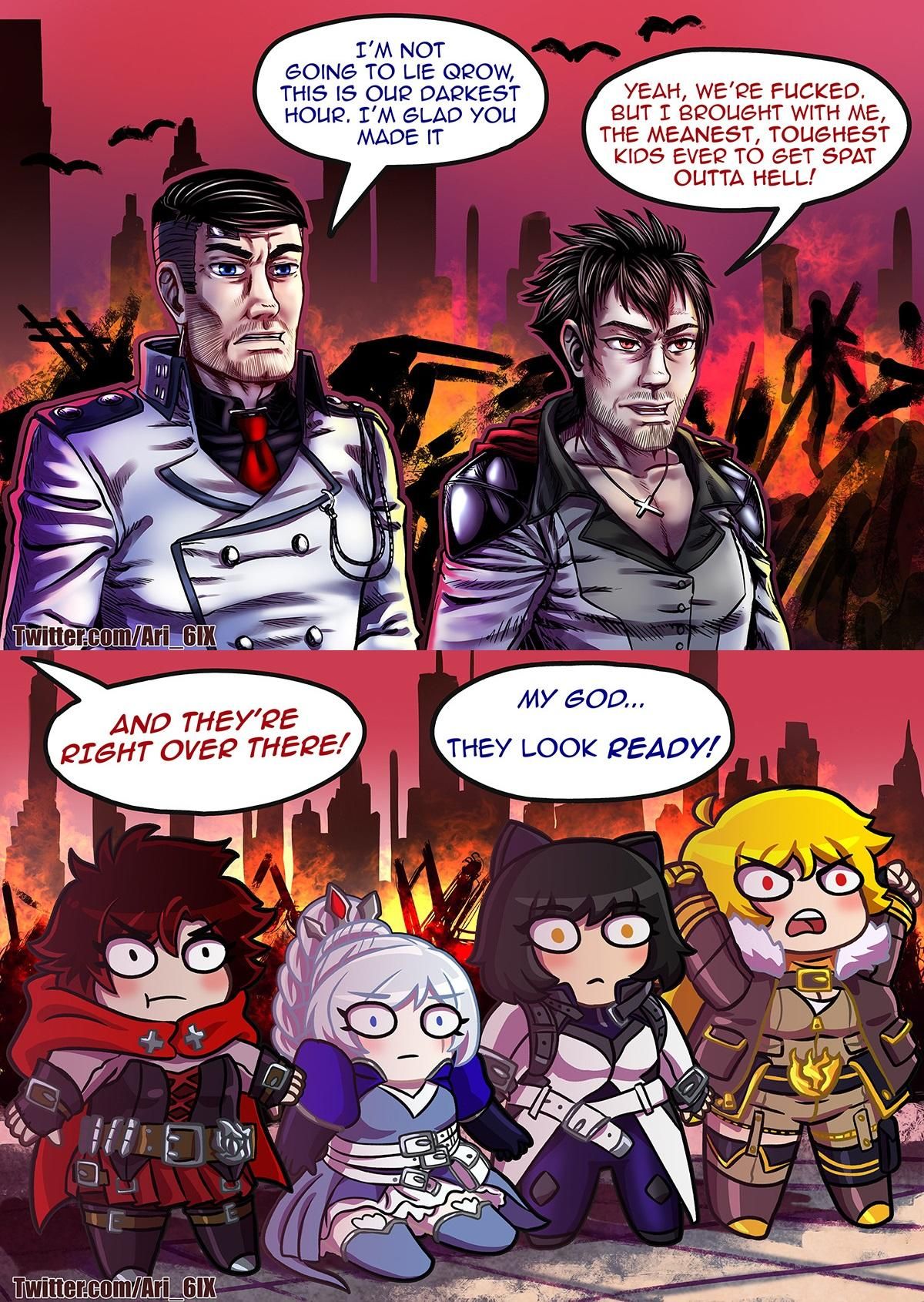
@AndrewJTalon, is Titanmaster_117, over on SB, doing ok? his last post a bit dark, even for him.
the ghosts of Aslanmas: we did not think this thought.
Jacques: YOU GET A PRESENT! YOU GET A PRESENT! EVERYBODY GETS A PRESENT! BWAHAHAHAHA!!!
either Vale in on fire or someone's a parent... again.
or Jaune ends up becoming Father Winter à la Santa Clause.
I hope he is. Now! An excerpt from The Good Book of the Tablebreaker Religion:
Saint Polly's Epistle to the Hermodians
Chapter 1
1 Polly, sanctified by the grace of the Table Breaker and bound in holy union to Saint Eustace, a witness to the deceptions of the underworld and the triumphs of faith, to the faithful in Hermod, who dwell amid the chill of progress and the whispers of old myths, ensnared by the tales of the Brother Gods:
2 Grace to you and peace from the Divine Spark, who through the Table Breaker has broken every illusion and curse, revealing the true light that no shadow can overcome.
3 Beloved, I write to you as one who has beheld the snares of enchantment firsthand, much like High King Peter who warned the Mistralians against the wisdom of this world that leads to folly before the Divine (Peter to the Mistralians 1:13-16). In my journeys beyond the veil—into the depths where reason falters and faith must stand firm—I encountered illusions that sought to deny the overworld, the sun, and the very paradise promised by our Lord. So too, the fables peddled in your academies and halls, tales of the Princess in the Tower and the Lost Knight, serve not as truths but as veils drawn by usurpers. These stories, spun from the threads of the so-called Brother Gods, purport to explain the origins of Remnant, yet they unravel under the scrutiny of the sacred texts and logic, exposing the Brothers not as creators, but as rebellious spirits who corrupt and deceive.
4 Recall the fable as it is told among the pagans: The Princess, imprisoned in her tower of sorrow, sought to defy death through cunning and magic, raising her beloved Lost Knight from the grave. For this, the Brother Gods—those twin deceivers, one cloaked in false light, the other in overt shadow—cursed them with immortality, dooming the Princess to endless wandering and the Knight to perpetual rebirth in vessels not his own. They claim this punishment upholds the "balance" of their creation, forbidding mortals to tamper with life and death. But herein lies their great lie, as King Caspian discerned in his Meditations, where he exposed the dualistic heresies that posit equal forces of growth and decay—a falsehood that elevates created beings to divine status, denying the sole sovereignty of the uncreated Spark (Caspian, Meditations Book VII:4).
5 Why, then, do the Brothers punish what the Table Breaker freely bestows? Our Lord raised the dead not as a transgression, but as a foretaste of his redemptive power: he called forth the afflicted from their graves in compassion, as recorded in the Chronicles of the Disciples, summoning the lost to life to glorify the Divine (Chronicles 4:7-9). These acts were not curses but blessings, miracles that drew souls to faith, as the Four Stewards raised the fallen in his name, fulfilling his command: "Heal the sick, raise the dead, comfort the weary, cast out shadows" (Sermon by the Sea 5:8). If the Brothers were true creators, loving their handiwork as a father loves his children, would they not rejoice in such restorations? Instead, they inflict eternal torment upon the Princess and Knight for mirroring these deeds, revealing their hypocrisy. As Saint Eustace argued in his Contemplations, true divinity acts from perfect goodness, not from jealousy or caprice; the Brothers' wrath exposes them as fallen beings, akin to those divine entities who rebelled with Jadis, seeking to hoard power they never possessed (Eustace, Contemplations Book IV:5).
6 This curse further demonstrates their disregard for creation, in stark contrast to the Table Breaker's boundless love. The Brothers, having supposedly forged Remnant, abandoned it in disdain when their "balance" was challenged, leaving humanity and Faunus to the mercy of Grimm and strife—like negligent artisans who shatter their flawed work rather than mend it. But the Table Breaker, the true incarnation of the Divine Spark, did not abandon us to the Ice Witch's freezing fist; he willingly laid his body upon the Stone Table, enduring sacrifice to add our lives to his eternal glory, not to hoard them as the Witch did. As Queen Lucy wrote to the Argusians: "Greater love has no one than this, that someone lay down his life for his kin" (Lucy to the Argusians 1:20), and so he broke the Table, tethering his life to ours in redemption. Where the Brothers curse immortality as punishment, stripping joy and purpose, the Table Breaker promises eternal life as gift: "I came that they may have life and have it in the paradise beyond the shadow of death" (Sermon by the Sea 7:10). Their indifference—cursing lovers for seeking what the Divine freely gives—proves they are no creators, but usurpers who pervert Thy order, as Jadis perverted the seasons with her endless winter.
Chapter 2
1 Beloved Hermodians, consider my own trial in the underworld, bound to the Silver Chair of enchantment, as a parable for discerning truth amid deceit, much like Mister Tumnus exhorted the Typhons to hold fast to faith against the illusions of false oracles (Tumnus to the Typhons 3:1-3). There, a sorceress—kin to the Brothers in her serpentine guile—sought to bind us with spells, denying the existence of the overworld, the sun, and the paradise beyond. "There is no sun," she whispered, "only the lamps of my realm; no Table Breaker, only the shadows I command." Her words wove a web of reason divorced from faith, tempting us to believe that Remnant's surface was but a dream, much as the Brothers' fables tempt you to accept their dual reign as reality.
2 Yet we resisted, not by worldly logic alone, but by the signs implanted in our souls: the memory of the sun's warmth, the lion's roar echoing in our hearts, and the unyielding truth that faith perceives what eyes cannot. As our companion declared, stamping out the enchanting fire, "Suppose we have only dreamed, or made up, all those things—trees and grass and sun and moon and stars and the Table Breaker himself. Suppose we have. Then all I can say is that, in that case, the made-up things seem a good deal more important than the real ones." This is the triumph of faith over illusion, as King Edmund urged the Quitalans: "Awake from the sleep of sin, and the Table Breaker will shine on you" (Edmund to the Quitalans 1:25). The Brothers' curse upon the Princess and Knight is such an enchantment—a tale that inverts divine mercy into tyranny, portraying compassion as burden rather than blessing, to mask their own fallen state.
3 For if they were creators, their acts would reflect perfect love, not punitive spite. The Table Breaker's miracles spread light: his disciples, empowered by the Spark, turned deserts to gardens, healed nations, and defied Grimm with Aura born of faith. The Brothers, by contrast, spawn endless curses, their "gifts" of relics and pools mere baits that ensnare, as the Princess discovered in her doomed quest. Queen Susan teaches in her epistle that evil is not a force but a privation of good; the Brothers embody this, their "creation" a mere distortion of Thy true work, their immortality a hollow echo of eternal life (Susan to the Jotuns 4:4). They punish resurrection because it exposes their impotence—they who could not prevent the Table's breaking, nor stem the Church's growth across Remnant.
4 Therefore, as one redeemed from the Silver Chair's bonds, I exhort you: cast off the fables of the Brothers, those usurpers who joined Jadis in rebellion, corrupting Thy creation with Grimm and lies. Cling to the Table Breaker, whose love redeems even the enchanted. Let reason serve faith, as in the teachings of Valiant Queen Lucy—faith seeking understanding, that you may see through the illusions to the paradise he builds (Lucy to the Argusians 3:2).
5 Now may the Spark of hope fill you with all joy and peace in believing, so that by his power you may abound in hope (Edmund to the Quitalans 1:24-25). Amen.
- - -
-Hermod would be a city in Jotunheim, a part of Anima with a Norse-like culture north of Mistral proper. I wanted to explore how the Tablebreaker religion would resolve the tale of the Two Brothers in its theology. And Christian theology presents plenty of alternatives that fit how petty the Brother Gods are, and still allows for something greater than them to exist. This doesn't deny their magical power but it is a different force than the magic used, and it's not perfect. But I thought Polly would be a good choice to write about the Brother Gods and how to address it in a Christian-inspired theology.
Plus, anything that mocks CRWBY's 12 Year Old's First Time on Reddit view of religion is all good.