
• An addendum to Rule 3 regarding fan-translated works of things such as Web Novels has been made. Please see here for details.
  • We've issued a clarification on our policy on AI-generated work.
  • Our mod selection process has completed. Please welcome our new moderators.
  • Due to issues with external spam filters, QQ is currently unable to send any mail to Microsoft E-mail addresses. This includes any account at live.com, hotmail.com or msn.com. Signing up to the forum with one of these addresses will result in your verification E-mail never arriving. For best results, please use a different E-mail provider for your QQ address.
  • For prospective new members, a word of warning: don't use common names like Dennis, Simon, or Kenny if you decide to create an account. Spammers have used them all before you and gotten those names flagged in the anti-spam databases. Your account registration will be rejected because of it.
  • Since it has happened MULTIPLE times now, I want to be very clear about this. You do not get to abandon an account and create a new one. You do not get to pass an account to someone else and create a new one. If you do so anyway, you will be banned for creating sockpuppets.
  • Due to the actions of particularly persistent spammers and trolls, we will be banning disposable email addresses from today onward.
  • The rules regarding NSFW links have been updated. See here for details.

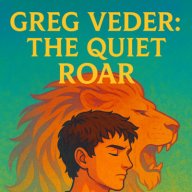
Greg Veder: The Quiet Roar

Created
Status
Incomplete
Watchers
29
Recent readers
198

Greg Veder always felt like he was living on the wrong frequency — too intense, too honest, too much. Autism made school a battlefield long before capes or monsters ever entered the picture.

Then something ancient wakes inside him.

Leo, the Lion Who Roars True, chooses Greg as his Patron — a cosmic force that punishes lies, rewards authenticity, and demands impossible honesty from those who follow him. Suddenly Greg's emotions, senses, and instincts burn hotter than he can control… and Brockton Bay becomes the worst possible place to learn self-mastery.
1.1 Waking Up With a Sun in His Chest New

Durolord

Getting some practice in, huh?
Joined
Feb 21, 2021
Messages
7
Likes received
16
Greg woke up already tired.

Not the kind of tired that went away with a yawn and a stretch, but the bone-deep, system-level kind. The kind where his body had technically been horizontal and unconscious, but his brain refused to believe in the concept of "off."

Light speared straight into his eyes before he even opened them. The thin curtains over his window might as well have been tracing paper; Brockton Bay's weak morning sun hit the glass, bounced off the white walls, and pooled on his face like someone had dragged a spotlight over his bed.

He didn't move at first. He lay still and let the data come in.

The hum of the refrigerator downstairs, a low, constant vibration under the floorboards. The pipe in the wall to his left clanking in irregular bursts—three small clanks, pause, one louder one, then silence, restarting in variable patterns his brain automatically started tracking. The distant wail of a siren, pitch dropping as it moved away. His cheap sheets: slightly pilled, rougher where his heels had scraped them in his sleep, one fold pressing like a thin rope across his ankle.

Too bright, too loud, too much texture. Not as feelings, not yet. Just entries in a log.

He opened his eyes a fraction of an inch.

The ceiling was a flat white rectangle, the overhead light fixture a circle dead center. Dust motes drifted across the sunbeam at a measurable rate—slower than falling rain, faster than a lazy insect. His mind set up lines between them, phantom diagrams: vector A, vector B, trajectory C.

A hot weight pushed against the underside of his sternum, like someone had cupped a hand around his heart and slipped a warming pad in between.

Leo's awake, he thought, and the heat flared in confirmation.

It wasn't a separate voice, not really. No whisper in his ear, no actual words. Just pressure and temperature and the sense of something coiled and waiting. A sun compressed to the size of his fist, tucked just under bone and muscle. Sometimes it was a pleasant warmth, the kind you could imagine curling around on a winter day. Right now, though, it was too much. A slow burn that made him want to curl his shoulders in and protect his chest.

He swallowed. His throat felt dry; he could smell yesterday's dust, the faint chemical tang of the detergent his stepdad bought because it was on sale, the lingering hint of old sweat trapped in the pillowcase.

He should get up.

He should… he should start the day.

The thought wasn't even fully formed—I should tone it down today—before the heat under his sternum spiked like someone jabbed a poker into it.

Greg hissed and curled slightly on his side, hands flying instinctively to his chest. His fingertips pressed into his T-shirt, finding nothing there except cotton and his own too-fast heartbeat, but the pain flared anyway. Sharp, stinging, electric.

"Okay, okay," he muttered, breath puffing hot across the pillowcase. "I heard you."

The pain eased back to an uncomfortable throb.

Leo did that sometimes. Reacted to thoughts. Not the casual ones—what's for breakfast, I should shower, where did I put my phone—but the heavier ones. The ones about shrinking, about turning the brightness down on himself so other people didn't flinch. The ones about disappearing.

Apparently, "tone it down" now qualified as a lie.

He lay there and let his breathing slow in precise increments. In through the nose, count four. Hold, count four. Out through the mouth—he could feel the way the air dragged across his teeth—count six. He repeated the cycle until his chest no longer felt like it was going to crack open along invisible fault lines.

The pipes clanked again: three little taps, one bigger. His brain filed the pattern under "probably the upstairs neighbor's shower." There was a whir from the hallway fan. A car passed outside, tires hissing on wet pavement—so it must have rained during the night. He added that to the internal status screen. Weather: damp. Light: too bright. Noise: high but manageable.

Emotion: uncertain.

He stared at the ceiling, eyes now fully open, and thought, Just act normal today.

The heat rolled in his chest, not quite pain this time. More like the sun was laughing at him.


Greg pushed himself upright slowly, joints protesting. He sat on the edge of his narrow mattress and let his feet find the cold floor. The contrast between the warm spot under the blankets and the cool vinyl sent a sharp, clear signal up through his legs, like his nerves were waking in sequence.

He liked that part. Clear signals were easier.

The room around him was small enough to map in one mental snapshot. Bed along the right wall, shoved into the corner. Desk opposite, under the window: old particleboard, edges chipped where he'd picked at the veneer during long nights online. Computer tower humming—a familiar noise, friendly in its consistency. Monitor dark. A cheap swivel chair with a cushion that had a permanent indent shaped like his hips.

Shelves along the other wall: uneven, one bracket slightly crooked. Stacks of notebooks, a few worn paperbacks, a couple of tabletop RPG manuals with corners flared from being flipped through too often. A mug holding pens sorted by type and ink color, and one spoon he never remembered to take back to the kitchen.

He let his eyes run over each object, naming them in his head. Naming was grounding.

Poster of an old superhero movie, edges curling. Cracks in the ceiling paint forming branching shapes; they looked like a map of rivers if he squinted. Laundry basket half-full, with the undifferentiated smell of human fabric: detergent, sweat, a tiny hint of mildew.

Outside the thin door, the house made its own set of sounds. His mom moving around—footsteps that weighed less than his stepdad's. The faint squeak of the kitchen cabinet hinge she kept meaning to fix. The tinny drone of the morning news from the small TV on the counter.

Greg mentally traced the house's layout through the floor: his room, the hallway, the stairs down, the living room to the left, the kitchen to the right. He could almost feel where each noise came from, the way sonar mapped space with sound.

The pipes rattled again. He counted the seconds between bursts.

Three.

Seven.

Five.

Pattern: inconsistent. Source: probably normal. Threat level: low.

That was how his brain liked to categorize things. It was easier to treat life as data rather than chaos. Chaos was overwhelming. Data could be sorted into columns and rows, tagged and prioritized.

He scratched absently at the side of his neck, nails catching on the faint roughness of healing acne. The sensation was a staccato series of dots along his skin. He noted it and moved on.

The light still stabbed at him, so he turned his head away from the window, focusing instead on the shadowed corner by the door. Shadows were smoother on the eyes. The transition line between light and dark created a gradient his brain could follow, mapping the intensity drop-off.

He was aware—dimly—that most people didn't start their day by silently cataloguing every sensory input and assigning them values. Most people seemed to just… be. They rolled over, groaned, maybe checked their phones, and went on autopilot.

Greg didn't have an autopilot. He had a control room with a hundred blinking panels and no off switch.

Leo sat at the center of it, a solar core that wasn't supposed to be there.

He pressed his palm lightly against his sternum. The warmth pulsed, slow and steady. Not painful now, but present. Always present. Like an internal glowstick cracked open and impossible to un-crack.

"Can you… not fry me today?" he asked under his breath.

No answer, obviously. But the warmth deepened for a moment, spreading in a thin line outward, like fingers tracing along his ribs from the inside. Not comforting, exactly. Not hostile, either. A reminder.

Right. You hate it when I lie, he thought, and felt a tiny spike. Not enough to make him wince, but enough to confirm the hypothesis.

He had learned that the hard way. The first time he'd decided to "just shut it all down" and pretend nothing was wrong, he'd ended up on the floor, clutching his chest while the world went white-hot around the edges. After that, he'd started treating Leo like a badly documented program—no manual, unknown fail-states, painful error messages.

He was still debugging.

Noise shifted downstairs. His stepdad's heavier footfalls entered the mix, cadence different from his mom's. His voice joined the news anchor's—low, slurry in the morning, a little too loud for the space. Greg's shoulders tightened autonomically.

He ran the likely script in his head. If he went down now, he'd get a comment about "sleeping in" even if it was barely past seven. If he waited too long, he'd get the look. The one that said he was being lazy, selfish, inconsiderate in ways no one would articulate directly but everyone seemed to agree on.

His brain projected both options on an imaginary screen, side by side. He hated them both.

"Just act normal," he murmured, out of habit.

The heat in his chest flared again—sharp, reprimanding.

"Fine," he added quickly. "I'll… try to act… calibrated."

Leo didn't spike at that. Which was annoying, because "calibrated" meant basically the same thing to him. Maybe Leo didn't speak in synonyms.

Greg pushed himself to his feet and swayed for a second, knees protesting the sudden change in angle. His bare toes curled on the cold floor. He inhaled once, deep, letting the cool air hit the back of his throat, and exhaled slowly.

Begin day, he told himself, like he was hitting a start button.


He started moving.

Greg's body liked movement more than stillness, but he'd spent years teaching it to hold still in front of other people. To fold into smaller shapes, to ignore the itch under his skin that wanted to rock, sway, tap, flick.

Here, alone in his room, the itch had more room.

He paced two steps forward, two steps back in the narrow strip of floor between his bed and the desk. Heel-to-toe, heel-to-toe. Each step landed at the same distance because he made it that way; his brain liked the rhythm. The creak of the floorboard under his second step marked a safe point, a quiet little yes from the house.

His fingers flicked at his sides, a rapid flutter of motion. He could feel air resistance against them in little pulses. His right hand traced an invisible figure eight; his left tapped against his thigh in a pattern that matched the pipes' clanks.

He counted the taps. One-two-three, pause, one-two-three-four-five, pause. It was like aligning two audio tracks in an editing program, looking for where the spikes matched.

The more he moved, the more his thoughts stopped trying to explode in every direction. Motion pulled them into a rough orbit.

He crossed to the wall by the door and ran his fingertips over the paint. There were tiny bumps there, imperfections from a rushed job years ago. To most people, it would feel smooth. To him, it was a textured map.

He traced shapes lightly—triangles, circles, a crude sun.

Leo pulsed faintly when his finger completed the sun's outline. Heat-to-touch mapping: internal star, external symbol.

"You like that?" he asked quietly.

No spike, no reprimand. Just a steady warmth.

So you're okay with suns. Good to know. He added that to Leo's growing list of preferences: hates lies, hates suppression, tolerates terrible jokes if they're honest, apparently likes symbolic reinforcement.

He let his head tip forward until his forehead rested against the cool wall. The contrast between his warm skin and the wall's chill was sharp enough to be pleasant. He closed his eyes and focused on the feeling. The wall was firm, unyielding; he could press without it moving.

He liked that, too. Some things in his life felt like they changed if he looked at them wrong—social rules that melted and reformed when tested. Physical reality was easier. Walls stayed where they were.

He inhaled, counted five, exhaled on seven.

The urge to stay like that, just braced against something solid, hummed through him. He could imagine spending the whole day here, orbiting his room like a small satellite around a planet, never dipping into the messy atmosphere below. Up here, he could be as weird as he needed to be. He could let his hands move, let his face go blank, let the scripts drop into the background.

Downstairs, the world would expect him to be a person version of "normal."

The thought of stepping into that space, into the shared kitchen with its too-bright overhead light and its conflicting smells and its unsaid expectations, made his stomach knot.

He shifted his forehead on the wall, feeling the drag of skin against paint, the slight stickiness of morning sweat. His fingers kept moving, tracing and retracing the outline of the small sun until the pattern etched into the wall's micro-bumps in his mind.

His chest unclenched a little. Not much, but enough.

Moving honestly, letting his body respond to the overload, helped. He knew that. He'd read about it in forum posts and blogs—stimming, self-regulation, sensory processing. People used the word "autism" like a blanket term, but inside it were all these specific mechanics his brain recognized as familiar. He wasn't officially diagnosed; paperwork cost money his family didn't have and patience his stepdad definitely didn't. But the descriptions fit.

He had learned to stim in ways that looked acceptable in public. Tapping his foot under the desk where teachers couldn't see. Spinning a pen quietly instead of flapping his hands. Counting silently instead of humming. Translation of need into something less noticeable.

Right now, there was no one to see. His fingers flicked openly. His feet sketched out the path on the floor without apology.

It felt… better. Not good, not safe, but closer to stable.

Of course, there was the problem.

If he acted like this around other people, they got weird.

They stared. They shifted away. They nudged each other. They thought he didn't notice, but his brain tracked micro-movements just as easily as it tracked dust motes and sound spikes. He had a whole archive of half-withdrawn smiles and tightened shoulders and sideways glances.

So: alone, he could move. Around others, he had to choose between regulation and acceptance.

His forehead thumped once, gently, against the wall as if to punctuate the thought.

First conflict of the day: If he acted like himself, people got weird. If he faked it, Leo hurt him.

He pulled back from the wall with a sigh, opening his eyes. The room wavered for a second as his visual processing caught up to the change from zero input to full input. Edges sharpened into focus, the boundary between shadow and light reasserting itself.

"Okay," he said quietly to the empty space. "We have to leave the room eventually. Rules are rules. School still exists. People will notice if I don't show up."

His chest warmed in what felt suspiciously like agreement.

"Traitor," he muttered at Leo, and got a small, amused pulse in return.


Clothes first. Armor.

Greg crossed to the small chest of drawers at the foot of his bed. The top drawer slid out with a familiar rasp. Inside, his T-shirts were sorted in a specific order, not by color but by texture and hem feel.

He ran his fingers lightly over the stack, eyes half-lidded, letting his skin do the deciding. The first shirt had a tiny, scratchy tag at the neck; he'd meant to cut it off but never got around to it. He skipped that one automatically. The second was an old event shirt with cracked lettering; the printed part felt rough and unpleasant against his fingertips. He pushed that aside, too.

Third: soft cotton, worn but not thin, no obvious tag, minimal seams. The fabric draped off his fingers in a way that suggested it would fall comfortably on his shoulders rather than cling.

"Winner," he murmured, and tugged it free.

It was navy blue with a faded graphic of some old sci-fi show logo. The design had cracked over time, but it sat on the chest in a way that usually didn't bug him, and the color was dark enough to feel like a shield. Bright colors felt like yelling. He preferred clothes that said, quietly, nothing to see here, move along.

Boxers and socks next. He picked the socks with the smoothest toe seam; misaligned seams haunted his day far more efficiently than any supervillain could. Pants—dark jeans with enough give in the fabric to not pinch when he sat too long.

He changed quickly, the practiced rhythm of someone who had optimized the process. Shirt over head, slight static tug at his hair, fabric settling along his skin. The sensation of the shirt's weight on his shoulders took a few seconds to register as "okay" rather than "invading." Pants up, button, zipper, the brush of metal teeth against his knuckles. Socks rolled over his feet in a snug hug.

Each step of dressing was a series of micro-sensations that his brain wanted to catalogue, but he had learned to compress that data so it didn't swallow the entire morning.

He glanced at the narrow mirror screwed into the back of his door. At the moment, it reflected only a sliver of his torso, but he avoided looking too directly at it yet. One thing at a time.

He stepped over to his desk and picked up the hoodie draped over his chair. It was his favorite one—gray, oversized, soft inside. It smelled faintly like laundry detergent and his own shampoo. He shoved his arms into it and pulled it on, and the immediate sense of containment settled over him like a weighted blanket.

Layers helped. They made his body feel more defined, less like he was leaking out into space.

He tugged the sleeves down so the cuffs almost covered his fingers, then flexed his hands against the fabric. Textile friction against skin: good. Warmth over forearms: good. Hood attached, available if the lights at school got too bright or the halls too noisy.

Armor status: acceptable.

He checked his pockets. Phone: front right, screen facing in, because he'd once tried it the other way and the notifications buzzed right against the thinner fabric and made his leg itch. Wallet: back right—thin, with student ID and bus pass. Front left pocket was reserved for an emergency stim object; currently, that was a smooth, flat bottlecap he'd worried the ridges off over several weeks. He thumbed its edge now, feeling the familiar, cool circle. The contact point between bottlecap and skin grounded him.

He turned to the mirror again and, this time, let himself look.

His reflection looked back with the cautious wariness of someone who never recognized himself fully. Brown hair that never did exactly what he wanted, currently pushed back with his fingers into something like order. Eyes a little too wide, a little too bright, like he was taking in more than he knew what to do with. Nose slightly crooked. Mouth pressed into a line that didn't quite know if it was allowed to be a smile.

The hoodie made his shoulders look broader, which he liked. It made him feel less fragile. The T-shirt neckline sat flat, no tag visible. No skin showing at the waist, socks fully covered.

Visually, he passed his own inspection.

Internally, Leo pulsed—a slow, even beat.

He'd chosen these clothes not just for how they looked, but for how they felt. The fabric didn't fight him. The seams didn't itch. The weight wasn't too much. He could endure the day in this, maybe even function in it.

His brain, of course, didn't stop at "am I comfortable?" It had to run the secondary program: What will other people see?

Neutral colors: less attention. Graphic tee: socially acceptable baseline nerd indicator. Jeans: standard. Hoodie: "slightly withdrawn" but not "suspicious." No bold statements, no slogans anyone could use as an excuse to start a conversation he wasn't ready for.

People liked to pretend clothes didn't communicate anything, but they read them anyway. He'd learned that the hard way with the one time he'd worn a shirt from an obscure series he actually cared about. Someone had recognized it, tried to talk to him about the lore, and he'd ended up infodumping for ten minutes straight without breathing properly.

Their expression had gone from excited to overwhelmed to suffocatingly polite. He'd replayed that scene for weeks.

Now, he picked shirts that meant less to him. That way, if someone commented, he could answer and move away without the gravitational pull of obsession dragging him under.

He tugged at the hem of his hoodie, straightening it once, twice. His fingers repeated the motion a third time even though it wasn't necessary. The repetition soothed the jittery feeling in his chest.

"Armor: online," he told his reflection quietly.

Leo's warmth hummed in agreement, low and steady.


Clothed and contained, Greg moved back toward the desk. His notebook lay open where he'd left it last night, a pen balanced across the pages. The blue ink had slightly bled into the paper fibers along each letter.

He'd spent an hour before bed writing out scripts.

Some people could just improvise their way through social situations. He needed prepared lines. Not to memorize word-for-word, but to have a bank of phrases he could grab when his brain froze.

He slid into the chair, feeling the familiar give of the cushion. The desk surface under his forearms was cool to the touch. He pulled the notebook closer.

Across the top of the page, his own handwriting stared back at him in uneven lines: Tuesday – School – Baseline Scripts.

Below that, in bullet points:

  • "Morning." (Neutral tone. Not too loud.)

  • "Hey." (Only if someone speaks first.)

  • "How was your weekend?" (Safe, generic.)

  • "Yeah, I saw that." (Only if true.)

  • "Cool." (Default response to info.)
His chest twinged faintly at that last one.

He tapped the pen against the notebook, the rhythmic clack syncing with his foot tapping under the desk.

He'd marked some lines with small symbols. A dot next to "Try not to talk too much about [insert current obsession]." A star next to "Remember to ask at least one question back in conversations."

His eyes skimmed down further, where he'd written a different set of lines, these ones with faint question marks next to them:

  • "Don't make eye contact too long."

  • "Smile so they know you're friendly."

  • "Laugh when they laugh."
The moment he read that last one, Leo flared hot.

"Okay, okay," Greg muttered, pen freezing mid-tap. "I know."

The heat settled into a slow burn, more disapproval than pain.

"I didn't say I was going to use it," he added, because apparently he now argued with the star in his chest like it was a code reviewer leaving aggressive comments.

He stared at the words "Laugh when they laugh."

It was one of those things he'd learned early. People laughed in groups, sometimes at things that weren't actually funny. Sometimes because they were supposed to. Sometimes because they were uncomfortable and didn't know what else to do.

He'd learned that if he didn't laugh with them, they gave him that look. The one that said he'd broken the script.

So he'd tried. Forced laughter when others laughed. After jokes he didn't understand, or statements that felt neutral but apparently counted as jokes, or digs at someone who wasn't in the room.

His laughter always felt off. He could hear it, flat at the edges. Wrong timing, wrong volume.

Leo, apparently, hated that.

The first time he'd forced a laugh at someone else's expense, the sun in his chest had gone white-hot, like boiling metal. He'd doubled over, one hand pressed against his ribs, swallowing down a shout while the table of kids around him kept on laughing. No one noticed he was in pain.

He'd learned something that day, too: Leo didn't care for dishonest mirroring.

He tapped the point of his pen lightly against the phrase until the ink threatened to tear through the paper. Then he crossed it out with a decisive line.

"Fine," he told the notebook. "New rule: I laugh if I actually think it's funny. Or if it's… kind, I guess. Not just because it's safer."

Warmth in his chest again. Approving.

He flipped the page to a fresh one and wrote across the top: Updated Scripts – Aligned.

It was a stupid word to use, but it felt right. Aligned with what he actually felt, not just what people wanted from him. If he could find a tiny overlap between "true" and "socially acceptable," maybe Leo wouldn't roast him from the inside and his peers wouldn't freeze him out entirely.

He wrote:

  • "Morning." (If voice works.)

  • Small nod if not. (Still counts.)

  • "Sorry, I'm a bit out of it." (Honest if overloaded.)

  • "Can you repeat that?" (Instead of pretending.)

  • "I don't get it, can you explain?" (If safe.)
His hand hesitated over that last one. Asking for clarification had a mixed track record. Some people were fine with it. Others acted like he'd just insulted their intelligence.

Rejection sensitivity curled up in his gut like a wary animal. So many memories of asking, "What do you mean?" and getting the eye-roll, the sigh, the "Never mind, forget it."

He added in small letters beside it: "Use with people you trust (if any)."

His pen hovered again.

Trust. The word sat heavy on the page. His brain offered up a quick slide show of faces: kids at school he knew the names of, teachers who praised his "potential" but got frustrated when he missed implied instructions, his mom, his stepdad, random internet avatars with usernames but no real names.

He didn't add any specific names next to "people you trust." The space stayed blank.

The pipes thumped again. His foot started tapping out the pattern almost automatically. Leo's warmth synced with his heartbeat. Tap-tap-tap, thump. Warm-warm, pulse.

He flipped back to the first page and scanned the scripts again.

Some were still functional. "Morning." "Hey." Neutral enough to be honest. Others felt like putty he'd molded to fit past expectations that no longer fit his insides.

His eyes caught on one of the earliest lines he'd written months ago, now smudged with wear: "Just act normal."

The ink had faded from rereading. He'd circled it once, hard enough to dent the page.

At the time, it had felt like a goal. A mission. If he could just act normal enough, maybe things would stop hurting. The stares, the sighs, the tension in his stepdad's jaw whenever he talked too fast. The teachers' polite frustration. The turn of classmates' shoulders away from his desk.

Now, looking at the words, his chest burned.

Leo flared so hot he had to slam the notebook shut and press his palm to his sternum, fingers spreading as if he could bleed some of the heat away into his hand.

"Okay," he hissed through his teeth. "Message received."

His heart hammered against his palm. Sweat pricked at the back of his neck. The pain wasn't as bad as it had been that first time, but it was sharp enough to carve away any illusion that "just act normal" was neutral.

"Not normal," he said aloud, barely above a whisper. "Calibrated. Real. Fine. I get it."

The heat eased, simmering down to a low hum like a turned-down stove burner.

He leaned back in his chair, letting his head rest against the top of it for a second. The ceiling stared back, indifferent.

He wasn't sure what scared him more—that Leo punished his lies, or that Leo might be right.


Footsteps on the stairs snapped him back to the timeline.

His stepdad, by the weight and rhythm. The boards creaked in predictable spots—third from the top, second from the bottom. A cough halfway up. Greg's internal status bar ticked toward red.

"Greg!" his mom's voice floated up from downstairs a moment later. "You awake?"

He swallowed. His throat felt tight, but his voice mostly worked when he tested it with a soft, "Yeah."

Louder: "Yeah! I'm up!"

"Breakfast!" she called. "Don't be late!"

Breakfast. Shared space. Shared noise. Shared expectations.

He stood up again, heel catching briefly on the edge of the rug. The hoodie shifted with him, the fabric's brush across his arms a small reassurance.

Before he opened the door, he forced himself to turn back to the mirror.

His reflection looked exactly as it had a few minutes ago: hoodie, jeans, slightly rumpled hair. Face caught between expressions.

But now he looked past the surface. Past the armor. He imagined the cross-section: skin, muscle, bone, and under the sternum, an impossible sun.

He couldn't see Leo, but he could feel him. A pressure, a glow, a presence that refused to be ignored whenever he tried to compress himself into something smaller and more palatable.

He stared at his own eyes. They looked too bright. Too intense. Like they held a question he didn't know how to answer.

What version of himself was he supposed to be today?

He knew the options. He'd rehearsed them for years.

Version one: the quiet background guy. Minimal input, minimal output. Smile occasionally, nod, drift. Don't raise your hand too much. Don't correct teachers when they're slightly wrong unless it really matters. Don't infodump. Don't let your hands move where people can see. Keep your face at half-power.

That version had gotten him fewer comments, fewer obvious stares, fewer overt "what's wrong with you?" moments. It had also left him feeling like he was watching his own life from somewhere behind his eyes, disconnected.

Version two: the honest version. The one who let his hands move when they wanted to, who asked questions when he didn't understand, who admitted when something was too loud or too bright. Who laughed when he actually found something funny, even if no one else did. Who talked about the things he cared about, not just the things other people signaled were safe.

That version had gotten him labeled "weird" more times than he could count. It had earned him invisible edges around social groups, polite distance, the occasional cruel joke he pretended not to hear.

Somewhere between them, maybe, there was a version three. A balance. But he hadn't found it yet.

His eyes flicked down to his own chest in the reflection, then back up.

"I'll just act normal," he told the mirror softly.

The words were out before he could stop them. Habit. The same way you typed a password you knew you needed to change.

Leo's response was immediate and brutal.

Pain knifed through his chest, a hot, stabbing spike that made his breath hitch. It felt like someone had reached through his ribs and squeezed the sun with bare hands. His knees dipped. He caught himself on the edge of the desk with one hand, fingers digging into the wood.

"Ah—" The sound escaped before he could swallow it.

He clamped his jaw shut, forcing slow breaths in and out. In through his nose, out through his mouth. The heat flared again, then again, in miserable pulses, like a warning alarm that refused to be silenced.

"Okay," he whispered, throat tight. "Not… normal. I get it. I get it."

Tears pricked at the corners of his eyes, more from the intensity of the sensation than from emotion, though both tangled together. He blinked them back. Crying before breakfast would not help.

The pain ebbed gradually to a dull ache. His hand slipped from the desk, leaving faint crescents in the soft wood where his nails had dug in.

He looked back at his reflection once more, breathing hard.

Not normal, then.

He straightened his hoodie, fingers smoothing fabric more for something to do than out of actual need. His shoulders settled into a position that was as close to comfortable as he could get: not hunched, not fully relaxed, somewhere in between. His face refused to shape itself into a convincing smile, so he didn't force it. Neutral was safer than false.

"New plan," he told the mirror quietly. "I'll… try to act like myself. Just… on low volume."

Leo's warmth nudged against his ribs, gentler this time. Not approval, exactly, but not flaming rejection either. Something in between. A we'll see.

Downstairs, his mom called his name again, sharper. The clatter of dishes grew louder, the morning news anchor's chipper tone clashing with his stepdad's muttered commentary.

Greg wrapped his hand around the doorknob. The cool metal grounded him. He turned it slowly, feeling each increment of movement.

Before he opened it fully, he took one more breath and silently ran a final system check.

Light: too bright, but hoodie hood available. Noise: high, but patterns identifiable. Textures: manageable. Scripts: partially updated. Internal sun: active, opinionated, currently not trying to kill him.

He stepped out into the hallway.

The door clicked shut behind him with a soft finality.

The version of himself he had chosen—somewhere between masked and honest, somewhere between suppression and explosion—would have to survive at least until breakfast.

Whether Leo would tolerate that compromise… was a question for five minutes from now.

For the moment, the sun in his chest pulsed once, twice, in quiet, watchful rhythm.

And Greg Veder went downstairs.
 
1.2 – Winslow: Rules No One Wrote Down New


Threshold Noise

Winslow hit him before he even made it through the doors.

The school loomed in front of him, big blocks of brick and grimy windows under a cloudy Brockton Bay sky. The flag out front hung limp, edges frayed. The concrete steps leading up were stained with old gum and whatever else people had decided to discard over the years. He catalogued each detail automatically, like he always did.

But the real hit came when he pulled the front door open.

Noise.

It slammed into him as if the door was holding it back and he'd just broken the seal. Overlapping conversations, locker doors banging, shoes squeaking on linoleum, the too-high whine of some ancient fluorescent light, the rumble of the ventilation system, the occasional sharp bark of laughter that cut through the rest like a siren.

Smell.

Sweat, deodorant, cheap perfume, stale cafeteria oil finding its way into the hallway somehow. Paper and cleaning chemicals. Wet fabric, because some people hadn't dried fully from the morning rain.

Light.

Flickering tubes overhead, some too bright, some dim and buzzing like they resented being asked to function. The stutter-flicker created little hits of change in the corner of his vision, as if reality was briefly cutting to a different frame and back.

His brain did what it always did in response to overload: it started mapping.

Okay. Main corridor: long, crowded, sloping slightly downward from the front doors toward the central intersection. Left branch: science wing, with that one water fountain that sputtered. Right branch: admin offices, guidance, nurse. Straight ahead: lockers, then classrooms.

He stepped to the side immediately after coming through the door, pressing his back briefly against the cool metal of the nearest locker bank. Don't stop in the middle, don't block the flow—that was one of the unwritten rules he'd learned fast. People moved like water here; if you stood in the wrong place, you got knocked around.

He let his gaze scan the corridor in slices.

Safe zones:

  • The patch by the trophy case where traffic split and slowed.

  • The nook near the janitor's closet where the lights were dimmer and people only passed through, not lingered.

  • The seat at the far end of the main staircase landing where you could see both up and down but most people's eyes slid past you.
Hostile clusters:

  • The knot of boys by the central lockers who liked to "accidentally" shoulder-check anyone smaller.

  • The group of girls near the drinking fountain whose laughter had that particular sharp edge that meant they were laughing at, not with.

  • The cluster by the entrance to the girls' bathroom—Emma's group, sometimes with that athletic girl, Sophia, orbiting close.
He didn't need to get close to any of them to know the risk zones. Their sound signatures were distinct. The way they filled space, too—bodies angled out, occupying more room than necessary, bags dropped where people would have to step around them. Passive-aggressive territory marking.

His chest hummed with heat, Leo's presence shifting, reacting to his micro-spikes of anxiety. Not painful, just a constant awareness that the sun under his sternum was paying attention.

He adjusted his backpack straps, making sure the weight was distributed evenly. One strap slightly higher than the other would bug him all day. Right now, it lay flat across both shoulders, the weight centered. Acceptable.

He stepped into the flow.

The hallway pressed around him immediately. Shoulders brushed shoulders. Backpacks bumped. Someone's elbow nearly caught his side; he shifted half a step sideways without thinking, moving into a gap that only existed for a fraction of a second.

He kept his eyes moving. Not in wild darts—that drew attention—but in a constant, scanning pattern that let him know where the threats were without locking onto anyone long enough to make them uncomfortable.

Snatches of conversation hit his ears and tried to stick.

"…told you, he totally—"

"—can't believe my mom—"

"—homework? Nah, I just—"

He filtered most of it out. Background noise. Non-critical. What mattered was the flow.

Don't stop in the middle. Don't block the flow. Angle your shoulders when passing someone coming the other way. Don't cut across someone's path unless you're sure of the gap. Don't walk too fast; you'll bump into people. Don't walk too slow; they'll bump into you.

Rules no one had written down but everyone seemed to know instinctively.

Everyone except people like him.

He'd learned them by trial and error. The first day, he'd stopped dead three steps inside the main hall to get his bearings and immediately got a shoulder in the back and a muttered "watch it, idiot." He'd spent the rest of that day with the imprint of that word replaying in his head along with the jolt of impact.

Now, he moved like he was slipping through a maze. Left, pause. Right, adjust. Shorten stride to avoid collision with a kid who'd dropped their binder. Lengthen stride to get past a slow-moving cluster before they could box him in.

His head buzzed faintly with the effort of tracking so many variables at once, but he preferred that to the alternative: being static in a moving space.

He passed the trophy case. The glass was smudged, reflecting the hallway in warped fragments. The old trophies inside—track, football, something from two decades ago—stood like relics of a school that maybe cared more once.

He kept going.

At the central intersection, the volume rose. More doors, more voices, more slamming metal. A locker door banged open to his right, the sharp metallic clang sending a flare of irritation up his spine. He flinched internally but kept his face neutral.

Don't react too much. Another unwritten rule. Reacting marked you as a target.

Overhead, one light flickered three times and then steadied. His eyes tracked the pattern despite himself. Three flickers, one long, two short—if he tried, he could map it to Morse code, give it meaning it didn't actually have. His brain liked doing that.

He pulled his hood up halfway—not enough to obscure his face fully, just enough to narrow his field of vision and dampen some of the worst of the overhead glare. The fabric muffled some sound as it brushed against his ears. Slightly better.

"Greg!"

The sudden sound of his name yanked his attention sideways. His heart jumped.

He turned to see who'd said it, already running through possible scripts.

The voice belonged to Mrs. Avery, one of the English teachers. She stood near her classroom door, stack of papers in one hand, coffee mug in the other. Late thirties, frizzy hair trying to escape a loose clip, glasses perched at the end of her nose. She had a tendency to talk like everything was a joke, even when it wasn't.

His brain flipped to the subroutine for teacher interaction before he'd fully faced her.


Homeroom Calibration

"Morning, Greg," Mrs. Avery said, giving him a quick once-over that he recognized: checking for obvious signs of truancy, exhaustion, or trouble.

There were three acceptable responses to a teacher's casual greeting in this context.

Option A: "Morning." Neutral, safe.
Option B: Nod and smile. Low verbal load, but might be read as rude if the teacher valued verbal responses.
Option C: Add a polite question back: "How are you?" Risk of follow-up conversation he wasn't ready for.

He picked A with a small add-on, because his brain liked precision.

"Good morning, Mrs. Avery," he said.

He heard the tiny hitch in his own voice—a little too formal, a little too crisp compared to the languid, careless "mornin'" echoing around from other students. His volume came out slightly higher than he'd intended, clipping the noise floor and attracting a flicker of attention from a kid walking past.

Mrs. Avery raised an eyebrow, a quirk that might have meant amusement or might have meant nothing. "You're here early for once," she said.

He wasn't, technically. He'd arrived at his usual time, which was five minutes before the bell, which was statistically slightly earlier than the median but well within the expected range. His brain calculated that without effort.

"I left home at the same time as usual," he answered. "Traffic was lighter by approximately nine percent. I didn't get stuck at the light on—"

He stopped himself when her expression shifted.

It was subtle. The corners of her mouth stayed up—they didn't drop into a frown—but her eyes unfocused a little, the way people's did when they were listening-but-not. A faint tension smoothed into her forehead like she'd just remembered a to-do list item mid-conversation.

Right. Too much detail.

He could see, in the periphery, two kids slowing slightly as they walked by, glancing over. One of them smirked in that particular way that said, oh, it's him.

The "odd" vibe. The invisible tag that some people carried at this school: Not Cool. Not Quite Right. Easy Target.

Greg felt it like a temperature drop on the back of his neck. His chest warmed in response, Leo pressing outward against his ribs in what could have been annoyance or solidarity; he hadn't figured out the difference yet.

Mrs. Avery recovered with a small chuckle. "Well, glad you made it on time," she said. "Ready for the quiz later?"

Her tone was light. Probably a joke. Definitely a test.

Greg's brain, unfortunately, took the words at face value first.

"There's no quiz scheduled for today," he said. "Not unless you changed the plan since yesterday. You said we'd be starting the poetry unit, and quizzes usually happen after at least one lecture or handout, not before, unless it's a diagnostic to measure prior knowledge, which you usually tell us about ahead of time, so—"

He saw it this time as he talked: the exact moment her expression shifted from conversational to that tight, micro wince. Her smile froze a degree too stiff. One of the kids going past snorted quietly.

"Relax, I was kidding," she cut in. "It was a joke, Greg."

His words stuttered to a halt. The hallway noise surged back in, loud and undefined, as if someone had turned the background up.

"Oh," he said. "Okay."

He tried to adjust his tone, make the word lighter. It came out too flat instead. Like a test tone on a speaker.

A laugh—not hers, someone else's—popped nearby. He couldn't tell if it was directed at him or just laughing at something else entirely. His rejection sensitivity immediately assumed it was about him. The skin on his face went hot.

His chest flared, but not from embarrassment alone. Leo's heat rose, sharp and prickly.

It wasn't wrong, he thought defensively at the warmth. She said "quiz." There wasn't one.

The heat shifted, not into pain but into a kind of restless simmer. Maybe not disapproval. Maybe just agitation.

"Anyway," Mrs. Avery said, already half-turning back toward her classroom. "Get to homeroom. Bell's about to ring."

"Right," he said. That came out too sharp, as if he was snapping at her when he wasn't. He winced internally.

He started walking again before the interaction could stretch any further. His shoulders tightened of their own accord, his steps going slightly stiff.

Behind him, he could feel—without looking—the echo of that small, subtle ugh, him vibe from the kids who'd been close enough to hear. Not hatred, not outright cruelty. Just that creeping dismissal. The way people's eyes slid off him like he was a mildly unpleasant topic they didn't want to engage with.

He hated that more than open hostility sometimes. At least when someone yelled at you, you knew where you stood.

He rejoined the hallway flow, recalculating his route. Homeroom, then English, then… his brain slotted the day's schedule into a familiar grid, overlaying it on the map of the building.

Leo simmered at his core like a small, impatient star.


Locker Vectors

His locker stood in the middle section of the hall, three down from a chipped support pillar, two across from a water fountain that dripped continuously into a rust-stained basin. Not ideal, but not worst-case either.

He timed his approach carefully. Too early, and the cluster of kids from the bus would still be there, talking loudly and swinging their bags into the thin space between lockers. Too late, and he'd get caught in the post-bell rush as everyone shoved books into metal boxes at the same time.

He hit it at the almost-quiet moment—noise still loud, but movement a little slower as people filtered into homerooms. He spun the combination lock with practiced speed. 12, 32, 7. The metal dial was cool under his fingers, edges biting faintly into his skin. The mechanism clicked in satisfying sequence.

He opened the locker door, its hinge giving the familiar squeak on the last inch.

Inside, everything was arranged in a way that calmed a tiny part of his overloaded brain. Top shelf: notebooks stacked by subject, spines facing out, labels written in the same pen, same angle. Middle: textbooks, ordered by weight so the smaller ones didn't get crushed. Bottom: gym shoes in a plastic bag, emergency granola bar, a small tin holding earplugs.

He swapped out his books quickly, sliding yesterday's math into the space and pulling out English and history. His fingers brushed the edge of the earplug tin and paused.

He considered it. The hall was loud. The day would probably be louder. Teachers sometimes complained if you wore earplugs in class because it "looked rude," even if you could still hear them just fine. His chest twinged.

He left the tin where it was. Calculated risk: less immediate sensory relief, lower chance of confrontation. For now.

He was closing the locker when he heard it.

"…I'm telling you, it was disgusting."

The words cut through the ambient noise with that specific nasty tone people used when they enjoyed what they were describing.

Greg's hand froze on the locker handle.

Sound source: behind him, offset by thirty degrees. Distance: maybe three meters. Voices: female, two primary, one secondary. He recognized the primary ones from prior mapping.

Emma Barnes. Red hair, clean clothes that somehow always looked new, laughter that bent too easily into cruelty. Associated cluster: social high tier. Probability of direct engagement with him: low, but not negligible if he did something to attract attention.

Sophia Hess. Dark hair, athlete. Moved like she owned the hallway. Always seemed bored and vaguely irritated with everything. The type who could hurt someone and make it look like an accident.

He didn't turn around fully. That would signal interest. Instead, he adjusted his stance, angling his ear slightly while pretending to fuss with the binders in his locker.

"Should've heard her," Emma said. Her voice had that bright, amused quality that set Greg's teeth on edge. "She totally lost it."

"Like, actual screaming?" one of the other girls asked. He didn't know her name; his brain hadn't tagged her as central to any pattern yet.

Sophia snorted. "Like a dying animal. It was pathetic."

A cluster of giggles. Greg's fingers tightened involuntarily on the edge of a textbook.

Data: they were talking about someone. Some event. Past tense? Present? His brain searched for context. There had been murmurings at school recently. Snatches of "did you hear about…" and "no way, that's gross." He hadn't had enough pieces yet to assemble a full picture.

"'Please,'" Emma said in a high, mocking whine. "'Stop, please, let me out.'" She laughed. "Like anyone cared."

"Locker freak," Sophia added. "Should've stayed in there."

"Yeah," another girl chimed in. "Seriously. The freak in the locker."

The phrase dropped into the noise like a stone into still water.

Greg heard it and something in his brain snapped to attention.

The freak in the locker.

Words formed units. Units formed patterns. Some patterns stood out as wrong.

His thoughts immediately started sorting.

Locker: confined space, usually small, used for storage, not people. Freak: socially assigned label for someone who doesn't fit norms, often used to justify mistreatment. In the locker: prepositional phrase indicating physical location. A person, locked inside, being called a freak for being there rather than for what put them there.

Should've heard her. She totally lost it.

He didn't have a visual for this event. His brain tried to generate one anyway—cramped metal, darkness, the muffled sound of someone shouting while footsteps walked away.

The skin on his arms prickled under his hoodie.

He risked a glance over his shoulder.

Emma stood with her back to his general direction, facing Sophia and the others. Her expression was animated, eyes bright, mouth curved in delight as she relived the story. Sophia leaned against the lockers with her arms crossed, smirk in place. The other girls hovered close, some laughing outright, others doing that half-smile people did when they weren't sure if it was entirely okay to enjoy what they were hearing but went along anyway.

He wasn't close enough to see all their faces clearly, but the posture was enough.

They weren't disturbed. They were entertained.

His chest tightened.

Leo's heat spiked suddenly, not like the punishing flare when Greg lied, but like the first blast of air when an oven door opened. Fierce, directed, angry.

Angry?

It took him a second to label it. The sensation didn't come with words, just with intensity. His heartbeat kicked up. He could feel the pulse in his throat.

He swallowed, forcing his gaze away before anyone noticed he was listening. The rules here were clear: eavesdropping on the powerful social clusters and then getting caught meant making yourself a target.

He shut his locker, the metal door clanging shut.

The sound rang louder in his skull than it should have. The phrase echoed with it in his mind.

The freak in the locker. The freak in the locker. The freak—

He wanted to file it away neatly, tag it as "mean girls being mean" and move on, like he did with most hallway cruelty. But something about this wouldn't slot into the usual category. It snagged.

Maybe it was the word "locker." Maybe it was the way Emma mimicked someone pleading. Maybe it was the faint, instinctive revulsion he felt at the idea of someone being locked in a small, dark space and mocked for their reaction rather than help.

His own experiences brushed up against that mental image. Not identical, but adjacent. Being cornered, mocked, unable to leave because the social rules said you'd be making it worse if you pushed past. Being stuck in conversations where everything hurt but walking away meant more whispers later.

He stepped away from his locker, heading down the hall toward homeroom. As he walked, the noise of other conversations washed in and out. None stuck the way that phrase did.

The freak in the locker.

His brain stamped it as something else: not just gossip. Narrative anomaly. Event hook. A piece of data that didn't fit the usual pattern of petty Winslow cruelty.

He didn't know why yet.

But he felt Leo burning hotter with every repetition.


Pattern Lock

Homeroom was in one of the older classrooms on the second floor, with yellowing posters on the walls and a whiteboard that still showed faint ghost marks from old notes never fully erased. Desks in uneven rows. Fluorescent lights buzzing overhead; one in the corner flickered at random intervals like it was trying to send a distress signal.

Greg slid into his usual seat—second row from the back, near the window. From here, he could see both the front of the room and the door. Two sightlines, fewer surprises.

The murmurs of other students washed around him. People talking about TV shows, weekend drama, someone's party. Words blurred into a low hum, but certain phrases still jumped out as his brain scanned for relevance.

"…did you hear—"

"…gross, man, I would've—"

"…they said she—"

Each time he thought he heard the beginning of something about the locker, his attention sharpened and then sank again when it turned into something else. Half-formed rumors, sideways references with no names.

He pulled out his English notebook, flipping past the neat notes from last week until he found a blank margin. His pen hovered, then started moving almost without conscious decision.

locker incident?
victim? student or teacher?
timeframe: recent (tone of voices = fresh gossip)
participants: Emma, Sophia, unknown others
motive: amusement? punishment? something else?

He underlined "victim" twice.

He should have been reviewing his notes on metaphors and similes. Mrs. Avery would definitely go over them again today if they were starting poetry, and a diagnostic quiz was not out of the question even if she had technically been joking earlier.

Instead, his pen kept circling back to the same patch of paper.

freak in locker
why "freak"?
why locker?

His chest throbbed in time with the words. Leo's heat sat like a solid weight.

The teacher for homeroom—Mr. Dahmer, math, monotone voice—took attendance in the background. Greg responded when his name was called, the automatic "here" sliding out of his mouth with practiced ease, and then his brain dove back under the surface of the room and into the pattern.

Locker as confinement. Social label "freak" currently applied loosely to various students, including himself, but context here felt… harsher. There was a difference between someone muttering "freak" under their breath as he walked by and someone laughing about a "freak in the locker" who had screamed to be let out.

He wrote, in small letters:

panic response ≠ freak

His skull throbbed at the temples, a tingling pressure like static building up. Too much sensory input plus too much internal processing: bad combo.

The room felt slightly too bright, the hum of the lights a little too high frequency. A pen clicked repeatedly from two rows over, each click a needle. Someone behind him tapped their foot arrhythmically. His brain tried to sync to the pattern and failed, creating internal dissonance.

He dug his nails lightly into the underside of the desk, grounding himself in the sharp sensation.

The freak in the locker.

He didn't know who "she" was. Emma had said "her," and Sophia had said "she." Female student, likely. His brain started scrolling through the mental roster of girls at Winslow, cross-referencing with known targets of cruelty.

Plenty of names popped up. Some he only knew as faces. Some he'd seen being whispered about. None clicked immediately.

Still, the phrase felt wrong. Not just because of the cruelty, but because of the mismatch between label and situation. If someone had been locked in a locker against their will—and that's what his brain had constructed, deliberate or not—the wrongness lay with whoever put them there, not with the girl who panicked in a dark, confined space.

His sense of injustice didn't always match the intensity of everyone else's. Sometimes people got outraged about things that felt fuzzy and abstract to him. But this? This slotted straight into a part of his brain that recognized cruelty as a glitch in the system.

He tapped his pen in the margin, dot-dot-dot, dash, dot-dot.

Leo pulsed once, sharply, when he wrote:

maybe tell someone?

The idea felt… big. Dangerous. His history with "telling someone" wasn't great. On the occasions he'd reported something—cheating on a test, kids throwing things at another kid's head when teachers weren't looking—it had ended with him being labeled a snitch, or with the adults nodding and doing nothing he could see.

Still. He wrote:

if pattern escalates → action?

His handwriting got messier as his head pounded. Sensory overload plus fixation equals headache—that was a known equation.

He forced himself to close the notebook halfway through another speculative line. The paper rasped under his fingertips. He tucked the pen under the metal groove at the top of the desk and pressed the heels of his hands into his eyes for a second, applying steady pressure.

Hot colors bloomed behind his eyelids. Patterns of red and gold and white, like miniature suns.

When he let go, the room snapped back into focus: dull posters, flickering lights, slumped students. Mr. Dahmer's voice droned on about lateness policies and reminders for some school assembly later in the week.

Greg tried to shift gears. His brain resisted.

The freak in the locker sat in the center of his mental map like a glowing error icon.

He flipped to the back of the notebook and, in tiny letters, wrote:

event hook: locker
flagged.

The word "hook" came from the online stories he read sometimes, the ones that started with something weird and then spiraled into bigger narrative events. He didn't think his life was a story, exactly, but sometimes it helped to think of it in terms of structure. Setups and payoffs. Foreshadowing.

Maybe this was nothing. Maybe it was just Winslow being Winslow, another cruel story that would wash out in a week.

His chest said otherwise.

Leo's heat pressed outward, insistent.


Pressure in the Air

The bell rang.

It was a jarring sound, a metallic clang with a frequency that seemed specifically engineered to punch through whatever you were thinking about and shred it. Conversation snapped on and off around the room. Chairs scraped. Backpacks rustled.

Greg's skull throbbed in time with the bell's echo.

He slid his notebook into his bag, the motion practiced enough that he didn't have to look. His hand brushed the rough cardboard of a folder; the texture scraped unpleasantly across his fingertips, sending a brief shiver up his arm. He shoved the folder aside and zipped the bag.

Students funneled toward the door in a loose line that immediately dissolved the second they hit the hallway. The volume in the corridor surged, bouncing off the cinderblock walls.

He stepped out of the classroom and into the stream.

Something felt… different.

He couldn't quantify it at first. The hallway looked the same—same lockers, same posters peeling at the edges, same army of teenagers moving in every direction. The sounds were at their usual deafening level. The smells hadn't improved.

But there was an undercurrent.

Like the air had thickened half a degree. Like the background noise had picked up a new thread that didn't match the rest.

His brain tried to pin it down as he walked.

More hushed tones than usual in some clusters. Not quieter overall—just pockets of tight, intent conversation, heads bent. A few glances toward one particular section of hallway, quickly averted when someone noticed someone else looking.

He followed the vector of those glances without meaning to. They converged near one of the rows of lockers, two turns down from where his own was. The air there felt… denser. Like humidity without the actual moisture.

Leo's heat rose, subtle at first, then stronger with each step he took in that direction.

He wasn't heading there deliberately; his route to English happened to pass close. Still, the closer he got, the more his skin prickled. Noise seemed to warp around that section of the hall, like people were talking around something rather than about it directly.

"…so gross—"

"—seriously, they should've—"

"—how long was she—"

He couldn't catch full sentences, just fragments. His brain filled in possibilities, each one worse than the last.

The freak in the locker.

He swallowed, throat suddenly dry. The strap of his backpack felt heavier on his shoulder.

Leo burned in his chest, a low, constant flame.

He reached the corner that would take him toward English and hesitated for half a second, eyes flicking down the other branch where the density of students was higher, compressed around something he couldn't see.

His fingers twitched at his side.

He wasn't late yet. He could afford three seconds. Three seconds to just… look.

His feet shifted.

And then, even before he could take those three seconds, even before he could round the corner enough to see clearly, the hallway changed.

It was in the way sound dipped and then spiked, like a crowd reacting to something unexpected. In the way bodies shifted position, a ripple moving through the mass. In the sudden sharpness of someone's shout, cutting through the rest.

His brain registered it as a pre-echo, the split-second before something happens that you can never fully articulate afterward but always remember.

Something's wrong.

He didn't know what, not yet. He only knew that the air tasted different on his tongue, metallic and tense, and Leo's heat flared so abruptly he almost staggered.

For a heartbeat, the image from his notes flashed in his mind—locker, victim, word "freak" like a stamp—and collided with the sensory present.

He stepped forward, into the branching corridor, as the system inside his head went from mapping to alarm.

He didn't know her name yet.

He didn't know that, thirty feet away, someone was about to be shoved.

He didn't know that this moment, this bell, this hallway, would end up as one of the pivot points on his internal timeline.

All he knew was that something about the pattern of Winslow had just shifted, and the sun in his chest reacted like it had been waiting for this exact glitch.

The freak in the locker, he thought again, and for the first time, the phrase didn't just lodge as wrong.

It felt like an accusation against the entire hallway.

He stepped into the new vector.

The story twisted.

And somewhere ahead, Taylor Hebert moved into position.
 
Awesome. Thanks for the update. Excellent as always.

Greg has 'tisms, milord. Xd xd

His thought process is like watching the inside of a thinker. Kinda cool actually.
 

Users who are viewing this thread

Back
Top