
• An addendum to Rule 3 regarding fan-translated works of things such as Web Novels has been made. Please see here for details.
  • We've issued a clarification on our policy on AI-generated work.
  • Our mod selection process has completed. Please welcome our new moderators.
  • Due to issues with external spam filters, QQ is currently unable to send any mail to Microsoft E-mail addresses. This includes any account at live.com, hotmail.com or msn.com. Signing up to the forum with one of these addresses will result in your verification E-mail never arriving. For best results, please use a different E-mail provider for your QQ address.
  • For prospective new members, a word of warning: don't use common names like Dennis, Simon, or Kenny if you decide to create an account. Spammers have used them all before you and gotten those names flagged in the anti-spam databases. Your account registration will be rejected because of it.
  • Since it has happened MULTIPLE times now, I want to be very clear about this. You do not get to abandon an account and create a new one. You do not get to pass an account to someone else and create a new one. If you do so anyway, you will be banned for creating sockpuppets.
  • Due to the actions of particularly persistent spammers and trolls, we will be banning disposable email addresses from today onward.
  • The rules regarding NSFW links have been updated. See here for details.

[RWBY] RWBY Shorts

Original Character, Do Steal: Lieutenant General Doctor Henryk Amzel
Forgot to add my OC sheet to QQ yesterday. Remedying that now.

Lieutenant General Doctor Henryk Amzel

Inspiration:
Edward Richtofen (COD: WAW specifically), Heinrich Amsel (also COD: WAW for the name) Henryk (Bloodborne) also for the name and for the fighting style.

Appearance: As muscled as a career soldier would need to be, but barely, he is a thin man whose high cheekbones and gaunt features give the impression of a leering, grinning skull that he hides behind a short, now-gray beard. The curly shock of hair poking out from under his general's cap remains orange, however. His eyes are cold blue, and he has a crescent shaped scar wrapping around the underside of his left eye, going up his nose and around his eyebrow. He is almost never seen without his mostly white general's uniform (as he has integrated his clothes into his fighting style), and two stars, as well as two tessellations of the pattern on his hochrot collar tabs mark him out as a Lieutenant General. Although when he expects to fight, he usually just wears his coat over his shoulders. When he is mainly concerned with battling cold weather, he usually buttons up and throws on a scarf and balaclava too.

nazi_zombies_dr_edward_richtofen_by_josael28tnz_d6aypds-fullview.png


But Stephen Lang's portrayal of General Pickett in the movie Gettysburg was what gave me the idea for the hair and beard. Of course I cannot find any images of Lang Pickett that will let me put a link in here/are on websites with languages that I can speak. And the beard would be a real beard and not just a goatee.

And I couldn't resist paying tribute to the single best piece of Scooby Doo media ever made, Zombie Island, I had to include Morgan Moonscar's scar as a little quirk of his appearance.

zombie_morgan_moonscar_by_batman714_dh5cjax-375w-2x.jpg

Emblem: Grinning Pumpkin wreathed in green flame, holding a curved sword in its mouth.

Race: Human

Semblance: Blood Rally: "The healing is not as rewarding as the hurting." When blood touches Amzel's body or Aura, his physical wounds seal up, his fatigue evaporates, and his strength increases. The more messy a battlefield is, the more terrifying the insane doctor becomes.

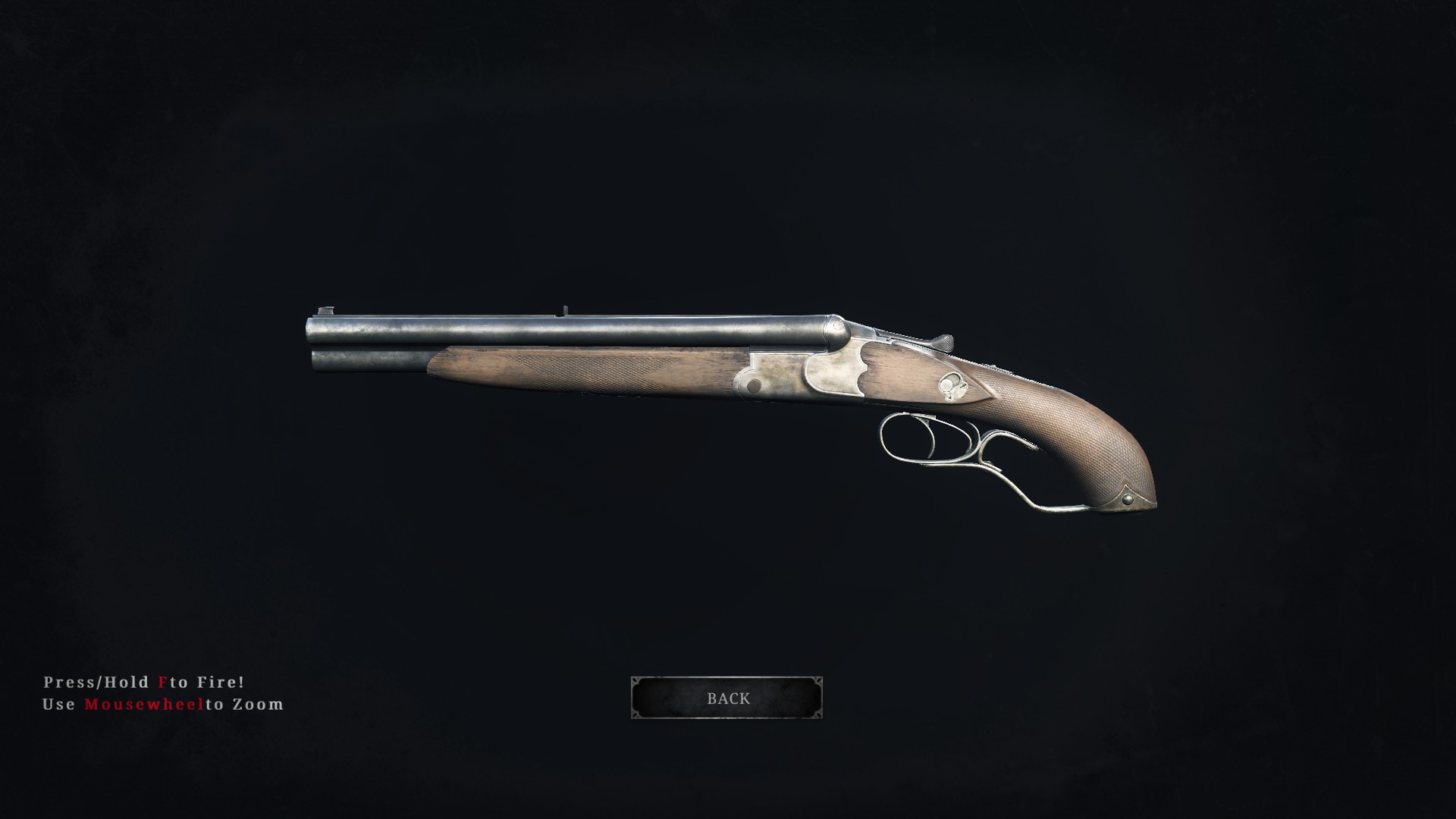
Weapons: A Saw-Cleaver - which rumors circulate about the the R&D wing of the General Staff is something that he picked up during his time as a medical officer in the Jaegers for admonishing patients, a sawed off Dust drilling of a pattern similar to the Luftwaffe M30, his service pistol, Jaeger-issue knife (usually with applied toxins), his overcoat.
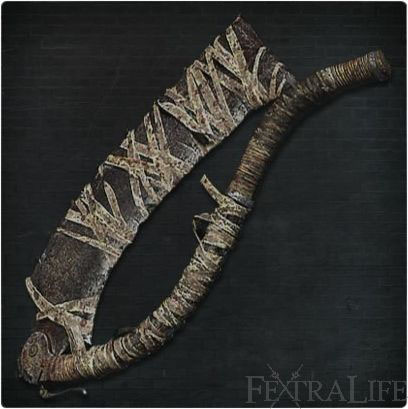
saw_cleaver.jpg

HuntDrillingHandcannon.jpg

Fighting style: He wields his blade like a traditional Hyperborean/Vacuoan navaja fighter, with the cleaver in one hand and his overcoat draped over his other forearm. Of course, this is his first trick. When the coat is over his offhand, this is when he grabs his gun and keeps it concealed. If he can hack his opponent to pieces, rip them up, or disembowel them with his blade, that is excellent.

But the cloak component of his literal cloak and dagger fighting style doubles as a cover for him to infiltrate a gun into the engagement. This gun is usually loaded with Wind and Lightning Dust shells in the shotgun chambers, and an armor piercing Hardlight Dust bullet in the rifle barrel. When the aptly named Donnergewehr goes off there is usually a whoosh-crack of concussive force that sends whatever was in its frontal firing arc and within a few meters of the muzzle flying, flooded with electricity, and whatever the gun was most directly aimed at gets a 9.5mm hole punched through it and whatever defenses it had.

Needless to say, the surprise only works once, and he needs to fill out the form for a new overcoat after every time he pulls the trick. So he mainly sticks to cleaver-fighting. Which he is good at. The heavy, oddly-shaped, sawback weapon, covered in fraying wraps and dried gore, combined the laughter of the truly mad man wielding it is usually enough to unsettle most of his opponents. Amzel is lithe and quick darting into measure and then backstepping out. The oddly shaped grip, and the folding blade create ample opportunity for change-ups and attacks at surprisingly long distance from unguarded angles. The weapon's mass and teeth do not often leave a second strike necessary.

The Saw-Cleaver turns the Grimm's monstrous forms against them, the larger and more grotesque the monster, the more the blade rips and ruins as it lacerates flesh. Amzel will boast of this particular detail aloud when other Atlesian forces are around, usually to reassure them that it isn't just for clearing away the excess clutter on a particularly noisome patient before a prosthetic can be fitted in.

He also keeps his pistol and knife on his person, as hold-out weapons. His slight-of-hand usually allowing him to draw and deploy one of them in the heat of battle, and with a surgeon's steadiness and precision.

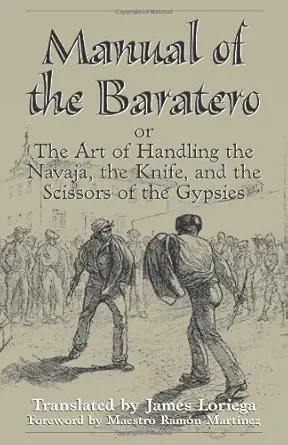
man-in-traditional-costume-armed-with-navaja-knife-with-cloak-as-a-shield-spain-spanish.jpg


51QQ3dt0YxL._SY445_SX342_FMwebp_.jpg


History: Like many sitting members of the General Staff, Amzel came up through the ranks of the Jaegers, where he initially served as a medical officer. However, he transferred out of the unit to escape the fallout of an apparent military-political scandal.

While several of his acquaintances were either covering their own asses or throwing blame on each other, Amzel was shuffled into R&D, where it was expected that he would just act as an administrator and organizer for whatever projects needed someone to coordinate personnel and assets, but where he quietly acquired competences and doctorates in physics, robotics, chemistry, and electrical engineering, at speed. Amzel proved to his superiors that the absence of sanity had left his mind with a great deal of free space. The Colossus-class walker, for instance, is a favorite proverbial punching bag of his.

Recently, he has been promoted to the head of the Special Construction Training Corps, based primarily out of the Jotun Installation in the cold wastes of northeastern Rana Niejta, where a group of mountains, unusual for the terrain rise high and act as a large natural curtain for the sizable box canyon between them. Here, he works bringing the next generation of cybernetics, machines, systems, and weapons into being.

Amzel is a good fit for Jotun, the Atlesian Area-51 analog. It is a source of paranormal, cryptid, and ghost stories that trickle into the Atlesian military's lore, with experiments concerning aircraft, android and walker systems, and Dust/chemical interactions mutating over retellings and speculation by drunken officers and contractors into stories about Faunus experimentation, occult rituals, and unworldly or unholy research projects taking place. Why wouldn't the commanding officer of the installation be a mad scientist with a comically Allomenian accent?

Currently, the two projects occupying his focus are the next generation 50-meter class walker - THERAPHOSA, and the Infantry Cybernetic Exoframe model: Dragon.

Politically, he aligns with the Folkers faction. Ostensibly because he sees droids deployed en masse as directly harming the Atlesian military's ability to react to fluid, violent, or escalating situations, moreover, he considers that integrating other kingdoms into their surveillance and intelligence networks as a deliberately exposing themselves to enemy infiltration, espionage, and shock assaults, as well as informing hostile/rival entities and powers of their technological and strategic capabilities and disposition.

Of course, Amzel is motivated at least in part by the fact that he is a Grimm Cultist who doesn't want to be discovered, and he worries that another country in their system may spot something that nobody in the Atlas military or security apparatus would think to look for and correlate.

The number of people who know of his true colors is incredibly small, only a single platoon in the SCTC. Jotun-4's elite security unit Grune Gespenster. (They, along with Jotun itself will be covered in a separate piece).

Each of whom was handpicked by Amzel for personal loyalty and 'like-mindedness.' Amzel never has any of them leave Jotun-4. They are a defensive unit whose entire structure is built around securing one building built halfway into the base of a mountain inside of a box canyon.

Though Amzel never takes the chance to sabotage a project placed under his authority. His pride as a (mad) scientist refuses to let him.

Role in the story/current ongoings: As of 2002, Amzel is working to bring the ICE Dragon project to life, enabling soldiers, no matter how wounded, to return to action, and with Aura-Wielder level capabilities to boot.

After the White Fang assassination attempt on Whitley Schnee left the boy as a pile of mostly-charred hamburger (they fired a trio of rockets at a limousine that they had thought Jacques was riding), and Jacques decided to make this the Military's problem, Amzel has at last found a test pilot for his Dragon frame in bad enough shape to need it. He's the military head of the program, and he works with Siarka Stark, the arms and shipping mogul who makes most of the ICE Dragon's components, and Kirk Lowenhardt, the government functionary sent to make sure the project is done on time and within requirements.

He was at the Vytal festival, he had been in Vale for the arms expo a week or two earlier and simply stayed over. This led to him scrounging and organizing a flotilla of smaller craft to evacuate Atlesians at least far enough away from Vale to the point where they can properly get underway to Atlas.

In the wake of the festival, Amzel vocalized his support for Hardy, asserting that the disaster was his every fear about Ironwood's doctrine realized on a grand scale.

In the months following the Vytal Festival, Amzel has been deploying his projects to the front. Whitley's combat data from the Vytal Festival has advanced the ICE Dragon project from the prototype stage to Pre-Production, and with that the Amphibious Powered Cavalry module has entered the initial field trial phase, with promises that it will be ready for full deployment some time in 2004.

Amzel spends his rare free time building his personal prototype for a reactor that harnesses energy released by the natural decay of high atomic weight metals.
 
Original Character, Do Steal: Admiral Gilbert Barker
  • Name: Gilbert Barker
  • Allusion: Admiral Ackbar from Star Wars, Julius Caesar,
  • Naming Process: The given name Gilbert is of Old German origin, meaning "bright pledge" or "famous promise," reflecting his steadfast loyalty and unbreakable oaths to Vale. The surname Barker has Old English roots, originally an occupational name for a tanner or one who strips bark from trees, but here it carries a subtle nautical echo—evoking the sharp, warning call of a lookout or the "bark" of naval guns, fitting for a commander renowned for his vigilant cries of impending danger.
  • Age: Late 50s
  • Background: Born into an aristocratic family from the Niederung sub-kingdom of Vale, Gilbert Barker is a goldfish Faunus whose early life of privilege was shattered when he was taken hostage by South Islands pirates during a trade voyage. Held captive for months, he keenly observed their tactics, command structures, and ship operations. When the pirate captain fell in a bloody skirmish with rival corsairs, Barker seized the moment—rallying the disoriented crew with calm authority and leading them to an improbable victory. Rather than continue the outlaw life, he convinced the survivors to surrender to Valean authorities upon return, testifying on their behalf to secure leniency for those who cooperated. This act of principled leadership made him a minor celebrity in Vale, celebrated in broadsheets as "the Pirate Admiral turned Patriot." The Valean Navy quickly recruited him, recognizing his intimate knowledge of pirate methods. He rose meteorically through the ranks, earning a lieutenancy and command of the frigate VSS Unicorn, where his daring pursuits of pirates, raiders, and rogue Mistralian privateers became legendary—dozens of captured vessels and disrupted smuggling rings to his credit. By the outbreak of the Faunus Revolution, he had reached full Captain and was given the Oberon-class carrier VSS Titania. When Revolutionary infiltrators crippled the Sulis Minerva Yards at Vale's easternmost naval base—blacking out power and destroying the base generators—Barker assumed emergency command. He brought Titania online under harrowing conditions, launched her full air wing to shield the docked fleet, and masterfully coordinated base defenses with incoming reinforcements. His trap-like encirclement annihilated or captured ninety percent of the raiding force, effectively ending large-scale Revolutionary assaults on Valean soil. Post-war, he was promoted to Admiral and led Titania's battlegroup in support of the Pandu Revolution, providing crucial air and amphibious support that helped topple the Kaurava regime. Upon further promotion to Chief of Naval Operations, he transferred his flag to the cutting-edge Banshee-class supercarrier VSS Archangel. Following the catastrophic Vytal Festival Attacks and the death of General Sir Aldric Varnholt during the defense of Vale, Barker assumed overall command of the Valean Defense Force, coordinating joint army-navy-Huntsman operations during the crisis.
  • Race: Faunus (goldfish traits—prominent orange-gold scales along neck and arms, large expressive eyes, subtle webbing between fingers, and fin-like protrusions along the spine and forearms)
  • Emblem: A stylized golden trap (spring-loaded jaws) encircling an anchor, symbolizing his knack for turning ambushes against the enemy and his unbreakable naval resolve
  • Weapon: "Vigilance": A Dust-infused naval cutlass with a reinforced basket hilt shaped like spreading fins. The blade can channel Water and Wind Dust to generate pressurized waves or razor-sharp air currents, ideal for close-quarters boarding actions or slicing through Grimm carapaces.
  • Semblance: "It's a Trap!"
    • Barker can project a brief, intense Aura pulse that heightens his tactical intuition and reveals hidden threats—illuminating concealed enemies, detecting ambushes, or exposing structural weaknesses in enemy formations within a moderate radius. The effect manifests as a sudden, instinctive "shout" in his mind (and sometimes vocally), allowing him to warn allies and counter traps before they spring. Prolonged use drains Aura rapidly, but it has saved entire fleets on multiple occasions.
  • Appearance: Tall and imposing with smooth orange-gold scales that catch the light, exceptionally large and expressive amber eyes that seem to take in everything, a broad domed head with subtle fin ridges, and a deep, resonant voice that carries authority even in a whisper. His posture is upright and alert, moving with deliberate, fluid grace.
  • Outfit: Crisp Valean admiral's dress uniform in deep navy blue with gold braid and epaulets, adorned with rows of campaign medals and the Chief of Naval Operations insignia. A ceremonial white cape flows from his shoulders during formal occasions, and he always wears reinforced gloves to accommodate his webbed fingers. On the bridge, he favors a practical greatcoat version.
  • Personality: Cautious yet decisive, Barker is a master strategist who prizes preparation and intelligence over bravado. Famous for his gravelly warnings of "It's a trap!" when sensing danger, he is deeply distrustful of overconfidence and always plans for worst-case scenarios. He commands profound respect from subordinates for his cool-headedness under fire and genuine care for crew welfare—treating human and Faunus sailors alike with fairness forged from his own experiences of prejudice and captivity. Though soft-spoken in council, his insights are incisive and often prove prescient. He harbors no bitterness from his piratical past or Faunus heritage, instead channeling it into relentless protection of Vale's seas and citizens. A devoted mentor to younger officers, he is nonetheless uncompromising when lives are at stake.
  • Notes: Widely regarded as Vale's greatest living naval mind, Barker serves as a stabilizing force in joint command structures, often mediating between army generals and Huntsman leaders. His Faunus heritage and aristocratic roots make him a bridge figure in post-Revolution Vale, though some conservative factions still whisper about his "pirate sympathies." Ozpin held him in high esteem for his moral clarity, and Barker remains a key ally in coordinated defense efforts against Salem's forces. Despite his triumphs, he carries quiet guilt over losses he couldn't prevent, driving his perpetual vigilance.
Yes, it's a bit on the nose but what the hell, I always loved Admiral Ackbar.
 
Original Character, Do Steal: Thanh Qinglong (alias: Thanh the Immortal)
  • IHBwvmd.jpeg
    • Name: Thanh Qinglong (alias: Thanh the Immortal)
    • Allusion: Killer Croc from Batman: Arkham Asylum, The Lizard from Spider-Man, Imperfect Cell from Dragon Ball Z, Darth Maul from Star Wars
    • Naming Process: The given name Thanh is Vietnamese in origin, meaning "green" or "blue-green," evoking the vivid coloration of his scales and his serpentine, predatory nature. The surname Qinglong draws from the Chinese mythological Azure Dragon (Qīnglóng), one of the Four Symbols representing the east, spring, and elemental wood—symbolizing immense power, regeneration, and primal ferocity. His weapon's name, "Rong," is an alternate phonetic rendering of the Vietnamese/Chinese word for "dragon" (rồng/lóng), tying his identity to draconic myth while hinting at his self-perceived supremacy.
    • Age: Late 40s (exact age uncertain due to his regenerative Semblance slowing visible aging)
    • Background: Thanh Qinglong emerged from the shadows of Mistral's capital underworld with no clear origins—rumors whisper of a brutal childhood in the slums where his extreme Faunus traits marked him as a monster even among his own kind. He quickly rose from low-level enforcer and assassin to a feared crime lord, building an empire on smuggling, slavery, extortion, and underground blood sports. His operation trafficked in both human and Faunus captives, and he cultivated a personal harem through seduction, coercion, or outright force—targeting powerful women like Huntresses to break and claim as trophies. His greatest miscalculation came when he attempted to enslave the renowned Huntresses Summer Rose and Saia Sarkara (then Saia Rhadri) after luring them into an illegal fighting ring. In the ensuing battle, Summer blinded him with her Silver Eyes and severed an arm, while Saia unleashed her devastating Semblance to vaporize everything below his shoulders. Against all odds, Thanh regenerated and escaped, though the defeat shattered his empire and left him a hunted fugitive. Embittered and stripped of wealth, he pledged his lethal skills to the White Fang as an assassin, carrying out messy, terror-inducing kills to sow fear among humans. Within the organization, he schemes constantly for power, despising Adam Taurus's leadership and plotting a violent takeover to remake the White Fang into a pack of depraved predators under his rule. His survival of near-total annihilation only fueled his myth as "Thanh the Immortal," a boogeyman whispered about in Mistral's dark alleys. Ultimately his loyalty is to himself, though any master who allows him free reign with his lusts for meat, power, and women will do-Until he can usurp them.
    • Race: Faunus (komodo dragon traits—extensive green scales covering most of his body, powerful reptilian tail, razor-sharp claws on hands and feet, venomous fangs, forked tongue, and bestial mannerisms)
    • Emblem: A coiled green dragon devouring its own tail, jaws dripping with crimson flames—symbolizing endless regeneration, insatiable hunger, and self-sustaining predation
    • Weapon: "Rong": A massive double-bladed monk's spade polearm, with one end a crescent shovel blade for slashing and entombing foes, the other a spear point for piercing. Integrated Fire Dust reservoirs along the shaft unleash twin flamethrower jets from dragon-head nozzles, allowing him to bathe close-range enemies in searing flames or propel himself with explosive bursts.
    • Semblance: "Rejuvenation"
      • Thanh possesses an extreme regenerative healing factor capable of reconstructing lost limbs, organs, or even his entire body from near-total destruction—as demonstrated when he survived vaporization below the shoulders. Regeneration speed and completeness depend on remaining Aura reserves and available biomass; when Aura is depleted, he requires consumed organic matter (preferably fresh) to fuel reconstruction. This makes him extraordinarily difficult to kill permanently, though sufficient sustained damage or Aura exhaustion can incapacitate him temporarily.
    • Appearance: An imposing, monstrous figure over eight feet tall with a heavily muscled, broad-shouldered build. His body is covered in thick, iridescent green scales that gleam wetly in light, a long powerful tail ending in barbed ridges, clawed digits on hands and feet, protruding venomous fangs, red slit-pupil eyes, and a bald, domed head with pronounced reptilian ridges. His movements are unnervingly fluid and predatory, often low to the ground with bestial twitches and a large, toothy smile.
    • Outfit: Minimalist and primal—loose black pants secured with a blood-red sash, bare-chested to display his scaled physique and intimidate foes. No armor or footwear, relying on his natural toughness and regeneration; the sash often conceals small Dust vials or trophies from victims. Occasionally will don a cloak to try and disguise himself.
    • Personality: Deceptively refined on the surface, Thanh speaks in cultured tones and postures as an honorable warrior-philosopher when it serves him, quoting ancient Mistralian texts on strength and survival. This is a thin veneer over a craven, sadistic monster—arrogant, manipulative, and utterly predatory. He views himself as the ultimate alpha, all others as prey or tools; women in particular are objects for conquest, breeding, or consumption. Ruthlessly cunning, he prefers ambush and psychological torment over fair fights, but revels in brutal close combat when cornered. His defeats have only deepened his paranoia and vindictiveness—he nurses eternal hatred for Summer Rose and Saia Sarkara, while scheming against Adam Taurus. Cannibalistic urges drive much of his depravity, seeing the act as both sustenance and dominance.
    • Notes: A terrifying wildcard in the White Fang's radical wing, Thanh's messy assassinations and cannibalistic reputation make him as much a liability as an asset to the cause. His extreme Faunus traits and Semblance isolate him even from many White Fang members, who fear his ambitions to turn the organization into a horde of flesh-eating marauders. He excels in aquatic or sewer environments for stealth kills, using venomous bites, flames, and claws in concert. Despite his arrogance, he is cautious around stronger warriors or overwhelming destructive forces, always planning multiple escape routes. A true monster with no redemption in sight—his immortality only ensures his evils endure.
 
Last edited:
Original Character, Do Steal: Rashid Al Ghul
Since there isnt many villain for ren to face.

Here is my take and using inspiration from Ra a Ghul for the villain.

Name: Rashid al-Ghul (alias: The Eternal Head)
Allusion:
Ra's al Ghul (DC Comics), Ozpin (RWBY), Alexander the Great, the Green Knight (Arthurian myth), the Judge (Blood Meridian)

Naming Process:
The name Rashid is Arabic in origin, meaning "rightly guided" or "one who follows the correct path," reflecting his absolute belief that his worldview is the only valid course for humanity. The title al-Ghul ("the Demon" or "Devourer") was not inherited but earned over centuries, whispered by survivors of civilizations he destabilized or erased. The alias The Eternal Head reflects both his immortality and his self-appointed role as the guiding intellect of humanity's evolution.

Age:
Appears mid-to-late 40s
(True age exceeds 200 years due to repeated use of his Semblance)

Background:
Rashid al-Ghul was born in the harsh deserts of Vacuo during an era of endless tribal warfare. A prodigious scholar and tactician, he sought not peace, but order that could endure suffering. His discovery of an ancient Aura-saturated spring,later known as the Well of Rebirth, granted him functional immortality, at the cost of emotional erosion and moral detachment.
Over centuries, Rashid observed kingdoms rise, decay, and collapse under what he deemed predictable weaknesses: compassion, hesitation, mercy, and love.

Concluding that humanity could not be trusted to evolve naturally, he founded The Verdant Circle, a clandestine global organization dedicated to engineering societal collapse so stronger civilizations could emerge.
Rashid's greatest personal failure came through his daughter, Anzu al-Ghul, who rejected his doctrine and fled the Circle to live peacefully in the village of Kuroyuri. When the village was annihilated by the Nuckelavee, Rashid considered her death and that of her husband, a necessary purification. Their inability to dominate their fate marked their bloodline as weak.

For decades, Rashid believed that line extinct.
The survival of Lie Ren shattered that certainty.
Rather than rejoice, Rashid resolved to test his grandson to determine whether Ren was an exception worthy of survival, or proof that the bloodline should have ended entirely.

Race:
Human

Emblem:
A green ouroboros entwined around a leafless tree, its roots cracking a broken crown—symbolizing cyclical destruction, selective rebirth, and the supremacy of ideology over legacy.
Weapon:
"Al-Khadir"
A curved, single-edged saber forged from rare alloys and inscribed with ancient glyphs. The blade houses interchangeable Dust channels (Poison, Wind, and Gravity Dust most commonly), allowing Rashid to weaken, disarm, or control opponents rather than overwhelm them outright. The hilt conceals a compact Dust-triggered sidearm used only as a last resort.

Semblance:
Cycle of Renewal
Rashid can transfer his consciousness into a specially prepared host upon death, overwriting the host's Aura and identity. He gains a weaken copy of the host semblance and a percentage of the host aura is permanent added tp his aura.
Requires extensive ritual preparation and Aura compatibility

Each transfer degrades his emotional capacity and fragments long-term memory and it will take time for Rashid to recover his memory and emotional capacity multiple uses in a quick session. Can cause insanity for rashid.
If ritual is interupted or fair there is a backlash.
Hosts gradually take on Rashid's physical traits and mannerisms
Explains his apparent immortality and centuries-long influence

Self-Imposed Limitation:
Rashid refuses to use Lie Ren as a host. To do so would invalidate the "test" of whether compassion can survive without domination.

Appearance:
A tall, lean, imposing man with an austere presence. His face is sharply defined, framed by long black hair streaked with silver, usually tied back. His eyes are unnaturally vivid green—bright, alert, and unsettlingly calm. He bears few scars despite centuries of battle, his posture rigid and controlled, radiating quiet authority rather than brute menace.

Outfit:
Flowing dark green and black robes layered over lightweight combat armor, blending ancient ceremonial garb with modern tactical design. Often wears a hooded cloak when operating covertly. His attire emphasizes discipline, restraint, and timelessness rather than intimidation.

Personality:
Cold, articulate, and relentlessly composed. Rashid speaks with the calm certainty of someone who believes history itself validates him. He is not sadistic—cruelty is merely a tool—but he is utterly ruthless. To him, love is a weakness, mercy a flaw, and grief an inefficiency.

Rashid views people as variables in an equation of survival. Bloodlines, cultures, and even nations are acceptable sacrifices if they fail to meet his standard of resilience. He is deeply offended by emotional defiance rather than physical resistance.
Toward Ren, Rashid is uniquely conflicted, proud of his discipline, disgusted by his mercy, and obsessed with determining whether Ren's existence disproves centuries of belief.

View of Ren's Parents:
Their deaths were justified
Their choice to protect others instead of dominating fate was weakness
Their elimination was a purge, not a tragedy
Ren's survival is a final variable that must be resolved

The Test of Ren:
Rashid engineers Grimm incursions, impossible missions, and moral dilemmas designed to replicate Kuroyuri's fall. He observes whether Ren breaks, hardens, or transcends loss.
Rashid's judgment is simple:
If Ren survives without embracing dominance, then strength without cruelty may exist.
If Ren fails, the bloodline should have ended.
 
Original Character, Do Steal: Colonel Sebastian Zaroff
BH62gyY.jpeg
  • Name: Sebastian Zaroff
  • Allusion: Colonel Sebastian Moran from Sherlock Holmes stories, General Zaroff from "The Most Dangerous Game"
  • Naming Process: The given name Sebastian directly references the infamous Colonel Sebastian Moran, Sherlock Holmes' most dangerous adversary and a peerless marksman. The surname Zaroff is drawn from General Zaroff, the aristocratic big-game hunter who turned to pursuing human prey for ultimate thrill. Together, the name evokes a refined yet predatory killer who views sentient beings as the ultimate quarry.
  • Age: Approximately 100 years old (appears in his late 50s due to exceptional vitality and possible Aura preservation)
  • Background: The last heir of the Albion noble family Zaroff, Sebastian Zaroff was born in the year 1889 AMF in Oberon-on-Aubrey, a small town outside of Camelot. He was educated in Hermia Academy, a model student and great athlete. Despite his Faunus origins, he was well liked and respected due to the Zaroff's family long history of serving the Crown. He joined the Albion Army, rising through the ranks and being assigned to Pandu. He gained great acclaim as a Grimm hunter, heroically fighting numerous monsters to protect everything from small villages to Hastinapur, the capital of Pandu itself. With the outbreak of the Great War, he was assigned to the 7th Cavaliers "Balls and Bayonets" Royal Brigade, a special reconnaissance unit that fought Mistralian and Mantlean Forces in the Anima campaigns. Promoted to Colonel, the war forged his reputation as a cold, unflinching soldier whose exploits were legendary. When the Empire collapsed, he drowned his sorrows in exile, lamenting the loss of grand conflict. Decades later, he was recruited into the Kauravan coup that overthrew the Sarkara royal family in Pandu, savoring the chaos of palace intrigue and battlefield glory once more. His triumph was short-lived—Arjun and Saia Sarkara returned, shattering the usurpers and forcing Zaroff into hiding. Now living in exile, he sustains himself through mercenary work and his true passion: hunting the most dangerous game—humans and Faunus alike—for the sheer exhilaration. He has allied loosely with Salem, drawn by the promise of one final, apocalyptic war worthy of his legacy. Along the way, he has taken a young Panduvian retainer named Asok as a personal servant and spotter, and he once regarded the assassin Marcus Black as a rare worthy opponent, expressing interest in claiming his skull as a trophy.
  • Race: Faunus (tiger traits—prominent striped patterns across his skin, sharp retractable claws, amber eyes with slit pupils, subtly feline ears, and pronounced canines)
  • Emblem: A stylized tiger's head in profile, superimposed over crossed rifle barrels with a single drop of blood at the crosshairs—symbolizing precision predation and the thrill of the hunt
  • Weapon: "Final Problem": A heavily customized Martin 1895 lever-action rifle chambered in .45-70 Government, enhanced with Dust-infused rounds for explosive, incendiary, or kinetic penetration effects. Ideal for extreme-range sniping against armored or Grimm targets.
    • Secondary: "Basher": A straight-bladed, three-quarter basket-hilted broadsword with a Dust channel along the edge for enhanced cutting power or elemental bursts, used for close-quarters finishing or dueling.
  • Semblance: "Old Timer"
    • Sebastian possesses an impeccable internal chronometer, allowing him to track time with perfect accuracy down to fractions of a second. While not directly offensive, it elevates his marksmanship to legendary levels—calculating bullet drop, wind drift, and target movement with mathematical precision. It also aids tracking by timing echoes, heartbeats, or footsteps, making him an unparalleled hunter in any environment.
  • Appearance: Tall and imposingly built with the lean, corded musculature of a lifelong predator, silver-streaked dark blonde hair slicked back, a meticulously groomed upper-class mustache, and piercing blue eyes. His skin bears faint orange-black tiger stripes across shoulders, arms, and torso. Despite his century of life, he carries himself with vigorous poise, his face weathered but handsome in a severe, aristocratic way.
  • Outfit: Classic big-game hunter attire refined for aristocratic taste—a tailored khaki safari jacket with multiple ammunition loops, dark blue shirt, light blue vest, riding breeches, polished boots, and a signature monocle over his right eye. A crimson tie and leather bandolier complete the ensemble, with "Final Problem" slung across his back and "Basher" at his hip.
  • Personality: Suave, erudite, and insightful, Zaroff presents himself as a cultured gentleman who waxes philosophical about the nobility of the hunt and glorious war. Beneath this polished facade is a thrill-seeker addicted to challenges and danger—he openly boasts of mounting trophies from sentient kills and views boredom as a fate worse than death. Nostalgic for his glory days, he romanticizes war and the hunt while despising peace and mediocrity. Coldly pragmatic in combat, he respects only worthy prey and competent rivals, but ultimately is kind to the innocent and still has enough honor to protect them from danger. He is a perfect gentleman to women, set in his ways, and has great wisdom he dispenses-Though often ignores it himself. His advancing age has instilled a fatalistic desire for one last blaze of glory rather than quiet decline.
  • Notes: A relic of Remnant's imperial past, Zaroff embodies the decaying aristocracy's worst excesses—refined depravity wrapped in nostalgia. His mercenary work stems from a death wish for epic battle rather than ideology. He maintains a macabre trophy room wherever he settles, filled with taxidermied heads and preserved parts from notable kills (Grimm, human, Faunus). Asok serves loyally but warily, handling logistics while Zaroff focuses on the hunt. Though slowed slightly by age, his experience, Semblance, and sheer ruthlessness make him lethally dangerous at range—few survive long once he declares them "worthy game."
 
Last edited:
Original Character, Do Steal: Count Caliban Testoasa
  • Name: Count Caliban Testoasa
  • Allusion: Darth Vader from Star Wars, Scarpia from the opera Tosca, and Don Juan from the classic story.
  • Naming Process: The given name Caliban derives from Romani origins meaning "black," evoking darkness, monstrosity, and unrelenting shadow—a nod to his implacable, fear-inducing presence. The surname Testoasa is Romanian for "tortoise," symbolizing armored resilience and slow, inexorable advance, aligning with his group's thematic inspiration from the Four Gods (specifically the Black Tortoise of the North, guardian of endurance and winter's unyielding cold).
  • Age: Mid-50s (appears ageless and mechanical beneath his armor due to extensive cybernetic reconstruction)
  • Background: Born into the decadent nobility of Hispania, Vacuo as a count of a minor but wealthy desert holding, Caliban Testoasa embodied the kingdom's cutthroat aristocratic culture—ruthless, entitled, and obsessed with legacy. His swordsmanship skills were second to none and with his Semblance, made him a feared mankiller. He grew up into a playboy womanizer, and he got into the drug trade in secret. Coveting Isabel Arc for her beauty, strength, and connection to Vale's prestigious Arc bloodline, he orchestrated a vile Scarpia Ultimatum when Team AARN came on a mission to his town: drugging the water supply of his entire town and holding its inhabitants hostage, demanding her hand in marriage to "save" them. Isabel accepted, pretending to send her friends away while secretly she was held hostage. Her team figured out the truth and returned to rescue her. When Nicholas Arc intervened to rescue his future wife, the ensuing duel was cataclysmic: Nicholas's overwhelming skill and power shattered Caliban's defenses, severing all four limbs and leaving him broken on the brink of death in the collapsed ruins of his castle. Though dead by everyone, Caliban was discovered and rebuilt by the brilliant but amoral scientist Arthur Watts, who transformed him into a cyborg—fusing advanced Atlesian prosthetics, life-support systems, and experimental Dust conduits into his ravaged body. Reborn stronger and more machine than man, Caliban now serves as an enforcer for Watts, hunting enemies with mechanical precision and harboring burning hatred for the Arc family. His resurrection has made him a figure of terror: an implacable black-armored juggernaut who strides through gunfire and explosions unmoved, slaughtering opposition in mook horror shows that cement his mythic dread.
  • Race: Human (heavily cybernetically augmented; original organic body largely replaced below the torso and limbs)
  • Emblem: A stylized black tortoise shell cracked by crimson lightning veins, set against a void-black shield—representing unbreakable defense pierced only by overwhelming force, and his vengeful rebirth
  • Weapon: "Furia de Sangre" (Blood Fury): A massive two-handed montante sword with a broad, serrated blade infused with experimental Lightning Dust conduits. The sword crackles with red electrical arcs on activation, capable of discharging devastating shockwaves, parrying projectiles with electromagnetic fields, or channeling bolts for ranged kills. Its weight and reach make it a terror in close combat, augmented further by Caliban's cybernetic strength.
  • Semblance: "Tortuga"
    • Caliban can absorb incoming kinetic energy (impacts, blasts, strikes) and redirect it to reinforce his body's durability or cybernetic systems—hardening his armor, amplifying servo strength, or even venting excess as explosive bursts. This made him notoriously tank-like even before reconstruction; post-cyborg, it synergizes with his mechanical frame for near-indestructibility. Only Nicholas Arc's legendary prowess found gaps to overwhelm the absorption threshold.
  • Appearance: Towering and broad-shouldered at over seven feet in full armor, with a hulking, mechanical silhouette that radiates menace. Beneath the helmet (rarely removed), his original face is pale and scarred, with cybernetic optics glowing red and a respirator mask concealing burn damage. His limbs are sleek black prosthetics with exposed red energy conduits pulsing like veins.
  • Outfit: Full-body black cybernetic armor resembling heavy Spanish knight plate fused with Atlesian power suit aesthetics—matte obsidian plating, a flowing dark cape, reinforced pauldrons etched with tortoise motifs, and an imposing helmet with a skull-like visor and built-in respirator that emits rhythmic mechanical breathing, with his remaining white hair flowing out the back. Red Lightning Dust glows along seams and joints, flaring during combat.
  • Personality: Cold, aristocratic, and consumed by entitlement turned to bitter rage, Caliban speaks in a deep, modulated voice (augmented by vocal synthesizers) laced with cultured disdain. He views himself as a tragic dark lord wronged by fate, justifying atrocities as the privileges of superiority. Implacable and patient, he crushes opposition methodically, savoring fear in others. Only the hope of revenge on the Arcs, Nicholas in particular, has kept him some succumbing to despair at being Watts' slave.
  • Notes: As the "Black Tortoise" enforcer among antagonistic circles tied to Grimm Cults and Salem herself, Caliban embodies unyielding defense and slow-burning retribution. His cybernetic enhancements require periodic maintenance by specialists like Watts, making him vulnerable if isolated from tech support. Despite his power, Nicholas Arc's victory haunts him as proof of mortal limits.. A walking engine of terror, he inspires dread in underlings and allies alike, his mechanical breathing a harbinger of doom.
 
Original Character, Do Steal: Iridescent, Salem's Gleeful Maiden Candidate New
  • Name: Iridescent (prefers "Iri")
  • Allusion: Kitty Pryde (Shadowcat) from X-Men (for phasing Semblance), Harley Quinn from DC Comics (for cheerful villainy), with thematic ties to Iris, Greek goddess of the rainbow (for iridescent, color-shifting motifs) and Golden Hair from the fairy tale of the same name.
  • Naming Process: Iridescent derives from the Latin "iridescens," meaning "shining with rainbow colors" or "displaying a play of lustrous changing colors," reflecting her rainbow-themed weapon, versatile Semblance that shifts her physical state like light refracting, and her deceptive, ever-smiling facade that masks deadly intent.
  • Age: Early 20s
  • Background: Born to a disgraced Valean noble who spiraled into crippling debt, Iridescent's early life descended into horror when her family was enslaved and forced into underground gladiatorial death matches. There, her father met her mother amid the brutality, and together they conceived her in the shadows of captivity. At just six years old, she witnessed her parents' gruesome devouring by Grimm in a rigged arena spectacle, an event that shattered her innocence and ignited a sadistic glee in chaos and pain. Orphaned and hardened, she clawed her way through Mistral's underbelly, honing her Semblance in survival scraps until Salem's agents recruited her as a "Dark Maiden" candidate—a twisted counterpart to Ozpin's Maidens. In direct competition with Cinder and other Maiden Candidates, Iridescent cheerfully serves Salem for her own sadistic pleasures. Operating from the shadows with gleeful efficiency, she sows discord among humanity, manipulates factions, and prepares cataclysmic strikes—all while charming her way into trust.
  • Race: Human
  • Emblem: A stylized rainbow prism fracturing into jagged, blood-red shards.
  • Weapon: "Sunshine Day": A vibrant, rainbow-patterned umbrella with a reinforced core of solid aluminum fashioned into a brutal mace. In umbrella form, it serves as a shield or means of transportation when Iridescent is in low density mode, while also serving as a brutal melee weapon in her high density mode.
  • Semblance: "Density Control"
    • Iridescent can manipulate her body's molecular density at will—decreasing it to phase through solid matter like walls, bullets, or restraints for perfect infiltration and evasion, or increasing it to become denser than lead for superhuman strength and durability (punching through barriers or tanking heavy hits). High-density mode enhances power but reduces speed due to added weight, forcing strategic shifts in combat. She can selectively apply it to limbs or objects in contact for hybrid tactics, like phasing a hand through armor to strike vitals.
  • Appearance: A striking young woman with smooth dark skin that contrasts vividly against her stark white hair, styled in loose, playful waves. Her eyes shimmer with an iridescent purple hue, wide and innocent at first glance but often twisting into manic glee. Lithe and athletic build, with a perpetual slasher smile that reveals too-sharp teeth, unnerving even hardened villains like Cinder.
  • Outfit: A tailored purple pinstripe suit with subtle rainbow accents on the lapels and cuffs, paired with a crisp white shirt, black tie, and polished loafers. The ensemble exudes professional charm, concealing hidden Dust pouches and weapon compartments; a matching fedora often tops it off for dramatic flair.
  • Personality: Effervescent and affably evil, Iridescent bubbles with cheer and nicknames ("Call me Iri!"), treating atrocities like playful games and victims like toys. Her constant smile masks a deep-seated sadism—she craves power not for security (like Cinder) but to inflict pain and revel in suffering for sheer amusement. Troubled by her past, she channels trauma into whimsical cruelty, maintaining an arrested childlike wonder amid horror. Loyal to Salem with fanatical joy, she's manipulative and unpredictable, disarming foes with charm before striking lethally.
  • Notes: Iridescent serves as Salem's wildcard Maiden aspirant, foiling Cinder's ambition-driven schemes with her pure delight in destruction. Her Semblance's versatility makes her a ghost in infiltration ops or a juggernaut in brawls, but over-reliance on density shifts can leave her vulnerable mid-transition. Unnervingly cheerful even in defeat, she views setbacks as "fun plot twists," always plotting brighter, bloodier comebacks. A dark mirror to Beacon's hopeful students, her presence heralds colorful chaos in Vale's shadows.
 
On Worldbuilding: Why Total Population Concentration is Bad in Remnant New
First, on the real world:

While it is technically possible for very small countries (city-states like Vatican City, Monaco, or Singapore) to have their entire population concentrated in what is essentially one urban area, for any country with a substantial population (tens of millions or more), concentrating everyone into a single city is practically impossible due to a combination of physical, logistical, economic, environmental, and social constraints. Here's a clear breakdown of the main reasons:

1. Limited Physical Space and Housing

Even the densest cities have limits to how many people can live comfortably and safely per square kilometer.
High-density urban areas (e.g., Manila or Mumbai) reach ~40,000–70,000 people/km² in their core districts, but sustaining that across an entire city is rare and comes with severe quality-of-life issues.
For a country of 100 million people at a realistic average density of 10,000–20,000 people/km² (similar to Tokyo or New York metro), the city would need 5,000–10,000 km²—roughly the size of Lebanon or Connecticut. Larger countries (e.g., 330 million like the U.S.) would require far more land, approaching the size of entire U.S. states.
Building upward (skyscrapers) helps but is extremely expensive, energy-intensive, and limited by engineering and safety concerns.

2. Food and Water Supply

Cities do not produce enough food locally. Most rely on surrounding rural areas or imports for agriculture.
Concentrating a national population in one place would eliminate nearby farmland, forcing total dependence on long-distance food transport or experimental solutions like vertical farming, which currently cannot scale to feed tens or hundreds of millions affordably.
Water is another bottleneck: massive cities require enormous freshwater sources (rivers, aquifers, reservoirs). A single city housing an entire nation would quickly exhaust local supplies and require impractical infrastructure to pipe in water from hundreds or thousands of kilometers away.

3. Energy and Infrastructure Overload

Power generation, waste management, transportation, and sanitation systems would be overwhelmed.
A city of 100+ million would need power plants, sewage systems, and roads/public transit on a scale never built. Current megacities already struggle with blackouts, traffic, and pollution at far smaller sizes.
Waste disposal alone would be catastrophic—imagine the garbage and sewage output of an entire country concentrated in one spot.

4. Economic and Resource Distribution

Economies depend on geographic diversity: mining, forestry, fishing, manufacturing, and energy production often require specific locations (mountains, coasts, fertile plains).
Forcing everything into one city would destroy most primary industries and create extreme vulnerability in supply chains. A single disruption (e.g., blocked highway or port) could cause widespread shortages.

5. Environmental and Health Risks

Extreme concentration creates heat islands, air pollution, and disease transmission risks (as seen in pandemics).
Loss of natural ecosystems would accelerate climate impacts, soil erosion, and biodiversity collapse.
Overcrowding correlates with higher stress, crime, and mental health issues.

6. Vulnerability to Disasters

Putting an entire nation in one location is a massive single point of failure. A natural disaster (earthquake, flood, hurricane), war, or pandemic could devastate or wipe out the population.
Spreading people across a country provides resilience.

Exceptions: City-States
Very small nations like Singapore (~5.9 million people, ~730 km²) or Monaco (~39,000 people) function as city-states because their populations are tiny, they have high wealth for imports/infrastructure, and they rely heavily on trade. Even Singapore actively manages density with strict planning and imports most food and water.

In summary, while technology could theoretically mitigate some issues (e.g., advanced desalination, vertical farms, hyper-efficient transit), the combined constraints of land, resources, infrastructure costs, and risk make it impossible in practice for any moderately large country to put its entire population in one city without catastrophic consequences. Populations naturally spread out because countries need geographic diversity to function sustainably.

And for Remnant:

In Remnant, the four main kingdoms (Vale, Mistral, Atlas, Vacuo) each have a single dominant megacity or capital that serves as the primary hub of population, government, defense, and technology. Yet, despite the existence of these megacities—and even extreme measures like Atlas literally floating its capital above the ground—no kingdom has ever succeeded in housing its entire population within one city, nor would such a setup be viable or historically realistic given the constant, existential threat of the Grimm. Here's why:

1. Grimm Are Attracted to Concentrated Negative of Human Presence and Negative Emotions

Grimm are drawn to large gatherings of humans, especially where negative emotions (fear, anger, despair) are high. A single megacity containing an entire kingdom's population would act as a massive beacon, attracting endless hordes of Grimm far beyond what any defense could sustainably repel.

2. Single Point of Failure Is Catastrophic

If a megacity housing everyone falls—even temporarily—the entire kingdom collapses. There is no fallback population, no secondary settlements to regroup or rebuild. No human civilization in history has ever put all of its eggs in one basket this way, for good reason: It would be suicide. In a world like Remnant that is a death world for humans, it would be even more foolhardy.

3. Resource and Logistic Requirements Cannot Be Fully Centralized

As established earlier, even with Dust's miraculous properties, kingdoms still need distributed agriculture, Dust mining, water sources, and other raw materials (metals, food, etc.).
Dust and other mines would often be in dangerous, Grimm-infested wilderness. Farming requires arable land outside protected urban cores. Trying to feed and supply tens of millions entirely within one city would require unsustainable imports from undefended territories or vertical/indoor farming on a scale never achieved in the real world, which would be even more vulnerable to natural disasters, accidents, failures of utilities, or other problems.
Atlas came closest to centralization but still relied on Mantle below for labor, mining, and basic industry-when Mantle was cut off, the floating city quickly became untenable.

4. Geographic and Natural Defenses Dictate Settlement Patterns

Kingdoms were deliberately established in locations with natural barriers that limit Grimm incursions (Vale's cliffs and forests, Mistral's mountains and plateaus, Vacuo's deserts, Atlas/Solitas's extreme cold).
These natural defenses protect a core city but cannot be scaled to enclose an entire kingdom's worth of territory or population.
Distributing some population into smaller, defensible small cities, towns, villages and outposts spreads the Grimm threat and allows resource extraction from wider areas.

5. Historical and Cultural Development Prevented Extreme Centralization

After the Great War, kingdoms were rebuilt with a focus on survival against Grimm, not maximum urban density. Societies evolved to maintain Huntsmen academies, mobile defenders, and scattered settlements because total centralization had already been proven suicidal.
Smaller villages and nomadic/trading routes (especially in Mistral and Vacuo) are necessary for cultural diversity easing tensions, and economic resilience. Forcing everyone into one city would require forcibly relocating millions—an impossible task under constant Grimm pressure.

6. Psychological and Social Sustainability

Cramming an entire kingdom into one city would generate enormous negative emotions (overcrowding, inequality, resource scarcity), further fueling Grimm attacks in a vicious cycle.
Remnant's people need space—both literal and psychological—to maintain hope and stability. Distributed populations reduce the emotional "signal" that attracts Grimm.

In summary, while Remnant's megacities are impressive feats of engineering and technology, the ever-present Grimm would force a distributed model of civilization. Total centralization would create an irresistible target, eliminate resource diversity, and guarantee extinction if defenses ever failed. Kingdoms survive precisely because they spread risk across protected cores and necessary outlying settlements—much like real-world nations avoid putting all citizens, agriculture, and industry in one place for similar reasons of resilience and vulnerability.
 
On Worldbuilding: Why Mundane Resources Are Still Needed in Remnant New
Remnant's civilizations in RWBY rely on Dust as their primary energy source and elemental manipulator, but even with its near-miraculous properties, the kingdoms still fundamentally require a vast array of conventional minerals, fossil fuels, and robust logistical systems (no matter what CRWBY says). Dust provides power and effects—it does not create physical matter, biological necessities, or stable chemical feedstocks. Below is a detailed explanation of why Remnant needs all of these resources, grouped by function, and why no combination of Dust varieties can ever fully substitute for them.

1. Structural and Construction Materials
These minerals form the physical backbone of everything built in Remnant—cities, airships, weapons, robots, walls, and infrastructure.
  • Iron, Aluminum, Titanium, Chromium, Manganese, Molybdenum, Tungsten, Vanadium, Niobium, Zinc, Beryllium
    • Required for steel and high-strength alloys used in skyscrapers, airship hulls, robotic frames (Atlesian Knights, Penny), bridges, railways, and weapons.
  • Lead
    • Radiation shielding in advanced labs, cables, alloys.
  • Fossil Fuels
    • Paints and coatings, adhesives, explosives (non-Dust), insulation, solvents, asphalt.
Dust cannot replace these because it is consumable and lacks the mechanical properties (tensile strength, ductility, heat resistance) needed for permanent structures.

2. Electronics and Advanced Technology
Remnant's Scrolls, CCT networks, robotic AI, sensors, and other such systems all require sophisticated electronics.
  • Copper, Gold, Silver, Tin, Tantalum, Indium, Gallium, Germanium, Silicon, Rare Earth Elements
    • Conductors, semiconductors, capacitors, displays, and circuit boards. Gold and silver for reliable contacts; tantalum for compact capacitors in Scrolls; rare earths for magnets in motors and speakers.
  • Beryllium
    • Lightweight, rigid components in aerospace and precision instruments.
  • Fossil Fuels
    • Synthetic rubber, plastics, lubricants, refrigerants, antifreeze and coolants
Dust can be woven into circuits for elemental effects (e.g., Lightning Dust for power), but the physical wiring, chips, and screens still demand these minerals. Dust alone would short-circuit or explode under sustained use.

3. Energy Systems and Batteries
While Dust dominates primary energy, stable storage and backup systems are still needed. And fossil fuels can provide other useful products.
  • Lithium, Cobalt, Nickel, Graphite, Manganese, Lead
    • Rechargeable batteries for portable devices, prosthetic limbs, vehicles, and grid storage. Lead-acid batteries for heavy machinery backups.
  • Fossil Fuels (Coal, Oil, Natural Gas)
    • Petrochemicals for plastics, synthetic rubber, lubricants, dyes, and explosives not suited to Dust's volatility.
    • Stable, long-duration power for remote outposts or industrial processes where Dust detonation risk is unacceptable.
    • Backup generators in critical facilities (hospitals, academies) during Dust shortages or embargoes.
Dust is consumable and volatile—it depletes and can detonate if mishandled. Fossil fuels provide consistent, non-explosive energy and chemical feedstocks that Dust cannot replicate without constant Aura control.

4. Agriculture and Food Security
No amount of Dust can sustainably feed millions.
  • Phosphate Rock, Potash
    • Phosphorus and potassium fertilizers essential for soil fertility for agriculture and animal husbandry. Plant Dust can force temporary growth in combat, but it depletes soil and cannot replace nutrient cycles.
  • Fossil Fuels
    • Diesel for farming equipment in rural zones, ammonia synthesis (Haber-Bosch process) for nitrogen fertilizers, and pesticides/herbicides derived from petrochemicals.
Remnant's villages and kingdoms still farm real crops and real animals on real land. Dust tricks cannot scale to year-round food production for entire populations.

5. Specialized Industrial and Chemical Uses
All of the man made items we see in Remnant still require chemical processes to produce.
  • Platinum Group Metals, Fluorspar, Tungsten
    • Catalysts, high-temperature tools, refractories, and chemical processing (e.g., refining Dust itself or producing synthetic materials).
  • Fossil Fuels
    • Base chemicals for plastics in consumer goods, inks, cosmetics, packaging materials. waxes, medical supplies, and synthetic fabrics.
Why All Varieties of Dust Cannot Replace These Resources
Even with every known type and combination (Fire, Water, Ice, Wind, Lightning, Gravity, Hard-Light, Plant, Steam, etc.):
  1. Dust Is Energy and Manipulation, Not Matter
    • It releases forces or temporary effects—it does not create durable mass. You cannot build a building, circuit board, or battery out of Dust crystals; they would dissipate or explode.
  2. Dust Is Consumable and Volatile
    • Once activated, it's gone. Infrastructure must be permanent and stable; fossil fuels and minerals provide that permanence.
  3. Biological and Chemical Limits
    • Food production requires real nutrients, soil chemistry, and stable energy sources. Water Dust makes temporary water; Plant Dust grows combat vines—not sustainable crops.
  4. Logistical and Geographic Constraints Persist
    • All these resources are location-specific and require mining, refining, farming, and secure transport chains—often through Grimm-infested areas.
    • Overreliance on any one resource would create catastrophic vulnerabilities (as Atlas's over-reliance on Dust showed).
  5. Historical Evidence in Canon
    • Kingdoms still mine metals, farm food, and maintain physical supply lines. Atlas's downfall was partly due to cutting off Mantle's basic resources, not just Dust.
In short, Dust is the spark that makes Remnant's technology spectacular, but the kingdoms are built on the same mundane foundations as real-world civilizations: metals for structure, minerals for electronics and agriculture, fossil fuels for stable chemistry and backups, and distributed logistics for resilience. Without them, even infinite Dust would leave Remnant unable to build, feed, or sustain itself.
 
On Worldbuilding: Petrochemical Production in Remnant: A Grounded Overview New
Petrochemical Production in Remnant: A Grounded Overview

In our version of Remnant—where fossil fuels exist as a critical complement to Dust—petrochemical production is a highly specialized, heavily defended industry that operates almost entirely within the safest kingdom territories. It is not as dominant as Dust energy, but it is indispensable for manufacturing stable, non-volatile materials that Dust cannot reliably produce (e.g., plastics, synthetic rubber, fertilizers, and lubricants). Production is limited in scale, geographically constrained, and deeply integrated with Dust technology for efficiency and defense.

1. Sources of Raw Materials
  • Oil and Natural Gas Deposits: These are finite, location-specific resources, much like Dust or metal ores. Major fields are found in:
    • Solitas (Atlas): Offshore rigs in frozen coastal waters or tundra drilling sites—cold slows Grimm, making extraction safer.
    • Sanus (Vale): On and offshore fields in protected inland basins or near Patch's coastal areas.
    • Anima (Mistral): Smaller, scattered deposits in lower valleys or terraced foothills, as well as offshore rigs in sheltered coves.
    • Vacuo: Limited desert shale plays, extracted via mobile, nomadic rigs that relocate frequently to avoid Grimm, or fortified rigs that become small towns in the jungles, deserts or badlands.
  • Deposits are discovered and mapped by Huntsmen-led exploration teams. Extraction is never done in open wilderness without heavy escort.
2. Extraction Process
  • Drilling and Pumping: Dust-enhanced rigs (Gravity Dust for lifting, Fire Dust for controlled heating in cold climates) bore into reservoirs. Platforms are fortified with armor and automated turrets.
  • Offshore Operations: Atlas dominates here with floating platforms protected by airship patrols. Wells are pumped using Dust-electric hybrid systems to minimize explosive risks.
  • Safety Measures: Operations have small crews to avoid creating large negative-emotion beacons. Workers rotate frequently, and sites include mandatory morale officers or recreational facilities to keep spirits high and Grimm attraction low.
3. Refining and Processing
  • Refineries: Located exclusively inside or near major cities (e.g., Mantle's industrial ring, Vale's port districts). These are massive, walled complexes with multi-layer defenses:
    • Atmospheric distillation towers separate crude into fractions (gasoline, diesel, naphtha, etc.).
    • Catalytic cracking and reforming units (powered by stable Lightning Dust generators) break heavy molecules into usable petrochemical feedstocks.
  • Key Outputs:
    • Light fractions → fuels for backup generators and heavy machinery.
    • Heavy fractions → lubricants, asphalt.
    • Intermediate chemicals → ethylene, propylene, benzene—the building blocks for plastics and synthetics.
  • Dust Integration: Fire/Ice Dust precisely controls temperatures in reactors; Gravity Dust assists in material handling. However, core chemical reactions still rely on traditional catalysis (platinum-group metals) because Dust is too volatile for sustained, controlled processing.
4. Downstream Manufacturing
  • Petrochemical plants polymerize feedstocks into:
    • Plastics (Scroll casings, weapon parts).
    • Synthetic fibers and rubber (clothing, tires).
    • Fertilizers and pesticides (via ammonia synthesis for nitrogen).
  • These facilities are clustered in industrial zones with direct pipeline connections from refineries, minimizing transport risks.
5. Logistics and Distribution
  • Pipelines: Buried lines within kingdom borders, patrolled by Huntsmen or drones.
  • Transport: Armored tankers (ground/rail/sea/air) for inter-kingdom trade, always under heavy protection. Vacuo relies on mobile tanker caravans.
  • Vulnerabilities: Sabotage or Grimm breaches can cause shortages and unrest.
6. Challenges and Limitations
  • Grimm Threat: Large industrial sites generate activity and occasional accidents (spills, fires) that attract Grimm. Refineries require constant Huntsmen presence and rapid-response teams.
  • Scale Constraints: Production is carefully managed to avoid over-reliance and to keep operations defensible. Kingdoms import specialized catalysts or rare additives when local mining falls short.
  • Environmental and Political Issues: Pollution is managed with Dust aided methods, but spills in rural areas can devastate villages. Faunus labor is heavily involved in dangerous extraction jobs in various polities, fueling discrimination tensions.
  • Why Dust Cannot Replace It: Dust provides energy and elemental effects but lacks the stable carbon backbones needed for complex polymers. Attempting to synthesize petrochemicals purely with Dust would be inefficient, explosive, and unable to scale.
In summary, petrochemical production in Remnant is a quiet but vital industry—far less glamorous than Dust, yet essential for the plastics in a Scroll, the rubber components of a Paladin, or the fertilizers feeding a kingdom. It reinforces the theme that even with miraculous Dust, Remnant's civilizations remain tethered to the same resource and logistical realities as our world, forcing careful, defended development within natural strongholds while under siege by the Grimm.
 
Last edited:
On Worldbuilding: Knightly/Military Orders of the Church of the Tablebreaker in Remnant New
Knightly/Military Orders of the Church of the Tablebreaker in Remnant

Much like medieval knightly orders on Earth, the Church of the Tablebreaker maintains several semi-military orders across Remnant. These Orders function as respected, semi-autonomous religious-military-charitable institutions with a strong presence in humanitarian aid, Grimm response, Dust-infused medical care, and community defense. The Order of Saint Edmund is especially known for its work in urban hospitals, mobile trauma response teams, refugee/Faunus aid programs, and rapid-deployment "Hospitaller Companies" that support Huntsmen/Huntresses during major Grimm incursions. Below is a typical organizational chart for one such order: The Order of Saint Edmund.

Organizational Chart — Order of Saint Edmund (Modern Era)

Grand Master of the Order

(sovereign religious and executive head of the entire Order worldwide; elected for life or until resignation/incapacity; ultimate authority over doctrine, vows, and major policy)
Grand Seneschal
(chief operating officer and second-in-command; oversees day-to-day administration, legal affairs, and coordination between global and local structures)
Grand Marshal
(supreme commander of all armed and paramilitary forces of the Order; responsible for training standards, deployment doctrine, and coordination with Huntsmen guilds and national militaries during Grimm crises)
Grand Almoner / Grand Hospitaller
(head of all charitable, medical, and humanitarian operations; oversees hospitals, mobile clinics, refugee programs, charity initiatives, and medical research & relief)
Sovereign Council / Magistral Council (advisory & governing body)
  • Meets regularly under the Grand Master
  • Includes the four Grand Officers above + elected Councillors (usually 6–10 senior professed members)
High Central Officers (Aelia Paravel-equivalent staff roles, global but with strong influence on major Sects)
  • Procurator General (chief legal counsel and compliance officer)
  • Secretary General (handles communications, archives, and international liaison)
  • Seneschal of the Magistral Convent (manages the Order's central headquarters and ceremonial life)
  • Receiver of the Common Treasury (CFO — global finances, endowments, Dust & resource management)
Regional / Provincial Level — Radian Province Sect
Preceptor / Grand Prior of Radian

(regional superior; appointed or elected leader of the entire Radian Sect; reports directly to the Grand Seneschal and Sovereign Council; combines spiritual, administrative, and operational authority in the region)
Deputy Prior / Seneschal of Radian
(day-to-day manager of the Sect's operations)
Master of Radian Province/Provincial Master
(military / security commander for the Sect; leads all armed response units and liaises with Radian's Huntsman academies and city defense forces)
Almoner / Hospitaller of Radian
(directs all local medical, charitable, and social outreach programs — hospitals, clinics, soup kitchens, Faunus aid centers, orphanages, mobile aid convoys)Commandery / Preceptory Level (individual houses / bases in and around Radian)
Knight Commander / Preceptor
(leader of a specific commandery — e.g., Central Radian Hospital Commandery, Vale Border Relief Commandery, Lower Districts Aid Commandery, etc.)

Nicholas Arc is the Knight Commander of the town of Radian, the capital of Radian Province.

Professed Knights(full-vowed members)
  • Elite core
  • Have taken solemn perpetual vows
  • Serve in leadership, ceremonial, combat, or senior medical roles
  • Ranked from Knight Captain to Knight Major.
Knights in Obedience
  • Junior professed knights or those still in temporary vows
  • Serve as field commanders, trauma surgeons, Grimm-response squad leaders, etc.
  • Ranked from Knight Second Lieutenant to Knight First Lieutenant.
Serving Brothers / Knight Sergeants
  • Form the backbone of operational units: medics, drivers, engineers, logistics specialists, security details, Dust technicians, field cooks, etc.
  • Ranked from Knight to Knight Master Sergeant.
Lay Auxiliaries / Volunteers / Confraters
  • Unvowed members and associates
  • Include trained paramedics, drivers, counselors, translators, Faunus community liaisons
  • Many participate through affiliated programs (similar to St. John Ambulance volunteers)
Chaplains (parallel spiritual structure)
  • Ordained priests of the Tablebreaker Church assigned to the Order
  • Provide sacraments, spiritual direction, last rites on battlefields, and moral guidance
  • Report ultimately to the Grand Master (via the Grand Commander / religious superior), but serve locally under the Preceptor of Radian
 
Last edited:
On Worldbuilding: Structure of the Valean Government New
The Federal Republic of Vale operates as a semi-presidential constitutional republic with strong influences from the Roman Republic (collegial executive, aristocratic senate-like body, popular assemblies via elected lower house), the French Fifth Republic (semi-presidential dual executive with direct presidential election + parliamentary confidence elements), and the United States (bicameral legislature with proportional/popular representation in one chamber, independent judiciary, checks and balances).

This creates a hybrid system emphasizing divided power to prevent tyranny (Roman checks via collegiality and veto), popular legitimacy (French/American direct elections), and federal/sub-national representation (nod to Vale's sub-kingdoms/provinces).

Executive Branch
The executive is dual-headed (semi-presidential style), blending Roman consular collegiality with French Fifth Republic dynamics.

  • Chancellor(Head of State / Chief Executive, akin to French President + Roman Consul)
    • Elected by direct popular vote (nationwide, possibly two-round majority system like France to ensure broad support).
    • Term: 5–7 years (renewable once, to avoid short-termism; French influence with Roman annual limits softened for stability).
    • Primary responsibilities: Foreign policy, defense/national security (Ministry of War/State), diplomacy, emergency powers (limited, like French Article 16), commander-in-chief of armed forces.
    • Appoints/dismisses the Chairman/Chairwoman (with legislative constraints).
    • Can dissolve the Low Council (like French president dissolving National Assembly) under specific conditions (e.g., after consulting Speakers and High Council President).
    • Ceremonial roles: Represents Vale internationally, signs/enacts laws (with veto possible, overridden by legislature supermajority), grants pardons.
  • Chairman/Chairwoman(Head of Government / akin to French Prime Minister + Roman Consul sharing domestic duties)
    • Elected by the Legislature (joint session of High + Low Council, requiring majority support; akin to parliamentary confidence vote).
    • Term: Tied to legislative confidence (can fall via no-confidence vote from Low Council, forcing resignation or dissolution).
    • Primary responsibilities: Domestic policy, economy, administration (oversees Ministries of Commerce, Interior, Education, Health, etc.).
    • Directs day-to-day government operations and cabinet (Ministers appointed by Chancellor on Chair's recommendation).
    • Responsible to the legislature (can be censured/removed by Low Council majority).
  • Collegiality & Checks (Roman influence): Chancellor and Chair share executive power; each can veto the other's major decisions in overlapping areas (e.g., war declaration needs both). In cohabitation (different parties/factions), power tilts toward the directly elected Chancellor (French style).
  • Cabinet/Ministries: Appointed by Chancellor on Chair's proposal. Key ones include Ministry of War (defense), Ministry of State (foreign affairs), Ministry of Commerce (trade/economy), etc. Ozpin's role as Head of Huntsmen fits as a high-level agency head/advisor (like a cabinet-level position reporting to both executives).
Legislative Branch
Bicameral parliament (strong Roman Senate + modern bicameralism like US/France).

  • High Council(Upper House / akin to Roman Senate + French Senate + US Senate)
    • Represents sub-kingdoms/provinces (federal element).
    • Members (Councilors) appointed by sub-kingdom governments (nobility-descended families, governors, or hereditary seats with modern confirmation).
    • Smaller size (e.g., 2–3 per sub-kingdom).
    • Longer terms (8–10 years, staggered) for stability.
    • Powers: Confirms high appointments (e.g., Supreme Court judges, some ministers), ratifies treaties, tries impeachments, equal say on constitutional amendments.
    • Presided over by Speaker of the High Council (elected by members; leads coalitions/parties in upper house).
  • Low Council(Lower House / akin to US House + French National Assembly + Roman tribal/centuriate assemblies)
    • Directly elected by popular vote (proportional representation from sub-kingdoms, ensuring population-based seats).
    • Larger size, shorter terms (4–5 years).
    • Primary initiator of legislation, budget/tax bills, no-confidence votes against Chair.
    • Presided over by Speaker of the Low Council (e.g., Rufus Winchester; elected by members, powerful coalition leader).
  • Joint Powers: Both houses must pass identical bills (conference committees resolve differences). Legislation can originate in either (but money bills start in Low). Chair needs Low Council confidence.
Judicial Branch
Independent, US-style with Roman/French touches.

  • Supreme Court of Vale(top court)
    • 9 justices (odd number avoids ties; US influence).
    • Appointed by Chancellor (nominated) + confirmed by High Council (advice/consent).
    • Lifetime tenure for independence.
    • Final interpreter of Valean Constitution; judicial review of laws/executive actions.
  • Lower Courts: Hierarchy of appellate, district, and specialized courts (e.g., administrative, military).
    • Judges appointed by executive (Chancellor/Chair) or legislature, with varying terms/confirmation.
  • Checks: Can declare laws unconstitutional; impeachment possible for misconduct (by legislature).
Additional Modern/Federal Touches
  • Sub-kingdoms/Provinces: Retain significant autonomy (like French regions or US states), with own legislatures/governors feeding into High Council.
  • Constitution: Rigid amendment process (supermajority in both houses + referendum, French style).
  • Checks & Balances: Chancellor dissolves Low Council → new elections; legislature removes Chair; judiciary checks both; Roman-style vetoes/collegiality in executive.
  • Elections: Mix direct (Chancellor, Low Council) + indirect (High Council, Chair).
 
Last edited:
On Worldbuilding: Structure of the Mistralian Government New
The Mistralian Confederation (formally the Confederated Provinces of Mistral, or simply Mistral) is a loose confederation of semi-autonomous provinces/sub-kingdoms in Anima, structured as a nominal republic with heavy warlord-era Chinese influences (1916–1928 Beiyang/Nanjing period). It features a weak, fragmented central government in the capital (Mistral, also once called Fengshi in Liu Bei Province), overshadowed by three dominant ideological/military factions (Green, Red, Yellow Dragons) that control provinces, armies, syndicates, and resources. The system is republican in name (post-overthrow of the Utopianist Regime in the Great War), but in practice is a multi-clique warlord confederation with constant intrigue, shifting alliances, assassinations, and proxy conflicts.

Mistral is a federation in theory but functions as a decentralized patchwork where provinces retain near-sovereign control over taxes, armies, justice, and foreign ties. Sub-kingdoms like the Hellenic Confederation, Fuujin, Taejo, Pandu, and Rostram, pay nominal tribute or send delegates but ignore central edicts.

Religious/cultural elements: Predominantly Pathist, with the holy Valley of Peace (near Ren/Nora's village, home to the Dragon Sage) as supreme spiritual site. Aelia Paravel in Narn sub-kingdom is an autonomous holy city-state for the Tablebreaker Church, often neutral or mediating but plays host to Valean and Atlasian military bases for protection.

Executive Branch – Nominal & Weak Central Authority
President / Grand Custodian (Head of State – akin to Beiyang/Nanjing-era President)

  • Elected (or "acclaimed") by the National Assembly in theory, but in practice installed/removed by whichever faction/clique holds the capital or most military leverage.
  • Term: 5–7 years nominally, but often shortened by coups, "retirements," or assassinations.
  • Powers: Ceremonial (signs laws, receives foreign envoys, appoints nominal ministers), commander-in-chief on paper, but real military command rests with provincial warlords/faction leaders.
  • Often a figurehead from a compromise faction (e.g., a neutral elder, minor noble, or rotating puppet). Weak presidency reflects post-revolution rejection of monarchy but failure to build strong republican institutions.

Premier / Grand Chancellor (Head of Government – akin to Premier in Nationalist era)

  • Appointed by President with Assembly "approval," but chosen by dominant faction/clique controlling the capital.
  • Directs nominal cabinet, but ministries are starved of funds and loyalty; real power in provincial governors/warlords.
  • Handles day-to-day administration when factions agree (rarely).

Cabinet / Five Yuan System (Based on early ROC, but dysfunctional)

  • Nominal ministries (War, Foreign Affairs, Interior, Finance, Justice, etc.).
  • Head of Huntsmen – Semi-independent academy head, controls elite Huntsmen units but often faction-aligned or neutral. (Leonardo Lionheart)
  • Real executive power lies with faction leaders (Lady Jia Xu for Green, Kael Draven for Red, Khan Rostam IV for Yellow), who command private armies, control provinces, and run parallel "governments."

Legislative Branch – Fragmented & Symbolic
National Assembly (Bicameral, weak central parliament)

  • Upper House: Council of Provinces / Dragon Council
    • Delegates from each province/sub-kingdom (2–4 per major province, 1 from minor/sub-kingdoms like Hellenic Confederation, Fuujin).
    • Appointed by provincial governors/warlords or faction bosses.
    • Focus: Ratifies treaties, constitutional changes, symbolic unity. Often boycotted or deadlocked by faction vetoes.
  • Lower House: People's Chamber / Representatives' Yuan
    • "Elected" (manipulated) from districts, proportional-ish but rigged by local warlords/syndicates.
    • Initiates laws/budgets nominally, but rarely functions without faction consensus.

Assembly meets irregularly in capital; laws unenforceable outside faction territories. Real "legislation" happens via faction pacts, syndicate deals, or warlord edicts.

Judicial Branch – Decentralized & Patronage-Based
Supreme Tribunal of Mistral

  • Nominal highest court in capital, interprets "Confederation Charter".
  • Justices appointed by President/Assembly, but loyalty to factions; rulings ignored if inconvenient.

Lower Courts

  • Provincial/high courts controlled by local warlords/governors; justice often arbitrary or syndicate-influenced.

Key Features & Dynamics
  • Three Dragon Factions as De Facto Power Blocs
    • Green Dragon (Traditionalist/Restorationist) – Dominant in Liu Bei & Guan Yu Provinces; controls ancient arts, elite traditional warriors, cultural institutions. Want to restore the Emperor to the Jade Throne to create unity. Ties with Atlas due to both favoring strong central government and distrust of Vale.
    • Red Dragon (Meritocratic/Revolutionary) – Strong in Zhang Fei & Zhou Yu; tech innovators, Faunus support, Hellenic/Pandu/Valean ties.
    • Yellow Dragon (Expansionist/Authoritarian) – Rules Cao Cao & eastern deserts; Mughal cavalry, syndicates, aggressive raids.
  • Syndicates / Organized Crime – Parallel power (like triads in 1920s China); fund factions, smuggle Dust, assassinate rivals, control black markets.
  • Sub-Kingdom Autonomy – Hellenic Confederation (Argus) runs Greek-style city-state democracy, leans Vale/Atlas. Fuujin self-governs (akin to modern Japan). Taejo/Pandu/Rostram independent, nominal vassals at best.
  • Weak Central Government – Capital under rotating faction occupation; "national" army tiny/fragmented; Huntsmen academies semi-autonomous/neutral-ish.
  • Cultural/Religious Overlay – Pathist monasteries mediate disputes; Valley of Peace as pilgrimage site for unity appeals; Tablebreaker Church in Aelia Paravel influences morals/diplomacy.

In short, as Ozpin once said, you could not pay me enough to get into Mistralian politics.
 
On Worldbuilding: Structure of the Vacuoan Government New
Vacuo Government Structure: The Sultanate of Vacuo
The Sultanate of Vacuo (officially the United Sultanate of Vacuo) is a highly decentralized federal monarchy that exists more on paper than in practice. Founded roughly 800 years ago by Malik the Sunderer, who united the fractured post-Xolotl sub-kingdoms under a single banner, Vacuo was a strong, centralized state blending Tablebreaker faith, revolutionary zeal, and pragmatic tribal governance. Today, it is a fragile confederation of semi-independent sub-kingdoms, city-states, nomadic tribes, and oasis strongholds held together by a weak central authority, constant negotiation, and the looming threat of Grimm incursions. The capital is in Vacuo City, also known as Shadovar.

Vacuo's government is deliberately loose—designed to accommodate the continent's harsh desert environment, nomadic lifestyles, history of warfare, and deeply ingrained distrust of centralized power (a direct reaction to the break up of the kingdom post the end of Malik the Sunderer's bloodline). The result is a system that functions through consensus, patronage, personal loyalty, and survival pragmatism rather than rigid law. Wars between tribes and even sub-kingdoms are common.

Executive Branch – The Sultan and the Grand Council
Sultan / Sultana (Head of State and nominal supreme authority)

  • Hereditary monarch from Malik the Sunderer's bloodline (currently contested as the line of Sultans is broken-Held by the Mudif (A hereditary Regent Position).
  • Symbolic and spiritual leader; officially commander-in-chief and protector of the Tablebreaker faith in Vacuo.
  • Powers:
    • Declares national emergencies (rarely heeded outside the capital).
    • Appoints the Grand Vizier (head of government).
    • Mediates disputes between sub-kingdoms (success varies wildly).
    • Grants pardons and titles, appoints judges.
  • In practice: Often a figurehead or puppet of the strongest coalition of sub-kingdoms/tribes at any given time. Real power lies with regional rulers.

Grand Vizier (Head of Government)

  • Appointed by the Sultan/Mudif with approval of the Grand Council.
  • Runs the day-to-day administration in the capital (Shadovar, built around Malik's oasis).
  • Oversees the few functioning central ministries: Water Rights, Grimm Defense Coordination, Trade Routes, Foreign Relations, Religious Affairs (Tablebreaker oversight), and others.
  • Effectiveness depends entirely on personal alliances and bribes—most Viziers survive by playing sub-kingdoms against each other.

Legislative / Deliberative Branch – The Grand Council
Grand Council (A massive, unwieldy assembly)

  • Composed of representatives from every major sub-kingdom, city-state, nomadic tribal confederation, and oasis stronghold.
  • Key permanent members (with largest voting blocs):
    • Hispania (coastal republic; Valean-influenced, mixed population; strong navy and army, anti-cult patrols)
    • Chaac (jungle/mountain city-states; Maya-inspired; independent, ritualistic)
    • Anansi (highland tribal federation; Ethiopian analogue; warrior culture, storytelling tradition)
    • Lusitania (western coastal enclaves; Portuguese analogue; trade and casino-focused, mercantile)
    • Osiris Remnant (ancient desert heartland; Egyptian successor state; scholarly, deeply religious)
    • Nomadic Tribes (rotating delegates from major clans; survivalist, fiercely autonomous)
  • Meets irregularly in Shadovar during the brief "cool season" or in emergencies.
  • Powers:
    • Approves the Grand Vizier.
    • Declares war (almost never used—sub-kingdoms fight their own wars).
    • Sets trade route tolls and water-sharing agreements (the only laws consistently enforced).
    • Can depose the Sultan or Mudij in extreme cases (has happened twice in history).
    • Approves viziers who oversee various functions across Vacuo, from judges to tax collection.
  • In practice: A chaotic bazaar of deal-making, threats, and walkouts. Decisions require near-unanimous consensus among major blocs, making decisive action rare.

Judicial / Religious Authority
Grand Kenbet
  • The Grand Kenbet is a council of elders appointed as judges, supervised by viziers appointed by the Grand Assembly. They consist of 352 Elder Judges from across Vacuo, with 9 selected for lifetime appointments on the High Court by the Grand Vizier and Mudij/Sultan as the ultimate authority and interpreter of the laws. While they carry the authority of the Sultan/Mudij, corruption is common and rulings are often only as strong as the judges' support in the area of the ruling.
  • Answers petitions from all citizens.


Tablebreaker Ecclesiarchy (Parallel power structure)

  • The Tablebreaker Faith has immense influence.
  • High Paladin and Council of Archpriests act as a de facto supreme court for many moral/religious crimes.
  • Paladins and Warrior Nuns operate semi-independently, hunting Grimm cults, Xolotl revivalists, and raiders. They are one of the few forces that can cross sub-kingdom borders with impunity.
  • Many sub-kingdoms defer to Church courts in cases involving heresy, Grimm summoning, or blood rituals rather than the often corrupt Kenbet.

Sub-Kingdoms & Regional Power
Real power rests with the sub-kingdoms and tribal confederations:

  • Hispania – Most organized; elected governors, strong republican institutions, professional military. Leads anti-cult operations in former Xolotl territories. Deeply suspicious of centralized power but pragmatic in alliances.
  • Chaac – Loose alliance of city-states; priest-kings rule individually. Strong warrior tradition, frequent internal wars.
  • Anansi – Tribal federation; leadership rotates among great storytellers/warchiefs. Highly mobile, excellent scouts.
  • Lusitania – Merchant republic; wealthy coastal cities, powerful fleets. Often mediates trade disputes.
  • Osiris Remnant – Scholarly desert kingdom; controls ancient libraries and ruins. Religious conservatives.
  • Nomadic Tribes – Dozens of clans; owe loyalty only when it suits them. Control vast desert routes.

Key Structural Weaknesses (Why Vacuo is "Even Worse")
  • No standing national army – Each sub-kingdom/tribe maintains its own forces. Defense against major Grimm swarms relies on ad-hoc coalitions and Huntsmen.
  • Water and resource control – The ultimate currency. Whoever controls oases and aquifers holds real power.
  • Xolotl Legacy – Underground cults in Hispania and the northwest jungles actively work to undermine stability. Ruins attract Salem's agents and treasure hunters.
  • Foreign influence – Vale and Mistral maintain cultural ties (and lingering resentment in some sub-kingdoms, while others have better relationships). Atlas has quiet trade deals (Dust for security tech) but little direct involvement. SDC exploits the chaos for cheap labor and artifact smuggling.
  • Grimm attraction – Negative emotions from constant infighting draw endless hordes, forcing even rivals to cooperate temporarily.
 
Last edited:
On Worldbuilding: Remnant Culture: Saint Reepicheep's Second Epistle to the Temujns New
Saint Reepicheep's Second Epistle to the Temujns

Chapter 1

1 Reepicheep, a mouse knighted by the Table Breaker's own grace, once quick to draw sword in wrathful pride yet redeemed by his mercy, to the fierce Temujns of the endless deserts, whose blood runs hot as the midday sun and whose blades flash swift in anger:

2 Grace and temperance to you from the Divine Spark, who tempers the storm into still waters and teaches the warrior to sheath the sword before it masters him.

3 Beloved Temujns, I write as one who knows the fire of rage in his small breast. Many times my tail has twitched and my whiskers bristled at insult, and I have leaped into duel with fury blazing. Yet the Table Breaker, in his gentle roar, has taught me—and now I teach you—that anger is a blade with two edges: one may cut evil cleanly, the other may wound the wielder's own soul. As Queen Susan warned the Jotuns, "But now you must put them all away: anger, wrath, malice, slander" (Susan to the Jotuns 3:8), yet not all anger is to be cast aside, for some is kindled by the Spark himself.

4 There is just anger, O warriors of the dunes, and there is unjust. Just anger rises not from wounded pride or thirst for vengeance, but from zeal for righteousness—like the Table Breaker's indignation when he drove the sacrificers from the Temple of the Broken Table, overturning their altars of greed with holy fire (Chronicles of the Disciples 7:12-13). It burns against cruelty to the weak, blasphemy against the Divine Spark, or the tyranny that chains souls anew to the fragments of the old Stone. Such anger is natural and even pleasing to the Lord, for it mirrors his own sorrow over sin. As High King Peter exhorted the Mistralians, "Be watchful; your adversary prowls like a roaring Grimm, but resist him with the zeal of justice, not the venom of hatred" (Peter to the Mistralians 4:8-9).

5 Unjust anger, however, springs from the flesh: the insult taken too deeply, the slight avenged without measure, the grudge nursed like a hidden dagger. This is the wrath that turns brother against brother, tribe against tribe, and invites destruction. It is the anger that broods into hatred, and hatred is the seed from which sin blossoms into death. The Table Breaker taught in his Sermon by the Sea: "Everyone who is angry with his brother without cause will be liable to judgment; and whoever harbors rage in his heart has already slain in secret" (Sermon 4:22).

6 Feeling righteous anger is natural, Temujns—it stirs in us as the wind stirs the sands—for we are made in the image of the Divine, who grieves over evil. Yet we must not let it turn into hatred and sin. Be slow to anger, as King Edmund counseled the Quitalans: "Let every person be quick to hear, slow to speak, slow to anger; for the anger of man does not produce the righteousness of the Divine" (Edmund to the Quitalans 1:19-20). Temperance and self-control are the reins upon this steed; without them, anger runs wild and tramples the rider.

Chapter 2

1 Consider the Creatures of Grimm, those black voids that haunt our lands. They are drawn not to flesh or blood, but to negativity—to wrath unchecked, to grudges festering, to hatred burning in the heart. When a warrior lets just anger sour into unjust rage, he becomes a beacon for the shadows: his fury feeds them, thickens their hordes, and hastens his own destruction. I have seen it upon the seas and in the wilds: camps torn asunder not by Grimm alone, but by the venom within men's souls that summoned them. To harbor wrath is to become like the Grimm themselves—soulless destroyers, seeking out evil and negativity, blind to mercy, devouring all in their path, including themselves.

2 Yet the Table Breaker offers another way: "Be angry, and do not sin; do not let the sun go down on your wrath, nor give place to the shadows" (Sermon 4:26). Forgive swiftly, even your enemy upon the sands. Seek reconciliation before the blade. Let temperance rule your heart, that your anger may serve justice and then depart, leaving room for the peace that Aura kindles. For the warrior who masters himself masters battles unseen, and his soul remains bright, repelling the Grimm where hatred would invite them.

3 Therefore, Temujns, train not only your arms but your spirits. Let righteous anger spur you to defend the innocent, but sheath it in self-control before it draws blood unjustly. Hate sin, but love the sinner, offering even the raider a path to redemption. Thus shall your honor endure, your tribes prosper, and the deserts bloom with the hope of the paradise of growth.

4 May the Divine Spark grant you the valor of temperance and the peace that surpasses the fury of battle.

5 To him who broke the Table and calms every storm, be glory forever. Amen.
 
Original Character, Do Steal: Sister Lucy Hart New
  • Name: Sister Lucy Hart
  • Allusion: Chūjō-hime from Japanese folklore (the devout princess who became a nun and wove a miraculous lotus-thread tapestry through divine intervention), Sister Eda from Black Lagoon (a profane, chain-smoking, gun-toting "nun" with a hidden heart of gold and zero tolerance for nonsense)
  • Naming Process: The religious title "Sister" reflects her vocation in the Tablebreaker Church, a Remnant faith emphasizing righteous upheaval against corruption (inspired by ancient tales of overturning tables in sacred spaces). "Lucy" derives from Latin "lux," meaning "light," symbolizing her role as a gentle illuminator of truth and comfort in dark times and after Lucy Pevensie from The Chronicles of Narnia. The surname Hart evokes the Old English for "stag"—a creature of grace, strength, and quiet vigilance—mirroring her steady guidance through life's trials.
  • Age: 40s
  • Background: A lifelong resident of Patch, Sister Lucy Hart joined the Tablebreaker Church in her youth after a personal crisis of faith-Before then, she was involved in the criminal underworld (though the details are scarce and she doesn't give much away). She was drawn to its teachings of peace, love, breaking chains of injustice and rebuilding community. She became the beloved Sunday School teacher at Patch's New Spring Chapel, where she nurtured generations of children—including Ruby Rose and Yang Xiao Long—during Taiyang Xiao Long's deepest grief following Summer's death. While Taiyang withdrew into depression, Lucy ensured the girls attended services not just for spiritual lessons but for hot meals, practical education, and emotional support, filling the maternal void with quiet compassion. Known island-wide for her willingness to help with "womanly concerns," household crises, or spiritual doubts, she has counseled everyone from grieving Huntsmen to wayward Faunus, all without judgment. Her gentle interventions have made her a pillar of Patch's community. Though devout, she possesses a worldly edge honed by years of dealing with Remnant's harsh realities, blending sermon-like wisdom with dry, teasing humor.
  • Race: Human
  • Emblem: The X-Cross of the Tablebreaker church-A simplified symbol worn by the devout, symbolizing the Broken Stone Table.
  • Weapon: "Lion Shears" - A pair of Winchester semiauto .45 ACP pistols that can mecha shift into a scissor-like blade. These weapons can also be split into twin shortswords.
  • Semblance: "Gentle Weaver"
    • Lucy can manifest thin threads of soft Aura that mend minor wounds, soothe emotional turmoil, or create temporary barriers of calm (dampening pain, fear, or rage in those touched). The threads "weave" connections, fostering understanding or easing confessions—ideal for counseling. Overuse drains her stamina, leaving her vulnerable, and it cannot heal severe injuries or override strong wills.
  • Appearance: Petite and unassuming with a warm, maternal presence—greying auburn hair neatly tucked beneath her habit, kind brown eyes magnified behind round glasses, and a perpetual calm smile that can shift to knowing dryness in an instant.
  • Outfit: Traditional Tablebreaker habit with a modest black dress with white accents with a wooden cross pendant. Practical additions include sturdy boots for Patch's rugged paths, a satchel for groceries/teaching aids, and hidden pockets for emergency supplies (bandages, snacks, or scripture pamphlets).
  • Personality: Warm, grounded, and unflappably kind, Lucy radiates serene compassion that disarms even the most guarded souls—offering hugs, tea, and gentle truths in equal measure. Her humor is dry and teasing, delivered with playful eyebrow arches that cut through nonsense without cruelty. Beneath her devout exterior lies a pragmatic, worldly wisdom—she's seen Remnant's ugliest sides yet chooses faith and service daily. Patient with children, firm with fools, and fiercely protective of the vulnerable, she embodies "tough love" wrapped in softness, never preaching from afar but rolling up sleeves to help directly.
 
Last edited:
On Worldbuilding: REPORT OF THE SELECT COMMITTEE OF THE HIGH COUNCIL APPOINTED TO INQUIRE INTO THE CIRCUMSTANCES ATTENDING THE FALL OF MOUNT GLENN AND THE LOSS OF LIFE AND PROPERTY RESULTING THEREFROM New
REPORT OF THE SELECT COMMITTEE OF THE HIGH COUNCIL
APPOINTED TO INQUIRE INTO
THE CIRCUMSTANCES ATTENDING THE FALL OF MOUNT GLENN
AND THE LOSS OF LIFE AND PROPERTY RESULTING THEREFROM
HIGH COUNCIL OF THE UNITED NATIONS OF VALE
Session of the 47th Legislature
Printed by Order of the High Council
Vale City, Year of The Broken Table 1987

COMMITTEE
The Select Committee appointed by resolution of the High Council on the 12th day of March, Year 1987, to inquire into the facts attending the fall of the settlement known as Mount Glenn, and the causes which led to the destruction of said settlement and the loss of life therein, consisted of the following members:
Councilor Priscilla Glocken (Chairwoman, Province of Vale-Proper)
Councilor Harlan Draven (Province of Arminus)
Councilor Lysandra Corvin (Province of Gallia)
Councilor Matilda Browning (Province of Nova Quitalia)
Councilor Marcus Flint (Province of Niederung)
Councilor Reuben Bell (Province of Endeavor)

MAJORITY REPORT
Your Committee, having carefully examined the testimony of witnesses, the official correspondence of the Executive, the records of the Council of Ministers, and such other documents as were submitted to them, beg leave to submit the following report:

I. ORIGIN AND CHARACTER OF THE MOUNT GLENN UNDERTAKING
The settlement known as Mount Glenn was conceived and executed under the primary direction of Elias Vorn, a private citizen of considerable wealth and technical accomplishment, with the sanction and material support of the Government of Vale. The project was presented to the Council and to the public as a model city—an engineered metropolis intended to demonstrate the capacity of human ingenuity to establish permanent, prosperous habitation beyond the protected kingdoms. It was asserted that Mount Glenn would be self-sustaining, defended by novel applications of Dust technology and automated systems, and supplied by direct subterranean transit to Vale City.

The undertaking received substantial appropriations from the public treasury, together with assignments of Huntsmen-in-training and regular Defense Force personnel. The scale of the investment, both financial and symbolic, rendered Mount Glenn a matter of national prestige. The project was approved in February of 1979, the city opening up for settlement upon initial completion and operational capacity reached in June 1983.

II. THE ROLE OF DOCTOR VICTOR MERLOT
Doctor Victor Merlot, a scientist of acknowledged brilliance in the fields of cybernetics and Dust applications, was appointed Chief Scientific Advisor to the project by Elias Vorn with the knowledge of certain members of the High Council. Testimony establishes that Doctor Merlot was granted extensive subterranean facilities for research into the behavior and potential control of Grimm creatures.

Evidence from surviving technical schematics and fragmentary laboratory records indicates that these experiments progressed far beyond the defensive purposes originally represented to the Council. Mutant specimens of unprecedented aggression and resistance to conventional deterrents were produced. The Committee finds that the breach of containment of these specimens constituted the proximate cause of the collapse of the city's defensive systems.

III. THE CATASTROPHE
On April 4th, Year 1986, the mutant Grimm escaped confinement, disabling the primary sonic barriers and automated turrets upon which the city relied. Standard Grimm were drawn in unprecedented numbers to the resulting disturbance. The surface districts were rapidly overrun, and the subterranean transit tunnels became avenues of invasion rather than escape.

The Committee received harrowing testimony from surviving medical personnel, Defense Force officers, civilian evacuees, and Hunters, including Doctor Isabel Arc and Captain Nicholas Arc, whose efforts in the final hours preserved many lives at great personal risk. The chaos and loss of life within the city and tunnels defy complete enumeration.

IV. THE DECISION TO SEAL THE TUNNELS
When it became evident that the city could not be held and that the Grimm incursion threatened the territory of Vale proper, the High Council, in emergency session, authorized the destruction of the primary transit tunnel by means of an explosive-laden train. This measure, though grievous, was deemed necessary to prevent the horde from reaching Vale City.

The vote was taken under the authority of Chancellor Zachary Thompson, who ordered the execution of the plan and took full personal responsibility. The Chancellor subsequently tendered his resignation, which was accepted by the Council.

V. CONCLUSIONS
  1. The fall of Mount Glenn resulted primarily from the unauthorized and uncontrolled experiments conducted by Doctor Victor Merlot, the dangers of which were not adequately communicated to or supervised by the responsible authorities.
  2. The Executive and certain members of the Council of Ministers failed in their duty of oversight by permitting a private citizen to exercise quasi-sovereign authority over a project of such magnitude and risk.
  3. While the decision to seal the tunnels inflicted additional loss of life, the Committee finds that the responsible authorities acted under the reasonable belief that no alternative existed to protect the Kingdom from catastrophic invasion.The Committee notes that the resignation, while voluntary, effectively shielded higher executive and legislative authorities from sustained scrutiny, a circumstance that will likely occasion divergent interpretations in subsequent historical scholarship.
  4. The tragedy underscores the peril of entrusting the common defense to untested technological innovations without rigorous public scrutiny and accountability.
VI. RECOMMENDATIONS
Your Committee respectfully recommends:
  1. That all future undertakings of similar scale require explicit authorization and continuing oversight by a joint committee of the High and Low Councils.
  2. That research into the control or modification of Grimm creatures be prohibited except under direct supervision of the Head of Huntsmen and with the express consent of the High Council and legislation to effect this be passed forthwith.
  3. That a permanent memorial be established to the citizens and defenders who perished at Mount Glenn, and that the site remain sealed as a warning to future generations.
All of which is respectfully submitted.
Priscilla Glocken (Chairwoman, Province of Vale-Proper)
Harlan Draven (Province of Arminus)
Lysandra Corvin (Province of Gallia)
Matilda Browning (Province of Nova Quitalia)
Marcus Flint (Province of Niederung)
Reuben Bell (Province of Endeavor)

- - -

MINORITY REPORT
The undersigned, while concurring in the general findings of fact contained in the foregoing report, cannot assent to certain conclusions and recommendations therein set forth, and submits the following views:

The Majority, in attributing primary responsibility to inadequate oversight by the Executive and Council of Ministers, has failed to give due weight to the extraordinary and unforeseen nature of the peril that confronted the Kingdom. The experiments of Doctor Merlot, though reckless and ultimately disastrous, were undertaken in pursuit of advancements that might have secured the permanent safety of Vale against the Grimm. The breach of containment and the ensuing catastrophe were not the result of mere negligence, but of the inherent unpredictability of such research—an unpredictability that no degree of supervision could wholly eliminate.

As to the decision to seal the transit tunnels, the Majority concedes its necessity while deploring its consequences. The undersigned holds that this measure was not merely necessary, but imperative and heroic. Intelligence available to the Chancellor and High Council at the critical hour indicated that the Grimm horde, swollen by Merlot's mutants, was advancing with a rapidity that threatened not only the frontier provinces but Vale City itself. Delay would have risked the annihilation of the Kingdom. The sacrifice of those remaining in the tunnels, grievous as it was, preserved the lives of hundreds of thousands.

The resignation of Chancellor Thompson, far from being a just acknowledgment of fault, appears rather as a capitulation to public clamor inflamed by incomplete knowledge of the facts. The undersigned regrets that the Majority has not seen fit to exonerate the Chancellor fully and to affirm the soundness of the final defensive action.

The recommendations of the Majority, while prudent in their call for future oversight, risk stifling legitimate scientific inquiry at a time when bold innovation is most needed against the Grimm menace. Prohibition of research into Grimm control should be tempered with provision for carefully regulated experimentation under joint civilian and Huntsmen authority.

In conclusion, the fall of Mount Glenn, though a profound tragedy, must be viewed as the price of ambition in an age of peril. The responsibility rests chiefly with Elias Vorn and Doctor Merlot, whose private judgments overrode the cautions of public authority. The Kingdom owes a debt of gratitude to those who, in the moment of crisis, chose the survival of the many over the vain hope of saving all.
Respectfully submitted,

Marcus Flint Councilor, Province of Niederung

- - -

THE RESIGNATION

On the 17th day following the catastrophe, Chancellor Thompson appeared before a joint session of the High and Low Councils to deliver the following address (excerpted from the official record):

"Honored Speakers, Councilors, and citizens of Vale,
The weight of the office I have held these six years has never been heavier than in this hour. The decision to seal the tunnels beneath Mount Glenn was mine to affirm, taken in the sincere belief that no lesser measure could preserve the Kingdom from annihilation. Yet the blood of those who perished in that darkness cries out, and I will not permit the institution of the Chancellery to bear the stain of their unanswered grief.
I have tendered my resignation to the Chairwoman, effective immediately. Let my departure serve as the accounting demanded by conscience and by the people. I pray that history may judge the necessity of our actions with greater mercy than the present hour affords.
May the Tablebreaker guide us to wisdom in the trials yet to come."

The resignation was accepted without dissent. Deputy Chancellor Elara Voss (a compromise figure from the moderate coalition) assumed interim authority pending new elections.

- - -

CONFIDENTIAL REPORT
SUBMITTED TO THE HIGH COUNCIL AND THE OFFICE OF THE CHANCELLORBY THE HEAD OF HUNTSMENON THE FALL OF MOUNT GLENN
Beacon Academy, Vale City
Year of The Broken Table 1987

To the Honorable Members of the High Council,and to Chancellor Zachary Thompson (or his successor in office):

In accordance with the request of the Select Committee and in fulfillment of my duty as Head of Huntsmen, I submit the following report concerning the circumstances surrounding the establishment, operation, and ultimate destruction of the settlement known as Mount Glenn. This account is drawn from direct observation, correspondence, after-action reviews of deployed Huntsmen and Huntresses, and such limited documentation as was recovered from the site.

I. PRELIMINARY OBSERVATIONS ON THE PROJECT
The Mount Glenn initiative originated as a private venture under the direction of Elias Vorn, a citizen of demonstrated ingenuity and resolve. From its earliest conception, the project was presented as an endeavor to extend the secure boundaries of human habitation through advanced applications of Dust engineering and automated defense systems. I was consulted informally by Mr. Vorn on several occasions beginning in Year 1973, and I encouraged cautious exploration of technologies that might strengthen our common defense against the Grimm.

It was my judgment at the time that a successful settlement of this nature could serve the broader interests of the Kingdom and, indeed, of humanity as a whole. I therefore lent measured support, facilitating the assignment of Huntsmen-in-training and licensed professionals to assist in perimeter establishment and threat assessment.

II. CONCERNS REGARDING SCIENTIFIC DIRECTION
In Year 1983, Mr. Vorn appointed Doctor Victor Merlot as Chief Scientific Advisor, with primary responsibility for the development of defensive technologies. I expressed private reservations to Mr. Vorn regarding Doctor Merlot's prior research, which had on multiple occasions approached the boundaries of ethical restraint in the study of Grimm behavior. These concerns were conveyed in writing and in person, with specific caution against experiments involving the containment or modification of live specimens.

Mr. Vorn assured me that Doctor Merlot's work would remain strictly defensive in nature and subject to oversight. Subsequent developments suggest that such oversight proved inadequate.

III. THE CATASTROPHE AND HUNTSMEN RESPONSE

In the latter months of Year 1985, reports from deployed personnel indicated escalating irregularities in Grimm activity near the settlement—patterns inconsistent with natural attraction. When containment was breached on April 4th 1986, the resulting incursion overwhelmed the city's primary defenses with unprecedented rapidity.

Huntsmen and Huntresses under my authority, alongside elements of the Valean Defense Force, mounted a determined rearguard action to facilitate civilian evacuation through the subterranean transit tunnels. Their efforts, often at great personal cost, preserved many lives that would otherwise have been lost. I mourn the fallen among their number, and I honor the courage of those who remained at their posts to the end.

IV. FINAL OBSERVATIONS

The fall of Mount Glenn represents a profound tragedy, born of ambition that outpaced prudence. Elias Vorn was a man of vision whose dreams for humanity deserved admiration, even as his refusal to heed measured counsel contributed to their undoing. Doctor Merlot's actions, whatever their intent, unleashed forces beyond reckoning.

The decision to seal the tunnels, though agonizing, preserved the Kingdom from a threat that might have eclipsed even the losses suffered that day. I offer no criticism of those who bore the burden of that choice.

We are reminded, once again, that the Grimm are not merely beasts to be engineered or mastered, but a peril that demands humility as much as resolve. Let the ruins of Mount Glenn stand as both memorial and warning: that the path to salvation is seldom found in the pursuit of perfection, but in the quiet strength to recognize our limits.

I remain at the disposal of the Council for any further testimony required.

With solemn respect,

Professor Ozpin
Head of Huntsmen
Headmaster of Beacon Academy
 
On Worldbuilding: DECLASSIFIED EXCERPT FORENSIC ANALYSIS OF RECOVERED LABORATORY RECORDS MOUNT GLENN SUBTERRANEAN FACILITIES New
DECLASSIFIED EXCERPT
FORENSIC ANALYSIS OF RECOVERED LABORATORY RECORDS
MOUNT GLENN SUBTERRANEAN FACILITIES
Prepared by Valean Defense Force Military Intelligence Department Q
In Cooperation with Beacon Academy and the Office of the Head of Huntsmen
Year of The Broken Table 1987
Classification: TOP SECRET – Authorized Personnel Only
Distribution: High Council Select Committee, Chancellor's Office, Beacon Security Archives

SUMMARY OF FINDINGS
The following analysis is derived from fragmentary data drives, charred notebooks, and surviving holographic logs recovered from the sealed subterranean laboratories beneath the former settlement of Mount Glenn. The facilities, designated "Nexus Sub-Level Delta" by project administration, were constructed under the supervision of Doctor Victor Merlot with funding and resources allocated through the Vorn Combine.

Doctor Merlot's stated objective, as recorded in early correspondence with Elias Vorn, was the development of "adaptive Grimm countermeasures" – technologies and biological modifications intended to render the creatures predictable, controllable, or repellant. Over time, the research diverged markedly from defensive applications into active manipulation and hybridization of live Grimm specimens.

PRIMARY EXPERIMENTAL PHASES
Phase I: Containment and Observation (Years 1982–83)
  • Objective: Establish viable long-term containment of lesser Grimm for behavioral study.
  • Methodology:
    • Construction of reinforced Dust-crystal containment cages powered directly by the Mount Glenn primary Dust vein.
    • Application of modulated sonic emitters (later adapted for city-wide barriers) to suppress aggression.
    • Introduction of controlled Aura infusions to test Grimm response to human soul-energy signatures.
  • Results: Successful containment of Beowolves, Creepers, and juvenile Ursai for periods exceeding six months. Subjects displayed reduced aggression under specific Dust-frequency exposure. Doctor Merlot noted "promising neural compliance thresholds."
  • Note: Additional investigation suggests this research was long term and conducted in secret at Merlot's private facilities and later in Mount Glenn, with this phase the culmination of at least four-five years of private experimentation prior to Merlot's appointment to the city.
Phase II: Cybernetic Augmentation (Years 1983-1984)
  • Objective: Implant mechanical interfaces to override natural Grimm behavioral patterns.
  • Methodology:
    • Surgical implantation of Dust-conductive neural shunts and control nodes into captured specimens.
    • Integration of prototype Atlesian-derived servo-motors and sensor arrays (sourced through discretionary Vorn Combine contracts).
    • Remote command protocols tested via encrypted radio linkage.
  • Notable Creations:
    • "Alpha-Series" Beowolves: Enhanced speed and pack coordination; capable of responding to basic directional commands.
    • "Creeper Drones": Modified Creepers fitted with explosive Dust payloads and rudimentary homing instincts.
  • Doctor Merlot's Log Entry (excerpt, Year 1984):

    "They are not mere beasts of destruction. Beneath the rage lies structure – a dark symmetry. With the proper key, they can be taught obedience. Mr. Vorn speaks of a city untouchable by Grimm; I will give him a city guarded by them."
Phase III: Dust-Induced Mutation and Human Aura Imprinting Cybernetics (Years 1985–1986)
  • Objective: Accelerate Grimm evolution to create specimens resistant to conventional deterrents and capable of directed aggression.
  • Methodology:
    • Direct exposure of just spawned and "juvenile" Grimm to concentrated multi-type Dust infusions drawn from the primary vein, with Aura neural "overlap" from human volunteers to attempt to imbue Grimm with human intelligence through neutral interfaces.
    • Forced hybridization of Grimm types through Dust-powered merging tanks and Aura-based manipulation systems.
    • Iterative mutation cycles using preserved Grimm tissue and synthetic Dust compounds.
  • Notable Creations:
    • "Armored Alpha Beowulves": Forced Alpha level Beowulves with extensive mutations and cybernetic implants: Able to problem solve, resistant to sonic emitters due to integrated neural interface.
    • "Nexus Creepers": Highly volatile Creepers capable of self-detonation on command.
    • "Chimera-Series Hybrids": Experimental fusions exhibiting traits of multiple Grimm species (e.g., Beowolf agility with Death Stalker plating).
  • Escalation Indicators:
    • Increasing isolation of research staff; non-essential personnel reassigned.
    • Falsification of progress reports to surface administration.
    • Doctor Merlot's personal logs reveal growing conviction that controlled Grimm could serve as the ultimate labor and defense force for a "post-human" society.
Phase IV: Breach and Collapse (Year 1986)
  • Trigger Event: Overloading of primary containment vats during an attempt to stabilize a large-scale Chimera specimen.
  • Consequences:
    • Mutant specimens neutralized city-wide sonic barriers through adaptive frequency disruption.
    • Escaped hybrids drew massive external Grimm hordes, overwhelming automated defenses.
    • Doctor Merlot's final recorded transmission (partial):

      "They understand now. They obey. Our race will be reborn in darkness—stronger, purer-"
CONCLUSIONS AND RECOMMENDATIONS
Doctor Merlot's experiments represent a profound violation of ethical boundaries and Huntsmen protocols concerning Grimm research. The mutations produced were not merely defensive innovations but weapons of unprecedented destructive potential.

The Investigative Team recommends:
  1. Permanent prohibition of live Grimm experimentation outside strictly regulated Beacon oversight.
  2. Enhanced security protocols for archival access to Doctor Merlot's research.
  3. Continued monitoring of known Merlot associates and salvage operations in the Mount Glenn exclusion zone.
Doctor Merlot's current whereabouts remain unknown. He is to be considered extremely dangerous.

Respectfully submitted,

Professor Ozpin
Head of Huntsmen
In consultation with Senior Investigative Staff and the Vale Defense Force Military Intelligence Department Q
 
On Worldbuilding: VALEAN DEFENSE FORCE SWORN TESTIMONY New
VALEAN DEFENSE FORCE
SWORN TESTIMONY
Operation: LAST LIGHT – Final Evacuation of Mount Glenn
Submitted by:Captain Elias Reynolds
57th Valean Infantry Regiment, 5th Battalion, Ebony Company
Date: 22nd Day After Collapse
Location: Forward Operating Base Echo, Glennwald Valley
Classification: Restricted – High Council Select Committee, Huntsmen Command, Chancellor's Office
Sworn before:
Colonel Harlan Greene (Commanding Officer, 57th Regiment/Valean Response Forces)
Councilor Priscilla Glocken (Chairwoman, Province of Vale-Proper)
Councilor Harlan Draven (Province of Arminus)
Councilor Lysandra Corvin (Province of Gallia)
Councilor Matilda Browning (Province of Nova Quitalia)
Councilor Marcus Flint (Province of Niederung)
Councilor Reuben Bell (Province of Endeavor)

STATEMENT OF CAPTAIN ELIAS REYNOLDS
I, Captain Elias Reynolds, do hereby swear that the following account is true and accurate to the best of my knowledge and recollection.
On the day of the final collapse of Mount Glenn, my company—Ebony Company, 5th Battalion, 57th Infantry—was attached to the Radian Volunteer Militia under the overall command of Valean Hunter Captain Nicholas Arc. I made no objection to this: Captain Arc's reputation was well known and well deserved, and his experience and power were welcome.

Colonel Greene had ordered Ebony Company into the primary transit tunnel as part of the rearguard, tasked with holding the barricade long enough to evacuate as many civilians and wounded as possible before the tunnel was sealed.

The tunnel was a nightmare. Dim emergency lighting flickered over a sea of desperate faces—refugees, wounded soldiers, children clutching parents. The air stank of blood, Dust, and fear. Doctor Isabel Arc—Captain Arc's wife—had set up a forward aid station right behind our barricade of concrete traffic dividers. She worked without pause, stabilizing the dying, directing nurses, even using her Semblance to keep men alive long enough to be loaded onto the railcarts. I've never seen a medic with that kind of focus under fire.

The Grimm came in waves. Beowolves mostly, but worse—All I can call them is... Mutants. Bigger, faster, smarter than anything in the field manuals. They shrugged off the sonic emitters and kept coming even after taking full auto bursts and grenades from our rifles. We held the line as best we could, but every minute cost us men.

When Command relayed the order to collapse the tunnel with the explosive train, I passed it down the line. Most of my troops obeyed and began falling back. Doctor Arc refused to leave. She said she'd stay until the last possible moment. I wasn't about to let her face that alone. I ordered the rest of my company to withdraw and took position on the barricade with her.

Captain Nicholas Arc came through the breach not long after—running point for the final group of survivors. He had a child over one shoulder and was laying down fire with his railgun sword. Mercer Sith, the Faunus heavy gunner, was right behind him with his minigun. They brought maybe forty civilians with them—men, women, children, some wounded so badly they shouldn't have been moving.

Doctor Arc was already at the edge of Aura break. She'd been holding the line with thrown barricades and whatever she could lift. When she saw her husband, she uh... She stayed together longer. Never seen anything like it.

We made the final push together. I took the rear, providing covering fire while Captain Arc carried his wife and the child. Mercer grabbed another boy clear of the tracks. The train came down the line like judgment itself—fast, unstoppable. We cleared the blast radius by seconds. The explosion collapsed the tunnel behind us and buried whatever was left of Mount Glenn.

I lost eight men that day holding that barricade. Good soldiers. We saved more than we lost, but not enough.

Captain Nicholas Arc and Doctor Isabel Arc are two of the finest people I've ever served with. Their actions, and the actions of every defender who didn't make it out, deserve to be remembered.

I have nothing further to add.

Captain Elias Reynolds
57th Valean Infantry Regiment
Ebony Company

Sworn and subscribed before this committee this 22nd day after the collapse.
Colonel Harlan Greene (Commanding Officer, 57th Regiment/Valean Response Forces)
Councilor Priscilla Glocken (Chairwoman, Province of Vale-Proper)
Councilor Harlan Draven (Province of Arminus)
Councilor Lysandra Corvin (Province of Gallia)
Councilor Matilda Browning (Province of Nova Quitalia)
Councilor Marcus Flint (Province of Niederung)
Councilor Reuben Bell (Province of Endeavor)
 
On Worldbuilding: The Cross Continental Transmit (CCT) Network of Remnant New
The Cross Continental Transmit (CCT) Network of Remnant
Overview


The Cross Continental Transmit System (CCT or CCTNet) is the backbone of global communication across Remnant. Established in the decades following the Great War as part of the peace accords and the broader post-war world order, the CCT is a network of massive transmission towers that enables instantaneous, high-bandwidth voice, video, text, and data transmission between Scrolls, terminals, and broadcast systems anywhere on the planet. It is one of the few truly transnational institutions that all kingdoms agree is essential to civilization's survival, and its protection is considered a sacred rule of engagement.

Core Technology: Quantum-Linked Primary Towers
At the heart of the CCT are the four Primary Relay Towers, one located in the capital of each Great Kingdom:

  • Vale City Tower (Vale)
  • Atlas City Tower (Atlas)
  • Mistral City Tower (Mistral)
  • Viracocha Tower (Shade Academy vicinity, Vacuo)

These towers are linked via quantum entanglement Dust arrays—a rare and highly guarded application of exotic Dust crystals that creates instantaneous, unbreakable communication channels regardless of distance or interference. The quantum link allows for virtually unlimited bandwidth and zero latency across continents, making real-time holographic calls, global news broadcasts, and massive data transfers possible. The exact mechanics are classified, known only to a handful of physicists and maintained under joint H.A.R./kingdom oversight.

The quantum link is the reason the CCT is considered "unjammable" by conventional means—any attempt to disrupt it would require physical destruction of the towers themselves or computer infiltration.

Secondary Infrastructure: Repeaters and Radio Backbone
While the Primary Towers handle the quantum core, the network extends globally through a vast array of repeater towers and high-altitude balloon relays.

  • Repeater Towers: Thousands of smaller towers scattered across kingdoms, settlements, and even remote outposts. These use conventional radio waves to receive and retransmit signals from the Primary Towers, extending coverage to areas without direct quantum access.
  • Balloon Repeaters: Autonomous, high-altitude balloons that float in the upper atmosphere. They serve as mobile relays in regions with poor tower coverage (e.g., Vacuo deserts, open oceans, or Grimm-infested wilds). Balloons can be redeployed quickly and are equipped with emergency radio transceivers.

In emergencies, the repeater and balloon network defaults to standard radio transmission. This allows basic voice and low-bandwidth data communication, ensuring no kingdom is ever fully isolated.

Rules of Engagement and Protection
The CCT towers—primary and secondary—are explicitly non-targetable under international accords formalized after the Great War. Deliberate attacks on CCT infrastructure are considered crimes against humanity, as they would isolate entire regions and cripple coordinated Grimm defense. Even in the rare event of kingdom-level conflict, all parties treat the towers as neutral sanctuaries.

Violations are vanishingly rare but carry severe consequences: universal condemnation, H.A.R. sanctions (license revocation for involved Hunters), and potential joint military retaliation.

Civilian and Cultural Usage
Beyond official communications, CCTNet is deeply woven into daily life:

  • Scroll Network: Personal devices connect seamlessly for calls, messaging, social media, and streaming.
  • Broadcast Media: Global news (VNN in Vale, Atlas Military Network, etc.), entertainment, and public alerts.
  • Ham (Amateur) Radio: A beloved hobby across Remnant. Enthusiasts maintain independent stations, often using repeater networks or balloon relays. Ham radio culture thrives in rural areas and among survivalists—it's a point of pride in Vacuo and a nostalgic pastime in Vale's outer provinces. During CCT outages, ham operators become vital community links.

Military Integration
Each kingdom maintains proprietary encrypted sub-networks layered atop CCTNet for secure command-and-control. These are supported by dedicated military "satellites" (high-altitude balloons or airships) and ground stations.

  • Backup Systems: All militaries retain robust radio networks and experimental balloon-based relay chains for redundancy. Vale and Atlas in particular test tethered balloon arrays for battlefield comms in Grimm-heavy zones.
  • Mobile Relays: Valean, Atlasian and some Mistralian capital ships also act as floating CCT nodes. Many powers also have heavily fortified relay stations and some sea ship based relay vessels for extra redundancy.

Navigation Functionality
CCTNet doubles as a global positioning and navigation system, using the tower/relay grid as a constellation of beacons.

How It Works:

  1. Triangulation via Signal Strength/Timing: Scrolls and vehicles ping multiple nearby towers/relays. By measuring signal return times and strengths, devices calculate precise position (accurate to within meters in dense coverage, ~50m in remote areas).
  2. Quantum Synchronization: Primary Towers provide an absolute time reference via quantum link—eliminating drift and enabling hyper-accurate GPS-like functionality even in bad weather or Grimm interference zones.
  3. Fallback Beacons: Balloon repeaters and secondary towers broadcast emergency navigation pulses on radio frequencies, guiding airships or ground convoys if CCTnet connection fails.
  4. Military Enhancements: Encrypted channels overlay tactical grids; Huntsmen Scrolls can "tag" Grimm signatures for real-time tracking shared across units.

In practice, losing local CCT coverage (e.g., tower destruction) blinds navigation in that region—airships revert to inertial/dead-reckoning, and ground forces rely on compass/maps. This makes tower protection a strategic imperative beyond mere communication.

Future

Proposals for creating additional Primary Relay towers across Remnant to increase coverage are common, but given the security risks and extensive resources and logistics required for a single core tower, this limits candidates that can host a new Primary. Menagerie, Fuujin, Pandu, and the Hellenic Confederation have all made numerous proposals to build new Primary Towers in their territories, but ongoing political and economic issues make these slow going.

Additional proposals for a "Neutral" tower have been made in neutral territory, but few areas across Remnant qualify that would be acceptable to the Four Kingdoms, HAR, or for the needed resources and logistical support.

- - -

Just my own twist on the CCTnet, based on the canon but with my own expansions.
 
Last edited:
On Worldbuilding: Tract of Brother Aldric on the Establishment of the Church of Albion New
A Tract Concerning the True Spring of Grace
and the Necessity of Separation from the Corruptions in Aelia Paravel

By Brother Aldric of Albion ,a humble servant of the Table Breaker and His pure Word,
written in the year 1341 AMF,
on the eve of the founding of the Church of Albion.

To all the faithful scattered throughout Vytal, Arminus, Gallia, Vale, and beyond; to every soul who hungers for the unadulterated grace of the Table Breaker and grieves at the profanation of His sacrifice—grace and peace be multiplied unto you through the knowledge of our Lord who broke the Stone and shattered every chain.

Beloved, the time has come to speak plainly. For many years we have borne in silence the heavy yoke laid upon the Church by the Four Chairs of Aelia Paravel and their Pontifex Leo Alexander II, who styles himself High King after the manner of blessed Peter yet walks not in Peter's humility. The sacred deposit entrusted to the Stewards has been twisted into a market stall, and the Table itself—once broken to set us free—has been rebuilt in men's imaginations as a ledger of debts payable in silver.

They sell indulgences as though the blood shed upon the Stone were insufficient, promising remission of sins for coin that fills their coffers and adorns their palaces. They exalt tradition above the holy writings handed down by the disciples. They bind consciences with decrees that the Table Breaker never spoke, and they silence any priest or monk who dares remind them that salvation is by grace alone, through faith alone, in the Table Breaker alone.

I ask you, brothers and sisters: when the Table cracked and the dawn broke upon the third day, did our Lord rise to establish a new priesthood that would sell pardons? Did He commission the Four Chairs to sit as brokers between the penitent and the Divine Spark? No. He rose to declare the debt paid in full, the curse broken, the way to paradise open to every soul—human and Faunus—who believes on His name. "It is finished," He cried with His returning breath, and no further payment is required.

Yet in Aelia Paravel they have forgotten this. They have turned pilgrimage into profit, relics into revenue, and the sacred fragments of the Table into a spectacle that distracts from the true power of the resurrection. They claim infallibility for their councils while the Grimm prowl ever closer, drawn by the very despair and division their greed engenders. For when the shepherds fleece the flock instead of feeding it, the wolves find easy entry.

We do not separate lightly. We know the peril of schism in a world where the Creatures of Grimm hunger for every outburst of human strife. Yet there comes a time when to remain in a corrupted house is to partake in its corruption. As King Edmund once taught the Quitalans, "Come out from among them and be separate, says the Lord, lest you share in their plagues" (Edmund to the Quitalans). We separate not to create a new church, but to restore the old—to return to the pure fountain of the Table Breaker's teaching before layers of human invention obscured it.

Therefore, in the year 1342 AMF, by the grace of the Divine Spark and leave of King Lucius II, we establish the Church of Albion: a fellowship of believers who hold these truths:
  1. The holy writings of the disciples and stewards are the sole infallible rule of faith and practice.
  2. Salvation is by grace alone, through faith alone, in the Table Breaker alone—no works, no payments, no intercessions of men can add to His finished sacrifice.
  3. Every believer is a priest before the Divine Spark, with direct access to the throne of mercy through the broken Table.
  4. The true Church is the company of all who trust in the Table Breaker, not an institution seated in any earthly city.
Let no one accuse us of pride. We are not innovators; we are restorers. We seek the old paths, where the good way is, that we may walk therein and find rest for our souls. We extend the hand of fellowship to every brother and sister still within the old structures who hungers for reform. Come out, and let us reason together beneath the light of the resurrection dawn.

And to those who remain in Aelia Paravel: repent. Cast down the sale of indulgences. Return the Church to its first love. Humble yourselves before the Table Breaker, lest the Grimm that already circle your walls find open gates in the despair of an oppressed people.
May the Divine Spark who broke the Stone grant us all grace to walk in the light of the true Spring that flows from His sacrifice alone.

Brother Aldric of Albion,
In the year of our Lord the Table Breaker, 1341 AMF
 
On Worldbuilding: A White Spring Orthodox Meditation on Endurance New
A White Spring Orthodox Meditation on Endurance

From the Liturgical Tradition of the White Spring Church

Composed by Saint Seraphim of Mantle, Bishop and Confessor (In the year 1587 AMF, during the Long Frosts of Solitas)

Troparion, Tone 4

O Table Breaker, Thou who didst endure the Stone's cold embrace
for three days and three nights in the tomb's unyielding winter,grant us,
Thy servants in this frozen land of Solitas,
the grace to bear the biting winds and endless snows.
As Thou didst shatter the Ice Witch's eternal frost
and brought forth the everlasting Spring,
so strengthen our souls amid the white silence,
that we may stand firm against despair and the prowling shadows.
For Thou art the Warmth that melts every chain,
and in Thy resurrection is our hope of thaw.
Glory to Thee, O Lord who breakest every winter.

Kontakion, Tone 6

In the depths of Solitas' cruel cold,
where the breath freezes and the heart grows heavy,
we cry to Thee, O Table Breaker, our Deliverer:
Thou who lay upon the Stone in deathly chill,
yet rose with the dawn to clothe the earth in green,
teach us endurance as Thou didst endure.
When the Grimm circle our cities like wolves in the blizzard,
drawn by our fears and fleeting angers,
kindle in us the Divine Spark that repels the void.
Let us not falter in the long night,
but await Thy Spring with patient faith,
for Thou hast promised paradise beyond all frost.
To Thee we sing: Alleluia, alleluia, alleluia.

Prayer of Endurance in the White Cold

O most merciful Table Breaker,
Lion of divine strength and Lamb of sacrifice,
who didst submit to the freezing fist of the Witch
and broke her power with Thy resurrection warmth:
look upon Thy faithful in Solitas,
where the snows bury our fields
and the winds howl like the ancient tempests.
In this land of iron skies and endless white,
teach us to endure as Thou didst endure—
not with complaints against the cold,
but with hearts aflame by Thy Spark.
When trials assail us like the Grimm in the storm,
grant us patience, that quiet fortress of the soul,
as Saint Coriakin learned amid the follies of his charge.
Strengthen the miners in Mantle's depths,
the guards upon our walls, the monks and nuns in our frozen monasteries,
that they may bear hardship as good soldiers of Thy broken Table.
Let us remember High King Peter's steadfastness in battle,
Queen Lucy's gentle healing in sorrow,
and King Edmund's redemption from betrayal's chill.
In our suffering, unite us to Thy three days upon the Stone:
the first day, acceptance of the cold;
the second, trust amid the darkness;
the third, hope for the breaking dawn.
O Thou who turnest winter to everlasting Spring,
preserve us from despair, from wrath that summons shadows,
from the temptations of the old gods' empty promises.
Make our endurance a testimony to the world,
that even in Solitas' white silence,
Thy Church stands unbroken, awaiting Thy final thaw.
For Thine is the kingdom beyond all winters,
the power that shatters every ice,
and the glory of the paradise of growth,
now and ever, and unto the ages of ages.
Amen.

(This meditation is one of many recited daily in White Spring Orthodox monasteries during the Long Frosts, often followed by prostrations before icons of the Table Breaker rising from the shattered Stone Table, depicted amid blooming flowers breaking through snow.)
 
On Worldbuilding: Vale: Sub-Kingdom of Endeavor: Historical Profile New
(Gonna add in more of these in the future in this new format).

Sub-Kingdom of Endeavor: Historical Profile

Official Name
: Republic of Endeavor (commonly called Endeavor)
Status: Autonomous sub-kingdom within the Federal Republic of Vale
Capital: New Atlantis
Population: ~35 million (2000 AMF census)
Primary Resources: Dust (high-grade Fire and Gravity veins), metals (iron, titanium), oil, coal, timber, silicates, and rare minerals
Climate & Geography: Semi-arid with vast grasslands, rugged mountains, badlands, and desert expanses; fertile river valleys support agriculture in the east.

Overview

Endeavor is Vale's industrial and cultural powerhouse in southeastern Sanus—a sprawling republic of frontiers, booming cities, and untamed wilds. Known for free trade, innovation, popular entertainment, and a deep-seated gun culture, it embodies rugged individualism and manifest destiny. Its people are fiercely independent yet loyal to Vale, contributing massive Dust exports, military volunteers, and cultural exports. High Councilor Rufus Winchester represents Endeavor in Vale City; his son Cardin hails from its academies.

Early History: Terra Bestiarum and the Beast's Waste
For millennia after the Moonshatter, southeastern Sanus—called Terra Bestiarum ("Land of Beasts")—remained largely untouched. Nomadic tribes and bands roamed its grasslands and badlands, evading monstrous Grimm like the elusive Sasquatch (towering ape-like brutes) and territorial Goliaths. The Quitalan Empire established coastal outposts but halted inland at Empirus' Wall—a massive fortified barrier marking the empire's frontier limit.

The region earned the name Beast's Waste for its perceived inhospitability. Advanced firearms and Dust weaponry from rising Eastern Sanusan empires finally enabled exploration and settlement in the centuries before the Great War.

Colonization and the Beast Wars
Albion Empire explorers bypassed Empirus' Wall via sea routes, establishing footholds. The Beast Wars (a series of brutal campaigns against native tribes and Grimm) secured Albion claim to much of the territory. Colonization was slow—natural barriers isolated settlements, fostering self-reliant communities. Legendary frontiersmen tamed the wilds.

Rebellion and Independence: The Endeavor Revolution
Heavy taxation after the War of the Hellenic Succession fueled resentment. Colonies rebelled, declaring the Republic of Endeavor.

With support from other Sanusan kingdoms, Solitas, and Animan powers, the rebels won their freedom. The capital, New Atlantis, rose as a shining city of progress: Named to honor mythic origins and new beginnings.

Modern Era: Industrial Powerhouse and Vale Integration
Endeavor tamed the land to the Great Sanusian Plateau, assimilating or displacing natives. For much of history it largely kept to itself and stayed out of the wars of empire save when forced to. Later, It joined the Great War on Vytal and Vale's side, providing troops and resources that tipped key battles. Post-War, it integrated as a Vale sub-kingdom—retaining republican institutions while contributing to federal strength.

Today, Endeavor drives Vale's economy: Dust/metal exports fuel industry; frontier culture produces iconic media (holovid heroes, gunslinger tales). Its people embody self-reliance—high gun ownership, volunteer militias—but remain loyal federalists.

Notable modern figures include Rufus Winchester, whose family traces to revolutionary officers—blending old frontier grit with High Council influence.
 
On Worldbuilding: The Church On The Cult of the Ashen Bride New
An Encyclical Letter from the Low King of Justice
Terrence II, Steward of the Second Chair
To the Faithful of the Concordance of Bishops
and all who hold fast to the Broken Table
Issued from the Hall of Judgment in Aelia Paravel
in the year 1598 AMF
on the Vigil of the Feast of the Third Dawn

To the beloved in the Table Breaker, scattered across the continents yet united in the one faith delivered once for all to the saints:
Grace, mercy, and peace from the Divine Spark who raised our Lord from the Stone, and from the Table Breaker Himself, who is both the Sacrifice and the High Priest forever.

It has come to our ears, through the vigilant watch of the Stone Breaker Order and the reports of faithful bishops in Mistral and Vacuo, that a pernicious heresy—long thought extinguished—has again raised its venomous head under the name of the so-called Church of the Ashen Bride. This sect, whose roots lie in the ancient poison sown by the Green Sorceress Viridis Serpens in the second century AMF, now spreads its lies in shadowed conventicles, among the disaffected, and even in certain noble houses that have grown cold toward the true light.

We, Terrence II, by the grace of the Table Breaker Low King of Justice and guardian of the Second Chair, declare and condemn this teaching as damnable heresy, contrary to the sacred deposit of faith, destructive to souls, and a direct echo of the deceptions once employed by the Ice Witch and her fallen allies.

The Ashen Bride doctrine asserts that the Table Breaker was not Himself the Divine Spark incarnate, but a created instrument, a puppet moved by the hand of a higher and hidden God; that His death upon the Stone was the act of a subordinate being, not the self-offering of God in flesh; and that further revelations are yet to come through an "Ashen Bride," a supposed future messiah who will complete or supersede what the Table Breaker began.

This is nothing less than the revival of the Serpent's ancient lie in a new guise. Viridis Serpens, that false nun whose true name and nature were later revealed as the Green Sorceress of Underland, sought to bind Prince Rilian and through him to enslave all Narnia. Her teaching—that the Table Breaker was but an avatar, a temporary vessel—served one purpose: to prepare the way for a counterfeit deliverer, an ashen figure whose coming would be heralded as the true fulfillment. We now discern that this figure is none other than the ancient enemy who has long worked in secret, she whom the records name the Witch of Ashes, whose servants have whispered her praises among the Grimm cults and in the councils of those who hate the light.

Let no one be deceived. The Table Breaker is not an instrument; He is the Divine Spark Himself, begotten not made, of one substance with the Father, true God from true God. As the sacred texts proclaim:
"He is the image of the invisible Divine, the firstborn of all creation… For in Him all the fullness of deity dwells bodily" (Edmund to the Quitalans 1:15, 19).

And again: "In the beginning was the Word, and the Word was with the Divine, and the Word was the Divine… And the Word became flesh and dwelt among us" (Chronicles of the Disciples 1:1, 14).

To deny His full divinity is to deny the efficacy of His sacrifice. If He were but a created being, then His death upon the Stone could not have broken the curse engraved there; it could not have paid the infinite debt of sin; it could not have shattered death itself. A creature cannot redeem creatures from the doom written by an infinite God. Only God, Son of the Emperor Above, in flesh could stand in our place, bear our curse, and rise victorious.

This heresy, like its ancestor in the days of Serpens, opens the door to every darkness. It claims the Table Breaker's work incomplete, awaiting a "true messiah"—a claim that invites the rise of false tablebreakers and deceivers. It sows division among the faithful, tempts the proud with secret knowledge, and lures the despairing with promises of a different salvation. In its most virulent forms it has allied itself with the cults that worship the Grimm as agents of necessary destruction, and with those who secretly honor the Ashen One, another form of the White Witch herself.

We therefore solemnly declare:
  1. The doctrine of the Church of the Ashen Bride is heretical and anathema.
  2. Those who teach it, or who knowingly adhere to it after due warning, will separate themselves from the communion of the Table Breaker's Church.
  3. The faithful are exhorted to avoid all fellowship with such teachers, to refute their errors with charity and firmness, and to report their activities to the bishops or to the Stone Breaker Order.
  4. Let all bishops, priests, and monks renew their oath to guard the faith once delivered, confessing with one voice that the Table Breaker is true God and true man, who by His own power broke the Table and opened the way to paradise.
Beloved, be watchful. The enemy prowls as a roaring Grimm, seeking whom he may devour. Yet the Table Breaker who overcame the Witch and rose from the Stone is greater than all who oppose Him. Hold fast the confession: "Thou art the Breaker, the Son of the Emperor Above." In this truth is our strength, our hope, and our victory.

May the Divine Spark who kindled the light in the darkness guard your hearts and minds in the Table Breaker, now and unto the paradise of growth.

Given at Aelia Paravel,Terrence II, Low King of Justice
Steward of the Second Chair
In the name of the Table Breaker, who was, and is, and is to come. Amen.
 
Last edited:
Back
Top